5 Most Beautiful Gothic Churches In South Dakota
When immigrants traveled from the Old World to the New World, they brought with them the beautiful Gothic architectural style and adapted it to the realities of frontier living. This is especially apparent in the prairie state of South Dakota.
While many Gothic churches in the U.S. today are Catholic or Episcopal, South Dakota has some Lutheran Gothic churches, due to its large Scandinavian population. In fact, even today, nearly 15% of South Dakotans are descended from Norwegian immigrants.
When you visit South Dakota, you'll find Gothic churches in many different local styles and traditions, from Carpenter Gothic Catholic churches with humble bell towers to ornate Swedish bell towers and pyramid-shaped towers. The interior is often just as beautiful, with hand-painted altars and sculptures designed by some of the biggest names in sculpting history.
Read on to learn more about the 5 most beautiful Gothic churches in South Dakota to pay your respects at.
St. John's Catholic Church

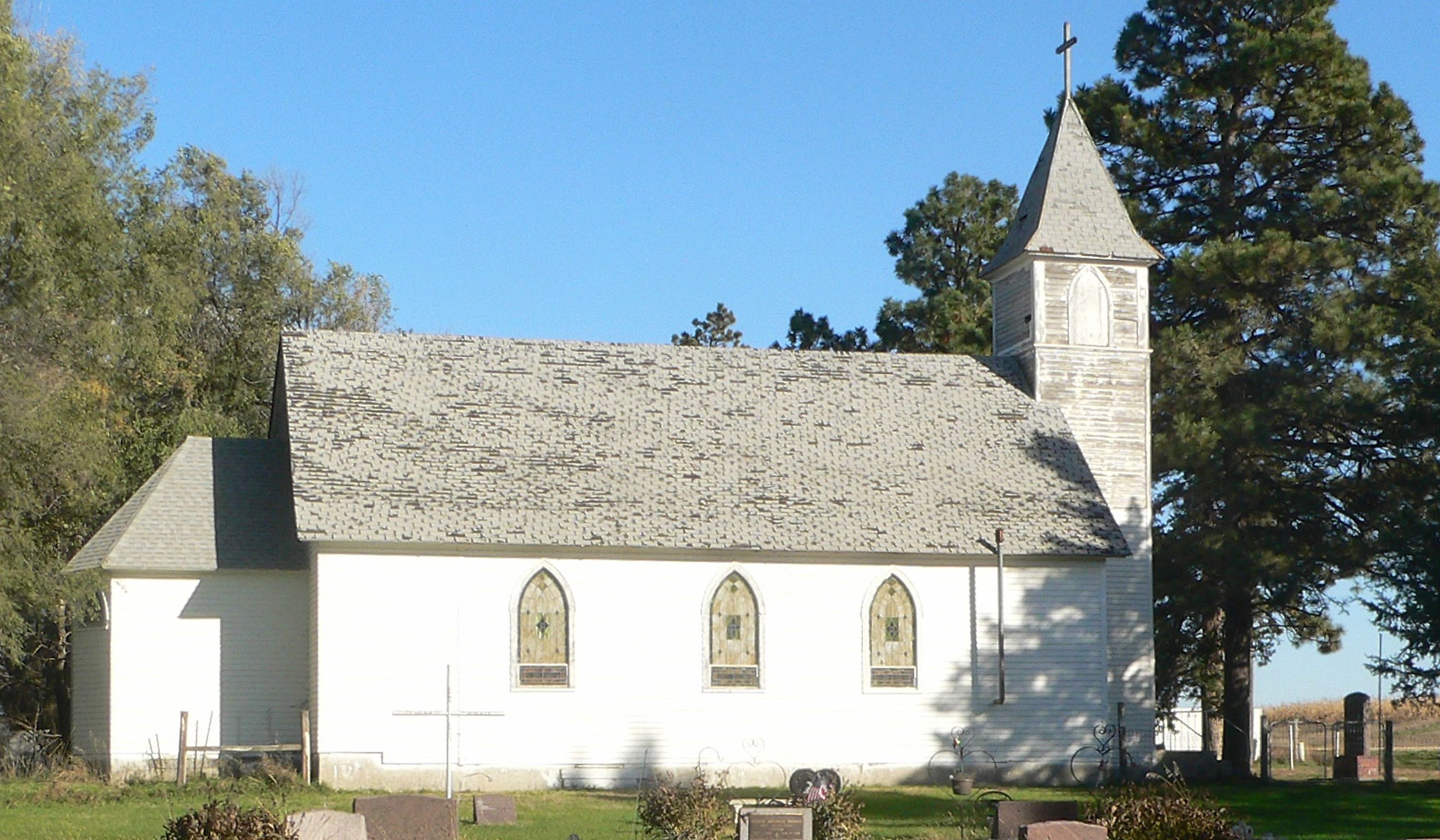
This Carpenter Gothic-style Catholic Church stands as a testament to days gone by in Paxton, South Dakota. While Catholic Churches in America are typically known for being ornate, others are far simpler yet still beautiful structures that fall more in line with the practicality of the frontier.
That's the case with St. John's Catholic Church, built with a steep roof and three lancet windows in the front. Its white exterior and tannish roof stand out in the hills of South Dakota, and it was built in 1915.
Unfortunately, the church was closed in 1973 when its longtime priest, Father Robert Ehrenbold, a Swiss immigrant, was forced to retire due to failing health. Today, the church and its cemetery are all that remains of the town of Paxton. However, the surrounding area has not forgotten about Father Robert nor his church, and they have carefully maintained it over the years, protecting it from rain damage. It was added to the National Register of Historic Places in 2009. There are no services held in the church, save on Memorial Day.
St. Agnes Catholic Church

Located in Vermillion, South Dakota, St. Agnes Catholic Church has been through many changes over the decades. A Catholic community set up the first church here in 1885, only to lose it to a Midwestern tornado in 1889. Church members rebuilt it, but by then they needed a larger structure. In order to accommodate them, the church hired Bavarian architect Anton Dohmen to construct a Gothic Revival Style Church in 1907. The church has a three-story bell tower on its southeastern corner.
This church served as the primary place of worship for St. Agnes until 1974, when they once again outgrew it, so they sold it to the Vermillion Area Arts Council and moved into a modern facility. The council both maintains the building and hosts many artistic events and workshops.
First Congregational Church of Milbank

This church is one of the oldest in South Dakota. It sits in Milbank, a railroad town founded in 1880 by the extension of the Chicago, Milwaukee, and St. Paul Railroad. The church itself was funded by Jeremiah Milbank, a railroad director who gave $15,000 for the church's construction. The town would later be named after him.
Built in 1883 in the Gothic Revival Style, it reflects the local styles of the time, as the church is made of white brick from Chaska, Minnesota. Like many Gothic Revival churches, it has a bell tower, but this one is topped by a pyramid steeple in a metal sheathing. The tower is the primary entrance into the church. Beside the tower is a large lancet window with stained glass.
The church has served as a meeting place for many different organizations, from the American Home Missionary Society to the Congregational Church, and multiple women's suffrage events throughout the late 19th and early 20th century. Today, the Grant County Historical Society maintains the church.
Swedish Lutheran Church of Strandburg

America has served as the home for people across the world. For the Dakotas, one of their largest immigrant communities is Scandinavians, including Swedes. Many of these people were Lutherans who built churches they were familiar with, such as the Swedish Lutheran Church of Strandburg, South Dakota.
Built in 1910 as a one-story Gothic-style church, it has a striking tower by its entrance with four white pinnacles and a cross sitting on top. Its exterior is a red brick veneer from Wisconsin bricks. It also features lancet windows, a gable roof, and a balcony in the steeple entryway for additional seating. Within the church sits a hand-carved Gothic altar, pulpit, and pipe organ. There are stained glass windows inside the church depicting Biblical stories. The church originally did services primarily in Swedish before adopting English as the immigrants gradually assimilated.
Golden Valley Norwegian Lutheran Church

As mentioned above, it wasn't just Swedes who came to South Dakota. Other Scandinavians also called this prairie landscape home, including Norwegians. Norwegians came here in the early 1900s and constructed a small church. Over time, the community decided to invest in a larger structure, so they pulled their funds together to design the rustic Gothic Revival church that stands to this day.
Built in 1921 on the slopes of the Grassy Butte, it's simpler than other Gothic Churches, lacking buttresses and pinnacles. However, it does possess many other well-known Gothic identifying marks, from a bell tower, a gabled roof, a nave, and arched windows on the side. The church also includes a finished basement and a red brick chimney. The entryway is through the bell tower.
Unfortunately, the church closed in the 1960s, but a local farming family maintains the land and the church for future generations to visit and learn about the Norwegian heritage of South Dakota.
Old buildings find new life
Many of these churches no longer have congregations, either due to shrinking populations or the growth of other denominations. But thankfully, these old buildings are finding new life, whether that's as an art council in Vermillion or as a historical society in Milbank. In addition, the communities find ways to protect these beautiful places from the elements with the same fervor as their founders did years ago. By visiting these beautiful Gothic churches, you may come back inspired to get involved with architectural preservation in your own towns and communities.





_interior_1.JPG)