6 Must-See Historic Forts In Oregon
Long before Oregon became a state, military outposts and trading forts marked the slow westward push into the Pacific Northwest. Some of those sites still stand today as parks and museums. The Lewis and Clark Expedition built Fort Clatsop and overwintered there in 1805-1806. John Jacob Astor founded Fort Astoria in 1811 as the first American-owned settlement on the Pacific Coast. Decades later Fort Stevens earned the strange distinction of being the only military installation in the continental United States attacked by enemy naval fire during World War II. The six forts below cover three centuries of exploration and conflict across Oregon.
Fort Clatsop

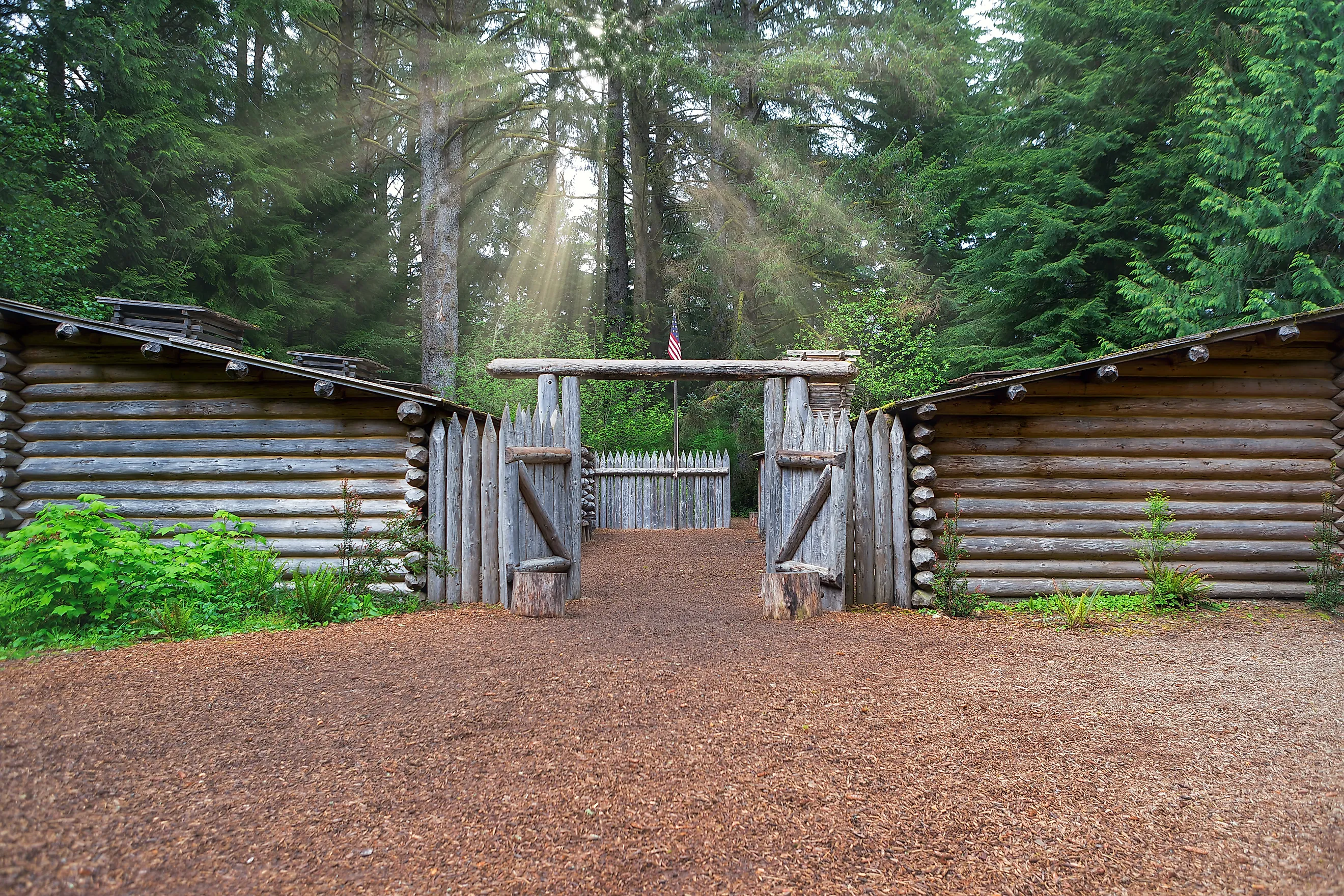
Near the mouth of the Columbia River lies Fort Clatsop, a memorable chapter in the story of the Lewis and Clark Expedition. Captain Meriwether Lewis and William Clark spent the winter of 1805-1806 here. After reaching the Pacific Ocean in November 1805, the expedition realized they needed permanent shelter to withstand the harsh coastal winter. The Corps of Discovery built Fort Clatsop and named it after the local Clatsop tribe, with whom the explorers developed trade and diplomatic relationships.
The expedition lived at the log fort from December 7, 1805, to March 23, 1806. During their stay, Lewis and Clark frequently interacted with the Clatsop and neighboring Chinook peoples, primarily through peaceful trade. The explorers exchanged items such as blue beads and other goods for food and supplies. Today, Fort Clatsop is preserved as part of Lewis and Clark National Historical Park, where visitors can learn about the daily lives and challenges faced by the expedition during their winter on the Pacific Coast.
Fort Stevens State Park

Located at Point Adams near the mouth of the Columbia River, Fort Stevens once held immense strategic importance. Built during the American Civil War, the fort later became one of the most important coastal defense sites in the Pacific Northwest. Its location made it a key defensive position against maritime threats approaching the West Coast. One of the fort's most notable moments came in 1942, when the Japanese submarine I-25 fired shells toward Fort Stevens during World War II. The fort did not return fire in order to avoid revealing the location of its defense batteries. The attack caused minimal damage and no casualties, making Fort Stevens the only military installation in the continental United States attacked by enemy naval fire during the war.
Today, Fort Stevens has transformed from a military stronghold into a popular recreation area. Fort Stevens State Park spans more than 4,300 acres and offers picnic areas, camping, and activities at Coffenbury Lake including fishing and boating. Visitors can also explore the park's information center and military museum, where exhibits highlight both the region's military and natural history.
Fort Dalles

Located in Wasco County near the end of the Oregon Trail, Fort Dalles became an important military and emigrant outpost during the mid-1800s. The Oregon Trail stretched more than 2,000 miles between Missouri and the Pacific Northwest, bringing thousands of settlers westward. Originally named Camp Drum, the fort played a key role during conflicts between the U.S. military and Native tribes between 1855 and 1858, including the Yakima War.
Fort Dalles also served as an important supply center during the Rogue River War and other regional conflicts as tensions grew between settlers and Native communities. Today, the Surgeon's Quarters, built in 1856, still stands and serves as part of the Fort Dalles Museum. Visitors can explore exhibits highlighting pioneer life, military history, and the region's Native American heritage.
Fort Astoria (Fort George)

Sitting near the mouth of the Columbia River along the Pacific Coast, Fort Astoria was the first American-owned settlement on the West Coast. It was founded in 1811 by John Jacob Astor and his Pacific Fur Company. During the early 19th century, growing trade and exploration across North America made the fort's location strategically important. Fort Astoria became a major hub for the fur trade not only because of its geographic position, but also because of the alliances the company formed with Native American tribes and foreign merchants.
During the War of 1812, the British North West Company purchased Fort Astoria in 1813 and renamed it Fort George in honor of King George III. Following the war, American claims to the fort and the surrounding region were restored through agreements that included the Treaty of 1818. Over the years, the fort underwent several structural and administrative changes that reflected its complex history. Today, visitors can explore the site's visitor and interpretive centers to gain a deeper understanding of Fort Astoria's role in the history of the Pacific Northwest.
Fort Hoskins

Built in 1856 in the Willamette Valley, Fort Hoskins served as an important military post during westward expansion. Its primary mission was to oversee the nearby Coast Indian Reservation and help maintain peace between Native tribes and incoming settlers. Rather than functioning as a major defensive fort, Fort Hoskins focused mainly on peacekeeping during a period of growing regional tension. Captain Christopher C. Augur was placed in command as the U.S. Army worked to manage relations during tribal relocation to reservations.
As tensions declined and the region became more stable, Fort Hoskins was decommissioned in 1865. Today, Fort Hoskins Historic Park preserves several original structures and allows visitors to explore the site's history through walking trails, interpretive signage, and preserved historic buildings.
Fort Yamhill

Another military post established in the Willamette Valley was Fort Yamhill. Built in 1856 near the Grand Ronde Indian Reservation, the fort was part of Oregon's growing military network during westward expansion. Like Fort Hoskins, its mission focused on maintaining peace between Native tribes and incoming settlers. Fort Yamhill also served as an important military outpost in the far western Oregon Territory. Lieutenant Philip Sheridan, who later became a prominent Union general during the Civil War, once served at the fort.
By the mid-1860s, Fort Yamhill had begun to decline as regional tensions eased. The fort was abandoned and officially decommissioned in 1866, and parts of the property were later used for farming and other civilian purposes. Today, Fort Yamhill State Heritage Area preserves the site's history through interpretive displays, walking trails, and exhibits exploring the fort's military past and its connection to the Grand Ronde community.
History Is Alive And Well In Oregon
Oregon's historic forts offer a fascinating glimpse into the state's early military, pioneer, and Native American history. From coastal defenses like Fort Stevens to frontier outposts such as Fort Dalles and Fort Yamhill, each site played a unique role during westward expansion and periods of regional conflict. Today, many of these forts have been preserved as museums, parks, and heritage areas where visitors can explore original structures, exhibits, and scenic landscapes. Together, they help tell the complex story of Oregon's past and the people who shaped it.