The Poorest County In America
In one South Dakota county, nearly 58% of residents live below the federal poverty line. By the U.S. Census Bureau's 2020-2024 American Community Survey five-year estimates, Oglala Lakota County has the highest poverty-rate estimate among U.S. counties and county equivalents, at 57.6%. That makes it the poorest county in America when poverty rate is the measure.
Where Is Oglala Lakota County?
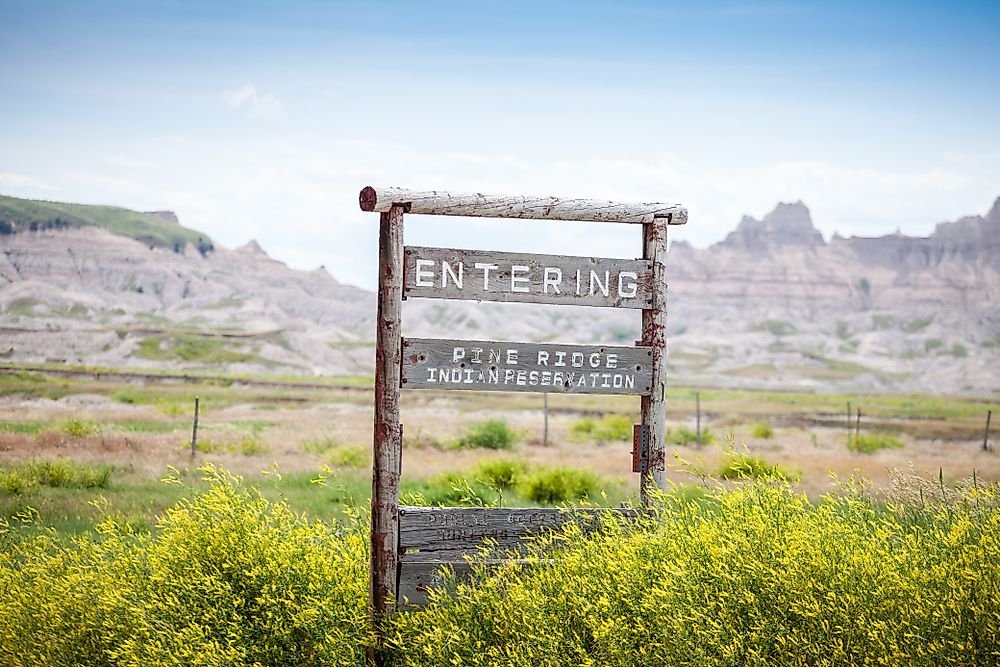
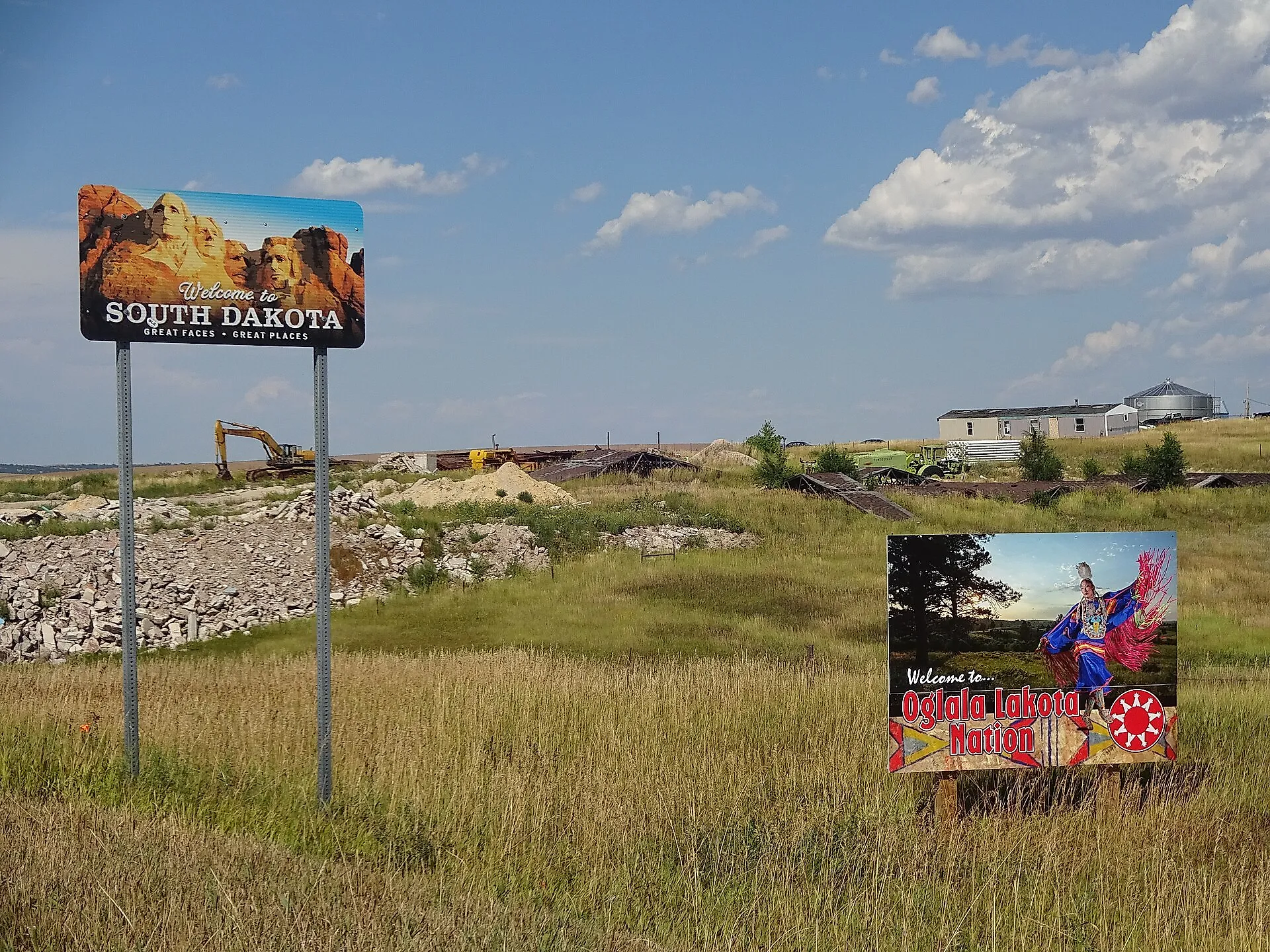
Oglala Lakota County covers about 2,094 square miles of southwestern South Dakota. Despite being more than twice the size of Rhode Island by land area, it had only 13,672 residents at the 2020 Census, or about 6.5 people per square mile. The county lies within the Pine Ridge Indian Reservation, home of the Oglala Sioux Tribe. Pine Ridge is actually larger than Oglala Lakota County itself. The Bureau of Indian Affairs says the reservation encompasses about 2.1 million acres across Oglala Lakota, Jackson, and Bennett counties. Part of Badlands National Park also extends into the northern part of Oglala Lakota County.
What Makes Oglala Lakota County The Poorest?

The most striking number is its 57.6% ACS poverty rate. Roughly 7,600 residents were estimated to be living below the federal poverty threshold during the 2020-2024 period. South Dakota's comparable rate was 11.9%, while the national figure was 12.5%. Income figures show a similar divide. Oglala Lakota County's per-capita income was just $11,771, compared with $40,550 for South Dakota and $44,673 nationally. Median household income was $41,417.
Oglala Lakota County has remarkably little conventional private-sector employment for an area its size. Census business data counted only 84 employer establishments in 2023, with fewer than 2,000 employees among them. The county's labor-force participation rate was just 32.9% among people age 16 and older in the 2020-2024 ACS period. Schools, healthcare, tribal government, federal services, retail businesses, and nonprofit organizations provide employment, but there is nothing resembling the diverse commercial base found around Rapid City or Sioux Falls.
The difficulties of starting businesses locally have been recognized for decades. Lakota Funds, founded on Pine Ridge in 1986, identifies access to capital, business networks, technical assistance, and infrastructure as major barriers to economic development. Since its founding, the organization says it has financed more than 1,600 business loans and helped establish or expand more than 1,500 businesses. Lakota Funds says only two Native American-owned businesses were operating on Pine Ridge when the organization began.
Geography Makes Poverty Harder To Escape

Distance amplifies many of the county's economic problems. Oglala Lakota County stretches across more than 2,000 square miles, but its communities are small and widely separated. Trips for specialized medical treatment, shopping, employment, or other services can require long drives.
Internet access does not completely erase that isolation. About 70% of households had broadband subscriptions in the 2020-2024 ACS period, leaving nearly three in ten without one. In an urban county, that would be a significant inconvenience. In a sparsely settled rural county, it can also restrict access to remote jobs, online education, telehealth, banking, and government services. The county's low density makes conventional economic development more difficult as well. A company considering a store, factory, or service operation has a potential customer and labor base spread across an area larger than some states' metropolitan regions.
Housing And Infrastructure Remain Obstacles

Poverty is visible in Oglala Lakota County's housing conditions as well as its income statistics. The Census Bureau estimates an average household size of 4.46 people, unusually high by U.S. standards. Housing shortages and overcrowding have been longstanding issues across Pine Ridge. Infrastructure is closely tied to the housing problem. Water, sewer, roads, electricity, and broadband must cover enormous distances between relatively small communities. Extending those systems is expensive, yet inadequate infrastructure can make it harder to construct additional homes or attract new businesses.
Education And Healthcare

Education statistics reveal another large gap. About 74.4% of adults age 25 and older had finished high school as of the 2020-2024 ACS, while just 11.8% held a bachelor's degree or higher. Pine Ridge does have schools serving students through high school, so the original draft's claim that students must leave the reservation or attend virtual school is incorrect. The broader difficulty is providing education across an enormous rural area where many households are simultaneously dealing with poverty, transportation limitations, housing shortages, and uneven internet access.
Healthcare faces some of the same geographic constraints. Indian Health Service operates Pine Ridge Hospital, a 45-bed hospital providing inpatient, emergency, obstetric, surgical, dental, behavioral-health, pharmacy, radiology, and primary-care services. The Pine Ridge Service Unit serves an estimated population of 26,000 people. More specialized treatment can still require travel outside the reservation, adding another burden for households already facing limited incomes and transportation choices.
An Economy That Is Still Developing
Calling Oglala Lakota County America's poorest county can obscure the economic activity that does exist there. Businesses are being created, tribal organizations are investing in infrastructure, and Native-led financial institutions are attempting to expand access to capital.
Lakota Funds alone reports that the businesses it has supported since 1986 have created more than 2,500 permanent jobs. Its loan portfolio now exceeds $27 million, a substantial change from the tiny business sector the organization encountered when it began. Even so, the scale of the challenge remains difficult to miss. An ACS poverty rate of 57.6% means more than one out of every two residents lives below the federal poverty threshold. Few places in the United States combine such a high poverty rate with such geographic isolation, a small private-sector economy, and the infrastructure challenges of a sparsely populated rural reservation.
- In DevelopmentExplore the world's least developed countries.