This South Carolina Town Instantly Transports You To The Past
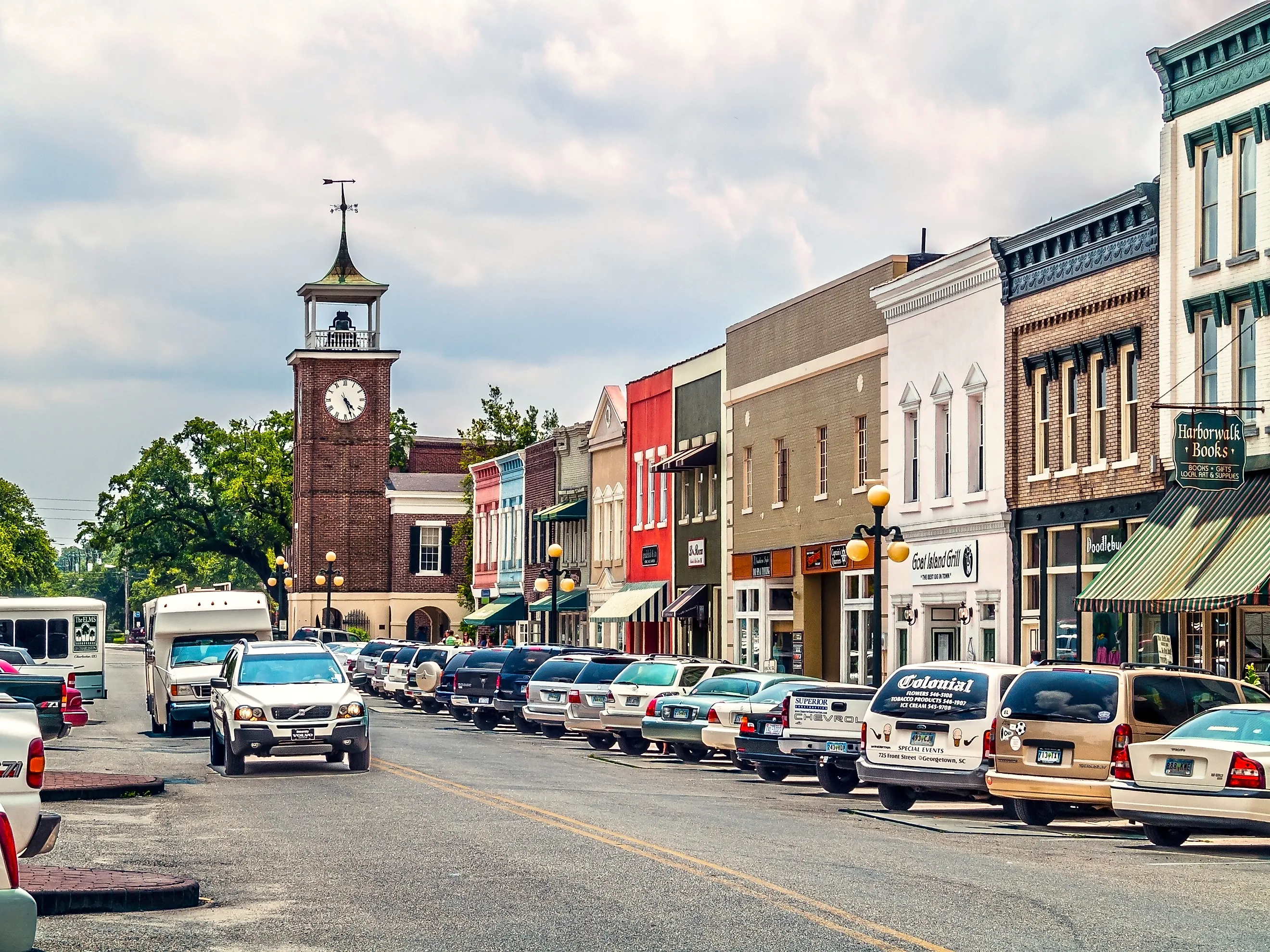
Front Street offers a unique window into Georgetown's past and present, particularly at The George, a boutique hotel that reflects the area's culture and heritage. It is not alone in this regard on this riverfront block, where history comes alive in South Carolina's third-oldest city at the Rice Museum and through historical markers that highlight the town's significance to the Lowcountry. The road runs parallel to the Sampit River, where rice and indigo were regularly unloaded for transport, helping Georgetown achieve the prominence it still holds today.
Modern shops and a boutique hotel have taken up shop in the antique buildings, but all pay homage to Georgetown's past through artwork and historical flair. The city offers modern comforts that mesh seamlessly with its preserved history, as evidenced by Front Street staples. One of them is The Independent, a restaurant that adds a touch of modernism to the scenery, transporting you back in time.
Georgetown's History

The waterfront town on the Hammock Coast became a pivotal transportation hub due to its location on the Sampit River, which enabled merchants to open shops along what is now Front Street. The colonial settlement was founded in 1729 and developed into a thriving port, driven by the region's economic boom in indigo and rice.
Georgetown played a pivotal role in the Revolutionary War, sending Thomas Lynch Sr. and Thomas Lynch Jr. to the Continental Congress. The younger would become a signer of the Declaration of Independence. Before the American War of Independence, Great Britain valued the indigo crop so much that it issued a bounty on its harvest. The bubble burst for blue dye during the war, prompting farmers to prioritize rice.
Local swamps and marshes were vitally crucial for rice harvesting, and by 1840, the Georgetown District produced nearly half of the total rice crop of the United States. The rice trade would crash at the onset of the Civil War due to disruptions to free (forced) labor, leading the area to rely heavily on lumber to survive economically through the 20th century.
Going Back in Time in the Historic District

Signing up for an Old Georgetown Walking Tour introduces you to the area and explains why it is so significant in many respects. The one or two-hour tour winds through the historic district, highlighting pivotal antebellum homes and pre-Revolutionary War sites that helped shape Georgetown into what it is today. Staying at Mansfield Plantation enables guests to immerse themselves in the area's history while being surrounded by timeless elegance.
The plantation was established in 1718 and originally encompassed 500 acres on the outskirts of Georgetown. Construction began on the main house nearly 50 years later, when the plantation grew into one of the most extensive rice plantations in the South. Today, it comprises 1,000 acres and is one of the most architecturally sound rice plantations left in the country.
The West End Heritage Center, like many venues in this region, combines historical narratives to provide a comprehensive study of its constituent elements. It features memorabilia and photographs of notable citizens. It devotes a significant section to Howard High School, the city's once all-Black school that paved the way for the center's current overseers.
Museums and Galleries

The Kaminski House is an essential stop for any trip. It is on Front Street, a few blocks from the heart of the district by The George and Harborwalk Marina. The 250-year-old house features artwork and antiques from the Low Country, China, Europe, and other places. It was built in 1769 and has been the home of many prominent Georgetown residents. There are several museums on Front Street in the heart of the walkable district, including the Rice Museum and the South Carolina Maritime Museum.

The Rice Museum is in the Old Market Building in front of the marina, behind the iconic Clock Tower. It features a permanent collection of dioramas, maps, paintings, and other artifacts that interpret the history of regional rice cultivation. The maritime museum highlights another important industry locally through exhibits, artwork, and rare artifacts. Together, the museums tell the complete story of Georgetown's economic and cultural importance to South Carolina.
The Gullah Museum interprets the critical history of the Gullah, a language and culture developed by West Africans who were brought to South Carolina's Sea Islands for rice and indigo cultivation. The state is intrinsically tied to this heritage, and its elements can be seen and tasted in many restaurants, art galleries, and everyday life, particularly in the Low Country.
Places to Stay With an Old-World Feel

The George boutique hotel is located directly on Front Street, overlooking the Sampit River, within walking distance of the museums and shops. The old-world feel comes from its tasteful artwork and interior tunnel connecting the lobby to the hallways leading to the rooms. Some of the rooms offer waterfront views, and they all offer sophisticated decor and bedding without feeling stuffy, a hallmark of the region. It also has a restaurant, The Independent, in the lobby.
The open-kitchen dining space features large windows overlooking Front Street, allowing guests to people-watch while dining on steaks and Low Country staples such as fresh seafood and grits. It has a comfortable bar with curated cocktails and a sense of the past. Wedgefield Plantation Bed and Breakfast features exposed brick walls, wooden ceilings, and a cozy atmosphere for an old-world feel.
Georgetown Communities
Within the city limits, there are many communities, ranging from the 63 homes in the historic district to apartments and modern homes. The Historic District stretches from East Bay Park to the marsh northeast of Church Street, while International Paper Company borders the West End on one side and the Liberty Steel Mill on the other. Taking a leisurely drive through the areas is akin to traveling through a time portal. The city's evolution is obvious, including its economic and residential growth, which is one of the best ways to experience Georgetown.
Strolling down Front Street in South Carolina's third-oldest city while admiring the Sampit River and historical markers instantly transports you to the past. The tree-lined roads are lined with historic storefronts that now house museums, such as the Gullah Museum, which highlight the city's heritage and prestige. The Kminski House and other homes reflect sophisticated architectural styles, serving as tangible reminders of Georgetown's past.
The city's heritage is reflected in its culinary scene, particularly in The Independent, a unique Low Country institution. Many traditional dishes have Gullah Geechee roots, including South Carolina staples such as shrimp and grits, so nearly every aspect of a visit is steeped in history. An afternoon walk at Harborwalk Marina is another way to experience Georgetown's culture and reflect on the river town's rich maritime history, transporting you back in time.