9 Tiny Off-Grid Towns In Kansas
Kansas is easy to misjudge from the highway. Long stretches of wheat fields and straight interstates can make the state feel uniform at a glance. Hidden within this landscape are communities that can make any vacation memorable. In Lindsborg, Scandinavian traditions color storefronts and festivals, while Greensburg stands as a model of sustainable rebuilding on the plains. These nine tiny off-the-grid towns in Kansas show how art, prairie landscapes, and community resilience shape daily life across the state.
Lucas

Lucas may be small, but it refuses to blend in. With just a few hundred residents, the town has shaped its identity around creativity. That spirit began more than a century ago when S.P. Dinsmoor built the Garden of Eden, filling his yard with bold concrete sculptures that still stand today. The quirky artistic spirit spills into everyday life; Miller’s Park displays miniature rock-built landscapes collected on family vacations, and Brant’s Meat Market, a local staple since 1922, pairs homemade bologna with a sense of local history.
Over time, Lucas became known as the Grassroots Art Capital of Kansas. The Grassroots Art Center continues that tradition, highlighting self-taught artists whose work feels right at home on the prairie. Even everyday spaces reflect that mindset, including the famously mosaic-covered Bowl Plaza restroom. Art, food, and history are intertwined in this town, making every corner an experience.
Cottonwood Falls

Cottonwood Falls sits in the Flint Hills, where tallgrass prairie defines the land and the pace of life. At the center of town, the 1873 Chase County Courthouse, built from local limestone, is still in use and part of everyday life. A short walk from the courthouse leads to the historic iron bridge spanning the Cottonwood River, and nearby is the waterfall that gave the town its name, providing a scenic backdrop for photographers.
Outside town, the Tallgrass Prairie National Preserve features rolling hills and grazing bison, giving visitors a glimpse of the prairie as it existed centuries ago. Back in town, historic buildings now house small shops and gathering places, including the Chase County Historical Society Museum and Grand Central Hotel & Grill. This limestone landmark has served travelers and cattlemen since 1884.
Wamego

Wamego has fully embraced its connection to The Wizard of Oz. Rather than treating it as a novelty, the town built a shared identity around the story. The Oz Museum draws visitors into more than a century of memorabilia, while murals, museum exhibits, and other yellow-brick-road details appear throughout Downtown. Adult visitors often end their tour at the Oz Winery, which serves distinctively named blends like "Squished Witch" in a tasting room filled with movie props.
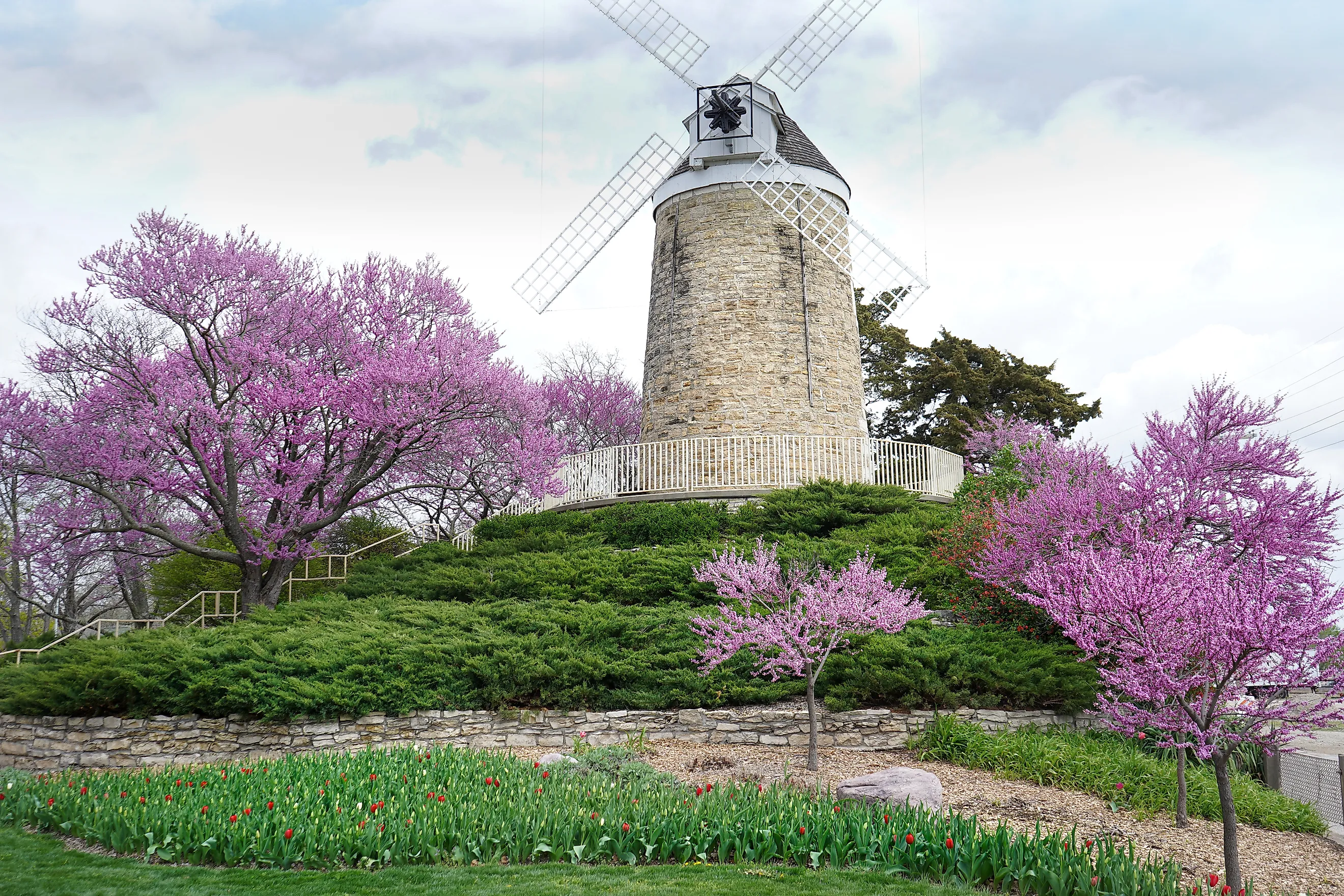
But Wamego is more than a theme. Just steps from Downtown, the City Park offers shade beneath mature trees and features a relocated 19th-century Dutch Mill. That blend of imagination and heritage gives Wamego a personality that feels both playful and grounded. For a complete visit, catch a show at the historic Columbian Theatre or grab a bite at The Brew.
Council Grove

Council Grove grew from a meeting place. In the 1820s, U.S. commissioners met with the Osage Nation here to secure safe passage along the Santa Fe Trail, and the town still carries that sense of crossroads. Council Grove has found a way to blend its historic sites into everyday life, with restaurants operating inside 19th-century buildings and the Kaw Mission standing as part of the community landscape.
The town still revolves around its lake and courthouse square, while the Hays House continues serving meals in the same structure where travelers once rested. The Neosho Riverwalk connects downtown to the waterfront, guiding visitors past landmarks like the Last Chance Store and the Madonna of the Trail statue. Here, history is not distant; it flows through streets, shops, and riverside paths, keeping the town’s frontier spirit alive.
Wilson

Wilson proudly calls itself the Czech Capital of Kansas, and that heritage shapes daily life. Czech traditions appear in local festivals, food, and even the skyline, where the massive painted Czech Egg stands in the park. History enthusiasts can stop by the tiny limestone historic jail, known as the Old Tobias Water Tower and Jail. This restored single-cell structure from 1907 offers a stark look at law and order on the early plains.
Downtown, the limestone Midland Railroad Hotel reflects the town’s railroad roots while still welcoming guests. Across the street, the Opera House hints at a time when small communities invested heavily in performance and gathering spaces. Just minutes away, Wilson State Park provides hiking, fishing, and scenic views, combining nature with history and tradition. The park spans nearly 1,000 acres along the 9,000-acre Wilson Lake, offering endless opportunities for outdoor enthusiasts.
Greensburg

Greensburg’s story changed dramatically in 2007, when a powerful tornado destroyed most of the town. What followed defined its future. Instead of rebuilding the same way, residents chose to focus on sustainability and renewable energy. Today, Greensburg is known nationwide for its commitment to green building. Travelers can see this commitment at Greensburg City Hall, one of the first LEED Platinum-certified city halls in the United States, built as part of the town’s sustainable rebuilding effort.
The historic Big Well, dug by hand in the 1880s, still stands as a reminder of the town’s earlier ingenuity. Newer spaces like the 5.4.7 Arts Center reflect its modern direction. Visitors also catch performances at the Twilight Theatre, a state-of-the-art venue built after the storm. Greensburg blends past and future in a way few small towns have had to attempt.
Atchison

Atchison is located high above the Missouri River, and its dramatic setting matches its bold personality. The town is known as the birthplace of Amelia Earhart, and it honors her legacy through her preserved childhood home overlooking the water. Architecture lovers will appreciate the 1885 Muchnic Art Gallery, a spectacular Queen Anne mansion with stained-glass windows and parquet floors that hosts rotating art exhibits year-round.
Atchison also leans into its reputation as one of the most haunted towns in Kansas, with trolley tours winding through streets lined with Victorian-era homes. For a quieter experience, the International Forest of Friendship is an arboretum dedicated to aviation history. Whether visitors come for architecture, aviation history, or ghost stories, the town’s strong sense of identity makes it memorable.
Lindsborg

Known as “Little Sweden USA,” Lindsborg’s streets are lined with Dala horse sculptures, Swedish flags, and Scandinavian storefronts. The community’s heritage, dating back to 1869, is evident in festivals, food, and public art. A short drive outside town leads to Coronado Heights, a stone castle built by the Works Progress Administration in the 1930s that offers sweeping views of the valley below.
Art is central to the town’s cultural life. The Birger Sandzén Memorial Gallery highlights local and regional artists, while the relocated Swedish Pavilion in Mill Park hosts seasonal events. Visitors can also watch craftsmen at Hemslöjd create Dala horse signs or explore the Valkommen Trail, connecting cultural heritage to the surrounding landscape.
Fort Scott

Fort Scott grew around the military post that still defines the town center. The preserved fort buildings and parade grounds are a direct window into the conflicts that shaped the frontier and Civil War eras. Yet the town extends beyond that history.
Brick streets and Victorian storefronts surround the fort, while museums like the Lowell Milken Center highlight stories of everyday individuals who influenced history. The town also celebrates the arts at the Gordon Parks Museum, located at the local college, which honors the Fort Scott native who became a groundbreaking photographer and filmmaker. To see it all, Dolly the Trolley provides narrated tours of the historic districts, offering a guided overview of the town’s layered past.
Discover The Details Of Kansas
Travelers often rush through Kansas, but the true character of the state exists in these small communities. These towns are shaped by events, cultures, and landscapes. What makes them compelling is not a single attraction, but the way each community integrates landmarks, heritage, and daily life. Going off the grid in these towns means connecting with land, tradition, and the deliberate choice to remain small.