These 13 Towns In Northern California Were Ranked Among US Favorites In 2026
Northern California is the part of the state Californians keep saving for later, the towns you pass signs for on the way to a trailhead or a lake and promise to explore next time. These 13 are the ones that reward making the trip. In Dunsmuir, a whole downtown fits inside a canyon barely wider than the river and the railroad. Weaverville has a working 1874 Taoist temple, the oldest still in use in California. At Shelter Cove, the beach is the color of gunpowder, reached by a road that tests your brakes. Each of these 13 landed on national favorites lists in 2026, and each earns the drive north.
Trinidad

The Pacific dominates almost every outing in Trinidad. Begin at Trinidad Head, where a compact trail rises above the harbor and opens onto views of sea stacks, forested cliffs, and fishing boats moving through the water below. The historic Trinidad Head Lighthouse adds a recognizable landmark to the headland, while migrating whales can sometimes be spotted offshore. Down at Trinidad State Beach, rock formations divide the sand into photogenic coves and create tide pools worth exploring at low tide. Indian Beach offers another sheltered section of coast, and the harbor remains active enough to keep the town connected to commercial fishing rather than feeling like a purpose-built resort. Because Trinidad is so small, visitors can move easily between bluff-top viewpoints, beaches, and the waterfront in a single afternoon. At low tide, the exposed rocks below the headlands add another layer of tide pools, seaweed, and marine life to an already busy shoreline.
Dunsmuir

Railroad history and mountain scenery overlap neatly in Dunsmuir, where the old downtown occupies a narrow Sacramento River canyon. Trains still pass close to historic buildings, reinforcing the town's identity as a former rail center rather than reducing it to a preserved backdrop. Hedge Creek Falls is the easiest natural stop, reached by a short trail that slips behind the falling water before continuing toward a Sacramento River overlook. Castle Crags State Park, a short drive south, raises the scale considerably with granite spires, forest trails, and broad views over the upper Sacramento corridor. Downtown deserves time as well, especially the old railroad architecture and small businesses clustered near the tracks. Mossbrae Falls remains one of the area's most photographed sights, although the long-used trackside approach is unsafe and unauthorized, so visitors should follow current local access guidance. The Sacramento River runs directly through the canyon beside town, adding trout water and shaded river access to a day already packed with railroad and waterfall scenery.
Grass Valley

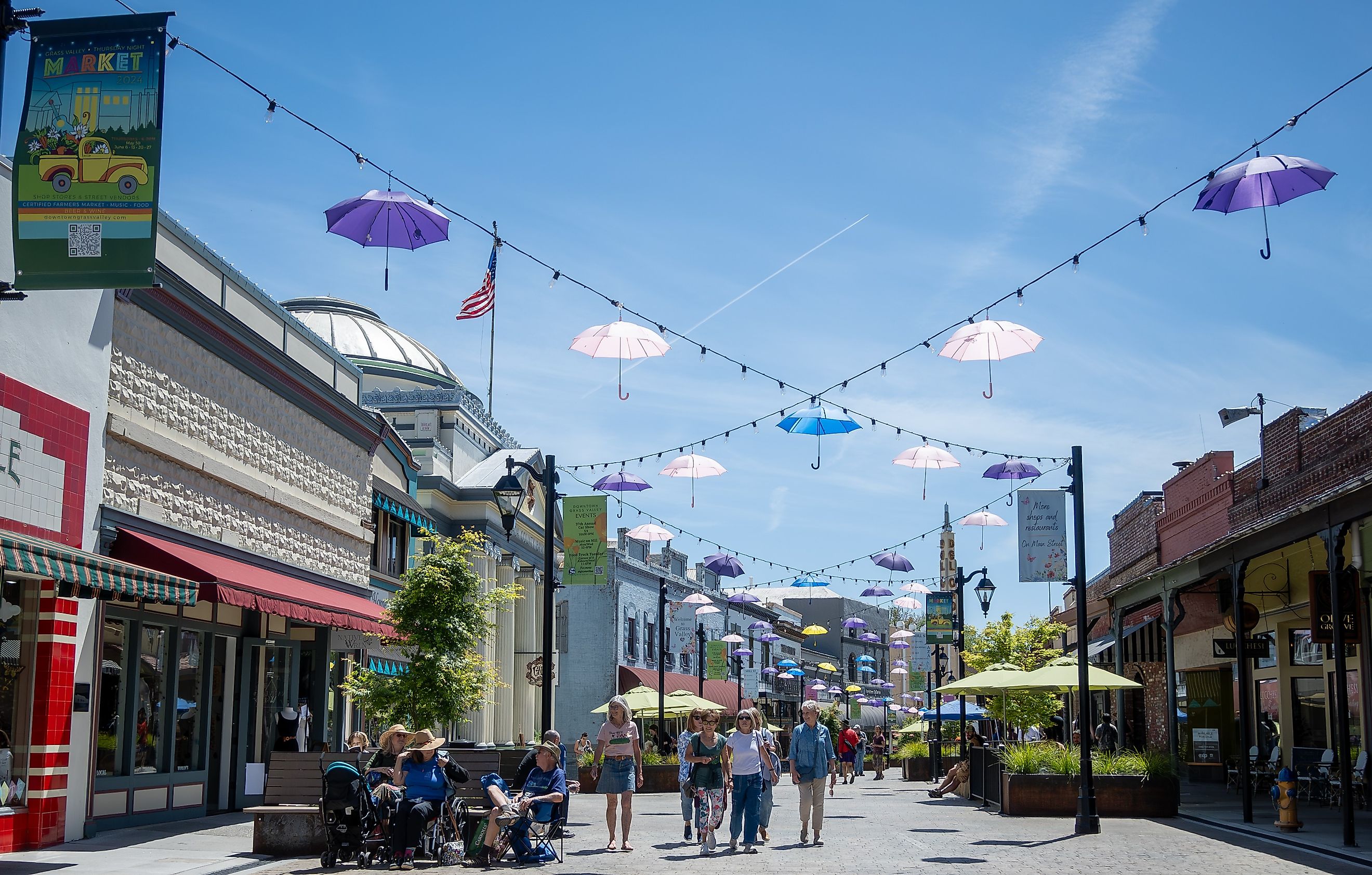
Empire Mine State Historic Park gives Grass Valley a sense of scale that ordinary mining museums cannot match. The site preserves mine buildings, gardens, an estate, and the entrance to an underground network associated with one of California's richest hard-rock gold operations. Walking the grounds reveals the industrial ambition behind a town whose downtown now feels remarkably genteel. Back in the center, brick storefronts lead toward the Del Oro Theatre, where a tall Art Deco neon tower becomes one of Grass Valley's most recognizable sights after sunset. The North Star Mining Museum digs further into the machinery and engineering of the local industry, while the Center for the Arts brings concerts and performances into the modern cultural mix. The Del Oro's neon is best saved for after dusk, when its tower glows above the brick commercial blocks after a daytime visit to Empire Mine's shafts, workshops, and landscaped grounds.
McCloud

McCloud still carries the orderly bones of the lumber company town it once was, but Mount Shasta gives the place a much grander backdrop than its industrial origins suggest. Historic commercial buildings and former company structures make the center worth exploring before heading to the McCloud River. There, Lower, Middle, and Upper Falls can be linked on one outing, with each cascade taking a different form. Middle Falls is the dramatic centerpiece, spreading across dark volcanic rock below a high overlook, while Lower Falls is easier to approach at river level. The McCloud Heritage Junction Museum adds context to the timber industry and the people who built the community around it. Clear days are especially rewarding because Mount Shasta can appear above rooftops and forest openings with startling scale. A clear evening can bring one final spectacle: dark skies above the old company-town streets, with Mount Shasta's snowy mass still visible after the lower slopes fall into shadow.
Weaverville

One building immediately separates Weaverville from the usual Gold Rush itinerary: the Joss House. The red Taoist temple, officially protected as Weaverville Joss House State Historic Park, preserves the legacy of the Chinese community that became central to the town during the nineteenth-century mining era. Its curved roofline and ceremonial interior introduce a history that is often missing from California mining-town visits. From there, the compact historic district unfolds through brick commercial buildings, wooden residences, old lodge halls, and streets framed by forested hills. A self-guided walk reveals how fires, rebuilding, mining wealth, and immigration shaped the town block by block. The old cemetery is another worthwhile stop, particularly for visitors interested in the people behind the architecture. Trinity County's lakes, rivers, and mountain roads begin just beyond town, but there is plenty to examine before leaving the center, particularly the surviving nineteenth-century commercial blocks and the temple grounds beneath the surrounding hills.
Downieville

Downieville is squeezed into such a tight mountain setting that the geography becomes part of the townscape. Buildings gather around the confluence of the Downie River and North Yuba River, with bridges, steep slopes, and forest visible almost everywhere. The historic center still reflects its Gold Rush origins, but modern Downieville is equally well known for mountain biking. Riders descend long, technical routes through the surrounding Sierra forest and roll directly back into town, giving the streets a lively outdoor culture during warmer months. Travelers who prefer walking can explore the riverbanks or head toward the Lakes Basin Recreation Area, where granite, alpine water, and pine forest replace the narrow canyon. Frazier Falls makes a particularly rewarding excursion when conditions allow. At the river confluence, clear mountain water passes beneath bridges only steps from the old commercial blocks, with the forested canyon walls rising immediately beyond the roofs.
Graeagle

Rows of small red buildings beneath tall pines give Graeagle an instantly recognizable look. Those cottages and commercial structures trace back to the community's lumber-company history, but the surrounding landscape now supplies most of the adventure. Graeagle Mill Pond is the easiest place to slow down, with calm water for paddling and swimming close to town. Higher in the mountains, the Lakes Basin Recreation Area opens into a network of trails, granite ridges, and alpine lakes. The Frazier Falls Trail is one of the most accessible scenic outings, leading to a viewpoint over the waterfall and canyon without demanding an all-day hike. More ambitious walkers can continue toward Long Lake, Round Lake, and other higher-elevation routes, while cyclists use Graeagle as a base for forest roads and mountain trails. A short return to the village after a mountain outing brings those red buildings back into view beneath the ponderosa pines, one of the scenes most closely associated with Graeagle.
Shelter Cove

Getting to Shelter Cove is part of the experience. The road twists across the King Range before dropping toward a remote patch of Pacific shoreline, and the sense of isolation becomes stronger as the ocean comes into view. Black Sands Beach is the essential stop. Its dark sand and gravel sit beneath steep coastal slopes, producing one of the most unusual beach scenes in California. The shoreline also marks a gateway to the Lost Coast Trail, where backpackers tackle a long stretch of roadless coast. Travelers staying closer to town can explore tide pools, watch fishing activity around the small harbor, and visit the Cape Mendocino Lighthouse, which was relocated to Shelter Cove. Weather changes the mood constantly: fog can erase distant headlands, while clear evenings expose a huge western horizon. At the relocated Cape Mendocino Lighthouse, the ocean remains in full view, and the surrounding headlands make an excellent final stop before the winding drive back across the King Range.
Sutter Creek

Sutter Creek looks orderly at first glance, with balconies, brick storefronts, and old hotels packed closely along Main Street, but its most fascinating attraction is much rougher around the edges. Knight Foundry preserves the machinery of a nineteenth-century industrial complex that supplied equipment to California's mines. Inside, belts, wheels, furnaces, and machine tools explain how mining towns actually functioned behind the romantic Gold Rush imagery. The contrast makes the foundry one of the most memorable stops in Amador County. Afterward, Main Street is an easy place to wander between galleries, restaurants, and historic buildings before heading into the surrounding foothills. Vineyards and tasting rooms spread across the nearby countryside, giving Sutter Creek a second identity beyond mining history. The Sutter Creek Theatre is worth checking for live music and performances in the evening. The foundry's heavy machinery is especially striking after a walk along Main Street, where balconies and hotel facades show the more refined side of the same mining-era economy.
Murphys

One morning in Murphys can begin beneath Main Street and end beneath giant sequoias. Mercer Caverns drops visitors into chambers filled with stalactites, stalagmites, flowstone, and delicate mineral formations, creating an underground attraction unlike anything in the town center. Above ground, the historic Murphys Hotel anchors a lively Main Street lined with restaurants, tasting rooms, and small shops. Ironstone Vineyards adds landscaped grounds, wine tasting, and a heritage museum where a massive crystalline gold specimen connects neatly to the region's mining past. Then there is Calaveras Big Trees State Park, close enough for an afternoon walk among enormous sequoias if time allows. This variety keeps Murphys from feeling like another preserved Gold Rush town. Visitors can spend hours underground, move into wine country, and finish the day beneath trees thousands of years old. After the caverns, vineyards, and sequoias, the Murphys Historic Hotel brings the day back to the center of town, where its nineteenth-century stone building still anchors Main Street.
Boonville

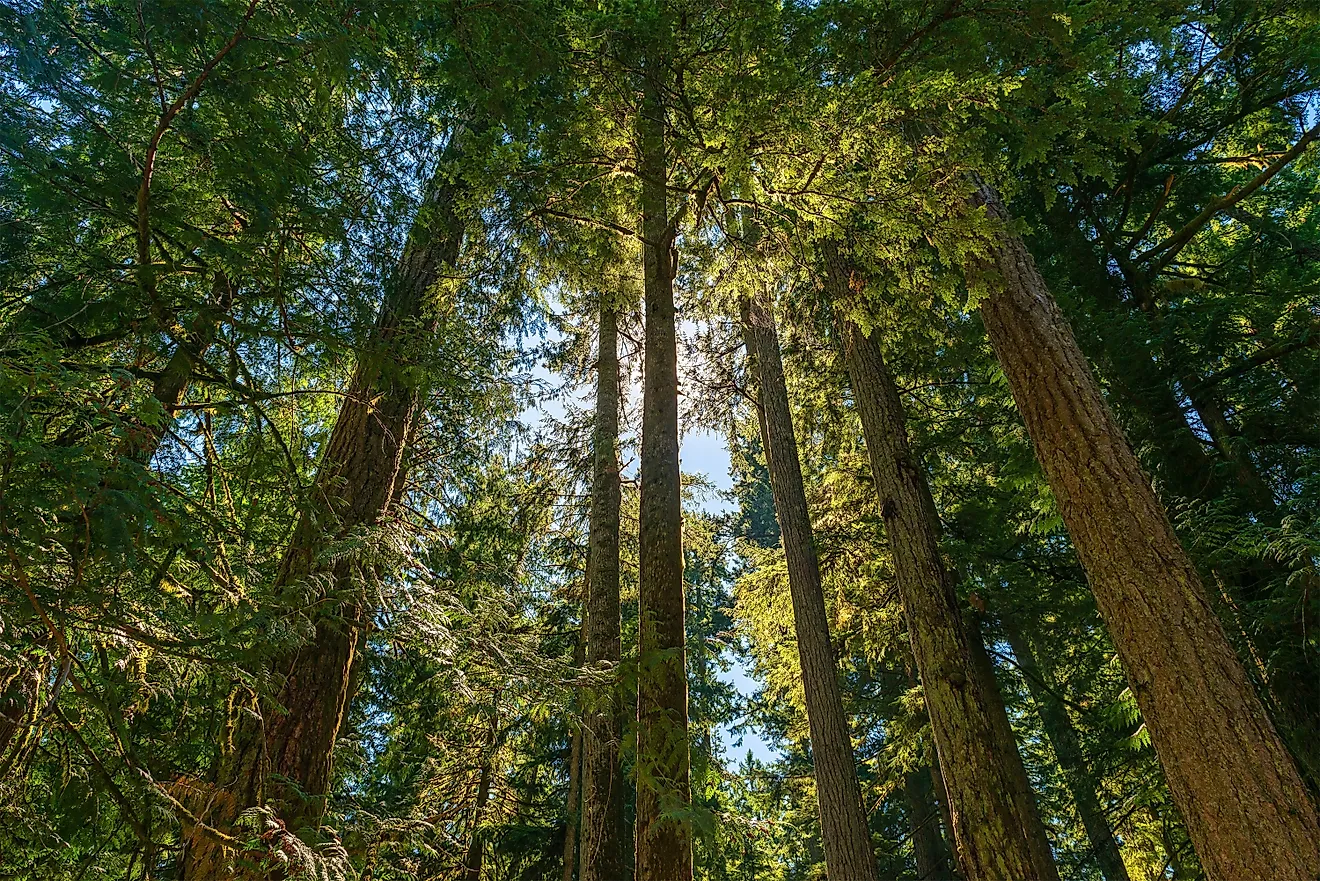
Boonville's quirkiest attraction is not a building or landscape but a language. Boontling developed locally in Anderson Valley and survives in place names, stories, and expressions that give the town an unusually specific cultural identity. The Anderson Valley Museum is the best place to learn how that vocabulary fits into the history of this isolated farming community. Outside town, vineyards roll across oak-dotted hills, but wine is only part of the appeal. Pennyroyal Farm produces cheese from sheep and goats raised on the property, pairing tastings with a closer look at the valley's agricultural side. Anderson Valley Brewing Company gives beer drinkers a well-known local stop, while Hendy Woods State Park, only a short drive away, protects groves of towering old-growth redwoods along easy walking trails. At Hendy Woods, the Big Hendy and Little Hendy groves bring visitors beneath old-growth redwoods only minutes from Anderson Valley's vineyards and farms.
Ferndale

Few California towns make architecture feel this playful. Ferndale's Main Street is lined with exuberant Victorian buildings painted in creams, reds, blues, and greens, many of them built during the prosperous dairy era that produced the town's famous "Butterfat Palaces." Walking is the best way to notice the carved brackets, bay windows, false fronts, and elaborate cornices before stepping into the Ferndale Museum for local history. A short uphill detour leads to Ferndale Cemetery, where old gravestones climb a grassy slope above town and open views toward the Eel River Valley. The Pacific is only a few miles away at Centerville Beach, a broad, windswept shoreline that feels dramatically different from the polished streets downtown. Late in the day, the slanting light across Main Street picks out the carved trim and painted details that are easy to miss on a quicker morning walk.
Nevada City

Broad Street gives Nevada City its theatrical first impression. Brick facades, balconies, awnings, and steeply rising streets create a downtown that still feels tied to the nineteenth century, but the strongest reason to linger is that many of those old buildings remain in active use. The Nevada Theatre, one of California's oldest operating theater buildings, continues to host performances and films. Nearby bookstores, galleries, cafes, and independent shops make the historic center easy to explore without a rigid plan. The 'Uba Seo Gallery adds an important local perspective through the history and contemporary culture of the Nevada City Rancheria Nisenan Tribe. When the streets begin to feel busy, the South Yuba River provides a sharp change of pace. Trails near the river lead toward swimming holes, granite outcrops, and old crossings shaded by woodland. Along the South Yuba, granite slabs and clear pools replace the brick streets entirely, giving hikers and summer swimmers a natural counterpoint to the architecture downtown.
Planning A Northern California Trip
What ties these towns together is that each rewards a slow, specific kind of visit rather than a checklist. A morning at Knight Foundry in Sutter Creek explains the machinery behind the Gold Rush more vividly than any museum plaque, and an afternoon among the sequoias at Calaveras Big Trees near Murphys resets the scale entirely. Downieville and Grass Valley show two versions of Sierra mining history, one squeezed into a river canyon and the other spread across the grounds of Empire Mine. Whether the draw is the black sand at Shelter Cove, the Boontling still spoken around Boonville, or Mount Shasta looming over McCloud, the best moments come from standing in one place long enough to notice what makes it unlike anywhere else.