These 10 Towns In Georgia Have The Best Main Streets
Georgia is a classic Southern state, known for its variety of scenery, including beaches, mountains, forests, and sweeping farmland. This diversity supports towns that reflect different aspects of Georgia's culture of traditional southern hospitality. Small-town main streets are reliable places to understand how communities function on a day-to-day basis, serving as gathering spots, business centers, and social anchors. Here are some of the Georgia towns that stand out for main streets that show off history and heritage, and the creativity and hard work of their people. In a rapidly changing economy, these places demonstrate how older commercial centers continue to evolve while maintaining much of their original purpose.
Americus

Main Street Americus reflects an earlier era while continuing to support current community uses. The downtown district features brick commercial buildings arranged along a compact street grid, with the Windsor Hotel serving as a focal point. Built in 1892, the hotel is well-known for its Victorian design, corner tower, and central atrium lobby that rises three stories. It continues to operate as a hotel and gathering place, playing a visible role in downtown activity.
Local organizations regularly schedule events intended to bring people downtown and support local businesses. These include recurring storefront promotions, food-centered gatherings, and seasonal celebrations associated with the Main Street Americus program. The First Friday Chili Crawl and the Women’s Wine and Chocolate Walk are among the events that encourage foot traffic and extended visits to the downtown area. Together, these efforts support a district that balances heritage architecture with continued use and steady public engagement.
Dahlonega

Dahlonega’s downtown district remains closely tied to its Gold Rush history, which predates the California Gold Rush. That chapter of local history is preserved through the Dahlonega Gold Museum, housed in the Old Lumpkin County Courthouse on the town square. The courthouse dates to the 1830s and continues to serve as a visual centerpiece for the surrounding historic district.
Public Square functions as the center of downtown life, with restaurants, offices, and cultural venues arranged around the courthouse lawn. The Historic Holly Theater, a former 1940s-era movie house, now serves as a performance venue hosting plays, concerts, and community events. Dining options cluster within walking distance of the square, allowing visitors to sit outdoors or step between shops and restaurants with little interruption. Chef Paco’s operates near downtown rather than directly on Main Street, while Bourbon Street Grille overlooks the square itself. This compact layout makes the district easy to explore on foot while keeping historical references visible throughout.
Helen

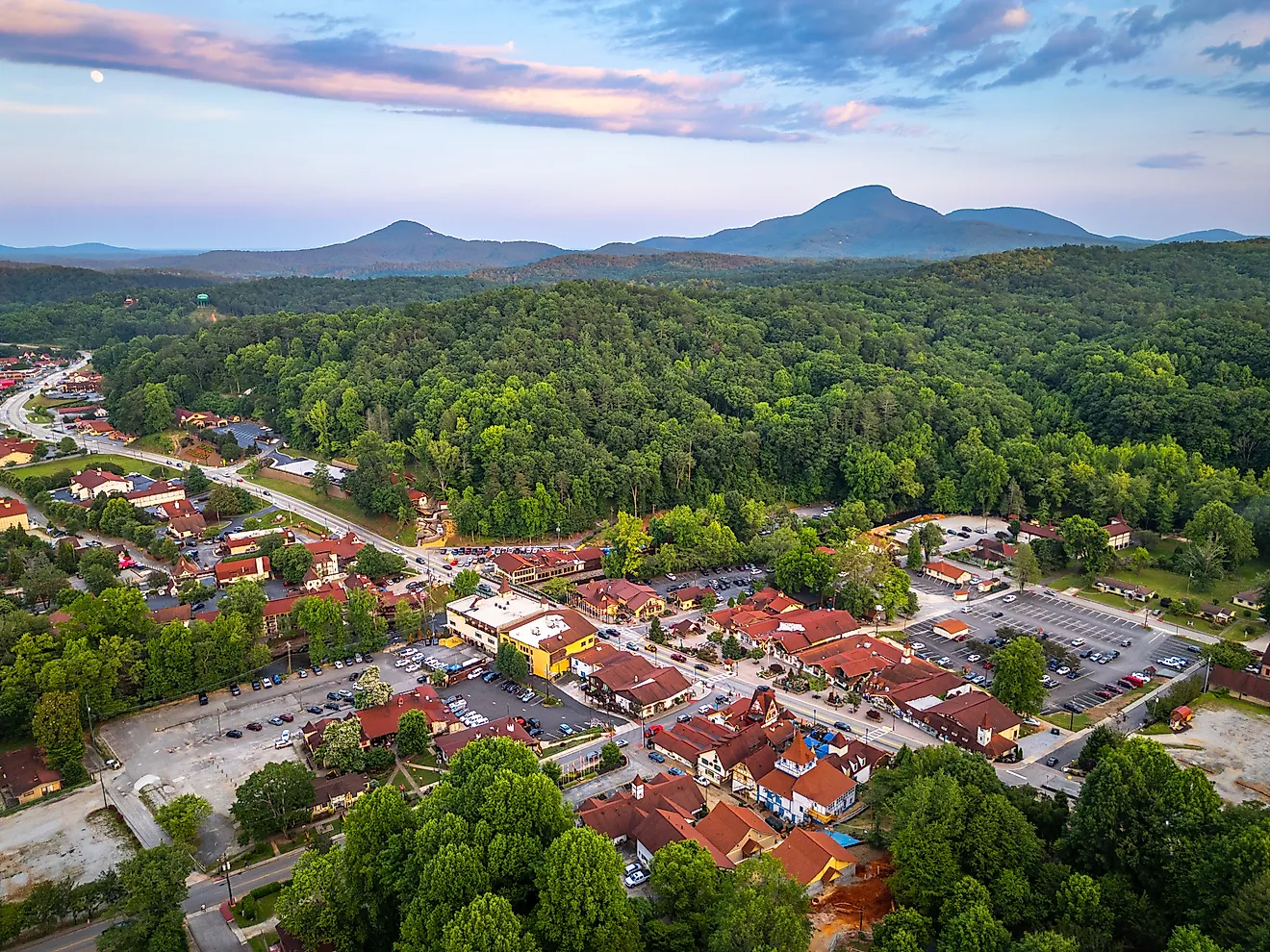
Helen is structured around a Bavarian-inspired town center located in the foothills of the Blue Ridge Mountains. The downtown area was intentionally redesigned decades ago to reflect alpine architectural motifs, which now define the appearance of its storefronts and public spaces. Restaurants, specialty shops, and event venues are concentrated within a short stretch of streets.
The Helen Arts and Heritage Center provides background on the town’s development while serving as a gallery for local artists working in painting, pottery, and other media. Dining options include Café International, which sits along the riverwalk, and the longstanding Hansel & Gretel Candy Kitchen, known for its handmade sweets and visible production areas. A short distance away, Habersham Winery maintains a tasting room near Helen’s downtown. Together, these locations create a district where cultural exhibits, food establishments, and retail businesses operate in close and convenient proximity.
Covington

Covington’s downtown square has become widely recognized through its role in film and television production. If you have a vague sense you've been there before, it might be because you've seen the courthouse square on The Vampire Diaries, The Dukes of Hazzard, or Remember the Titans. The courthouse square and surrounding streets have appeared in numerous productions, lending the area a familiar quality for visitors. Brick commercial buildings, a prominent town clock, and restaurant storefronts remain functional parts of daily life rather than set pieces.
Mystic Grill operates directly on the square and is known for its connection to several filmed series. Guided excursions such as Mystic Falls Tours introduce visitors to filming locations tied to shows produced in the area, while interpretive plaques embedded in sidewalks mark notable productions associated with the Covington Walk of Stars. Lodging options include the Twelve Oaks, an antebellum-era house adapted for overnight stays and located a short drive from the square. Together, these elements allow downtown Covington to support tourism while remaining active as a working civic center.
Thomasville

Thomasville’s downtown district supports a large concentration of independent shops, restaurants, and restored commercial buildings. The city has received national recognition for downtown preservation and reinvestment, reflecting long-term efforts to maintain the area as an economic and social center. Decorative brickwork, wide sidewalks, and storefront continuity contribute to an environment suited for walking and extended visits.
Food-centered activities play a significant role in downtown life. The Taste of Thomasville tour introduces visitors to local eateries while passing through nearby historic neighborhoods. Restaurants such as Jonah’s Fish & Grits and Moonspin Pizza are among the established stops associated with these tours. Nearby, the Big Oak in Elizabeth Ireland Poe Park remains a defining local landmark. Dating back several centuries, the tree is widely regarded as one of the largest live oaks in the eastern United States and stands within easy reach of the downtown area.
Madison

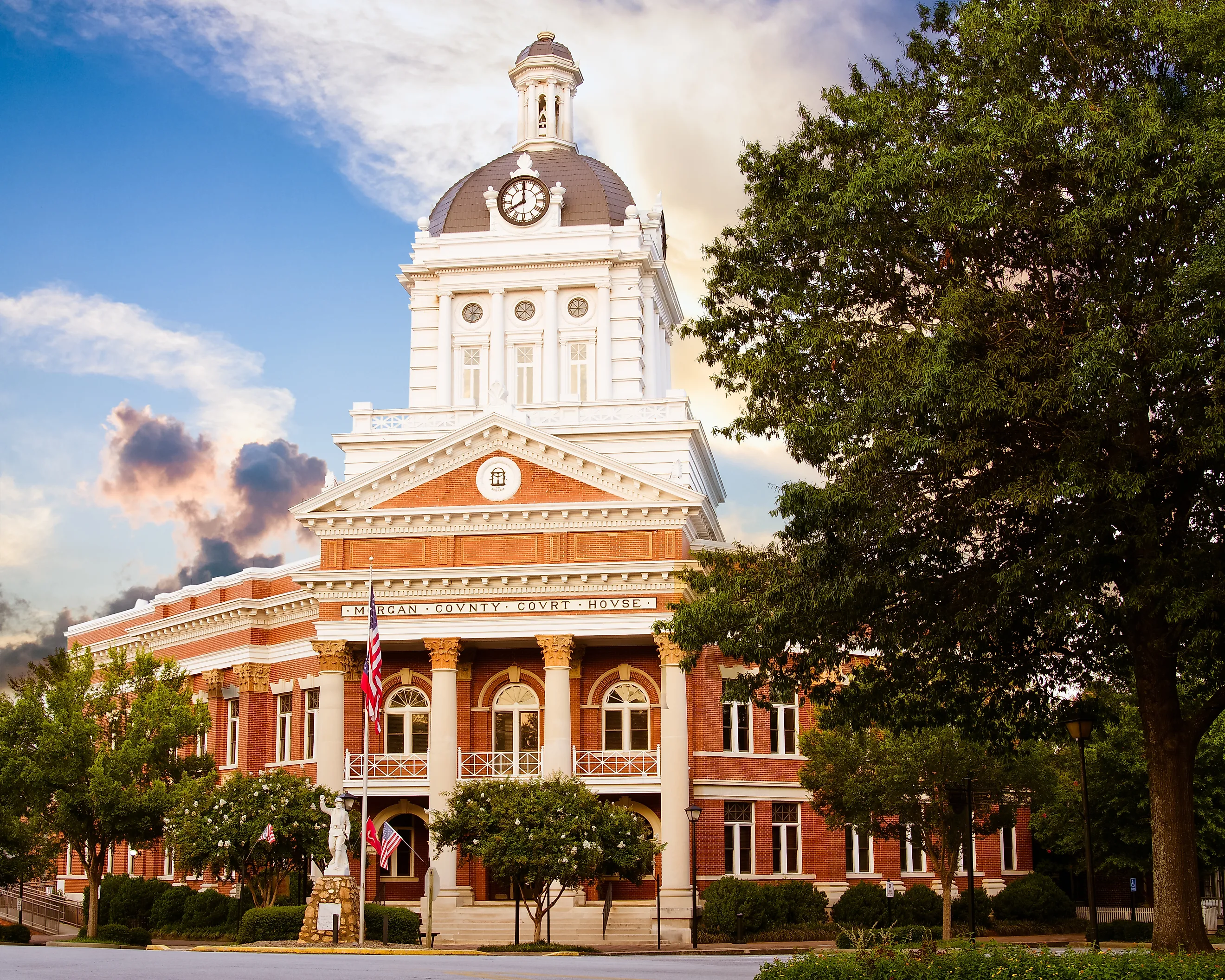
Downtown Madison anchors one of Georgia’s best-preserved historic districts, characterized by large antebellum homes and intact commercial buildings. The town has been used as a filming location for several movies, including Goosebumps, Hidden Figures, and Halloween II. The layout of downtown encourages exploration on foot, with public buildings and shops arranged around the main corridor.
The Madison-Morgan Cultural Center occupies a former school building and functions as a museum, gallery, and performance space. It provides cultural programming throughout the year while preserving the structure’s architectural details. Retail options range from large antique centers such as Madison Markets to smaller contemporary shops like Amelia’s Apparel. This mix allows older buildings to remain in use while accommodating present-day retail and cultural needs.
Blue Ridge

Downtown Blue Ridge serves as a gateway for visitors traveling into North Georgia’s mountain region. The district features clothing shops, gift stores, and restaurants arranged along a walkable main corridor. Blue Ridge Cotton Company operates as a central retail presence, offering locally branded apparel and supporting regional charities through its sales model.
Huck’s General Store appeals to families with candy sold by the scoop and shelves filled with nostalgic items and souvenirs. The downtown area also supports a range of locally owned galleries and studios displaying work by regional artists. These spaces are dispersed throughout the district rather than confined to a single venue, encouraging casual discovery during a walk through town.
Rome

Downtown Rome is notable for its wide main thoroughfare, Broad Street, which local sources describe as among the widest main streets in Georgia. This open configuration allows for sidewalk dining, retail storefronts, and public gathering spaces lined along a broad corridor. The downtown area connects easily to nearby parks and trails, reinforcing its role as a link between commercial activity and outdoor access.
Admiral John H. Towers Memorial Plaza honors a Rome native recognized for his influence on naval aviation history. The City Clocktower, constructed in the nineteenth century, rises above downtown and remains one of the town’s defining markers. Heritage Park sits behind the levee along Second Avenue near the confluence of the Etowah and Oostanaula Rivers, offering walking paths and green space close to the downtown core.
Bainbridge

Downtown Bainbridge is organized around Willis Park, a landscaped square framed by late nineteenth- and early twentieth-century commercial buildings. The park functions as a visual and social center, with benches, walkways, and views across the surrounding district. Several lodging options operate within walking distance of the square.
The Willis Park Hotel occupies a corner building constructed in 1899 and offers a small number of guest rooms with views over the park. Restaurants located nearby include The American, a locally owned establishment, along with coffee and breakfast spots such as The Bean Cafe. This close grouping of lodging, dining, and public space encourages visitors to remain downtown while exploring the area on foot.
Main Streets That Still Matter

Across these Georgia towns, Main Streets continue to serve as focal points for daily life rather than purely tourist corridors. They support independent businesses, preserve historic buildings, and host events that bring residents downtown on a regular basis. While each town reflects local priorities and development patterns, they share a commitment to keeping their central districts active and relevant.
Food remains one of the most visible ways these downtowns maintain appeal, with restaurants adapting older buildings for contemporary use. Cultural venues, public parks, and walkable layouts add structure and continuity. Taken together, these Main Streets show how established commercial centers can remain integral to community life while accommodating measured change.