The Most Picturesque Towns In Vermont
The covered bridges of Vermont still carry traffic across rivers they have spanned since the 1800s. Eight towns scattered across the Green Mountains hold onto that older version of the state. Their village streets look much as they did two centuries ago. Mountain peaks above 4,000 feet rise behind their church steeples. Waterfalls feed swimming holes a short walk from the town center. These eight towns are some of the most scenic corners of Vermont.
Manchester

Established in the 1760s and now home to just under 5,000 residents, the town of Manchester in southern Vermont is rich in historic and natural beauty. Spend time in the Manchester Village Historic District, where preserved 18th- and 19th-century landmarks line the streets. Among those of note is Hildene (1905), once the home of Robert Todd Lincoln, son of President Abraham Lincoln.
Enjoying the outdoors is a treat in Manchester, where summers are comfortably warm and winters are cool. The nearby Bromley Mountain offers alpine slopes for skiing and snowboarding in winter, with cycling and biking in summer. There is also the Green Mountain National Forest, home to moose, black bears, beavers, and turkeys. Add in recreation areas and camping sites, and this is a fine way to escape the hectic pace of modern life and simply unwind.
Bennington

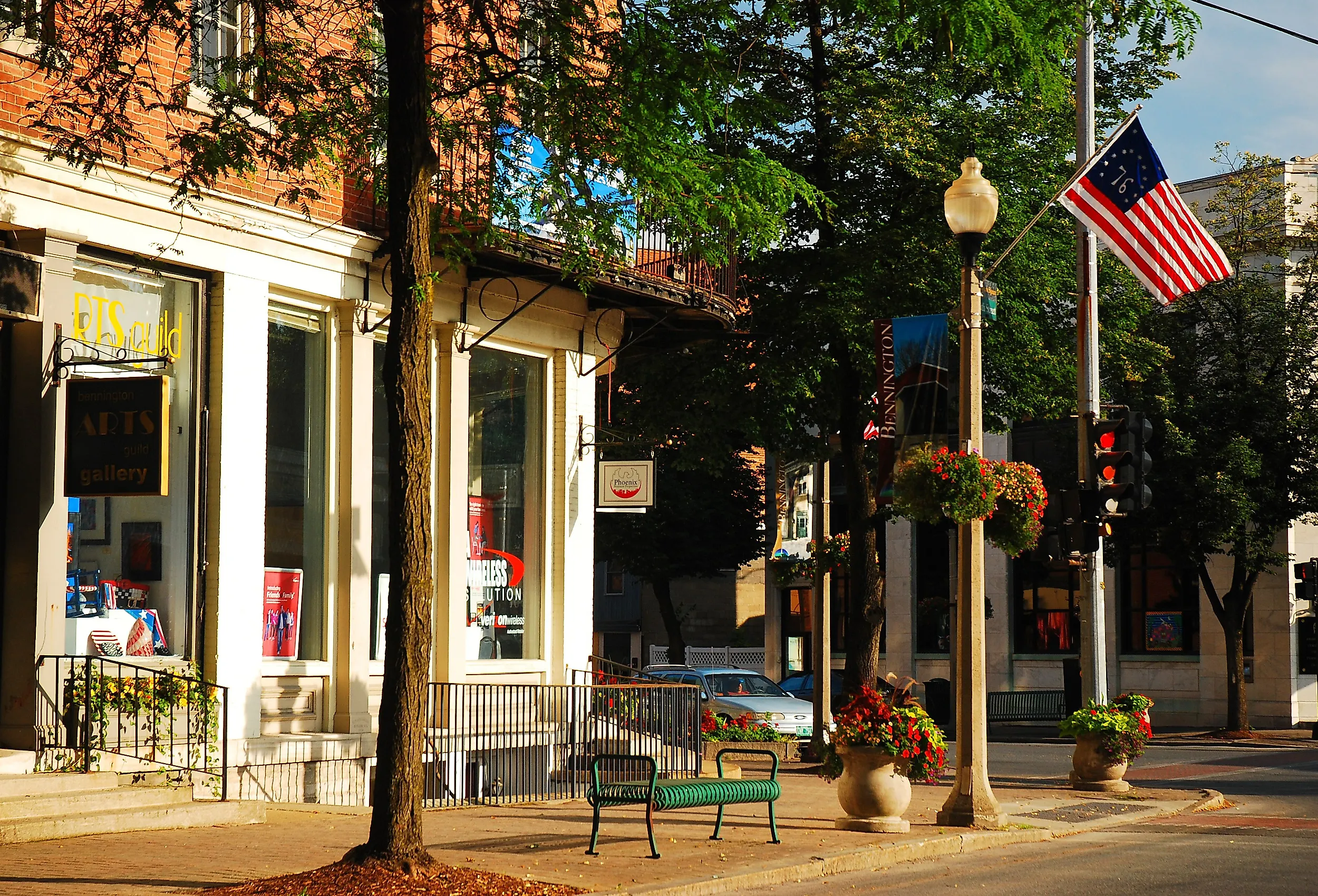
One of two seats of the same-named County (along with Manchester), Bennington was chartered in the 1740s, and some 15,000 residents call the town home today. It holds several landmarks tied to the 18th and 19th centuries. Among those listed on the National Register of Historic Places are the Henry Covered Bridge (1835), the Henry House (1769), and the Park-McCullough Historic Governor's Mansion (1864). Then there is Vermont’s tallest structure, the 306-foot-tall Bennington Battle Monument (1891), commemorating the 1777 battle during the American Revolution.
Bennington also rewards time spent outdoors, where summers are warm and winters are cool. The nearby Lake Shaftsbury State Park offers boating, swimming, fishing, and camping, while Willow Park covers over 100 acres of biking and picnic sites amid green space. Several community events run through the year, including the annual Garlic Town, USA Festival held over Labor Day weekend. The event brings over 20 food trucks, beer and cocktail bars, live music, and many garlic varieties.
St. Johnsbury

Seat of Caledonia County and located along the Passumpsic River (a Connecticut River tributary), the town of St. Johnsbury is a quiet slice of Vermont. Just over 7,000 call the community home today. Founded in the 18th century, it offers a mix of historic character and natural beauty. With warm summers and cool winters, the seasons pass comfortably in St. Johnsbury. Fishing, paddling, hiking, and biking remain popular along the river, while the Railroad Street Historic District and other landmarks trace the region’s past.
Other attractions of note include the St. Johnsbury Athenaeum (1871), which serves as an art gallery and library, and the Fairbanks Museum and Planetarium, which highlights natural and cultural history. Add in local businesses like the 98 Mill restaurant and the St. Johnsbury Country Store, and it is easy to see why this Vermont community draws visitors back.
Stowe

Stowe, known as the “Ski Capital of the East”, lies within the Green Mountains in northern Vermont. Established in the 1760s, this historic town is home to just over 5,000 today. Cooler temperatures, particularly in summer, make for a welcome change of pace. The five-mile Stowe Recreation Path is good for biking, hiking, and snowshoeing, with the chance of a wildlife sighting along the way. Then there is the state’s highest peak, Mount Mansfield, at an elevation of some 4,400 feet. For the alpine sports enthusiast, a visit to Stowe would not be complete without the slopes of the Stowe Mountain Resort.
Historic intrigue also awaits in Stowe, where several 18th- and 19th-century buildings stand. Among the most beloved of the town’s attractions is the Von Trapp Family Lodge & Resort, a chalet with a European flavor that celebrates mountain life and the Von Trapp family, whose story was recounted in the musical and film “The Sound of Music.”
Montpelier

The capital city of Vermont, Montpelier, is the least populated capital city in America, with just over 8,000 inhabitants. With roots dating back to the 1780s, Montpelier carries a strong historic character framed by the surrounding hills. Explore some of the many historic landmarks here, including the Vermont State House (1833) and the Christ Episcopal Church (1840), which convey the look of Montpelier in the 19th century. The Vermont State House stands out with its Greek Revival architecture and newer rooms designed in the “Aesthetic Movement” style.
The natural setting of the town can suit all ages. With cool winters and hot summers, the outdoors is easy to enjoy in Montpelier. Spend afternoons at Hubbard Park, where biking, hiking, picnicking, and camping spread across some 200 acres, or relax along the Winooski River. The park even holds a 54-foot-tall observation tower with wide views over the green hills.
Warren

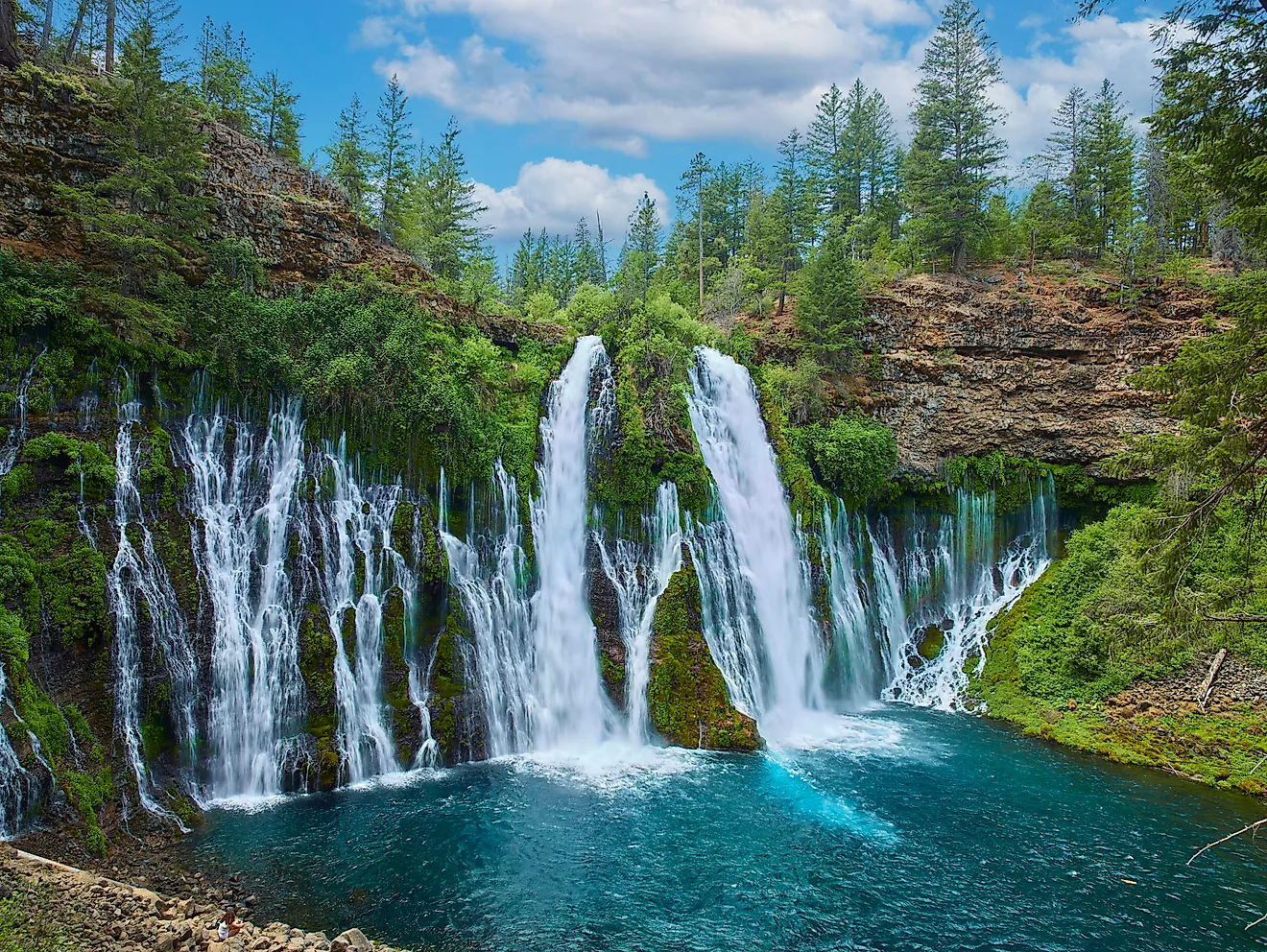
Just 40 minutes from Montpelier, the town of Warren lies within the Green Mountains and the Mad River Valley, with a history dating back to the 1780s. Nearly 2,000 call it home today, and guests after a quiet getaway with outdoor fun will find it here. Take to the slopes of the Sugarbush Resort in winter, where more than 50 miles of trails suit amateur and expert skiers and snowboarders alike. In summer, the photogenic Warren Falls sits at the end of a short trail near town, with swimming holes at the base of the falls. Nearby, a portion of the Long Trail (which runs about 272 miles) offers excellent hiking and biking with campsites along the way.
There is also the historic Warren Covered Bridge (1880), which spans the Mad River and is well worth a visit, as well as the Warren Village Historic District. Here, a sense of 19th-century life is evident, and buildings like the Warren Church show a range of architectural styles, with Italianate and Greek Revival side by side.
Burke

Burke was chartered in the 1780s and named for the English philosopher and politician Edmund Burke, and today around 1,600 residents call it home. A comfortable place to explore year-round, Burke is a community with a warm sense of welcome. Spend time at Burke Mountain, with a peak of some 3,200 feet, and take to the slopes of the Burke Mountain Ski Area. In summer, the biking and hiking trails on the site open up wide views over the surrounding hills. The ski area has over 50 trails and a skiable area of 260 acres, making it a solid day out in Vermont’s mountains.
Back in town proper, annual events bring people together, including the June Strawberry Festival and the Fall Festival. The Strawberry Festival features live music, food trucks, homemade strawberry shortcake, and family activities, while the Fall Festival brings a parade, horse-drawn wagon rides, live entertainment, and a craft fair with more than 75 vendors.
Windsor

The Vermont Constitution was adopted in Windsor in 1777, an event that earned the town the moniker “Birthplace of Vermont”. Now home to nearly 4,000 inhabitants, historic Windsor remains a clear link to the days of the colonial United States, with relaxing natural surroundings close at hand. Explore such landmarks as the Cornish-Windsor Covered Bridge (1866) and the Old Constitution House (1777), both named on the National Register of Historic Places, while green spaces nearby are ideal for an unhurried afternoon.
Go biking, hiking, camping, and picnicking at Paradise Park, while the nearby Lake Runnemede is a good spot for paddling, fishing, and wildlife watching. Finally, end the day at a local establishment like the Harpoon Brewery Taproom and Beer Garden, known for its outdoor seating, facility tours, and Harpoon beers.
Eight Towns That Keep Vermont's Past Close
Each of these towns holds onto a piece of Vermont that the rest of the country has mostly let go. Windsor and Bennington carry the weight of the colonial and Revolutionary era in their streets and monuments. Stowe and Burke build their identity around the high peaks at their backs. Montpelier governs the state from a downtown small enough to walk in an afternoon. The covered bridges, the historic districts, and the mountain trails are not preserved for tourists so much as still in daily use, which is what makes these towns worth knowing for anyone who already calls Vermont home.