The Most Charming River Towns In Virginia
Steamboats once churned up the Rappahannock to haul tobacco and oysters off Virginia's tidewater wharves. Those landings are now quiet waterfront towns. Tappahannock keeps its steamboat-era artifacts inside the Essex County museum. Urbanna still tells the story of the tobacco it once shipped across the Atlantic. Farther west the Appomattox carries Farmville's High Bridge over a forested valley. Each of these towns grew up facing its river and never turned away.
Tappahannock

Tappahannock is located on Virginia's Middle Peninsula by the Rappahannock River. Rappahannock River Park provides direct access to the water for recreation and features several benches and open grassy areas for sitting and picnicking along the riverbank. If you're interested in history, the Essex County Museum and Historical Society showcases the area's cultural and natural heritage, as well as artifacts from the steamboat era.
For dining, 1710 Tavern is one of Virginia's oldest taverns and is only steps away from the river. Its original architecture and artifacts from Chesapeake Bay's history can give patrons a historic dining experience, and the she-crab soup is said to be the best in the area.
Urbanna

Urbanna is further downstream from Tappahannock, closer to Chesapeake Bay. Waterman's Park is a secluded pocket park in a residential area. It features several benches that offer unobstructed views of the Rappahannock River. The Urbanna Museum and Visitors Center is housed in a 1766 mercantile building that was affiliated with the tobacco trade and used for shipping tobacco across the Atlantic to England. Exhibits cover how the tobacco trade aided Virginia's economy, Urbanna's oyster industry, and models of historical boats.
Urbanna Pearl Oyster Tavern is a classic oyster bar, serving fresh-shucked oysters, various roasted oyster dishes, and exclusive Virginia-produced beer and wine.
Irvington

Irvington is located on Virginia's Northern Neck peninsula along Carter's Creek, a tributary of the Rappahannock River. The Steamboat Era Museum houses a collection of artifacts, dioramas, models, artwork, and photographs from Virginia's tidewater steamboat era. This includes the largest surviving artifact of the steamboat era, a restored pilothouse from the steamboat "Potomac".
The Tides Inn is a historic waterfront resort that opened in 1947, with on-site dining where dishes are influenced by seafood sourced from the surrounding waters. For a rainy day or indoor stroll, check out Objects Art and More, a fine art gallery showcasing nautical and maritime-themed paintings, sculptures, art glass, wood, and pottery from over 200 artists worldwide.
Deltaville

Deltaville sits near the mouth of the Rappahannock River, where it empties into Chesapeake Bay. Locals love the 36-acre Holly Point Nature Park, laced with winding wilderness and garden walking trails that pass through a wildflower meadow, an azalea garden, and a camellia garden. There are picnic tables and pavilions placed throughout, should there be an impromptu picnic.
The Deltaville Maritime Museum, located within the park, features exhibits on the workboats, methods, and history of Chesapeake Bay's working watermen. A trail leads down to the pier, where several restored workboats are docked. After your tour, head to Deltaville Tap and Raw Bar to sip craft beer and sample local seafood while taking in views of Jackson Creek, just off the Chesapeake Bay.
Occoquan

Occoquan is about 20 miles south of Washington, DC, on the Occoquan River. River Mill Park occupies one acre along the Occoquan River, its open space traversed by a single paved walking trail. The Mill House Museum is near the park and houses a collection dating back centuries. There is an iron furnace and other artifacts from the old grist and cotton mills, plus exhibits on the impacts of the Civil War on the town and a large collection of photographs.
If you want to dine while overlooking the river and the dock, go to Madigan's Waterfront Restaurant, which includes a partially covered outside deck, a topside deck, and a tiki bar.
Fredericksburg

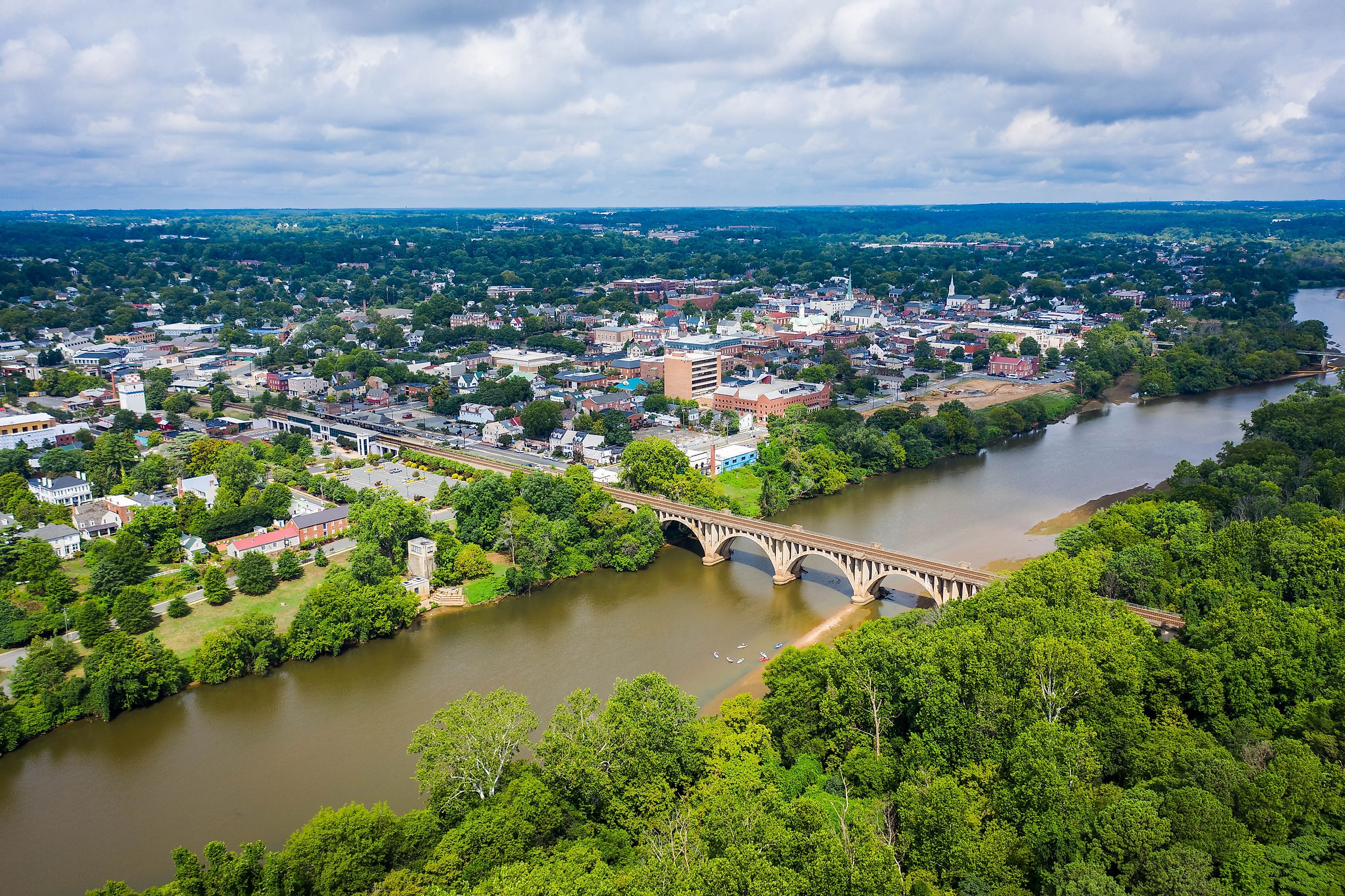
Fredericksburg is south of Occoquan, back on the Rappahannock River, which flows through downtown. Old Mill Park stretches along the river, allowing people to recreate on and off the river with a canoe and kayak boat launch, open fields, picnic areas, and a playground. The Rappahannock River Heritage Trail is a 1.5-mile paved multi-use trail that runs from Old Mill Park to Mary Washington Boulevard.
The Georgian-style Chatham Manor, dating back to 1771, is across the river from Fredericksburg on the banks of the river. Five of the manor's ten rooms contain exhibits that are open to the public, along with the landscaped gardens and grounds.
Farmville

The Appomattox River flows right through the Virginia town of Farmville, linking the historic downtown with its waterfront. Take in the river with waterfront dining at Charley's Waterfront Café, found inside a historic tobacco warehouse. Nearby, Wilck's Lake Park has a two-mile multi-use trail that encircles the lake of the same name. Much of the trail is shaded by trees and passes through river habitats where various wildlife species are often observed.
For a special excursion, head to High Bridge Trail State Park, which is home to the longest recreational bridge in Virginia. The bridge is over 2,400 feet long and 125 feet high above the Appomattox River.
Down By the River in Virginia
All of these towns still continue to be influenced by the rivers that helped shape them. Urbanna still commemorates its overseas tobacco trade, which was crucial to the state's economy; Irvington continues to keep the steamboat era alive, and Fredericksburg is always bringing people together to recreate, on and off the river, at places like Old Mill Park. Together, these Virginia towns continue to keep the rivers on which they were founded central to community life.