The 11 Can't-Miss Towns In The Great Lakes
Five inland seas ring the continent’s middle, the mighty Great Lakes, and they behave like oceans with schedules. Shipping lanes thread past downtown sidewalks, and the same freshwater that fills these basins also fills taps from Michigan to Ontario.
In Alpena, the lake turns transparent over a shipwreck-rich bay, and a marine sanctuary headquarters sits steps from the marina. In Niagara-on-the-Lake, orchards and vineyards press toward a river mouth where sailboats aim for Lake Ontario and cafés keep pace with theatre crowds. Between those two points sit canal towns, harbor towns, and ridge towns where daily life follows bridges, piers, and promenades. These eleven towns deliver the Great Lakes like no others; they are quintessential Great Lakes communities, and here's why you should visit them!
Alpena, Michigan

Alpena sits on the edge of Thunder Bay, a stretch of Lake Huron known for its concentration of historic shipwrecks, some still visible beneath the water’s surface on clear days. The Thunder Bay National Marine Sanctuary headquarters anchors downtown, where a full-size replica schooner rises from the Great Lakes Maritime Heritage Center’s floor and glass-bottom boat tours leave from the nearby marina. Inland, the town opens into quiet neighborhoods, pine groves, and fossil-rich rock formations tucked around the lesser-known Rockport Recreation Area, where retirees often hike, hunt Petoskey stones, or fish from the limestone shore.
Four blocks from the harbor, Cabin Creek Coffee serves as a year-round meeting point with consistent traffic from locals, especially during the city’s colder months. Besser Museum curates a mix of regional art and science exhibits and features a planetarium open to the public. The Bay View Park shoreline, dotted with benches and shaded by old cottonwoods, draws morning walkers and evening readers. Just north of the city, the paved multi-use Alpena Bi-Path winds past the wildlife sanctuary, hospital, and community college—linking many of the places new residents rely on.
Collingwood, Ontario

Collingwood faces Georgian Bay with a working harbor still used by tugboats and fishermen. The shoreline trail begins at Millennium Park where native grasses and wildflowers border a concrete pier that stays busy through every season—dog walkers, paddleboarders, seniors reading in folding chairs. The bay rarely sits still. Wind patterns pull whitecaps into the harbor and push spray up against the granite shoreline near the Collingwood Terminals. From most parts of town, the shape of Blue Mountain stays visible in the western distance.
Downtown centers around Hurontario Street where Gibson & Company serves espresso and wine in a split-level room lined with books and worn wood. The Collingwood Museum, housed in the town’s former train station, shows photographs of ice-harvesting crews and dockworkers inside a space the size of a chapel. At the base of Blue Mountain, Scandinave Spa Blue Mountain runs heated outdoor baths in silence-only zones with forest views. The town’s newest park, Harbourview, includes a boardwalk across cranberry marsh, a covered bridge, and benches set back from the trail. Most mornings, people walk it in pairs or alone.
Niagara-on-the-Lake, Ontario

Niagara-on-the-Lake runs along the Niagara River’s final stretch before it enters Lake Ontario, where the water flattens and orchard rows press close to the shoreline. Bike paths loop through farms and estates, but many locals walk the river trail behind Queen’s Royal Park, where sailboats move toward the lake and benches face Old Fort Niagara across the water.
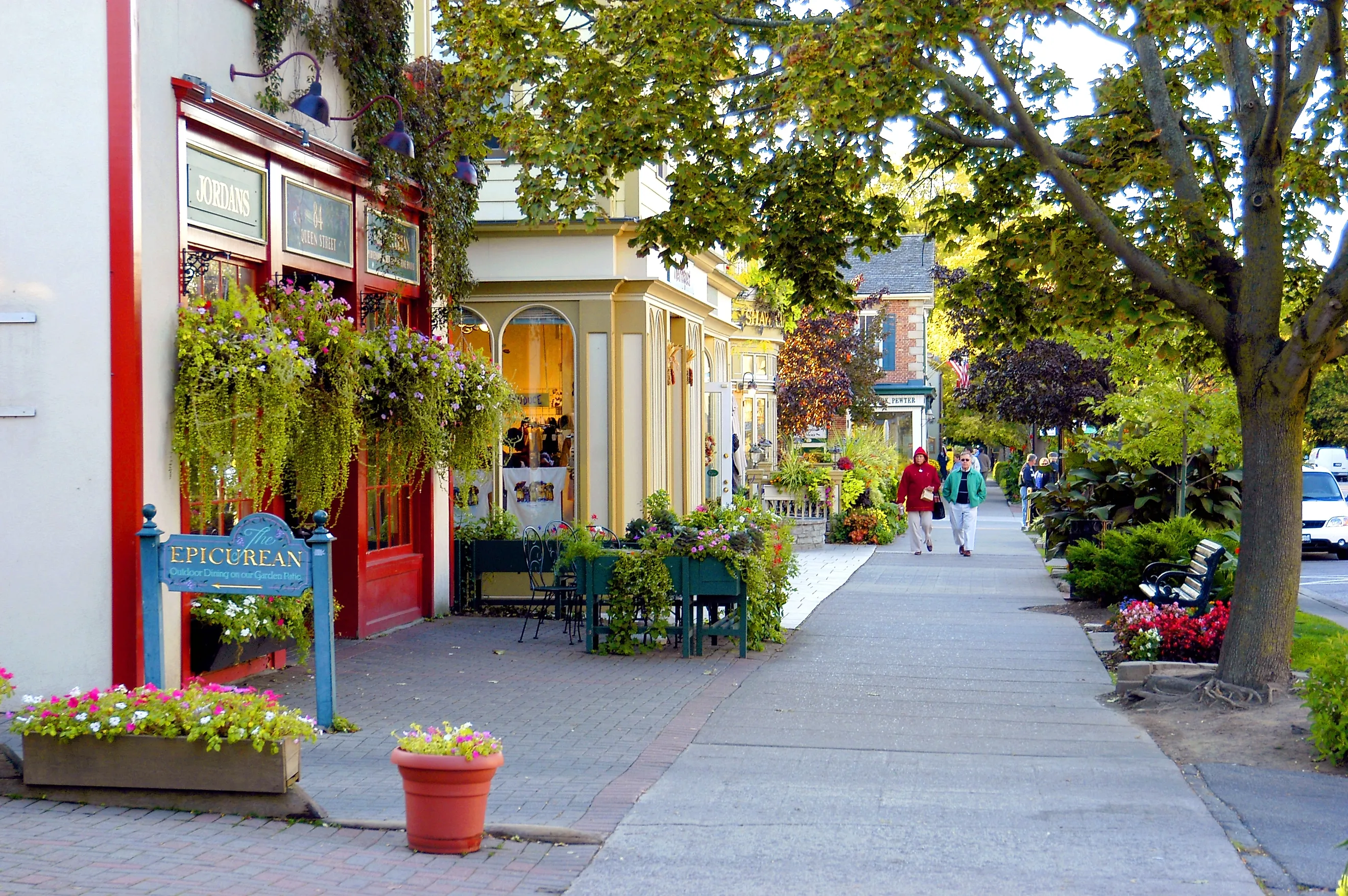
Shaw Café serves lunch under an ivy-covered balcony beside a steady flow of foot traffic along Queen Street. Balzac’s Coffee Roasters stays open later than most places and sits in the same historic core as Shaw Festival’s theatres, pulling in early ticket holders for an espresso before performances. The Apothecary Museum displays 19th-century glass vials and handwritten labels in a preserved storefront across from Victoria Street’s residential blocks. Outside of town, Stratus Vineyards maintains quiet grounds and a controlled tasting room open all year. Retirees settle here for the walkability, lake access, and small-format cultural life. Garden clubs, local theater donors, and wine workers all use the same post office and grocers.
Houghton, Michigan

Houghton is shaped by water and elevation. The town rises sharply from the Portage Canal, with homes tucked into hillsides above a working harbor used by research vessels, icebreakers, and private boats. Snowfall totals often exceed 200 inches, drawing retirees who prefer solitude, endurance, and a full shift of seasons. Sidewalks run along ridge streets with clear views of the Portage Lake Lift Bridge and Hancock’s steeples across the canal.
Across the canal in Hancock, 5th & Elm Coffeehouse now occupies the historic Orpheum Theater on Quincy Street and draws locals from both towns. A waterfront trail system on the Houghton side links the library, marina, and Dee Stadium along the canal. Michigan Tech’s Rozsa Center for the Performing Arts programs classical concerts and film screenings through winter, with free campus shuttles open to public riders. The A.E. Seaman Mineral Museum houses a collection of native copper, fluorescent rock, and Keweenaw geodes, with displays that rotate year-round. Grocery stores, pharmacies, the hospital, and the canal all sit within a three-mile loop.
Vermilion, Ohio

Vermilion is built where a river curves into Lake Erie, forming a natural harbor lined with boathouses, drawbridges, and marinas that stay active from spring through late fall. The lake wind carries into the neighborhoods just inland, where pines and maple trees shield porches and narrow streets. The breakwall at Main Street Beach angles toward the lighthouse, and locals gather there to watch the lake swell or calm.
Chez François operates along the river in a shingled building with dock access and a prix fixe dinner that draws repeat customers year-round. The adjacent Wine Room opens earlier in the day and keeps a shorter menu with white tablecloths and quiet seating. Ritter Public Library anchors the civic center with large windows facing Liberty Avenue and meeting rooms in regular use. The Vermilion River Reservation—just south of town—offers paved walking trails, fishing spots, and wooded picnic areas used by residents through every season. Brewed Awakening, a café on Liberty, serves rotating soups and espresso and fills up early with familiar faces.
Sault Ste. Marie, Michigan

Freighters pass through downtown Sault Ste. Marie every day of the year. Some stretch over a thousand feet, clearing the Soo Locks by inches, lifting and lowering between Lake Superior and the lower Great Lakes. The city’s grid runs parallel to the St. Marys River, where paved paths extend from the Cloverland hydro plant to the fishing docks near Rotary Park.
Along the riverfront, restaurants in repurposed depots and storefronts serve whitefish sandwiches and local beer to diners watching freighters move through the Soo Locks. The Museum Ship Valley Camp holds a full cargo vessel on land, open for self-guided tours above and below deck. Cup of the Day, a block inland from the water, roasts beans on-site and runs a small lunch counter with daily soups. Locals meet at Penny’s Kitchen early for baked oatmeal or corned beef hash before walking the riverfront or heading to Lake Superior State University’s arts center, where recitals and film nights are open to the public. Residents in Sault Ste. Marie live in rhythm with the locks, the river, and each other.
Mackinac Island, Michigan

Mackinac Island runs without motor traffic. Horses move freight, carry commuters, and pull taxi carts from docks to homes along Market Street and further inland toward Mission Hill. Lake Huron stays visible from nearly every side of the island, especially along the perimeter road where walkers and cyclists loop the full eight miles.
Doud’s Market keeps narrow aisles stocked year-round, including housemade deli sandwiches for shoreline picnics. Watercolor Café opens seasonally at the old boathouse and shares space with an artist workshop, with tables facing the harbor. The island’s medical center, library, post office, and school sit within a few blocks of each other. Fort Holmes stands at the island’s highest point, reached by a path that passes birch groves and overlooks the mainland. Trillium blooms in spring. Mission Point Resort’s theater screens films through the summer and hosts local performers into the fall. Retirees on Mackinac Island adapt to the ferry, the snow, and the silence after sunset.
Petoskey, Michigan

Petoskey sits on a curve of Little Traverse Bay where the lake turns over polished stones with each wave. The rocks collect along Sunset Park and Magnus City Beach, where walkers scan for the ridged Petoskey stone, a fossilized coral found only in this region.
Julienne Tomatoes opens at seven and serves egg wraps and baked goods before the downtown fills. McLean & Eakin Booksellers holds events most evenings and sits across from the Crooked Tree Arts Center, where locals gather for gallery shows and chamber music. Bear River Valley Recreation Area runs through a wooded gorge one block from Lake Street. Paved trails follow the water and loop through the open section near the waterfall. North Perk Coffee stays open late for chess players and writing groups. The hospital, library, and senior center sit inside a two-mile grid. Retirees in Petoskey rely on the same few streets for groceries, parks, and daily contact.
Traverse City, Michigan

Traverse City is bordered by cherry orchards, vineyards, and cold bays that change color by the hour. Grand Traverse Bay divides into east and west arms, and locals refer to their orientation by which shore they live on.
Mundos 305 on Front Street roasts beans in-house and serves cortados alongside pastry wrapped in parchment. The Village at Grand Traverse Commons, a repurposed asylum complex, houses restaurants, galleries, and walking trails. Red Spire Brunch House sits in the basement of one of the old brick wards. Clinch Park anchors the waterfront with a wide beach, shaded picnic spots, and kayak access. Interlochen Center for the Arts is twenty minutes south, where chamber groups and folk acts perform all year. Retirees tend to live close to downtown, where sidewalks stay clear and grocery stores, clinics, and post offices sit on a loop.
Holland, Michigan

Holland uses a heated sidewalk system through downtown that melts snow before it settles. Warm water circulates beneath brickwork from mid-fall through early spring. The downtown district faces Lake Macatawa, with walking paths that follow the channel out to Holland State Park.
Deboer Bakkerij opens by six and serves split pea soup, pastries, and hash from a corner booth near Washington Avenue. Lemonjello’s Coffee stays busy through the afternoon and sits across from Centennial Park, where people play bocce or walk laps around the tulip beds. Holland Museum holds a collection of hand-carved furniture and printed maps inside a compact downtown gallery. Big Red, the lighthouse at the mouth of the channel, draws photographers and readers through every season. The city’s main grocery, health care, and civic offices all fall within a five-minute drive from the lake.
Grand Haven, Michigan

Grand Haven draws people to the same stretch of concrete every evening. The south pier extends past the lighthouse into open water, where lake fog and freighter horns shape the sound of the shoreline. From May through early fall, locals watch the Grand Haven Musical Fountain from benches across the channel. The show begins after sunset. The light patterns change with the wind. Lake Michigan stays cold through August and visible from most of the city grid.
Morning Star Café opens early on Washington Avenue with egg strata, house granola, and grapefruit juice. The Grand Haven Area Arts Council runs events out of the Armory building near the riverfront. In the same block, Aldea Coffee roasts in small batches and shares space with a bookstore and print shop. The boardwalk runs from Chinook Pier to the beach, passing marinas, ice cream windows, and benches placed near the water’s edge. Tri-Cities Historical Museum keeps a collection of ship models, uniforms, and regional artifacts inside the old Story & Clark piano building. Retirees walk the same loops daily.