Georgia's 9 Unsung Small Towns
Georgia’s small towns are full of history and character, offering travelers a chance to explore beyond the state’s well-known beach and mountain destinations. From the gold-rich streets of Dahlonega and the Appalachian scenery of Blue Ridge to the coastal marshes of Darien and the rose-lined avenues of Thomasville, each town tells its own story.
These communities thrive around courthouse squares, riverfronts, rail lines, and historic downtowns, reflecting coastal industry, artistic expression, Appalachian culture, and Southern elegance. Whether you’re touring Howard Finster’s Paradise Garden in Summerville, paddling the Chattooga River, or visiting Fort King George in Darien, these small towns invite travelers to slow down, connect with local culture, and discover the authentic heart of Georgia one walkable street at a time.
Dahlonega

Dahlonega blends Appalachian mountain culture with deep Gold Rush history, all centered around a lively, walkable square. The historic courthouse anchors downtown and now houses the Dahlonega Gold Museum, telling the story of America’s first major gold rush. Surrounding streets are filled with Southern restaurants and tasting rooms tied to the North Georgia wine scene, with nearby options like Accent Cellars in downtown Dahlonega or scenic vineyards such as Wolf Mountain Vineyards and Three Sisters Vineyards just a short drive away.
Nearby outdoor access is another draw, with hikers and cyclists heading to the Appalachian Approach Trail at Amicalola Falls State Park, roughly 15 miles south of Dahlonega. Seasonal festivals like Gold Rush Days bring live music, crafts, and food stalls to the square, reinforcing Dahlonega’s role as both a mountain gateway and a community-focused destination with strong regional character. Stay overnight at the Mountain Laurel Creek Inn or try the Dahlonega Square Hotel.
Rome

Rome, defined by its dramatic geography and layered history, is more populous than the other towns on this list. It's a beautiful place, with multiple rivers converging beneath forested hills. Downtown features a strong collection of historic buildings, independent boutiques, and local eateries clustered along Broad Street, including longtime local institutions like Harvest Moon Café and Swift & Finch Coffee. The Berry College campus, one of the most visually striking in the country, is open to visitors and includes walking paths, stone architecture, and scenic overlooks across its expansive grounds.
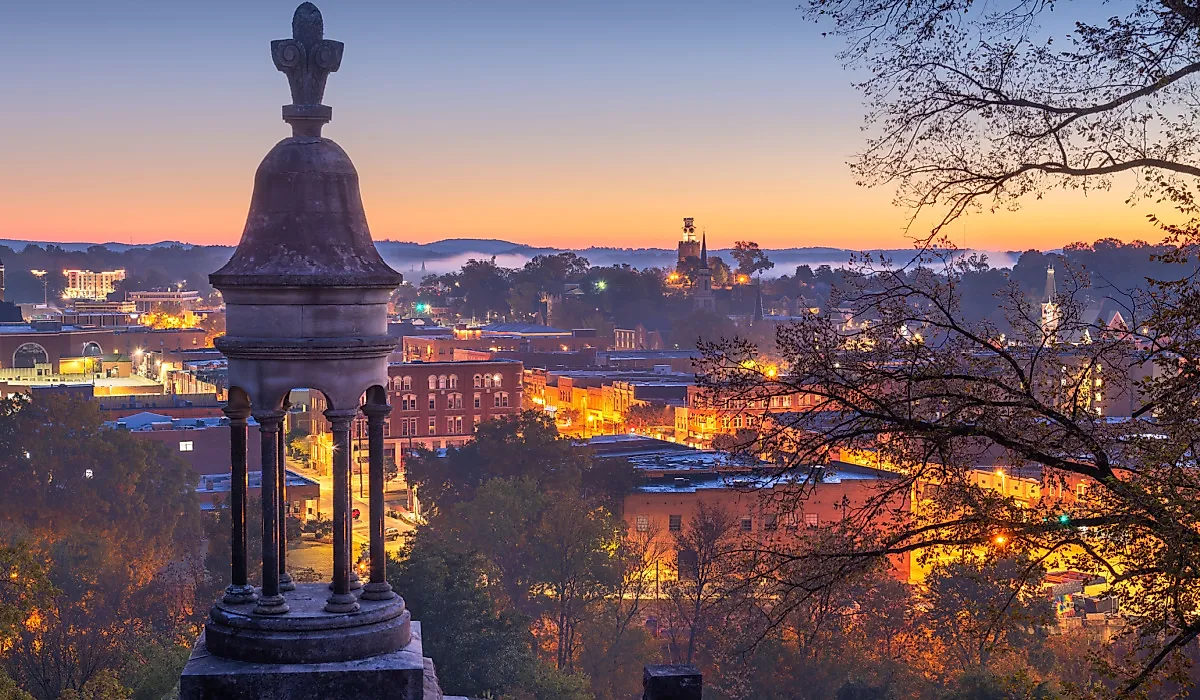
History lovers explore the Chieftains Museum at Major Ridge Home or take in views from Myrtle Hill Cemetery and the iconic Clock Tower perched above downtown. Riverwalk paths and nearby trails tie Rome’s identity closely to both nature and heritage, creating a setting where outdoor access and historic character intersect naturally. For an overnight stay in Rome, Georgia, the Hilton Garden Inn Rome Downtown offers comfortable rooms just steps from Broad Street, making it a convenient base for exploring the city’s historic sites, riverwalks, and local dining.
Brunswick

Brunswick carries a salt-air charm shaped by shrimping, shipbuilding, and its role as a working port. Its historic downtown is compact and atmospheric, with brick storefronts and local seafood restaurants like Indigo Coastal Shanty and Tipsy McSway’s, both longtime fixtures along Newcastle Street that reflect the town’s casual, coastal character. Visitors stroll the waterfront to watch shrimp boats return at sunset or explore the Old Town Historic District, where oak-lined streets and preserved homes reflect the town’s long coastal history.
Brunswick also serves as a strategic coastal hub, offering direct access to the causeways leading to St. Simons Island and Jekyll Island, making it an ideal base for exploring Georgia’s barrier islands while staying rooted on the mainland. The Ritz Theatre anchors the arts scene with performances and community events, while surrounding marshlands and tidal creeks reinforce Brunswick’s deep connection to Georgia’s coast. Visitors can settle into the Econo Lodge Historic District, a cozy and practical option located near downtown, providing easy access to the waterfront, local seafood restaurants, and the town’s historic streets.
LaGrange

LaGrange surprises visitors with its blend of industrial roots and cultural ambition. One of the town’s standout attractions is Hills & Dales Estate, a meticulously preserved Italianate garden and home that reflects early 20th-century Southern elegance. Art lovers visit the LaGrange Art Museum as well as the nearby Legacy Museum on Main, which interprets the region’s history through a contemporary lens.
The Thread walking trail follows former mill corridors through town, highlighting LaGrange’s transition from textile production toward a more creative, community-oriented future without losing its historic backbone. The LaGrange Inn & Suites offers a comfortable, centrally located stay, placing guests within walking distance of downtown shops, restaurants, and cultural attractions.
Blue Ridge

Blue Ridge is a mountain town with a relaxed, outdoors-first identity built around an inviting downtown strip. The historic Blue Ridge Scenic Railway runs directly through town, offering seasonal rides along the Toccoa River. Just outside town, visitors explore nearby waterfalls and trail systems, including access points to the Benton MacKaye Trail, which winds through North Georgia’s backcountry.
Apple orchards and local cider houses define the fall season, while cabins and river access keep the town active year-round. Blue Ridge feels intentionally small yet well-developed, balancing tourism with Appalachian character. The Blue Ridge Inn provides a welcoming overnight option just minutes from the downtown shops, the historic scenic railway, and nearby hiking trails, making it an ideal base for exploring the town and surrounding mountains.
Americus

Located in southwest Georgia between Columbus and Albany, Americus sits amid rolling farmland and historic rail corridors that have long shaped its role as a regional hub. The Rylander Theatre is located downtown and is a restored 1920s performance venue that still hosts live shows, community events, and local arts programming. The Windsor Hotel, dating back to 1892, offers a tangible sense of old Georgia hospitality, with elegant rooms and a historic atmosphere just steps from the square.
Nearby, the Habitat for Humanity Global Village provides a unique educational experience. It showcases how the organization has built affordable housing projects worldwide while offering volunteers and visitors a hands-on look at its mission. A trip here reinforces Americus’ identity as a town shaped by service, civic engagement, and community impact.
Thomasville

Thomasville’s identity is rooted in elegance, quail-hunting culture, and a refined downtown atmosphere. The town’s winter resort history comes alive at Pebble Hill Plantation, where visitors can tour the grand home, stroll formal gardens, and explore the former sporting grounds that once hosted hunting parties and social gatherings. Thomasville is also known for its rose gardens and the annual Rose Show & Festival, which fills downtown with color, music, and artisan booths each spring.
Cultural depth extends beyond the square, with the Thomasville Center for the Arts hosting rotating exhibitions, the Cumberland Museum exploring local history, and nearby working plantations such as Oak Hill Plantation and Burt-Stark Plantation offering insight into regional agriculture and conservation practices. For an overnight stay, the Thomasville Bed and Breakfast provides a historic, welcoming retreat just steps from downtown, making it an ideal base for exploring gardens, galleries, and southern elegance.
Summerville

Summerville is a quiet northwest Georgia town with a strong sense of place and an unexpectedly rich architectural legacy. The town’s defining feature is Howard Finster’s Paradise Garden, a sprawling folk‑art environment created by the visionary outsider artist, with towering mosaics and vibrant installations unlike anything else in the state. Outdoor access is another highlight. Visitors can explore the Chattooga River National Wild and Scenic River, a storied waterway offering world‑class paddling and rugged hiking along corridors of free‑flowing river and wooded gorge scenery. Nearby James H. “Sloppy” Floyd State Park provides hiking, fishing, picnicking, and kayak access amid quiet forested grounds.
Trails like the Chattooga River Trail and connections toward the historic Bartram Trail offer deeper wilderness walks for more adventurous hikers. Summerville’s small downtown also boasts local spots like Jefferson’s Restaurant and Thatcher’s BBQ & Grill where travelers can refuel after a day outdoors. For an overnight stay, Coach Inn offers comfortable, convenient lodging right in town, making it an ideal base for both artistic discovery at Paradise Garden and outdoor excursions along the river and state park trails.
Darien

Darien is one of Georgia’s oldest coastal towns, shaped by maritime history and unspoiled surroundings. Its small downtown sits along the Darien River, where shrimp boats, marsh grasses, and historic markers define the landscape. Visitors can explore Fort King George Historic Site, the oldest English fort in Georgia, or stroll the waterfront to experience the town’s working-coastal rhythm.
Darien’s proximity to Sapelo Island and Blackbeard Island adds ecological depth, offering opportunities to explore barrier-island beaches, tidal creeks, and maritime forests, with birdwatching, kayaking, and guided tours highlighting the area’s wildlife and Gullah-Geechee heritage. Local restaurants like Skippers Fish Camp serve fresh seafood, while Darien Waterfront Inn provides comfortable, waterfront accommodations just steps from downtown, making it an ideal base for experiencing the history, natural beauty, and coastal culture of Georgia’s Lowcountry.
What sets these Georgia towns apart is not just their scenery or landmarks, but the way history, culture, and daily life still intersect along their main streets. In each, you’ll find places designed to be experienced on foot — courthouse squares alive with local shops, riverfront paths shaped by working industries, and downtowns where festivals, food, and conversation still matter. These towns don’t rely on spectacle; instead, they invite connection, curiosity, and a sense of discovery. For travelers seeking destinations that feel grounded and authentic, Georgia’s unsung small towns offer something increasingly rare: places that know