9 Unforgettable Small Towns to Visit in Kentucky
The rolling hills of Kentucky unfold in shades of blue-green that few other states can match. Drive the backroads, and you’ll pass thoroughbreds grazing open pastures, white-lined fences stretching toward the horizon, and bourbon distilleries aging their spirits in century-old warehouses.
Across this landscape, small towns have carved out identities all their own. Some are shaped by freight trains rumbling through downtown streets. Others are defined by caves opening beneath Main Street or by artisans practicing trades handed down through generations. These communities do not simply preserve history. They live within it.
Kentucky’s smaller towns offer experiences rooted in place and tradition. From the world’s longest cave system to America’s largest restored Shaker community, here are nine small towns that deserve a place on your travel list.
Horse Cave

Horse Cave is built directly on top of a living, flowing cave system, something few towns in the country experience in quite the same way. Beneath its streets, sidewalks, and historic buildings runs Hidden River Cave, an underground river and cavern system that once powered local industry and shaped the town’s development.

For generations, Hidden River Cave served as Horse Cave’s water source and economic engine. Mills and businesses relied on the steady underground flow, tying daily life closely to the cave below. Today, visitors can descend straight from downtown into the cave through the American Cave Museum & Hidden River Cave. Guided tours reveal large chambers, rushing water, and a rare look at how geology and community life intersect here.
Above ground, Horse Cave’s walkable historic district reflects its late-19th- and early-20th-century roots. Restored storefronts and civic buildings give the town a grounded, lived-in feel. Just off I-65, Farmwalds Amish Restaurant is known for made-from-scratch donuts and hearty meals.
Harrodsburg

Harrodsburg is home to Shaker Village of Pleasant Hill, America’s largest restored Shaker community. The site includes 34 surviving buildings spread across 3,000 acres. Founded in 1805, it was the third-largest Shaker settlement in the United States at its peak, with nearly 500 members. Today, the village operates a working farm using sustainable practices, and visitors can stay overnight in restored buildings furnished with reproduction Shaker pieces.

Downtown Harrodsburg is recognized as the oldest permanent English settlement west of the Alleghenies. Old Fort Harrod State Park features a full-scale replica of the 1774 fort, along with pioneer cabins and craftspeople demonstrating period trades. The park also shelters the Lincoln Marriage Temple, the log cabin where Abraham Lincoln’s parents wed in 1806.
Stop at Beaumont Inn, a James Beard Award winner known for its historic setting and longstanding Kentucky Southern menu. After a day of exploring, visitors can head to Shaker Landing along the Kentucky River Palisades, where limestone cliffs rise nearly 250 feet above the water; the Dixie Belle is retired from cruises and now serves as an on-site venue.
Bardstown

Bardstown calls itself the Bourbon Capital of the World. With a history dating back over 200 years, the title reflects a long-standing production history. The community is a longtime bourbon-producing town, where the spirit has aged in warehouses throughout the region for generations. Each September, the Kentucky Bourbon Festival takes over downtown, drawing visitors for tastings, barrel races, and live music celebrating America’s only native spirit.

Distillery tours run year-round, with several locations within walking distance of the historic downtown square. The Oscar Getz Museum of Whiskey History houses more than 1,500 rare bottles and artifacts, tracing bourbon from Colonial-era stills to Prohibition-era raids.
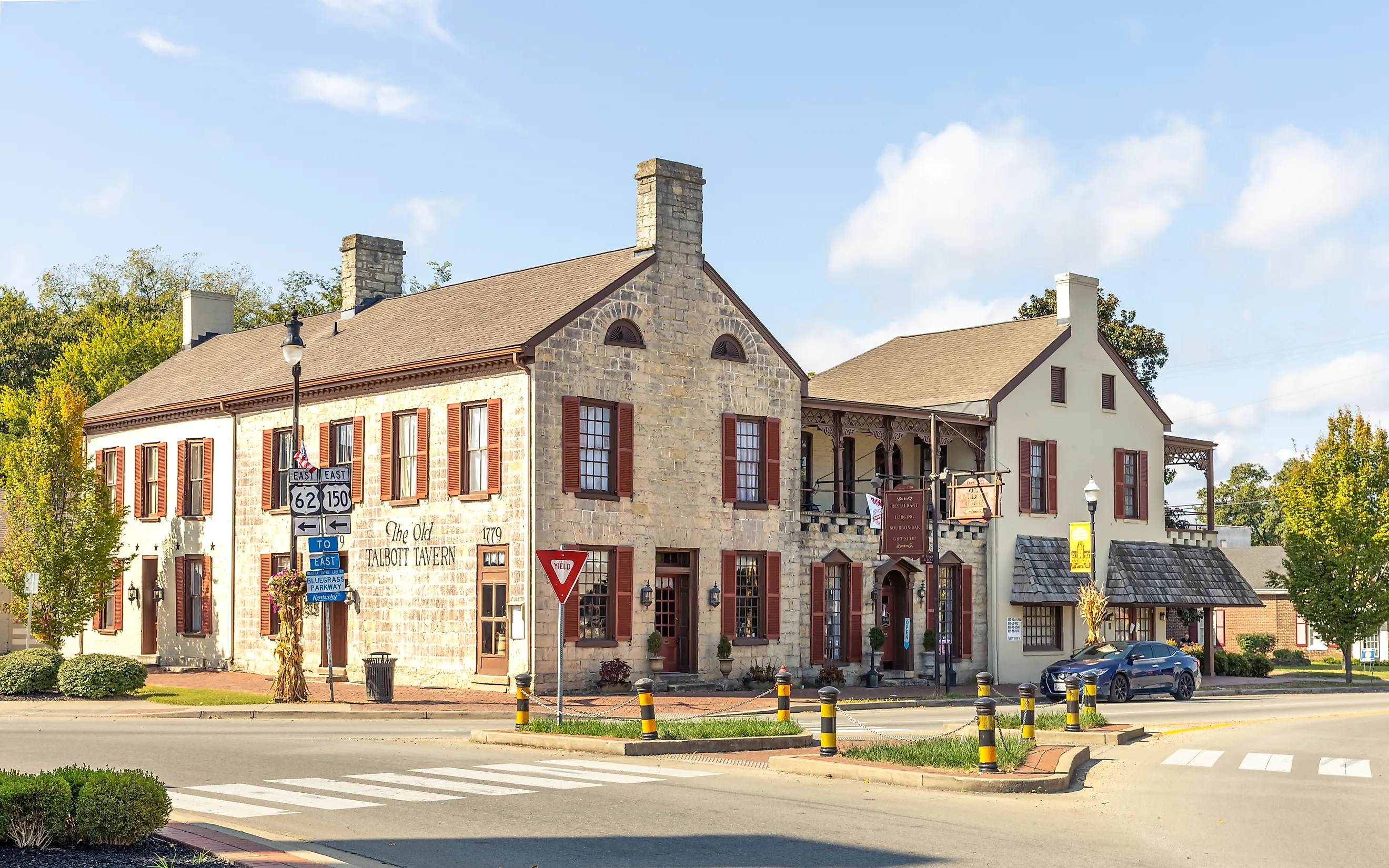
Downtown, the Old Talbott Tavern has served travelers since 1779, making it one of the oldest western stagecoach stops in America. Guest rooms are named for famous visitors such as Abraham Lincoln and Jesse James, and the tavern’s dining rooms reflect the long history of the site.
La Grange

You hear the trains before you see them. La Grange is a one-of-a-kind town where mainline freight trains run directly down the center of Main Street. Approximately 25 trains pass through each day on tracks laid by the Louisville and Frankfort Railroad in 1851. Locals have learned to time errands around the CSX schedule, while visitors gather along the sidewalks when the crossing bells begin to ring.
The La Grange Railroad Museum preserves this unusual heritage through model train displays and historical exhibits that explain how the town developed around the tracks rather than beside them. Nearby, the Oldham County History Center occupies a Victorian mansion downtown and documents the area’s railroad and agricultural past through photographs and artifacts.

One Nineteen West Main is a longtime downtown restaurant known for a scratch-made menu. Dishes include the Kentucky “Haute” Brown topped with oven-roasted turkey, country ham, maple bacon, and fried green tomatoes, along with a signature bacon pie that has received national attention.
Fort Mitchell

Fort Mitchell is located across the river from Cincinnati, Ohio. The city is named for a Civil War general who built fortifications there in 1861 to help defend the area from Confederate forces. Today, Fort Mitchell is better known for a different distinction.
The Vent Haven Museum is the world’s only museum dedicated entirely to ventriloquism. Founded by Cincinnati businessman William Shakespeare Berger in 1973, the collection includes more than 1,000 ventriloquist figures. The museum is open seasonally from May through September. Guided tours last about an hour and move through three buildings filled with figures that once appeared on stages ranging from vaudeville to television.
Greyhound Tavern has operated in Fort Mitchell since 1921 and has earned multiple “Best Steak in Northern Kentucky” awards. The restaurant serves classic comfort dishes, including fried chicken, prime rib, and pimento cheese. Camporosso offers a more casual setting, with wood-fired pizzas and a patio suited to afternoon or evening dining.
Berea

Berea is known as the Folk Arts & Crafts Capital of Kentucky. More than 750 Kentucky artisans sell their work at the Kentucky Artisan Center just off Interstate 75. Offerings include hand-carved dulcimers, pottery, woven textiles, and blown glass. Downtown, visitors can find working studios where glassblowers, furniture makers, and jewelry designers practice techniques passed down through generations.

Berea is also a college town and home to Berea College, founded in 1855. The college has a long history as the first integrated and coeducational institution in the South. Today, it provides free tuition to all 1,600 students. Students work 10 to 15 hours per week in campus roles as part of the school’s longstanding labor program.
The Pinnacles Trail winds through 9,000 acres of forest and offers wide views of the Kentucky River valley. Crafted at Boone Tavern, the college-owned restaurant, reopened in July 2025 with an updated dining room and a farm-to-table menu. Student waitstaff provide service as part of the work-study program, and the space features furniture and pottery made by Berea College Student Craft.
Corbin

Corbin is the birthplace of Kentucky Fried Chicken. In 1930, Harland Sanders opened a service station on U.S. 25 and began serving meals to travelers from a single table in the back. His pressure-fried chicken became popular, leading him to move across the street to a larger location known as the Sanders Cafe. There, he refined his recipe of 11 herbs and spices.
The Sanders Cafe and Museum continues to operate today. It serves KFC alongside exhibits on Sanders’ life and the origins of the franchise. Visitors can sit in the same dining room where Sanders served his first customers and view artifacts from the original restaurant, including his former living quarters upstairs.
Cumberland Falls State Resort Park lies about 20 miles southwest of town. The 68-foot waterfall spans 125 feet across and is known for producing a moonbow during full moons. Downtown, The Wrigley Taproom & Eatery offers craft beer and pub fare in a renovated historic building on Main Street.
Rabbit Hash

This small Ohio River settlement is nationally known for electing dogs as mayor. The tradition began as a fundraiser and later developed into a civic ritual tied to community pride and preservation. These canine mayors are not jokes or marketing tools. They reflect Rabbit Hash’s independent identity.
The Rabbit Hash General Store serves as the town’s anchor. The weathered riverside landmark has operated since the 1800s and has long served farmers, rivermen, and travelers. Inside, local goods line the shelves, handwritten notes cover the walls, and live music often fills the space.
Much of Rabbit Hash lies within the Rabbit Hash Historic District. Preserved buildings cluster organically rather than along a formal Main Street. Nearby, the Ohio River shapes daily life and serves as a gathering place for events, music, and informal community time.
Cave City

Cave City is best known as the gateway to Mammoth Cave National Park. The park is home to the world’s longest known cave system, with more than 426 miles of surveyed passages. New sections continue to be explored. Guided ranger tours lead visitors through large chambers formed 10-15 million years ago, passing gypsum formations and other rare geological features.

Above ground, Cave City reflects decades of American road travel. The town grew alongside cave tourism, and that history remains visible today. Wigwam Village No. 2 stands as one of the last surviving concrete teepee motels in the United States and the only one in Kentucky. Staying here places visitors inside a preserved example of mid-century roadside culture.
El Mazatlán Mexican Restaurant is a popular sit-down option for both residents and visitors. Known for generous portions and quick service, it provides a practical place to stop after a day of exploring.
Where Kentucky’s History and Daily Life Intersect
Each of these Kentucky towns offers something that cannot be found elsewhere. Whether touring underground chambers older than recorded history, watching artisans shape molten glass, or navigating Main Street alongside passing freight trains, the experience is rooted in daily life rather than spectacle. These communities reward unhurried travel and close attention. Together, they reflect how Kentucky’s landscapes, traditions, and small-town rhythms continue to shape places that feel both lived in and enduring.