9 Timeless North Carolina Towns To Visit In 2026
Many of North Carolina's most timeless towns echo their pivotal moments in their annual events. The battles of the Second World War and the stories of legendary pirates are imprinted in the history of towns like Bath and Ocracoke. In 2026, you can celebrate the days of Blackbeard or step into the world of Mayberry from The Andy Griffith Show, along with countless other experiences. Beyond festivals, these places converge past and present in remarkable streetscapes, historic buildings, and a coastline filled with mystery and weather-worn beauty. Strolling their waterfronts, Main Streets, and preserved districts from the early 19th century allows visitors to soak up local life that has endured for generations.
Beaufort

The original 1713 Plan of Beaufort Towne, centering around Front Street, still shapes the historic district. Here, more than 150 homes display plaques naming their first owners. The West Indies-influenced architecture reflects the town’s early trade ties with the Caribbean and Atlantic colonies. That continuity explains why Beaufort, which was founded in 1709, still feels timeless today. Front Street traces Taylor Creek along the Inner Banks, with working docks, private boats, and views across the water to Shackleford Banks. A walk here usually includes ice cream from Beaufort Creamery, a longtime fixture steps from the waterfront.

Just down the boardwalk, Beaufort Paddle rents kayaks and stand-up paddleboards, providing direct access to the same estuarine waters that once carried merchants and privateers. Artifacts recovered from Blackbeard’s Queen Anne’s Revenge are displayed at the North Carolina Maritime Museum, located directly on the waterfront. Beaufort's maritime heritage and connection to the ocean become most visible during the Annual North Carolina Maritime Museum Wooden Boat Show, which will enjoy its 50th year on May 2, 2026, when traditional wooden vessels fill the harbor.
Blowing Rock

Long before air conditioning reshaped summer travel, Blowing Rock built a reputation as a warm-weather refuge in the state, drawing seasonal visitors by the mid-1800s and keeping that role intact ever since. Yet, one of the town's most beloved ongoing festivals is Winterfest, which runs January 22-25, 2026, and features events across town and nearby Chetola Lake. Among the many wintertime festivities that shape the festival are the Polar Bear Plunge and the Artisan Ice Stroll. Regardless of the time of year, the town's namesake structure, The Blowing Rock, stands just outside of downtown. It captures a history that both predates and has little to do with human intervention.

The historic Main Street, however, does show off how people have made the town both a special and visitable place. Original cottage-sale buildings along Main Street house places like Funky Tulip and Bolick & Traditions Pottery, while nearby Memorial Park hosts summer concerts and major gatherings.
Ocracoke

Reaching Ocracoke Island still requires a ferry ride across Pamlico Sound, and that physical separation has shaped the village since its settlement grew around Ocracoke Inlet in the 1700s. The harbor at Silver Lake remains the center of daily life, edged by working boats, docks, and places like SmacNally’s Waterfront Bar & Grill. Built in 1823, the Ocracoke Lighthouse continues to function exactly as intended, marking the village edge near the harbor. A short distance away, the British Cemetery documents the island’s role in the Battle of the Atlantic, where German U-boats sank Allied ships offshore during World War II. That same inlet drew Edward Teach (known to history as Blackbeard), who used Ocracoke as a base in 1718 before his final battle just off the island.
Speaking of the legendary pirate, one of Ocracoke’s ongoing annual events is Blackbeard’s Pirate Jamboree, which brings reenactments and encampments back to the waterfront every year. But perhaps the best reason to visit this North Carolina town in 2026 is the Ocrafolk Music & Storytelling Festival, which returns in June with performances and gatherings spread across the village.
Bath

Bath became North Carolina’s first town and first port in 1705 because of its position along the Pamlico River. The early town footprint never expanded far beyond the waterline, leaving today’s historic district tightly bound to the river that once handled trade, ships, and politics for the colony. Craven Street runs only yards from the shoreline, passing St. Thomas Episcopal Church, built in 1734 and still standing as the oldest surviving church building in the state. Nearby, the Palmer-Marsh House predates the Declaration of Independence and remains identifiable by its unusually wide double chimney.

The town’s maritime role also explains its long association with piracy. Blackbeard accepted a royal pardon in Bath in 1718, tying the town’s port status directly to colonial-era power and conflict. That connection still surfaces at Blackbeard Tavern on Main Street, as well as within the annual BathFest (returning in May 2026), which features pirate encampments, historical interpretation, live music, and student showcases at Bonner’s Point.
Manteo

Manteo kicks off summer 2026 with its First Friday waterfront events, lighting up Queen Elizabeth, Sir Walter Raleigh, and Budleigh streets with live music, artisans, period-costumed actors, and late-night specials from restaurants like Poor Richard’s Sandwich Shop. Just a few blocks away, the Opening Night of The Lost Colony on June 6, 2026, brings the story of Roanoke Island’s vanished English settlers to life in an outdoor drama at Waterside Theatre.

Waterfront dining at Blue Water Grill & Raw Bar keeps the harbor buzzing, echoing the seafood trade that has defined life on Shallowbag Bay for generations. Strolling toward the Elizabethan Gardens, visitors encounter more than 500 plant species and a 16th-century-style gazebo, providing a living, cultivated counterpoint to the wild history of Fort Raleigh National Historic Site, just a short drive away.
Southport

Southport celebrates Independence every year with the NC 4th of July Festival, returning in 2026 with a parade, Freedom Flotilla along the Cape Fear River, and fireworks over the waterfront. Howe Street, Bay Street, and Waterfront Park host parade entries, marching bands, and vendors against a backdrop of 19th-century clapboard homes. The town’s cinematic reputation threads through those streets as well, with scenes from 2013's Safe Haven shot at Ports of Call Bistro and Fishy Fishy Cafe while the Old Brunswick County Jail at Nash and Rhett Streets offers tours highlighting its role in film and local history. Trinity United Methodist Church, founded in 1798, lies on East Nash Street with original clapboard siding and shingle-style detail.
New Bern

New Bern kicks off the summer of 2026 along the Trent and Neuse rivers with the Great Trent River Raft Race, where homemade rafts, kayaks, and paddleboards launch from Union Point Park into playful competition, echoing the waterways that carried colonial merchants, Swiss settlers, and river traffic for over 300 years. Downtown streets fill again in October 2026 for MumFest, where Pollock Street and the waterfront host artisans, food vendors, and live performances, reviving the same blocks where early settlers held markets and public gatherings.

Walking Middle Street, visitors can pass the Birthplace of Pepsi, where Caleb Bradham first mixed his cola formula in the 1890s. The streetscape of brick buildings and ironwork balconies feels continuous with the colonial city grid. Tryon Palace rises just a block from the river, a 1770 Georgian reconstruction of the governor’s residence, where architecture and civic authority were anchored to the waterways that still animate the harbor.
Oak Island

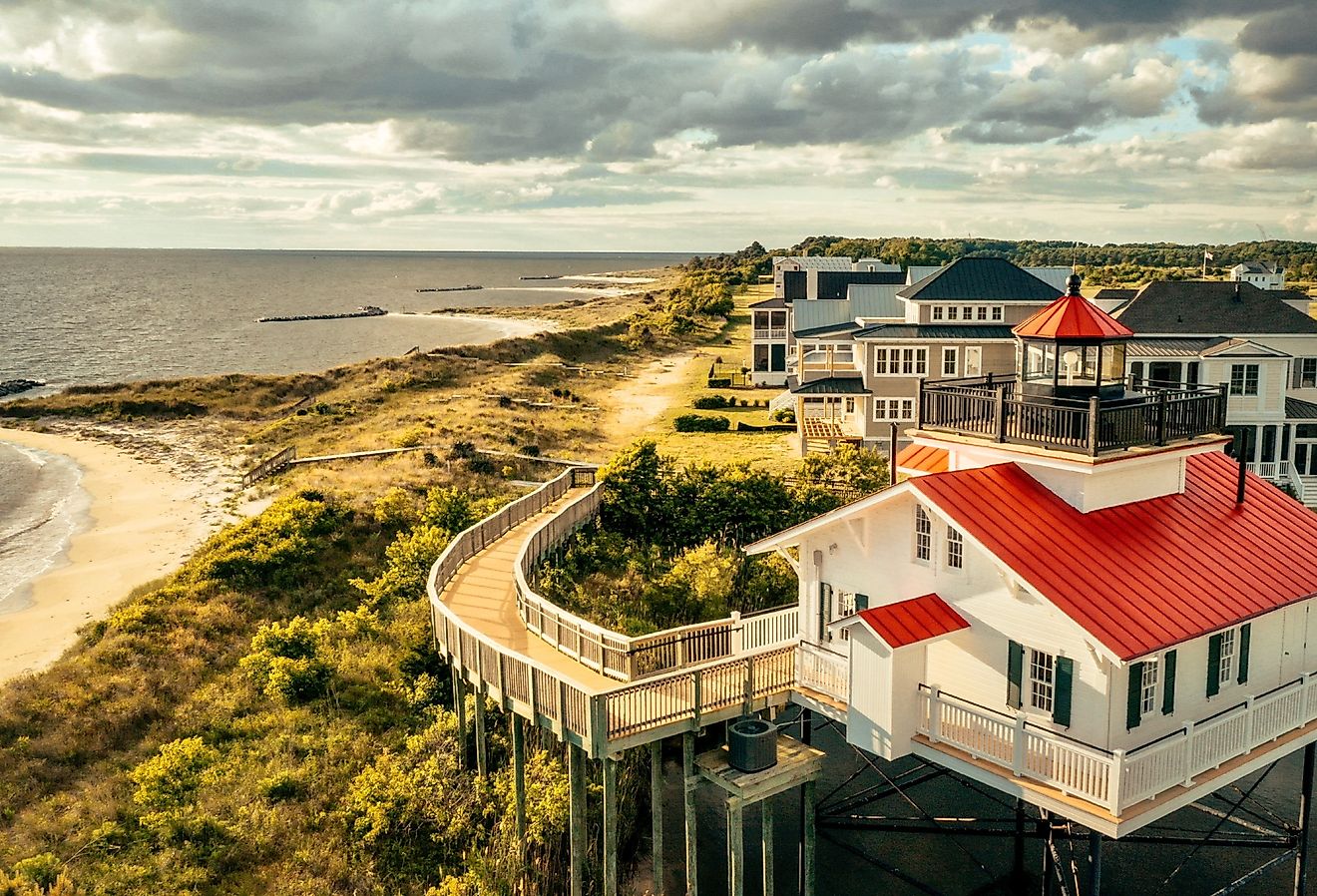
While people have inhabited Oak Island since at least the early 19th century, one of its most recognizable features was constructed in the 1950s. The Oak Island Lighthouse, built in 1958, rises 169 feet above the Cape Fear River, guiding vessels through these historic North Carolina waters. Visitors can climb 131 steps via ship ladders to reach the second level, linking generations through the same coastal watch that once safeguarded ships carrying settlers and goods. Oak Island Pier, rebuilt multiple times since its 1955 debut, extends 880 feet over the Atlantic and continues the island’s tradition of fishing. Community life thrives at Middleton Park, with its splash pads, picnic shelters, and pickleball courts, which also host major annual events like the Oak Island Art Guild Arts & Craft Festival, bringing more than 100 artists to the heart of town, and Mardi Gras by the Sea, which returns on February 21, 2026, a parade with live music, tons of food, and family-friendly activities.
Mount Airy

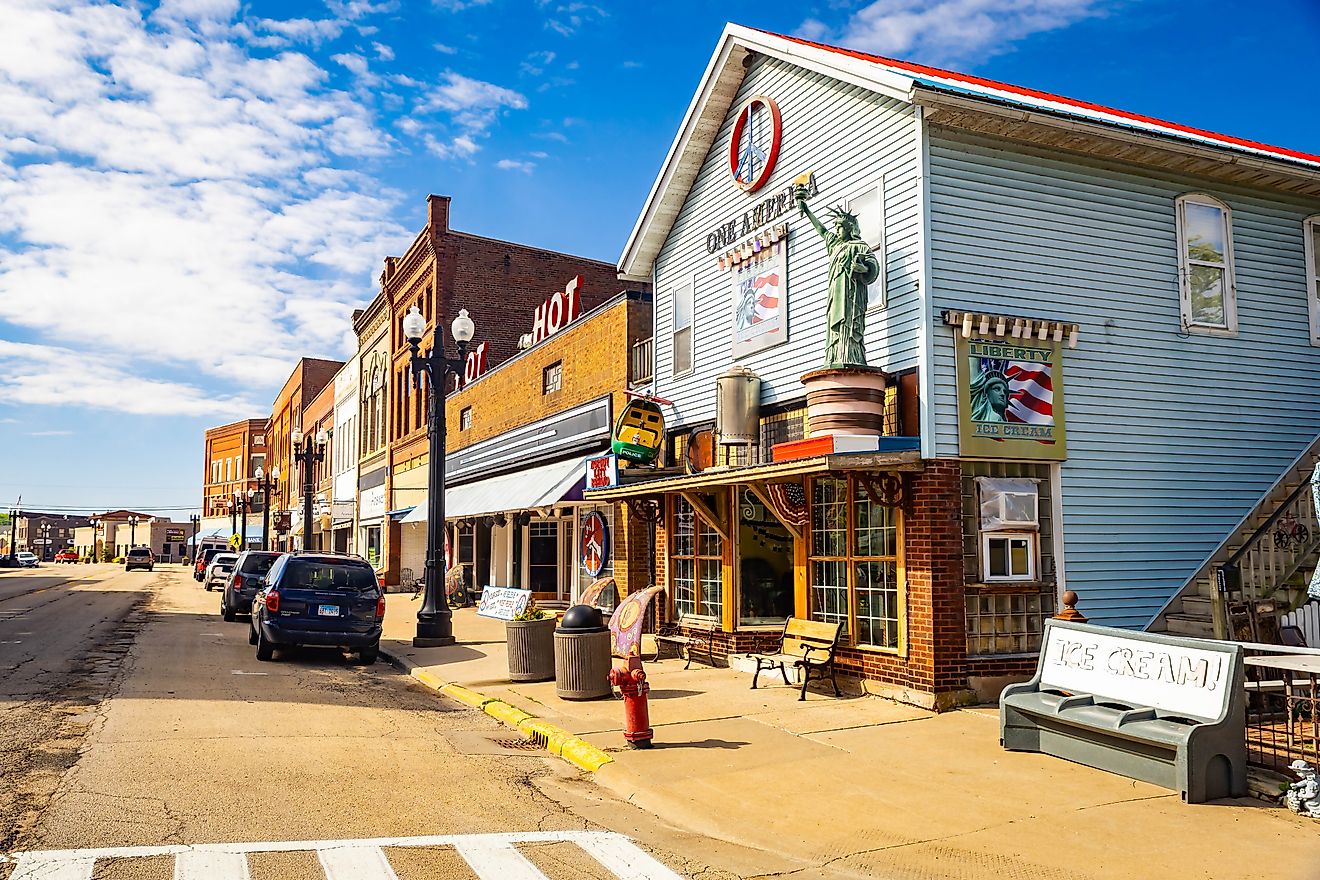
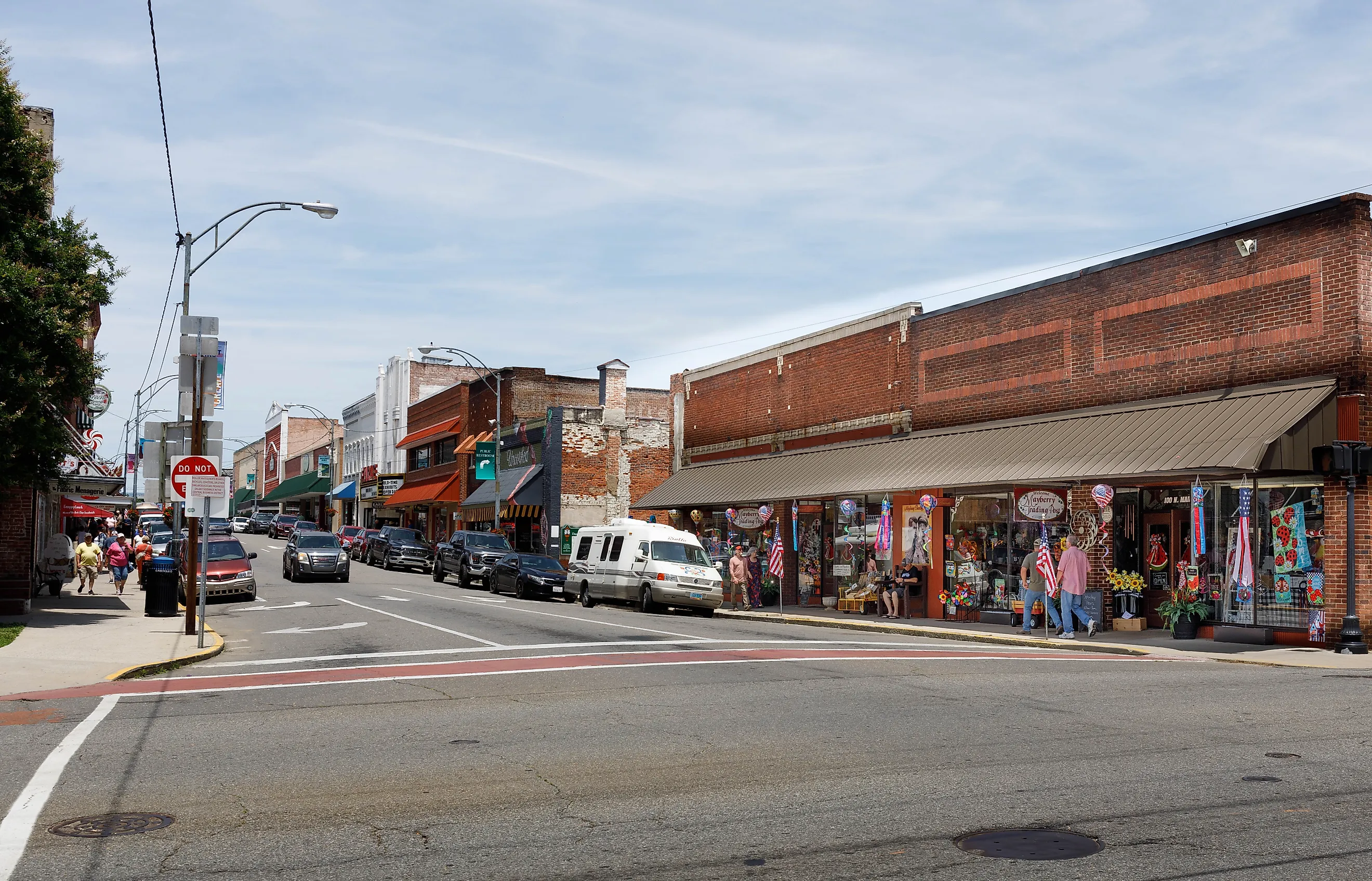
Mount Airy is filled with the nostalgia of Mayberry, the fictional town in The Andy Griffith Show. Main Street still hosts century-old buildings that hold vintage shops, quirky boutiques, and cafés like Snappy Lunch, where burgers and Southern classics have drawn locals and visitors for generations. The Andy Griffith Museum showcases memorabilia and photographs celebrating the town’s native son, securing Mount Airy’s reputation as the real-world Mayberry. This September, Mayberry Days returns to transform the downtown area into Andy Griffith’s world, with a parade, sing-alongs at the Mayberry Days Chapel, pork chop sandwiches, and concerts. Events touch multiple locations, including the Andy Griffith Playhouse.
In 2026, North Carolina’s timeless towns invite you to move seamlessly from the coast to the mountains, where Oak Island’s pier and lighthouse echo centuries of maritime life, Southport’s clapboard streets come alive with the NC 4th of July Festival and cinematic history, and Mount Airy lets you wander into Mayberry itself. Each town layers its festivals and historic streets with remarkable stories from WWII, the days of Blackbeard, and the mysterious vanishing English settlers, proving that the past and present coexist beautifully here.