12 Of The Quietest Texas Towns
Texas has no shortage of small towns; from the Hill Country’s spring-fed rivers to the quiet coastal stretches near the Gulf, the state’s varied geography has allowed communities to grow far from all the rush. In Wimberley, that can mean a swim at Blue Hole Regional Park and a stop at Wimberley Market Days. In Jefferson, it looks more like a walk through a historic district before heading out to Caddo Lake State Park. Farther west, Marfa and Terlingua trade crowds for desert views, art spaces, and night skies.
These 12 Texas towns stand out for giving visitors something to do at their own pace, allowing them to leisurely meander through compact downtowns and enjoy nature unlike anywhere else.
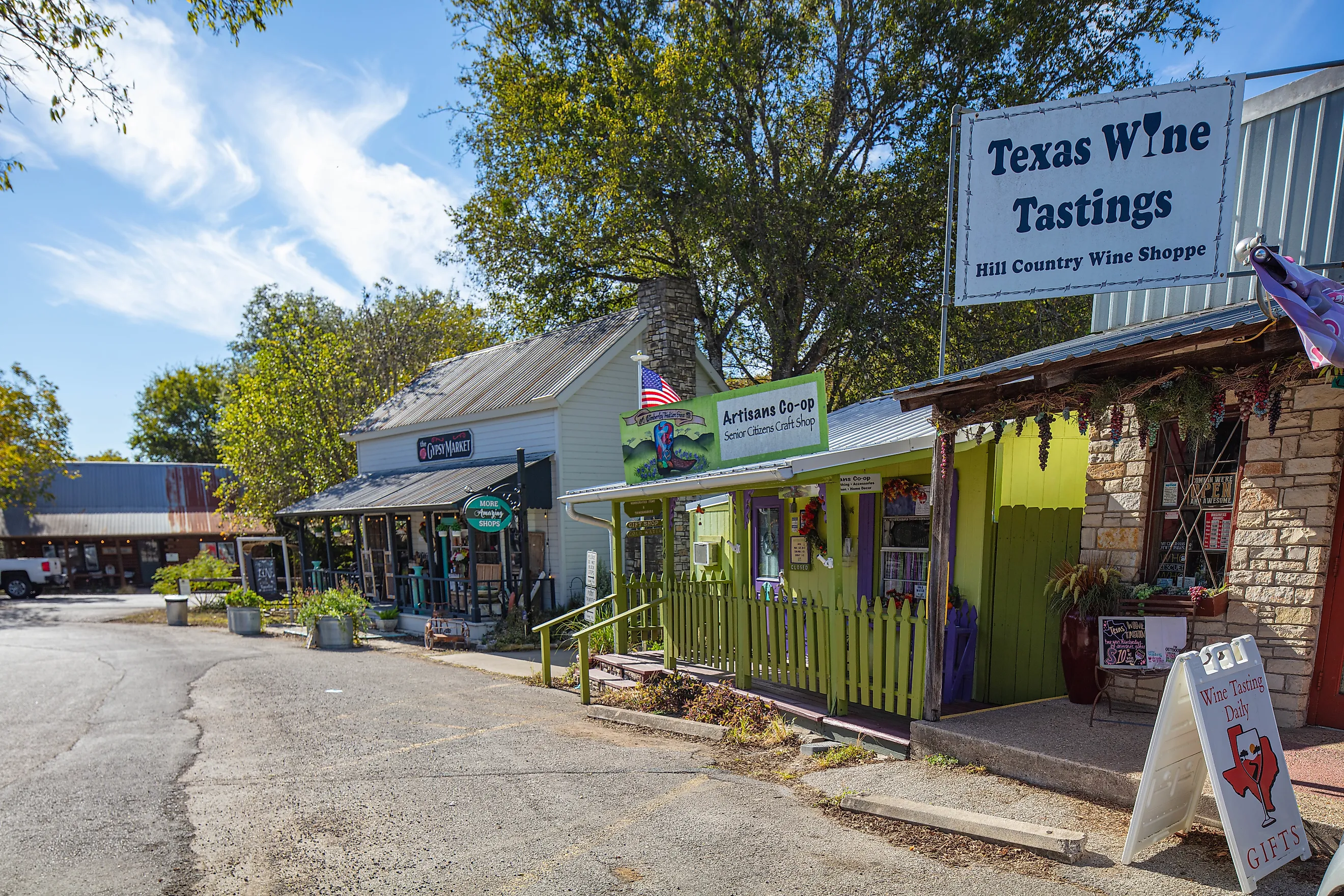
Wimberley

When visitors arrive in Wimberley for a weekend getaway, they often begin at Blue Hole Regional Park, where a spring-fed swimming area and shaded trails follow Cypress Creek through one of the Hill Country’s best-known public swimming spots. Nearby, Jacob’s Well Natural Area centers on a deep artesian spring and includes managed trails and viewing areas, making it another easy stop for anyone who wants time outdoors without a long drive.
For something more local, Wimberley Market Days has been drawing shoppers for years and gives the town a different kind of weekend rhythm from March through December.
Blanco

Blanco is the kind of town where a state park visit and a walk around the square can fit into the same easy afternoon. Blanco State Park gives visitors direct access to the Blanco River for swimming, fishing, and picnicking, while the Old Blanco County Courthouse is in the center of town with a building that now serves as a visitor center and museum.
Real Ale Brewing Company adds another stop nearby, but part of Blanco’s appeal is how little planning it takes to move between the river, the square, and a short visit elsewhere in town.
Llano

Llano works well for anyone who wants river scenery without filling the day with too much driving. Badu Park sits on Lake Llano and gives the town one of its easiest gathering spots, with open green space and direct water access. From there, it is easy to head into town and circle past the Llano County Courthouse, one of the most recognizable landmarks on the square.
If you want to add something bigger to the day, Enchanted Rock State Natural Area is close enough for a side trip and is known for its huge granite dome and marked hiking trails.
Bandera

Bandera is best known for its cowboy image, but outside its busier event weekends, visitors can keep things simple with time on the riverfront and a few smaller attractions. The town promotes itself as the Cowboy Capital of the World, and that identity still shapes much of what people notice upon arrival. The city was a crucial cattle-drive staging area in the 1800s, and today there are still weekly gunfight reenactments and lasso lessons available.
Bandera City Park sits along the Medina River and gives visitors an easy place for a short walk, a picnic, or just time by the water. The Frontier Times Museum adds a compact look at regional history, while the Bandera Natural History and Art Museum gives the town another indoor stop that feels different from the usual Hill Country river outing.
Ingram

Ingram stands out for pairing Hill Country river scenery with one of Texas's stranger attractions. Stonehenge II, an oversized concrete replica of the English monument, gives the town a landmark unlike any other on this list. At 90% of the original height and 60% of the original width, this free attraction is one of the most visited in the state.
The nearby Guadalupe River keeps the setting grounded in the region's landscape, while the Hill Country Arts Foundation adds another layer through local arts programming and performances.
Leakey

Leakey sits near some of the best-known outdoor stops in the Frio Canyon region, but the town itself keeps things simple. Visitors come for easy access to the Frio River, then branch out to places like Garner State Park, where trails, picnic areas, and riverfront spots can easily fill most of the day.
Another draw is Lost Maples State Natural Area, known for its rugged canyons and seasonal fall color. Leakey stands out for how quickly a day there turns into river access, canyon views, and long stretches of road with little around except hills and sky.
Jefferson

Jefferson feels different from many quiet Texas towns because its appeal comes less from wide-open scenery and more from its preserved character of the 19th century. The Jefferson Historic District is easy to explore on foot, with old commercial buildings, period homes, and antique shops giving the town a strong sense of continuity.
Nearby, Caddo Lake State Park changes the mood entirely, replacing brick streets and storefronts with bayous, cypress trees, and slow-moving water. For anyone staying longer, the Excelsior House Hotel adds another historic landmark that fits naturally into the setting.
Port Aransas

Port Aransas can be busy in summer, but it feels much calmer when the day starts early and stays focused on the shoreline and nearby preserves. The Port Aransas Nature Preserve at Charlie’s Pasture gives visitors boardwalks and birding areas across marsh and tidal habitat, while the beach near the South Jetty is one of the easiest places in town to catch sunrise without much effort.
Mustang Island State Park adds another stretch of protected coastline nearby, with birding, camping, and shoreline access that feels more open than the center of town.
Port Isabel

Port Isabel is small, walkable, and anchored by one of the clearest historic landmarks on the Texas coast. The Port Isabel Lighthouse State Historic Site gives the town a landmark that few coastal communities in the state can match, and it remains the feature most visitors associate with the area. The white lighthouse was built in 1852 to guide ships through the Brazos Santiago Pass toward Port Isabel.
From the top, it is easy to look out over the Laguna Madre, which supports birdwatching and quieter waterfront time. For a wildlife-focused side trip, Laguna Atascosa National Wildlife Refuge is nearby and remains one of the best-known birding destinations on the South Texas coast.
Marfa

Marfa draws visitors not only for its open desert setting but also for its landmarks and art spaces. The most structured daytime stop is The Chinati Foundation, where tours are the main way to experience most of the collection and the grounds, which feature large-scale and contemporary works of art. Later in the day, the Marfa Lights Viewing Area offers one of the simplest outings in West Texas, with visitors pulling off east of town to watch for the unexplained lights that have become part of local lore.
The Presidio County Courthouse, completed in 1886, adds another historic stop to a place better known for art, open desert, and long stretches of silence.
Alpine

Alpine works well as a quiet West Texas base because it combines a real town center with easy access to larger desert landscapes. In town, the Museum of the Big Bend on the Sul Ross State University campus offers a compact introduction to the region’s history.
Just above town, Hancock Hill offers a short climb to one of the best views of Alpine and the surrounding mountains. From there, it makes sense to use Alpine as a jumping-off point for a longer day in Big Bend National Park, especially for scenic drives and star-filled night skies.
Terlingua

Terlingua is one of the few places in Texas where a ghost town, mining ruins, and vast desert parkland sit within the same small community. The Terlingua Ghost Town preserves remnants of the early 20th-century cinnabar mining boom, with ruined structures that still shape the area's look and feel.
The Starlight Theatre Restaurant and Saloon adds a well-known local stop in the middle of that historic setting. For even bigger scenery, Big Bend Ranch State Park and Big Bend National Park lie nearby, giving visitors access to some of the most remote and dramatic landscapes in the state.
A Slower, Quieter Texas
These towns feel quieter not just because of their size, but because each one is shaped around a few places people tend to remember. In Wimberley and Blanco, that might be a swimming hole, a riverbank, or a courthouse square. In Jefferson and Port Isabel, it could be a historic district, a lighthouse, or a time near the water. Far West Texas towns like Marfa, Alpine, and Terlingua narrow things even further, with art spaces, lookout points, ghost-town remains, and long desert views replacing the pace people usually associate with Texas.