9 Of The Best Affordable Towns To Retire In The United States
Retirement decisions are usually framed as a choice between palm trees and price tags, but for many people, the real question is simpler: where will everyday life actually feel worth living? The best affordable towns offer places a retiree can return to week after week, a riverfront they know in every season, and a neighborhood restaurant where the staff starts remembering their order. Cost of living matters, but so does having somewhere meaningful to go on a Tuesday afternoon.
River towns like Batesville and Natchez, college hubs like Carbondale, highland and high-desert communities like Beckley and Silver City, and carefully preserved Southern centers like Thomasville all have one thing in common: they give retirees reliable anchors.
Batesville, Arkansas

Daily life in Batesville often revolves around the White River, a wide, slow-moving stretch of water that locals actually use. Retirees fish from the banks, launch small boats for quiet mornings, or simply walk the riverfront trails that follow its bends through town. Yet the median home value here sits in the high-$160,000s, comfortably below the Arkansas average, so river access doesn't require a big-city budget. A few minutes uphill, Ramsey Mountain Trail provides something rarer: a short but rewarding climb to a lookout where the river valley opens up in full, a reminder that north-central Arkansas still feels refreshingly unengineered.
The town's cultural backbone is Lyon College, whose campus quietly feeds Batesville a steady stream of lectures, concerts, and visiting speakers that retirees can attend without the friction of a big-city arts scene. Downtown, the restored Melba Theater anchors evenings with live music and touring acts in a space that feels intentionally intimate rather than nostalgic. For something unmistakably local, Stella's Brick Oven draws loyal crowds with wood-fired pizzas and a social energy that turns a simple dinner out into a standing weekly ritual, exactly the kind of place retirees come to rely on, not just try once.
Thomasville, Georgia

Thomasville rewards retirees who want their days anchored by places with real purpose. Mornings often begin at the Thomasville Rose Garden, where more than a thousand rose bushes create a living calendar, locals know the exact weeks when blooms peak, and returning year after year becomes part of the ritual. Remarkably, median home values linger around $220,000, well below Georgia's statewide average, so that ritual doesn't come with a metro-area price tag. From there, the town's historic backbone reveals itself at the Lapham-Patterson House, a meticulously preserved Victorian that tells the story of Thomasville's winter-resort era with architectural details that reward slow, repeat visits rather than quick walkthroughs.
What keeps retirement here from feeling static is how history blends into everyday pleasures. A short drive leads to Pebble Hill Plantation, where trails, gardens, and preserved sporting grounds offer reasons to return in different seasons, not just once. Back downtown, the Sweet Grass Dairy Cheese Shop has become a regional draw, turning locally made cheeses into a social experience that pulls neighbors and visitors into conversation. Evenings often end outdoors at the Ritz Amphitheater, where free concerts and community events give retirees something scheduled to look forward to, without requiring a long drive or a late night.
Beckley, West Virginia

Beckley offers retirees something increasingly rare: affordability paired with places that feel meaningful rather than manufactured. That meaning starts with a housing market where typical homes run in the low-$140,000s, notably under West Virginia's already modest state average, leaving room in the budget for travel, hobbies, or helping family. Many days naturally orbit the Beckley Exhibition Coal Mine, where a guided rail ride descends into a real underground mine and the restored coal camp above ground shows how Appalachian families actually lived. It's not a one-and-done attraction; retirees return with visiting family because the storytelling deepens with each visit. Just beyond town, the landscape opens dramatically at New River Gorge, where overlooks and short-access trails make it easy to enjoy one of the East's most striking river corridors without committing to strenuous hikes.
Back in Beckley, daily life is anchored by places that locals genuinely use. Tamarack isn't a typical visitor stop; it's a statewide showcase where retirees browse rotating exhibits of West Virginia-made crafts and attend live music without driving hours. Evenings often end downtown at Pasquale's, a long-standing institution where generous portions and familiar faces turn dinner into a social constant. Together, these places give Beckley a rhythm that suits retirement, grounded in history, shaped by landscape, and supported by establishments built to last.
Silver City, New Mexico

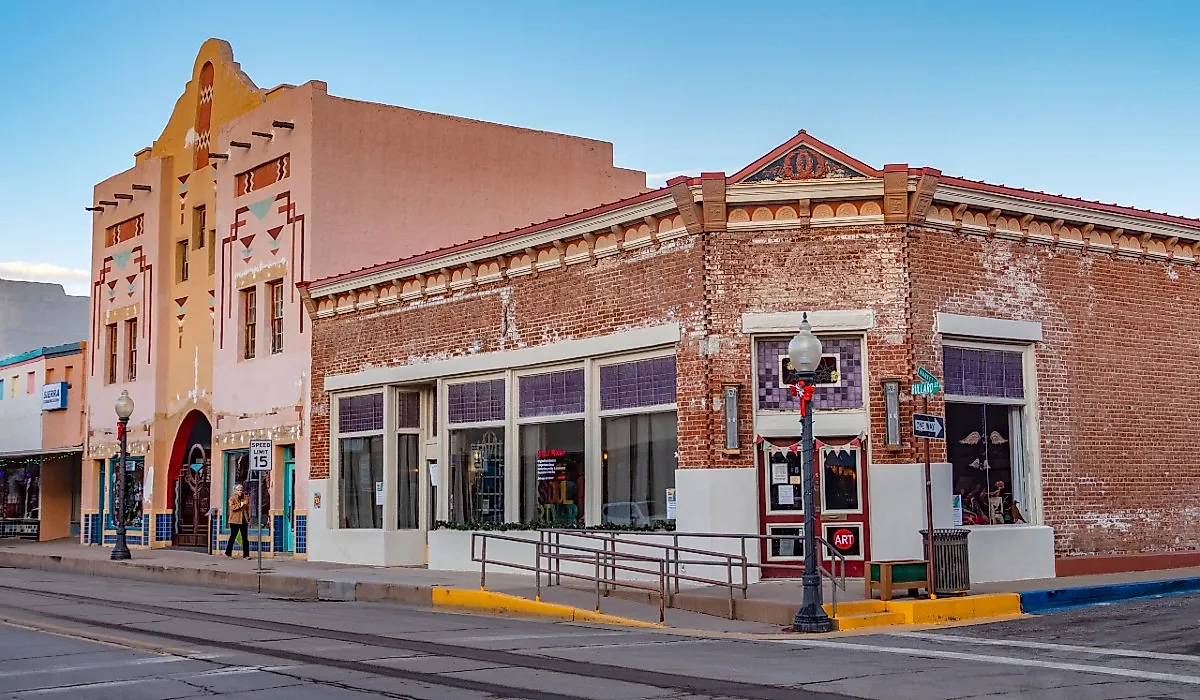
Silver City appeals to retirees who want daily access to places that reward curiosity rather than constant novelty. In a town where the typical home value is just over $220,000, far below New Mexico's statewide norm, curiosity doesn't require a luxury budget, even for those living primarily on retirement income. Life here often stretches outward toward the Gila Cliff Dwellings National Monument, where a forested hike leads to remarkably intact Mogollon dwellings tucked into volcanic rock. It's the kind of site retirees return to with visiting friends because the walk, the history, and the silence change with every season. Back in town, Silver City's mining past surfaces along the Big Ditch Park, a landscaped greenway tracing the massive flood channel that reshaped the town in the 19th century, an everyday walking route that doubles as a living history lesson.
Downtown life concentrates naturally along Bullard Street Historic District, where retirees spend unhurried afternoons browsing galleries and settling into places that feel purpose-built for conversation. Silver City Books anchors that rhythm with author events and a deep regional selection that rewards lingering. When evenings call for something social, Little Toad Creek Brewery & Distillery stands out for its locally made beer, green-chile-forward menu, and live music that feels woven into town life rather than staged for visitors. Together, these places give Silver City a retirement pace that's active, grounded, and quietly engaging.
Carbondale, Illinois

Carbondale works for retirees who want their days shaped by places with staying power rather than novelty. Life here often pulls outward toward Giant City State Park, where sandstone formations form narrow passageways that reward slow walking and repeat visits. The park's accessible trails and sheltered picnic areas make it easy to spend a few hours without overplanning, a luxury retirees quickly appreciate. That connection deepens with Shawnee National Forest, which surrounds the town with bluffs, quiet lakes, and scenic drives that feel substantial enough to replace long-distance travel.
Back in town, Southern Illinois University quietly enriches daily life, offering concerts, lectures, and visiting performers that retirees can attend casually rather than as special occasions. All of that plays out in a market where the median home value sits in the mid-$130,000s, compared with nearly $280,000 statewide, exactly the kind of gap that keeps monthly costs in check without sacrificing amenities. Evenings often circle back downtown, where Quatro's Deep Pan Pizza has become a generational institution, less about chasing trends and more about continuity, shared tables, and reliable ritual. For retirees, that mix matters: easy access to nationally significant landscapes, paired with a college-town core that keeps life intellectually active without inflating the cost of living.
Natchez, Mississippi

Natchez offers retirees daily access to places where history and landscape still shape how time is spent. Life here often revolves around the Natchez Trace Parkway, which begins in town and immediately opens into miles of protected scenery ideal for short drives, cycling, or quiet walks without traffic stress. For many retirees, the pleasant surprise is that typical home values still hover around $115,000, dramatically below Mississippi's state average, so those drives start from a house payment that doesn't dominate the budget. That sense of continuity deepens at Natchez National Historical Park, where preserved sites like Melrose and Fort Rosalie go beyond mansion mythology to explain the town's layered past in a way that rewards repeated visits rather than a single tour.
Downtown, retirement life naturally narrows to a few enduring institutions. Under-the-Hill still functions as a working riverfront, anchoring daily routines with Mississippi River views that change by the hour. Nearby, The Camp Restaurant stands out not as a novelty stop but as a dependable gathering place, known statewide for its elevated Southern cooking and social energy that pulls locals back week after week. For retirees, Natchez succeeds by offering places that don't need reinvention, just time, which retirement finally provides.
These towns show that affordable retirement doesn't require compromise. Modest home prices free up money for travel, hobbies, and family, while rivers, campuses, historic districts, and public lands keep daily life grounded. The real luxury in each place isn't square footage; it's having somewhere meaningful to go nearby.