10 Undisturbed Towns To Visit In Kansas
Kansas has hundreds of incorporated towns, but only a handful still feel undisturbed by modern life. In Cottonwood Falls, people still step into a limestone courthouse from 1873. In Council Grove, river crossings and treaty sites sit where Santa Fe Trail wagons actually passed through. And instead of replicas or themed attractions, you walk into the real thing, places like Lindsborg’s 1898 Smoky Valley Roller Mill, where the buildings that shaped the town are still part of the visit.
Hutchinson

Space artifacts 650 feet underground define Hutchinson's claim as an unexpected center for preservation. The Cosmosphere accommodates the biggest unified stock of the United States and Russian space items worldwide. The museum displays flown spacecraft from the Mercury, Gemini, and Apollo programs; notably Liberty Bell 7, Gemini X, and Apollo 13's Command Module Odyssey. The Justice Planetarium projects the night sky through its Spitz Sci-Dome XD digital system, while Dr. Goddard's Lab demonstrates rocket science through live experiments. This aerospace focus connects directly to the city's underground resources. Strataca, the Kansas Underground Salt Museum, descends 650 feet below the surface into the Hutchinson Salt Company mine, which began functioning in 1923. A double-deck elevator transports visitors into chambers carved from 275-million-year-old salt deposits. Museum exhibits explain the mining process and how these caverns store documents for Underground Vaults & Storage, including original film negatives of Gone with the Wind. Movie costumes from Batman and other productions fill temporary displays.

Above ground, nature provides contrast. Dillon Nature Center encompasses 100+ acres with three miles of trails through woods, prairie, marsh, and ponds. Over 200 bird species and 300 varieties of woody plants populate this designated National Urban Wildlife Sanctuary. History fills the Reno County Museum. The Transportation Gallery displays 100 years of vehicles from a 1893 Schuttler wagon to a rare 1903 Ford Model A. The "I Walked Into A Different World" Vietnam War exhibit runs through June 2026 with artifacts from private collections and stories from Reno County residents who served.
Lucas

Civil War veteran Samuel Dinsmoor transformed his retirement into one of Kansas's most peculiar legacies. The Garden of Eden features 40-foot concrete trees that he built using 113 tons of cement, starting in 1907, when he was already 62 years old. Dinsmoor stopped working in 1929, after going blind. The sculptures blend biblical scenes with Populist political commentary that reflect the times of Dinsmoor's life, including a crucified Labor figure watched by a banker, lawyer, preacher, and doctor. An octopus representing monopolies, a common metaphor of the day, wraps tentacles around the world, while Liberty drives a spear through another octopus on an adjacent tree.
Dinsmoor's grassroots vision sparked a movement. The Grassroots Art Center fills three renovated 1897 limestone buildings with works by self-taught Midwest artists. Herman Divers created a life-sized motorcycle from aluminum pull tabs strong enough to sit on. Galleries feature limestone carvings, barbed wire sculptures, and bottle creations. Admission includes guided tours of the Florence Deeble Rock Garden and the Garden of Isis, where artist Mri-Pilar filled seven rooms with recycled assemblage sculptures made from computer motherboards, Barbie dolls, and household items against foil-lined walls.

This artistic energy is even seen in the town infrastructure. Bowl Plaza takes the form of a toilet, with the building shaped like a tank, a curved bench representing the bowl, and a 14-foot mosaic lid entrance featuring repurposed glass bottles, license plates, and hubcaps. Inside, mosaics made from toys, mirrors, and broken dishes cover every wall. The men's room displays toy cars and robots, while the women's room features glass flowers and teacups. This free, 24-hour public restroom won second place in America's Best Restroom contest in 2014 and the International Toilet Tourism Award for quirkiest entry in 2018.
Abilene

Dwight Eisenhower spent his youth delivering ice in this Dickinson County seat before commanding Allied forces in Europe. The Eisenhower Presidential Library, Museum, and Boyhood Home covers 22 acres at 200 Southeast Fourth Street. Five galleries trace his life from his childhood in Abilene through Supreme Commander of NATO. The museum holds his mother Ida's original 19th-century home on its original site, where the family lived from 1898 until she died in 1946. Visitors walk through the Place of Meditation where Dwight, Mamie, and their first son, Doud Dwight, rest. An 11-foot bronze statue of General Eisenhower stands on the grounds. Additionally, the Dickinson County Heritage Center combines three museums under one roof. The Museum of Independent Telephony displays equipment showing how C.L. Brown's company became Sprint, with early telephones on loan from the Smithsonian Institution. The main galleries preserve Wild Bill Hickok's marshal days and Joseph McCoy's cattle drives that made Abilene boom at the Chisholm Trail's end.

The C.W. Parker Carousel from 1901 still operates with its original steam engine and 1903 Wurlitzer pump band organ playing music. Twenty-four hand-carved horses and four chariots rotate daily. Outdoor buildings include an 1858 Volkmann Log Cabin, 1868 Kellogg Schoolhouse, 1907 Acme Mutual Telephone Exchange Office, and 1915 Prichard Family Farm Barn. These historic sites lead to recreated frontier experiences. Old Abilene Town recreates the 1870s cattle town with over a dozen preserved buildings from the mid-19th century. The rail station, hotel, and shops display period furnishings and information placards explaining each structure's history. Reenactors stage Wild West gunfights and can-can performances on weekends from late May through September. The Alamo saloon serves sarsaparilla, and the general store sells frontier-themed items.
Coffeyville

Red paint outlines four dead outlaws on the pavement where armed citizens ended the Dalton Gang's 1892 bank robbery attempt. The Dalton Defenders and Coffeyville History Museum are directly across from the Condon Bank, which was the site of the gang's attempted robbery. Five galleries display guns used in the 12-minute shootout, saddles, the original First National Bank vault doors, and photographs of the corpses laid out in Death Alley. A horse-drawn hearse matching the one that carried Dalton's bodies to burial stands near a covered wagon display.
The museum showcases non-shootout related history as well: Walter Johnson memorabilia honors the baseball pitcher who lived in Coffeyville, and Native American exhibits show pre-settlement history. But Death Alley and the Old City Jail mark where Bob Dalton, Grat Dalton, and Bill Power fell trying to reach their horses on October 5, 1892. Red painted outlines show where each body dropped, while plaques mark spots where four citizens died defending their town. The reconstructed jail uses original rock and holds mannequins dressed as the gang members, positioned as they appeared in the famous death photograph. Bullet holes still scar the north brick wall.

These outlaws rest nearby. Elmwood Cemetery conserves the gang's graves, alongside the graves of everyday members o the town. But the town had its share of abnormal residents as well. The Brown Mansion, completed in 1906 for natural gas tycoon W.P. Brown, displays the Georgian style in a structure that cost, at the time, $125,000 (wholesale, since Brown owned the lumberyard.) All fireplaces feature different designs, and the inglenook mirrors one created for Louis Comfort Tiffany. The dining room displays a signed Tiffany chandelier. Original furnishings, wall coverings, and floor treatments remain throughout five bedrooms, three full baths, a third-floor ballroom, and basement quarters with a single bowling alley.
Independence

Laura Ingalls Wilder spent just two years near this Montgomery County seat, but those childhood months inspired the Little House books that shaped how Americans imagine frontier life. The Little House on the Prairie Museum is on a site matching the description from Wilder's novel. A reconstructed cabin built from hand-hewn logs stands where the Ingalls family likely lived from 1869 to 1871. The one-room structure features a loft where Mary and Laura would have slept, plus period furnishings including a rope bed, cast iron cookware, and a spinning wheel. A post office occupies the original building from nearby Wayside, Kansas.
You will also find frontier connection at the Independence Historical Museum. This landmark with 25 rooms has collections ranging from medical equipment from early Independence doctors to period clothing and artifacts from the town's 1903 oil boom. A schoolroom recreation shows where children learned before consolidated districts. Beyond town history, recreation is everywhere at Elk City State Park, spreading across 857 acres next to a 4,500-acre reservoir. The Eagle Rock Mountain Bike Trail winds 4 miles through oak and hickory forest that transitions to open grassland. Mountain bikers, hikers, and equestrians share this path that crosses wooden bridges over seasonal creeks.
Lindsborg

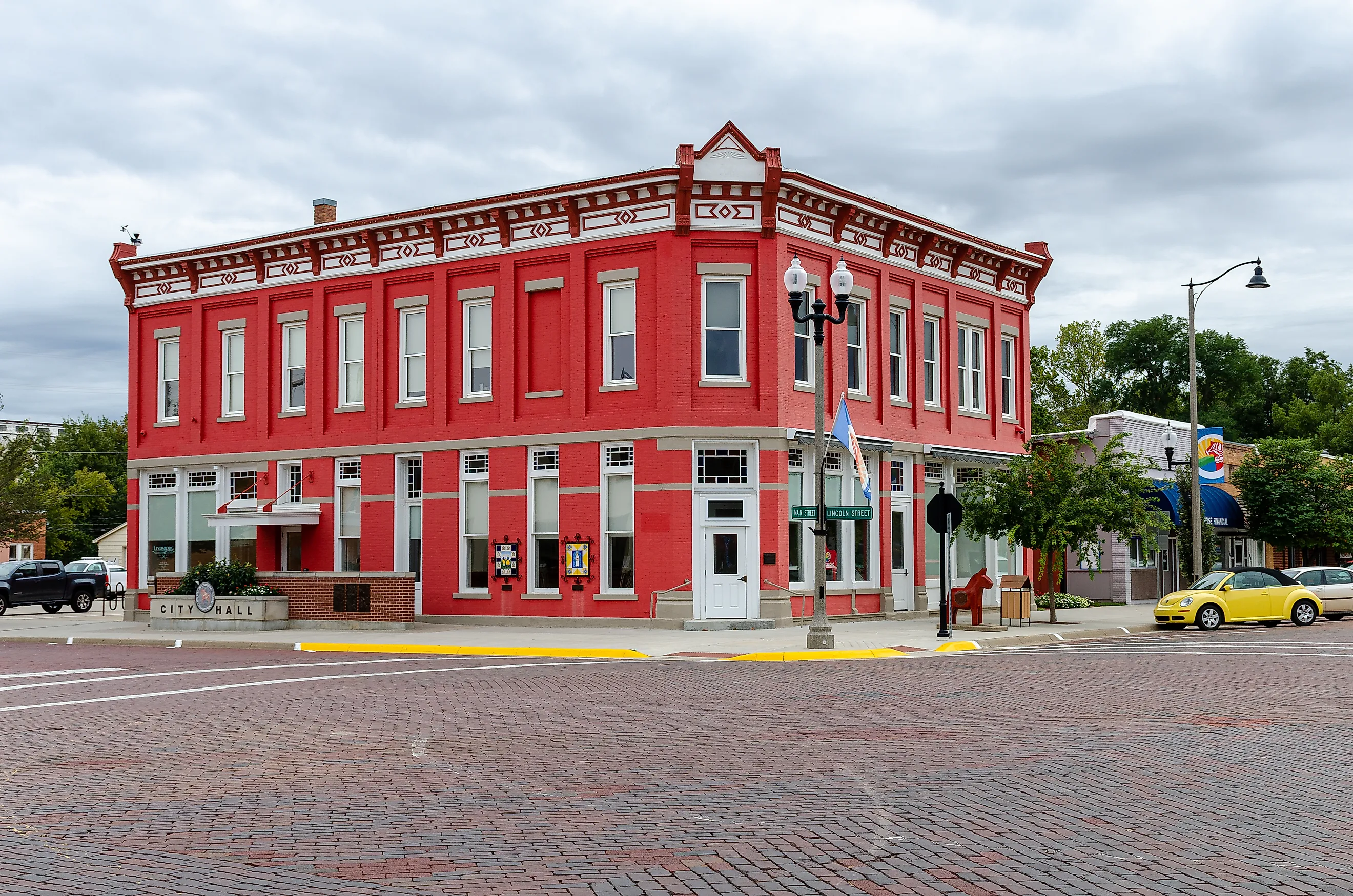
The painted "Dala" horses set up across storefronts might make Lindsborg's Swedish roots clear to visitors, but they run even deeper. Swedish immigrants settled this McPherson County town in 1869, and the heritage remains tangible in everyday lifestyle, like working flour mills and preserved homesteads. The Lindsborg Old Mill & Swedish Heritage Museum showcases this history with its 1898 Smoky Valley Roller Mill that operated commercially until 1955. You can walk through the four-story structure where grain was once processed using roller technology. The museum grounds include the 1904 World's Fair Swedish Pavilion, which served as Bethany College's art department for over six decades under artist Birger Sandzén.

The artistic legacy continues at the Birger Sandzén Memorial Gallery, where the Swedish-born painter's palette knife landscapes fill the walls. His vibrant prairie and mountain scenes bridge impressionism with abstraction through bold brushwork and rich colors, capturing the Kansas terrain that surrounds Lindsborg. To see this landscape yourself, the Välkommen Trail spans 4.5 miles along former Union Pacific and Missouri-Pacific rail beds. This paved path connects Bethany College to the Old Mill Campground, featuring historical markers that detail how Swedish settlers transformed the empty prairie into a thriving community. The southern section includes a refurbished railroad bridge.
Cottonwood Falls

Chase County's seat holds fewer than 900 residents, yet its 1873 courthouse draws visitors who want to see Kansas before modern development reshaped small towns. The Chase County Courthouse towers 113 feet above Broadway Street with its red mansard roof visible across the Flint Hills. Built from native limestone quarried on-site, this French Renaissance structure remains Kansas's oldest operating courthouse. Inside, a three-story spiral staircase crafted from black walnut trees harvested along the Cottonwood River winds through the building, while the working courtroom features an embossed tin ceiling. This working government building connects directly to the town's pioneer past, making it more than just architecture to admire. That history extends to the Chase County Historical Society Museum, which is in an 1882 limestone building that served as Chase County National Bank until 1928. The museum has a schoolroom with original textbooks and annuals, a dentist's office, and cowboy memorabilia from the ranching era.

From downtown, the landscape reveals why this region remains undisturbed. Chase Lake Falls sits 1.5 miles west of town at Chase State Fishing Lake. The 0.9-mile trail crosses the dam and descends to three tiers of waterfalls cascading over limestone shelves into Prather Creek. Spring rains transform the falls into rushing curtains of water, though they slow to gentle flows in summer.
Wamego

L. Frank Baum never visited this Kansas River town, but his 1900 novel transformed Wamego into a destination where yellow brick roads run through actual streets. The OZ Museum holds 2,000+ artifacts spanning 120 years of Oz history. You enter through a sepia-toned farmhouse window that opens into technicolor Munchkinland. The collection includes screen-used costumes and props from the 1939 MGM film, first-edition Baum novels from the early 1900s, and items from the Broadway musical Wicked.

This Oz connection is also beyond memorabilia. The 1895 Columbian Theatre houses six large murals commissioned by the U.S. Treasury for the 1893 Chicago World's Fair Government Building. Fourteen additional paintings from the fair were discovered under the stage during the 1994 restoration. The theater still stages Broadway musicals and concerts on weekends. These World's Fair artifacts appear again in Wamego City Park, where statues from the 1893 exposition stand near the Schonhoff Dutch Mill. John Schonhoff, a Dutch immigrant, built this 40-foot limestone windmill in 1879 on his farm 12 miles north of town to grind wheat and corn. The mill was reconstructed in 1924 after relocated to the park and now operates with restored machinery that still grinds grain.
Council Grove

Santa Fe Trail wagons crossed the Neosho River here for 60 years, making Council Grove the last supply stop before 500 miles of unsettled prairie. The Kaw Mission State Historic Site preserves this town's identity as a settler frontier town, in the form of a 1851 native stone building which, from 1851 to 1854, instructed up to 30 native Kaw boys in European fashion. The Mission was not popular with the Kaw people, and its existence today stands as a reminder of the complicated and often tragic history of European settlers with native American people across the continent.
The structure features eight rooms across two stories, including four upstairs dormitory rooms. Further southeast, on the Kanza Heritage Trail, the Kanza Monument stands in respectful testament to the native people of the territory. This history suffuses downtown as well. The Neosho Riverwalk paves both sides of the river at the most documented crossing on the Santa Fe Trail. The walking and bicycle trail connects historic sites, including the protected stump of the Council Oak, where an 1825 treaty gave Americans passage through Osage territory in exchange for $8,000. The Post Office Oak stands nearby, where trail travelers left messages about conditions ahead carved into the bark. These sites remain accessible year-round at no charge.

Beyond downtown, the Flint Hills Nature Trail stretches east from Council Grove for 118 miles along former Missouri-Pacific rail beds. The Council Grove section passes through native tallgrass prairie that appears as it did when the Kaw and Osage lived here. The gradual climb crosses both open Flint Hills scenery and shaded areas. Deer, turkeys, and prairie birds populate the grasslands, where controlled burns maintain the ecosystem that sustained tribes for thousands of years.
Fort Scott

Twenty buildings from the 1840s stand where the U.S. Army maintained its Permanent Indian Frontier. Fort Scott National Historic Site contains 11 original structures and nine reconstructions that relay how westward expansion collided with slavery debates. Rangers lead tours through authentically furnished rooms showing military life from the 1840s through the Civil War period. The military history intersects with artistic achievement at the Gordon Parks Museum on the Fort Scott Community College campus. Parks grew up in Fort Scott and became the first African-American photographer for LIFE magazine, and the first to direct a major Hollywood production, with "The Learning Tree" in 1968, which he filmed in his hometown. The museum displays his iconic photographs documenting poverty and racism, personal items such as his desk and cameras, and furnishings from his New York apartment.

But really, no trip to Fort Scott is complete without a hike at Gunn Park, the biggest municipal park space in Kansas, covering 155 acres on the Marmaton River. The 6.5 miles of single-way mountain biking pathway wind through timber and along the riverbank, providing terrain for trail runners and hikers. Fern Lake is stocked with rainbow trout from October 15th to April 15th, while the west lake holds catfish, bass, and crappie. The 18-hole disc golf course mixes wooded areas with open fairways boasting challenging Mach III targets.
These undisturbed towns to visit in Kansas feel complete because everyday life never moved elsewhere. In Fort Scott, army buildings still stand where orders were once given, and the town grew around them instead of replacing them. In Wamego, a theater, park, and windmill continue to share the same block as they have for generations. Across the United States, places like these are rare. They don’t explain themselves loudly; they let streets, buildings, and routines do the talking.