9 Most Peaceful Small Towns In Tasmania
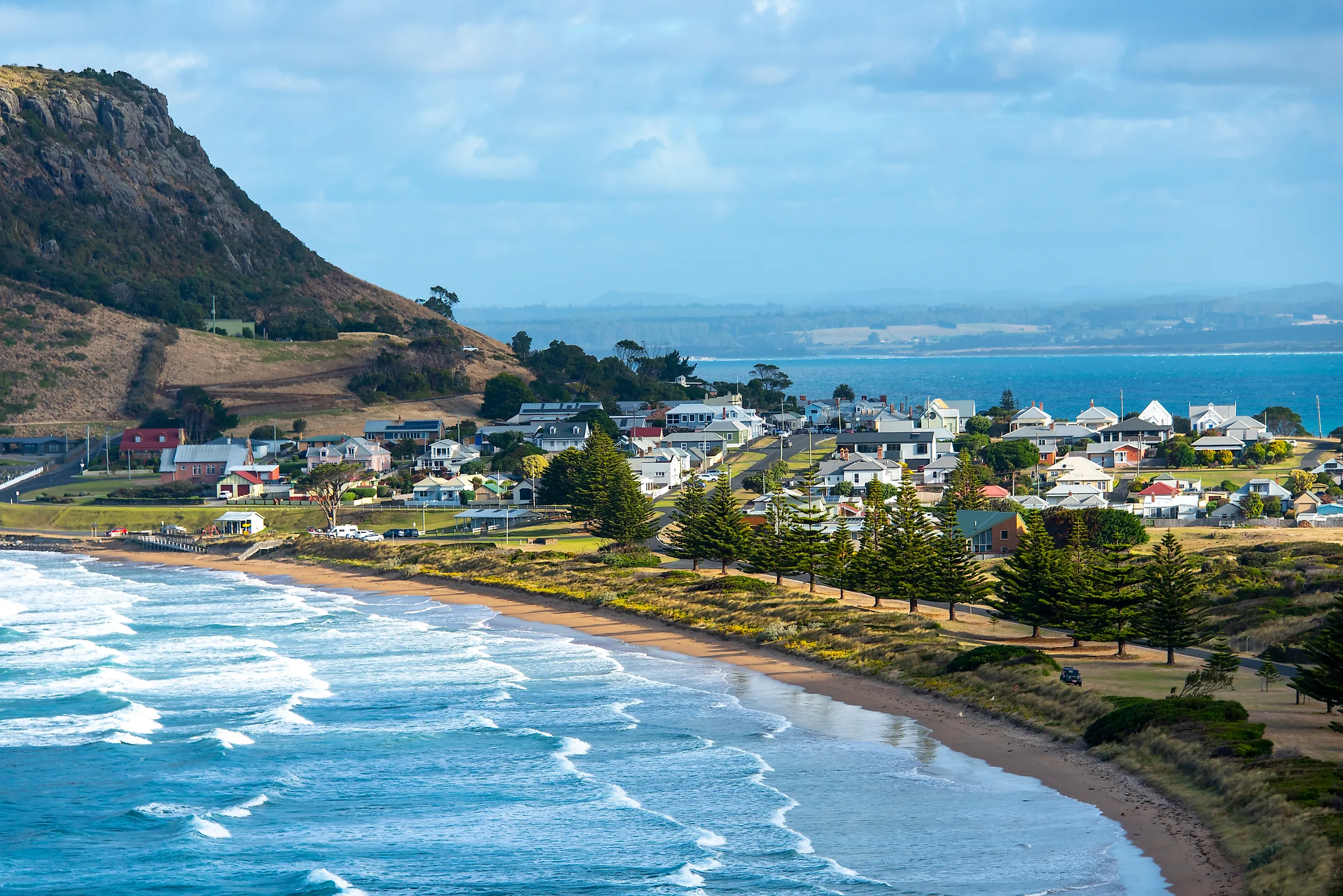
In Tasmania, the national parks get most of the attention, yet the small towns in between leave a stronger impression. In Stanley, houses cluster at the base of a sheer volcanic rise called the Nut. In Swansea, the coastline opens straight toward the Hazards, with nothing breaking the view across Great Oyster Bay. In Richmond, a convict-built sandstone bridge still carries traffic over the Coal River as it has for nearly two centuries. These are some of the towns this list is built around.
Richmond

The layout and buildings of Richmond have remained largely intact since its establishment in 1820. Richmond Bridge, completed in 1825, still carries traffic across the Coal River as part of the main road. Just beside it, the Coal River Walk follows a short, quiet stretch of water where ducks gather near the banks, and the bridge comes into full view from below.

Richmond Gaol offers an unvarnished look at the penal system of the 1820s, with cells, iron restraints, and rooms arranged as they were originally used. Nearby, Pooley Wines Cellar Door occupies a restored sandstone building where tastings focus on pinot noir and riesling from the Coal River Valley vineyards.
Stanley

Stanley feels defined by what lies behind it: a 152-meter volcanic plug known as the Nut, which rises above the town and coastline. The climb up The Nut State Reserve is short but steep, either by chairlift or a direct walking track, and the payoff is immediate. A 2-kilometer loop circles the summit with uninterrupted views of Bass Strait, farmland, and the tight grid of cottages below. Outside the center is Highfield Historic Site, once the headquarters of the Van Diemen’s Land Company. The homestead and outbuildings show how the settlement operated as an early agricultural base in a remote part of Tasmania.

At dusk, Godfrey's Beach Penguin Viewing Area becomes active as little penguins return from the sea in small groups, crossing the sand toward burrows in the dunes. On the waterfront, Hursey Seafoods serves southern rock lobster, scallops, and battered flathead within view of the working harbor.
Deloraine

Deloraine is at the base of the Great Western Tiers alongside the Meander River, with the Deloraine Riverbank Reserve running parallel to the street. Here, footbridges cross slow-moving sections of the river where platypus are often spotted early in the day. The Great Western Tiers Sculpture Trail places large-scale works across town, including installations along walking paths, near seating areas, and in small riverside green spaces.
At Yarns Artwork in Silk, large hand-painted panels stretch across the walls, depicting Tasmanian landscapes and wildlife in layered color. Frames used for dyeing and stretching the silk are part of the display, showing how each piece is produced. About 15 minutes out, Ashgrove Cheese Dairy Door allows visitors to watch cheese being made through viewing windows before tasting cheddar and other varieties produced from the farm’s own milk supply.
New Norfolk

In New Norfolk, much of the early 1800s still sits in plain sight. Bush Inn, operating since 1815, remains a functioning pub with low ceilings and exposed timber beams that reflect its original build. Nearby, St Matthew’s Anglican Church stands close to the river, its sandstone exterior and interior fittings dating back to 1823, still in regular use.
The Derwent Valley Railway is a working piece of history; locomotives and carriages are stored and restored on-site, and heritage runs still operate along sections of the original track on selected days. Nearby, Tynwald Park follows the riverbank with wide lawns and walking paths that open up to views across the Derwent. It's used for public events, but just as often you'll find people simply passing through on a quiet afternoon.
Orford
Orford faces directly across Mercury Passage toward Maria Island. At Shelley Beach, the shoreline stretches wide and flat, with long, uninterrupted views across Mercury Passage to the island’s cliffs. The water remains relatively calm here, making it suitable for swimming and longer beach walks. Further along the coast, Spring Beach sits between low headlands that block wind and road noise, creating a more enclosed stretch of sand with fewer visitors.
Darlington Vineyard is tucked inland from the coast, where cool maritime air shapes its pinot noir and riesling. Tastings come with views out over the vines toward Maria Island; not a bad place to spend an hour. The nearby Prosser River Walk is a slower kind of stop, following the river as it quiets and widens toward the sea, with still water and birdlife most of the way along.
Strahan

Strahan sits on Macquarie Harbour, with the Gordon River Cruise departing from the harbor for a full-day journey lasting around 5 to 6 hours. The route crosses Macquarie Harbour, passes the narrow entrance known as Hells Gates, and continues into the Gordon River. Passengers step off at designated stops to walk along elevated boardwalks through dense Huon pine forest, with some trees estimated to be over 2,000 years old. The West Coast Wilderness Railway follows a historic mining route through rainforest and steep terrain, with restored trains running along the original track used to transport copper from inland mines.
Outside town, Ocean Beach stretches for nearly 30 kilometers along the Southern Ocean, shaped by strong winds and consistent surf. In the evening, The Ship That Never Was is performed in a local theatre, retelling the escape of convicts from Sarah Island through a fast-paced live production with audience interaction.
Bicheno

Bicheno is a small coastal town on Tasmania's east coast, where rocky headlands and the open waters of the Tasman Sea define the shoreline. Among its natural attractions, the Bicheno Blowhole draws steady visitors to the water's edge, where incoming waves are forced through a narrow channel in the rocks and expelled as dramatic bursts of spray; a spectacle that varies with the strength of the swell. Just outside town, East Coast Natureworld offers an introduction to Tasmania's native wildlife, with Tasmanian devils remaining the headline attraction alongside wombats, kangaroos, and a variety of birdlife housed in open enclosures.
Along the shoreline, Waubs Bay forms a sheltered curve where boats remain anchored, and the water stays calm enough for swimming and snorkeling. After dark, Bicheno Penguin Tours leads small groups to nearby beaches, where little penguins come ashore and move toward burrows inland.
Kettering

Kettering is a small stop with one main purpose: catching the ferry to Bruny Island, which leaves from Oyster Cove Marina. The marina itself is low-key, with a public jetty, boat ramp, and open water views across the D'Entrecasteaux Channel. If you're waiting for the next crossing, Oyster Cove Inn sits right on the marina with seats facing the water and a menu that sticks to local seafood: oysters, flathead, chowder, grilled fish, which is all you really need in a place like this.
On the water, SailTas offers sailing courses and guided trips using cruising yachts that move through the channel and surrounding bays. The Kettering Point Walking Track is a bush path of roughly 1 kilometer leading through coastal vegetation to a rocky headland, where wide views open across the channel toward Bruny Island and the passing ferry route.
Swansea

On the shores of Great Oyster Bay, Swansea faces the Hazards, and the mountains remain visible from most parts of town. Jubilee Beach runs along the settlement, with calm water and a long stretch of sand used for swimming, kayaking, and shoreline walks. Inland, Bark Mill Tavern & Bakery, a large stone complex built in the 1840s, now houses a working bakery and tavern serving scallop pies, wood-fired pizzas, and sourdough bread.
South of town, Spiky Bridge is one of the more curious landmarks along this stretch of coastline. Built in 1843 by convict laborers, the bridge gets its name from the fieldstones that were packed vertically into the structure, giving it a jagged, spiked appearance that still puzzles visitors today. Back near the waterfront, Freycinet Marine Farm offers a more relaxed stop, serving oysters and mussels harvested straight from Great Oyster Bay, and you can eat them outside with the bay right in front of you.
The most peaceful small towns in Tasmania don’t follow a single pattern, and that’s exactly the point. In Stanley, the day winds down with penguins returning to shore. In Richmond, the same bridge has carried people across the river for two centuries. Swansea looks outward, toward open water and distant peaks, while Strahan turns inward, into rainforest and river systems that stretch far beyond town limits. Few places feel this varied across such a small area, and fewer still let you experience it without heavy crowds.