9 Most Charming Town Squares In Louisiana
The spirit and character of Louisiana lives in the square. These downtown hubs are where the community pulse is strongest. Mapped out below are nine historic centers that remain go-to spots for residents and visitors alike. These squares were often the starting points for their towns, and today they host farmers markets, antique shopping and seasonal events. To feel how these towns operate and where they came from, their historic districts make the essential stops on any drive through the state.
Ponchatoula

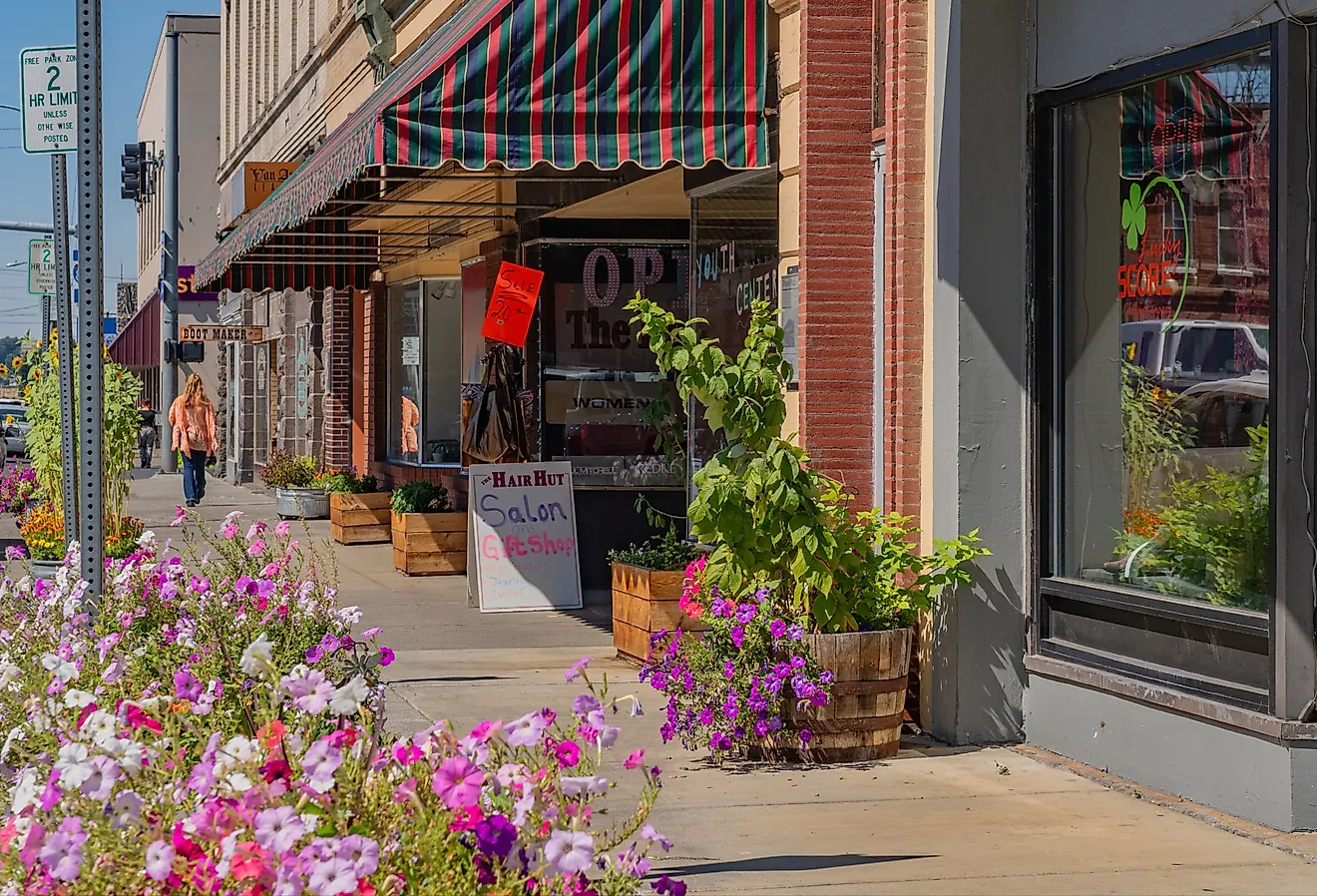
Downtown Ponchatoula is often noted for its "Hallmark movie" aesthetic, featuring gift shops, boutiques, antique stores, art galleries, offices, bars, restaurants and more. Historically the site of this town's industrial and agricultural output, the landmark railroad depot here has been repurposed to house the Ponchatoula Country Market, a spot for locals to display and sell their handmade, homemade and homegrown items. Meanwhile, the arts scene within the downtown square displays an understanding of cultural preservation and contemporary expression, as entities such as the Twin Steeples Creative Arts Center and various independent studios are found in restored buildings, effectively utilizing historic property for modern creative pursuits.
Not only has this small-town center helped earn Ponchatoula the title of "America's Antique City," but the city is also known as the "Strawberry Capital of the World," hosting a highly anticipated annual three-day strawberry festival every spring. Established in 1972, the Ponchatoula Strawberry Festival has grown into Louisiana's largest free harvest event, serving as an annual celebration of regional strawberry farmers and local nonprofit organizations.
Covington

Covington's historic core is recognized as the Division of St. John Historic District, an area encompassing approximately 20 blocks of the original 1813 town plan designed by founder John Wharton Collins. Listed on the National Register of Historic Places in 1982, the district features a unique layout of 360-foot square blocks containing central, 120-foot square interior spaces known as "ox lots," which were historically reserved as common areas for staging the draft animals and livestock used by early merchants and farmers.
H.J. Smith and Sons General Store and Museum, family owned and operated since July 4, 1876, operates as both a long-standing retail business and a museum featuring regional artifacts pertaining to the history of Covington. The 1907 Mission-style Southern Hotel was restored in 2014 to serve as a luxury inn again after decades as a government building, and the Three Rivers Art Festival annually transforms several city blocks into an open-air gallery for paintings, photography, woodwork, sculptures, jewelry and more.
Breaux Bridge

In 1829, Scholastique Picou Breaux, a 33-year-old widow, did something remarkably rare for her era when she drew the Plan de la Ville du Pont Breaux, including space for housing and essential infrastructure like a school, church, and a deliberate network of streets designed to make the settlement a viable mercantile hub along the Bayou Teche. Today, you can see her legacy at Veteran's Park, where her bronze statue surveys the downtown she dared to shape. Fast forward 130 years later, the Louisiana Legislature officially designated Breaux Bridge as the "Crawfish Capital of the World," as the restaurants of this city are known to be the first that offered crawfish openly on their menus and created the now-famous crawfish etouffee.
The Bayou Teche Visitors Center also provides downtown tours of the Legend of the Bayou Teche, the historic bridge, the Veterans Monument, Scholastique's statue and more, though you can easily fill in the gaps here by browsing the local galleries and craft shops located within the district's historic commercial buildings to dive deeper into the arts within this Cajun culture center.
West Monroe

West Monroe's downtown, located on the Ouachita River and famously known as "Antique Alley," still shows many signs of its roots as a 19th-century river settlement named Cottonport. The district is home to more than 40 shops, ranging from traditional antique dealers to specialty stores filled with a diverse collection of vintage finds. History enthusiasts can visit the nearby Biedenharn Museum and Gardens, where a historic home filled with antiques and artifacts is surrounded by one of the most beautiful parks in Louisiana, and there's certainly something for everyone to enjoy here, including a Coca-Cola Museum, Bible Museum, Museum Store and formal English garden.
Visitors also often plan trips to attend annual events such as the Ouachita Live concert series, the Ouachita RiverFest, and the Christmas on the River celebration. Trapp's on the River always lands in the conversation among top local dining options, known for its Cajun cooking, river views and weekly live music, all stemming from the legacy of Bernard Trappey and his famous 1898 hot sauce recipe.
New Iberia

New Iberia and its historic downtown also maintain a direct connection to the Bayou Teche, the waterway that served as this city's initial transportation and industrial artery. Bouligny Plaza is located in the heart of the city and supports numerous public activities, including the Teche Area Farmers Market, where visitors can grab homegrown produce and homemade items from area farmers, artists, crafters and more. The Main Street District's legacy can be further explored by walking the Bayou Teche Boardwalk or browsing the 71 buildings that feature Victorian and Colonial Revival designs, while Shadows-on-the-Teche, a landmark that highlights the lives of those enslaved at the site of this former sugarcane plantation, engages the community in programs that promote art, culture and education. In fact, a collection of roughly 17,000 family letters, photographs and receipts preserved in trunks at The Shadows is still being researched.
The Louisiana Sugar Cane Festival, the World Championship Gumbo Cookoff, and the Bayou Mardi Gras Parade serve as some of the city's primary cultural pillars, bringing the community together through local food, music and, most importantly, valued tradition.
Crowley

Since Crowley's inception in 1887, the city's Historic Commercial District has grown into a Louisiana Main Street community centered on the Court Circle on Parkerson Avenue, maintaining the architecture of the early rice era. According to the Advisory Council on Historic Preservation, Crowley has milled more rice than any city in the country, earning it the title of "Rice Capital of the World." In honor of this designation, Crowley hosts the International Rice Festival annually, which serves as one of the nation's oldest agricultural festivals. The city is also home to more than 200 structures on the National Register of Historic Places, including many with Queen Anne architecture.
Historic buildings play a major role in Crowley's overall presence, such as the Grand Opera House of the South, first opened in 1901 and since revived as an elegant performance space, and the restored 1920 Crowley Motor Company building, which houses four museums with free admission, the Rice Interpretive Center, History of Crowley, J.D. Miller Music Recording Studio, and the Ford Automotive Museum.
Natchitoches

Natchitoches, founded in 1714, is the oldest permanent European settlement in the Louisiana Purchase territory that is now Louisiana, and downtown Natchitoches, as well as the adjacent neighborhood, is a National Historic Landmark District that hosts historic home tours, trolley and boat excursions, museums, art galleries, libraries, antique shops and culinary destinations. It has long been a captivating backdrop for cinema too, hosting the production of beloved films such as Steel Magnolias, The Horse Soldiers and The Man in the Moon, as well as later projects like American Standard and The Year Without a Santa Claus, so feel free to trot through the same paths as John Wayne, Dolly Parton and others on a relaxing horse-drawn carriage ride from Cane River Carriage Company.
For all the sports junkies, the 27,500-square-foot Louisiana Sports Hall of Fame and Northwest Louisiana History Museum complex is a permanent home for portraits, memorabilia and other items celebrating the accomplishments of more than 300 legendary athletes, coaches and sports figures throughout the state's rich athletic history, in addition to an exploration of cultural traditions from early Native American civilizations to now.
Abbeville

Abbeville rose from a land acquisition in 1843 by Père Antoine Désiré Mégret, who designed the village to mirror the aesthetic of his French birthplace and ultimately placed Magdalen Square at the town's center, where it remains the primary spot for local events and gatherings. The Vermilion Parish Courthouse serves as the administrative seat of the parish, continuing a tradition of governance that has occupied this specific area since the 1840s, while the Abbeville Cultural & Historical Museum offers visitors insight into regional Acadian artifacts and art, and the St. Mary Magdalen Catholic Church borders the square with a historic cemetery and rectory on its three-acre site. Now for foodies that like to do it big, each November the city hosts the famous Giant Omelette Celebration, where professional chefs prepare a massive 5,000-egg omelette over a 12-foot skillet directly next to the beautiful town square.
St. Martinville

Originally established as the "Attakapas Post" on the banks of the Bayou Teche to facilitate trade and settlement, St. Martinville's focus lies at the St. Martin de Tours Catholic Church Square, where the must-see 1836 St. Martin de Tours Catholic Church, the 1856 Presbytre and a pre-Civil War parish hall all face a central, tree-shaded plaza that has served as the town's social and religious nexus since the colonial era. Acadian, African, French, Italian, and Spanish influences have preserved their unique traditions while weaving together into a distinctive "cultural gumbo" that surfaces through dancing, festivals and more often than not, food.
Located in the historic downtown near the square, the Duchamp Opera House, an architectural landmark constructed circa 1830, is recognized as the oldest commercial building in Acadiana and a historic opera house. Further into the district, the African American Museum documents the essential roles of the enslaved people and free people of color whose labor and culture built the Attakapas District. A short walk away, Evangeline Oak Park also features the legendary live oak tree immortalized in Henry Wadsworth Longfellow's 1847 poem as the site where an exiled Acadian heroine awaited her lost lover.
The Heart Of Louisiana's Squares
What these nine locations share is a commitment to their original purpose, serving as the gravity for the city. From their days as early trading posts to their current role as centers for regional festivals, these squares have held local life together for generations. Together, they complete the picture of this state's true character, thus using these downtown districts as your guide presents a chance to step inside the historic journeys that built Louisiana from the ground up.