9 Best Places To Live In Massachusetts In 2026
Massachusetts is an appealing place to live in 2026 due to its strong support for older adults and excellent living conditions. Cambridge has long been a draw as the home of both Harvard and MIT, and the more recent addition of the Kendall Square innovation district, while Falmouth attracts those looking to retreat to the coast, where days might be spent walking or biking along the Atlantic shoreline. Somerville prioritizes cultural offerings and creative development, home to more artists per capita than almost any other city in the country, and Amherst is an agricultural hub, with plenty of opportunities for outdoor recreation and one of the largest natural history museums in New England. No matter your budget or your focus, these nine Massachusetts towns are ready to welcome you home.
Cambridge

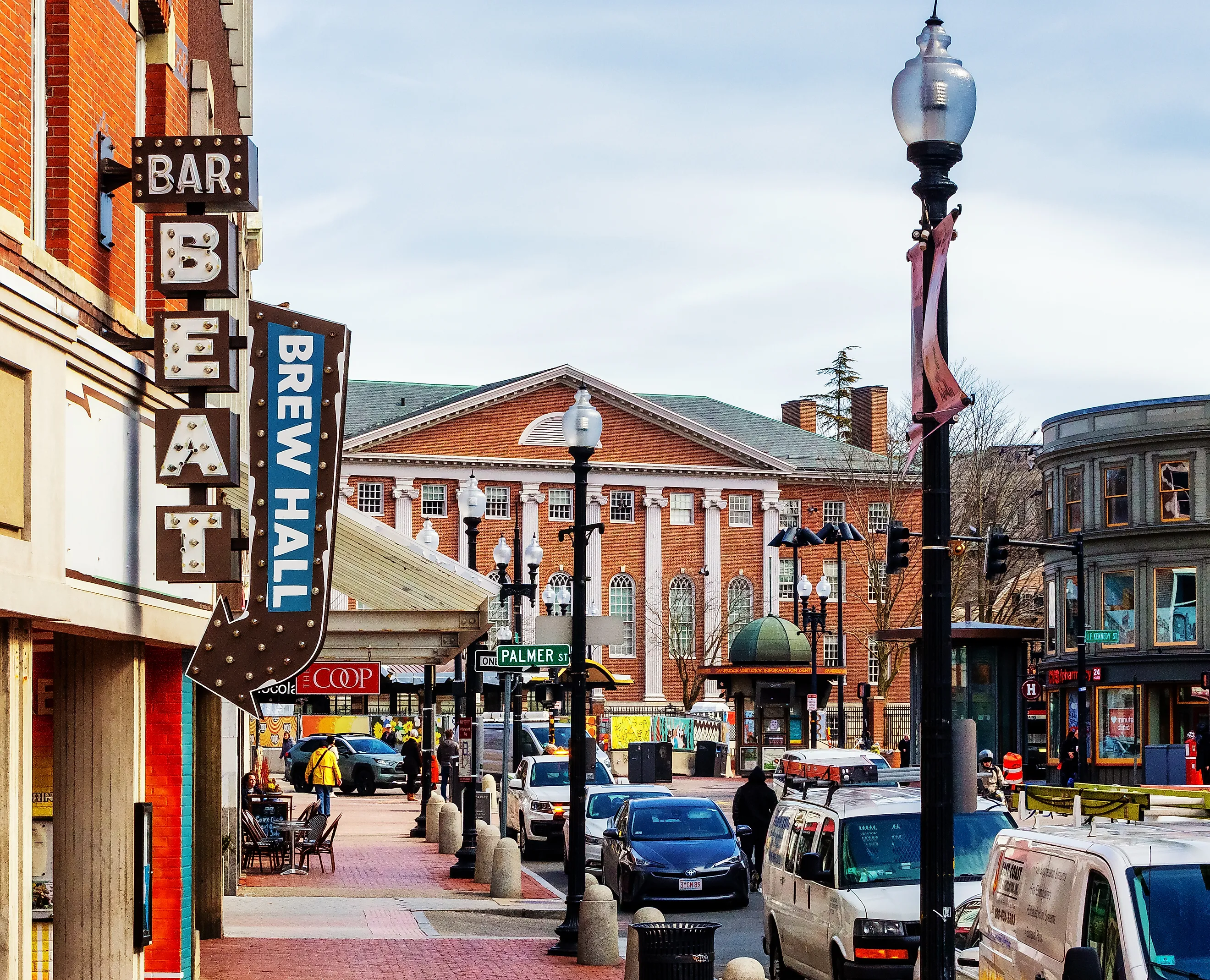
Cambridge boasts diverse neighborhoods, excellent public schools, and a dynamic economy centered around world-renowned universities. The city's unique identity has grown around Harvard and MIT, as well as the Kendall Square innovation district. While average rents and home prices are above state averages, living in Cambridge means having access to some of the world's most renowned cultural institutions and industries at your doorstep.
Cambridge is unmatched in Massachusetts for the density of high-wage employment. Kendall Square alone hosts Takeda Pharmaceutical, Moderna, Google, Biogen, Philips, and hundreds of biotech startups. The Cambridge Innovation Center, meanwhile, supports over 300 life science and biotech organizations. For remote workers and freelancers, the city's density of coworking spaces, coffee shops, and neighborhood culture makes it an ideal live-work environment with a mix of flexibility and convenience.
Somerville

Somerville earns its reputation as having more artists per capita than any American city except New York, according to the city's official statistics. It has 20 distinct city squares and walkable neighborhoods, offering a mix of restaurants, arts venues, and community cultural events, such as concerts at Union Square and the Somerville Arts Council's Carnival. The Somerville Community Path provides a dedicated cycling and walking corridor through multiple neighborhoods. Meanwhile, East Somerville's restaurant crawl culture reflects genuine culinary diversity, with Haitian, Salvadoran, Brazilian, and Korean restaurants alongside long-standing neighborhood spots.
Somerville's median home price is more accessible than neighboring Cambridge, and the city's Inclusionary Housing Program supports income-restricted units for both rental and ownership. The Office of Housing Stability, established in 2018, actively helps residents navigate the financial pressures of homeownership and high rents. Assembly Row, Somerville's revitalized industrial district, has become an employment hub with several companies setting up shop in recent years, and its access via the Red Line and GLX to the full Boston-Cambridge job market makes it an even more appealing destination for putting down roots.
Newton

Newton is an upscale suburb where you can walk to dinner at a James Beard-nominated restaurant and catch the Green Line to downtown Boston in under 30 minutes. With four commuter rail stops and Green Line D service, residents have incredible access to the full Boston employment market as well as all the attractions and amenities of a world-class urban center. While house prices are steep in this desirable sleeper city, first-time buyers statewide can access MassHousing's Down Payment Assistance program, which provides up to $30,000 in 2026, as well as support through the ONE Mortgage Program available through several local lenders.
Newton is home to hundreds of acres of parkland and conservation areas, including the Charles River trails, Cold Spring Park, and the Norumbega section of the Charles River Reservation, all easily accessible on foot or by bike from most of its neighborhoods. Meanwhile, Newton's cultural programs, such as Spring Fest and the Harvest Fair, provide residents with plenty of activities throughout the year.
Waltham

Waltham is simultaneously a biotech employment hub, similar to Cambridge, and a diverse food destination. The city's housing stock is diverse, mixing older Victorian homes with newer construction near the Charles River and Brandeis University. Moody Street is the town's restaurant district, which is a huge regional draw featuring authentic Indian, Brazilian, Korean, and Mediterranean restaurants. The Charles River waterfront has cycling trails and kayak rentals for the outdoorsy types, while Lyman Estate's gardens, also known as the Vale, and the Watch City's historic mill buildings add architectural charm. Both are open to the public for self-guided walking tours.
Professionals will find Thermo Fisher Scientific's HQ, alongside AstraZeneca's Massachusetts campus, Fresenius Kabi, Boston Dynamics, PTC, and Alnylam Pharmaceuticals. Meanwhile, Brandeis University attracts students from around the world, further underscoring the city's dynamic cultural appeal. For remote workers, Waltham's walkable downtown and wealth of independent coffee shops support the growing trend in a way that feels sustainable and social.
Lexington

Lexington has earned top marks across schools, crime and safety, outdoor activities, diversity, and family environment. The town of roughly 35,000 residents sits northwest of Boston, close enough for an easy commute. Like other places on this list, Lexington's proximity to the city and its premium location command premium prices. For families who can afford the entry point, however, Lexington delivers exceptional long-term value with several employers based in and around town, including firms affiliated with MIT research networks.
Minute Man National Historical Park stretches through Lexington, as well as neighboring Lincoln and Concord, offering historic Revolutionary War trails where residents can run, cycle, and walk their dogs year-round. The Lexington Community Center, Willard's Woods, and over 20 conservation areas provide additional recreational infrastructure that most towns of this size can't match. For creative types, Munroe Center for the Arts runs pottery, painting, and music programs, while live performances by the Lexington Symphony round out the cultural calendar.
Falmouth

Falmouth offers a rare combination of year-round infrastructure and classic Cape scenery that many smaller towns can’t match. The town has over 68 miles of coastline and multiple public beaches, alongside the Shining Sea Bikeway, a scenic 10.7-mile paved path that runs from North Falmouth to Woods Hole and is widely used for cycling, running, and walking. Woods Hole itself boasts globally recognized institutions like the Woods Hole Oceanographic Institution, the largest research center of its kind in the world, and the Marine Biological Laboratory, bringing a steady population of researchers and professionals.
Beyond lifestyle, Falmouth stands out for its practicality and housing diversity relative to other Cape towns. It offers a mix of classic Cape Cod homes, waterfront properties, and more modest inland neighborhoods, giving buyers more flexibility than in more exclusive markets like Chatham or Provincetown. The town also benefits from proximity to the mainland at just over an hour to Boston without needing to cross the Cape Cod Canal bridges from farther east, making it a viable option for hybrid workers and even commuters. Add in ferry access to Martha’s Vineyard, strong public schools, and a robust parks and conservation system, and Falmouth becomes one of the few places on Cape Cod that works not just as a summer destination, but as a sustainable place to live year-round.
Worcester

Worcester is Massachusetts' second-largest city, anchored by a university ecosystem that includes Clark University, WPI, College of the Holy Cross, and UMass Medical School, among others. Its cost of living runs about 13% lower than the Massachusetts state average, making it one of the most compelling value propositions in the region. The Canal District and Main South neighborhoods have attracted significant new development, including renovated lofts and townhomes alongside historic triple-deckers. For buyers, Worcester's affordability makes it great for both investors and first-time home owners.
The Worcester Art Museum is home to a globally significant collection spanning more than 5,000 years, including renowned holdings of Japanese woodblock prints, European and American paintings, and one of the largest arms and armor collections in the country, while Shrewsbury Street's restaurant row has built a genuine food culture around Worcester, particularly when it comes to authentic Italian cuisine. For fun beyond town, Wachusett Mountain, roughly 30 minutes from town, provides skiing, hiking, and mountain biking access closer than most major population centers in the region.
Northampton

Northampton is known locally as the "Paradise City." It is home to Smith College, one of the country's most prestigious liberal arts colleges, which infuses the city of approximately 30,000 with a permanent intellectual and cultural reputation. Smith College is a cornerstone of the town's economy as well, in addition to Cooley Dickinson Hospital, both of which draw and employ a large number of residents. The downtown strongly emphasizes locally owned businesses, with independent bookstores, restaurants, galleries, and performance venues forming the core of its identity, and the annual First Night Northampton on New Year's Eve and the Pulaski Day Parade in October bolster a community calendar that's busy all-year round.
Amherst

Not to be outdone by other towns on this list with a strong academic focus, Amherst is home to three colleges: UMass Amherst, Amherst College, and Hampshire College. Over 50 operating farms and 2,000 acres of protected farmland sustain a genuine agricultural sector and a farm-to-table restaurant culture, which sets it apart from more urban centers closer to Boston and the coast. UMass Amherst's research output draws federal and private grants, supporting research employment across sciences, engineering, and social sciences.
The Emily Dickinson Museum invites visitors to tour the homestead where Dickinson was born, died, and did most of her writing, and the Beneski Museum of Natural History is one of the largest of its kind in New England. For leisure, Amherst Cinema screens independent films and Hollywood blockbusters, while the surrounding region offers excellent access to the outdoors. The Metacomet-Monadnock Trail runs through town along the Mount Holyoke Range on its route between Connecticut and New Hampshire, while Mount Sugarloaf State Reservation opens up to summit views of the Connecticut River Valley a short drive from town.
Come Home to Massachusetts
Massachusetts offers an extraordinary range of places to call home in 2026, from innovation-driven cities like Cambridge and Worcester to coastal communities like Falmouth and culturally rich college towns like Amherst and Northampton. Whether you prioritize career access, affordability, outdoor space, or creative energy, each destination on this list delivers a distinct lifestyle backed by strong local infrastructure and identity. Ultimately, the “best” place comes down to how you want to live, but across the state, there’s no shortage of compelling options.