9 Best Downtowns In South Australia
Robe shipped a fortune in wool out of Guichen Bay before the railways stole its trade. Hahndorf laid down its first German shopfront in 1839 and never tore it up. These South Australian towns kept their main streets exactly where the bullock teams and paddle steamers left them. The stone is still standing on Murray Street and High Street and Randell Street. Each one tells you what built the place long before anyone called it heritage. Walk the centre of any of them and the wool money and copper money and wine money is right there in the masonry.
Hahndorf

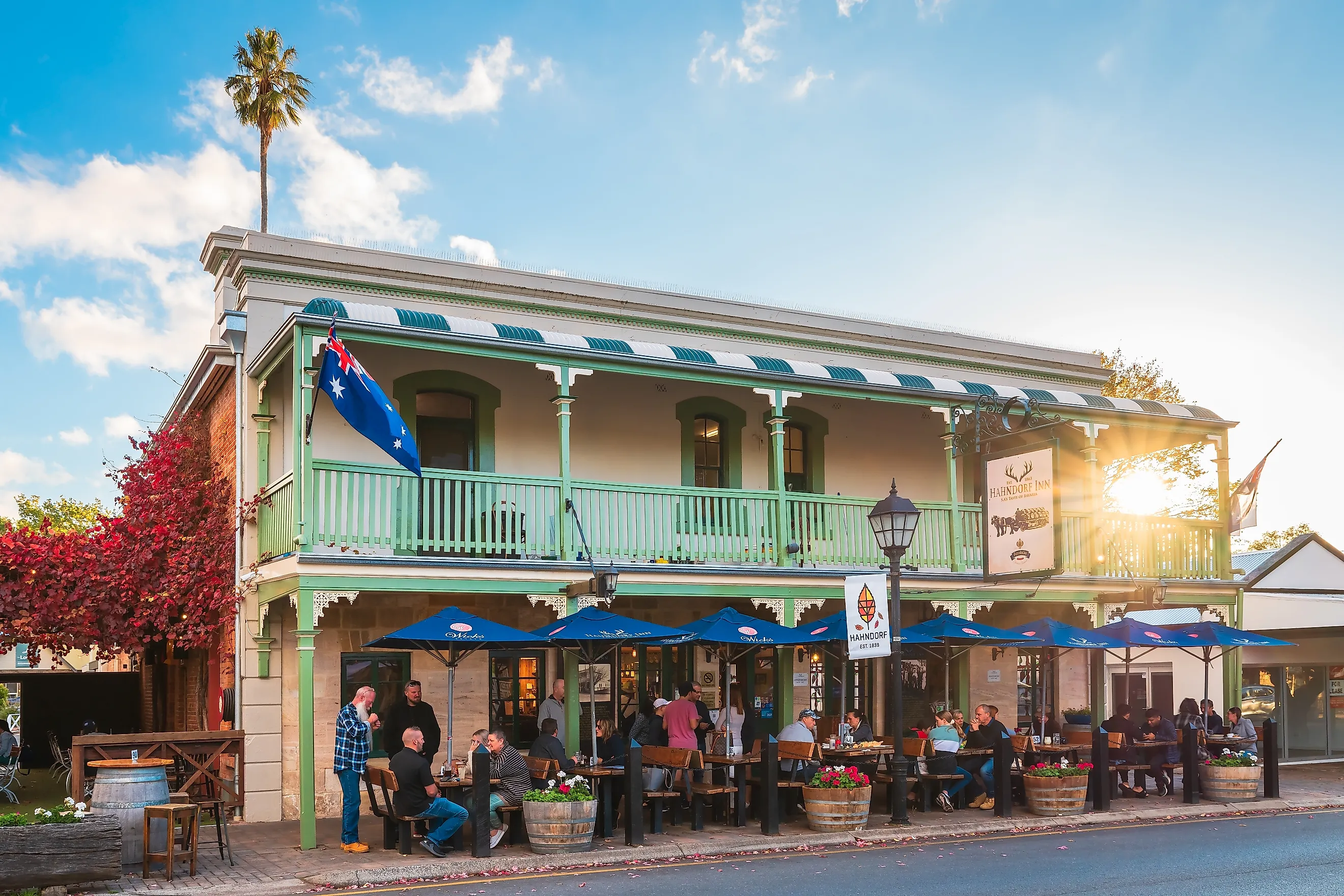
Lutherans fleeing Prussian persecution stepped off the ship in 1839 and built the oldest surviving German town in Australia, and Main Street still runs the way they laid it. Stone buildings and timber trim line the road, shaded by elms that reach for several blocks. The Hahndorf Academy holds down the street from an 1857 schoolhouse, now packed with galleries and a museum that runs from the Peramangk people who called the place Bukartilla through the German settlers who renamed it. Historic shopfronts still face the road, most of them still working storefronts. The German Arms Hotel anchors the southern end among the bakeries and butchers and food shops that keep the whole street fed.
Strathalbyn

The Angas River loops through a bend in the middle of town, and the Soldiers Memorial Gardens claim the whole peninsula. Lawns, shade trees, duck ponds, and stonework run right up to the edge of High Street. The war memorial went up in 1921 for the district's First World War dead, with a bronze plaque added in 1949 for the Second. Cross into the business district and the Victorian stone takes over, much of it now occupied by antique dealers who have made the town a hunting ground for collectors. The storefronts have barely changed since the riverboat era that first put money in the place.
Tanunda

Wine money built the bluestone face of the former Tanunda Institute, and it still commands its stretch of Murray Street. The town raised it in 1879 as a hall with meeting rooms and a reading room, then handed it to the Barossa News and later the Barossa & Light Herald to print the local paper. Murray Street rolls on from there through blocks of stone shopfronts holding wine merchants, bakeries, and specialty retailers. Cellar doors sit shoulder to shoulder with businesses that have traded here for generations. The valley made its fortune on grapes, and the nineteenth-century facades along this street are where it spent the money.
Burra

Copper turned Burra into one of the richest mining towns in the colony, and Market Square still sits at the centre of the spend. Stone buildings from the nineteenth-century boom ring the open square, including the Market Square Museum, a former house, post office, and general store. The Burra Hotel watches the square from a corner, with old bank buildings and business premises crowding in beside it. Side streets run down toward Burra Creek and the mine works, including the Monster Mine you can walk into. Buy a Burra Heritage Passport and the key opens locked sites like Morphett's Engine House and Redruth Gaol, all within a short walk of the square.
Port Elliot

Australia's first public railway ran horses down to Port Elliot in 1854, hauling River Murray cargo from the Goolwa wharves to ships waiting at Horseshoe Bay. The Strand still drops toward Encounter Bay through the strip that trade built, past bond stores, stone cottages, and shopfronts from the port-and-rail years. The Port Elliot Bakery works out of one of the best-known heritage buildings on the street, and the line out the door proves it. The anchorage turned out to be a killer in bad weather, which is why the railway pushed on to Victor Harbor a decade later. Walk to the bottom of the street and the view opens onto Horseshoe Bay, where rocky headlands frame one of the most photographed stretches of the South Australian coast.
Robe

For a few wild decades Robe ran second only to Port Adelaide for customs revenue, and the limestone Customs House at Royal Circus is where the money changed hands. Its red-brick quoins still mark the old harbour precinct above Guichen Bay. Wool wagons once banked up along Victoria Street and Mundy Terrace, queuing for the jetty in lines that stretched out past the edge of town. The street still runs through a parade of limestone buildings and whitewashed cottages, with the Robe Hotel holding court among the boutiques and galleries. Walk Victoria Street toward the water and the harbour opens up, fishing boats coming in as the light goes.
Clare

Tall plane trees throw shade over Main North Road, and under them sit the old coach inns and hotels that served the wagons rolling through. Wine merchants and food shops work the street now, the public face of the Clare Valley wine region. The town came up as a service centre for the farms and pastoral stations along the Hutt River, hauling supplies long before a vine paid a bill here. Wine eventually took over, and the businesses moved into the original stone facades without knocking them down. Step past the central blocks and the Hutt River runs through parkland a few minutes from the shops.
Willunga

The slate underfoot in Willunga came out of the hills right behind town, and it shows up everywhere from retaining walls to the shopfronts climbing High Street. The street rises through buildings raised during the quarrying years. At 61 High Street, the Willunga Slate Museum keeps the tools, photographs, and quarry records of the industry that named the place. The Willunga Hotel takes the best corner in the business district, flanked by stone storefronts now holding cafes and shops. A short walk off the strip, the Willunga Quarry Market spreads out with produce, plants, handmade goods, and collectables, pulling the town's trade beyond High Street one weekend at a time.
Mannum

The PS Marion has floated on the Murray River since 1897, and she is still moored at Mannum where Randell Street meets the water. Former hotels, stores, and riverfront premises line the main street, most of them dating to the paddle-steamer trade that made the town. The Mannum Dock Discovery Centre sits beside the restored steamer, wrapping in river-history exhibits, the Randell Dry Dock, and the visitor centre. Across the street, parkland runs along the bank with long views of the river. The working-river story is not in a frame here, it is tied up at the wharf.
Stone That Still Earns Its Keep
Robe shipped wool, Burra dug copper, Tanunda crushed grapes, and Port Elliot ran the first rails in the country to the sea. Every one of these main streets still does business out of the buildings that fortune put up. The Angas River still bends through Strathalbyn, the PS Marion still fires her boiler at Mannum, and the slate still climbs High Street in Willunga. South Australia kept the proof of how it got rich right where everyone can walk past it.