8 West Virginia Towns Where Time Stands Still
There are many states in the U.S. where traces of earlier eras remain visible, and West Virginia is one of the clearest examples. Across the state, small towns continue to reflect the industries, events, and daily rhythms that shaped them decades or even centuries ago. From sites tied to abolitionist history and early engineering to towns rooted in railroads, mining, and river trade, these places maintain a strong connection to their past. The following West Virginia towns offer a glimpse into communities where historical foundations continue to shape the present, creating the sense that time has stood still rather than moved forward.
Harpers Ferry

Also called “Peter’s Hole,” Harpers Ferry has historical influence as an 18th-century town that began in the 1730s as a peninsular standpoint for Peter Stephens, but was later purchased by Robert Harper, who operated a ferry across the Potomac River. John Brown’s Fort is a landmark where you can learn about the famous abolitionist who sheltered with his followers inside a late 1840s building. Jefferson Rock is a natural detour with Appalachian Trail views, shale rock formations, and scenic hillsides for trekkers seeking a quiet escape. The town can also be viewed from elevated areas where Thomas Jefferson once stood in the 1780s.

At Chapel of St. Peter, visitors encounter local parishioners and Civil War-era docents while observing chapel architecture and religious services. For dining, The Rabbit Hole offers indoor seating and a casual atmosphere, along with pork fries and house salads.
Lewisburg

Lewisburg is an easygoing West Virginia town named in the 1750s after Andrew Lewis, a militia captain who encouraged settlers to move west of the Alleghenies, with later incorporation in 1782. Visitors to the North House Museum can see how past residents lived through Civil War-era relics and period furniture. The Lost World Caverns is a 1940s attraction where visitors descend 120 feet below ground to view stalactites and stalagmites, including the 30-ton Snowy Chandelier.
Carnegie Hall, built more than a century ago, blends historical significance with live performances and remains a local entertainment venue. The French Goat offers farm-to-table French cuisine in a historic setting, along with a cocktail menu. Guests can dine indoors or walk through the garden terraces.
Berkeley Springs

Berkeley Springs has long been known for its warm mineral waters and early settlement history. First called Medicine Springs in the 1740s, when Native Americans were present in the area, the town gained wider recognition after George Washington visited, following earlier references noted by Thomas Jefferson’s father. The Museum of the Berkeley Springs introduces visitors to the history of the warm mineral springs and their influence on the community. It is located in an upstairs section of the 1815 Roman Bath House. Berkeley Springs State Park features hot springs that produce about 2,000 gallons of mineral water per minute and are commonly used for spa and sauna relaxation.
The Historic Star Theatre, dating to the 1920s, continues to show films in a traditional setting, including mainstream releases and independent screenings. Charlotte’s Cafe operates as a local diner serving coffee and breakfast dishes such as Philly cheesesteak and avocado toast.
Thomas

Thomas is a West Virginia town that draws visitors through its setting and history. Dating back to the 1880s, the town played an important role in coal and timber production and was named after Thomas Beall Davis, who was central to its coal industry development. Blackwater Canyon Trail features waterfalls and mountain scenery for cyclists and hikers exploring the surrounding landscape. Gradient Project Space displays contemporary art and regularly hosts film screenings and community events.
The Purple Fiddle serves as a music venue and eatery that hosts touring bands, including bluegrass and jazz performers. Happy & More Bakery & Cafe operates as a local gathering place offering pastries, cinnamon rolls, and sandwiches.
Shepherdstown

Often cited as one of the oldest towns in the state, Shepherdstown is a Potomac River community with roots in early German colonial settlement during the 1700s. The James Rumsey Monument remains a prominent local landmark honoring the pioneer of steam navigation on the Potomac River and serves as a frequent point of interest for visitors. Near Shepherd University, the town reflects an active academic presence, with students and faculty contributing to daily activity around campus.

Shepherdstown Pedal & Paddle provides bicycle and kayak rentals along with repair services for visitors traveling through the area. Four Seasons Books is an independent bookstore known for its literary selection and long-standing presence in the town since the 1990s.
Buckhannon

Originally established in 1816 and named after a Delaware chief or missionary, Buckhannon is located along the Buckhannon River. Buckhannon Dog Park provides a fenced recreational space near the water, with a boat ramp and open areas used by local residents. Pringle Tree Park offers public picnic areas and playgrounds set among sycamore trees along the river. The park also references the area’s earlier settlement in the 1760s by Samuel and John Pringle.

Artistry on Main features handcrafted gifts and woodwork created by local artisans, along with workshops and classes for visitors. Skateland operates as a family-friendly roller skating venue with a retro atmosphere and has been in operation since 1950.
Hinton

Hinton was established in 1873 and later chartered in the 1890s, becoming an early transportation hub in the region. The Hinton Railroad Museum displays artifacts from the early days of the Chesapeake and Ohio Railway, including references to the Steel Drivin’ Man, John Henry, and uniforms worn by railroad workers. Brooks Falls Roadside Park features river views, rapids, and small waterfall drops along the roadside.
Bluestone State Park covers 2,154 acres and includes lake access, fishing areas, and campgrounds. Otter & Oak is a local boutique offering outdoor apparel and artisan-made goods, with a small café area serving coffee.
Fayetteville

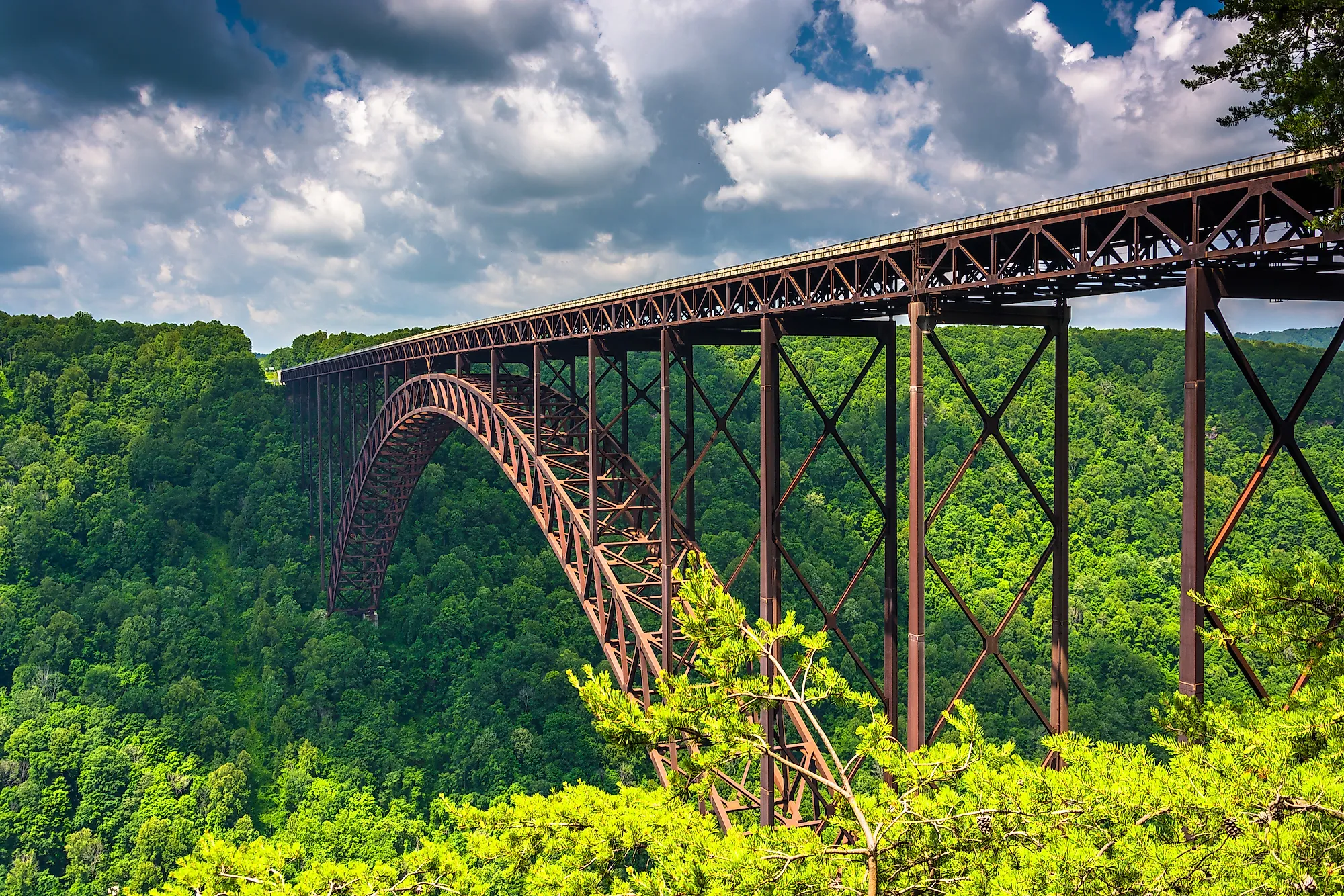
Fayetteville is a small town located just south of the New River Gorge Bridge. Recognized as early as the 1830s, the town developed further after the 1870s as the surrounding area became more accessible. The New River Gorge Bridge is a prominent local landmark known for its steel arch design and pedestrian catwalks, which allow visitors to view the structure over a two- to three-hour walk. Wolf Creek Falls offers a short hike leading to creekside views and elevated overlooks.

The Cathedral Cafe operates in a former church building and serves breakfast and lunch items, including frittatas and desserts. Pies & Pints is a local restaurant offering a menu that includes char-grilled wings and specialty pizzas.
Where History Shapes Daily Life in West Virginia
Each of these towns reflects a different chapter of West Virginia’s past, shaped by geography, industry, and long-standing local institutions. Through preserved landmarks, enduring town centers, and traditions that continue across generations, they offer a sense of continuity that is increasingly rare. Together, these places show how history in West Virginia is not confined to museums or monuments, but remains woven into everyday life across the state.