8 Wallet-Friendly Small Towns To Retire In Italy
Retiring in Italy can still be affordable when retirees look beyond famous cities and resort towns. Focusing on towns with fewer than 50,000 residents, each spot features housing prices that fall far below Italy’s national average of € 2,188 per square meter. Sulmona is especially wallet-friendly at €884 per square meter, while Lanciano sits at €1,101 and Spoleto at €1,195. With plenty of amenities throughout, retirees can visit Orvieto’s Duomo or soak at Fonteverde in San Casciano dei Bagni. With mountain or coastal access and thermal-spa scenery, without the high housing costs of big cities, these eight wallet-friendly Italian towns make retirement feel financially realistic yet rich.

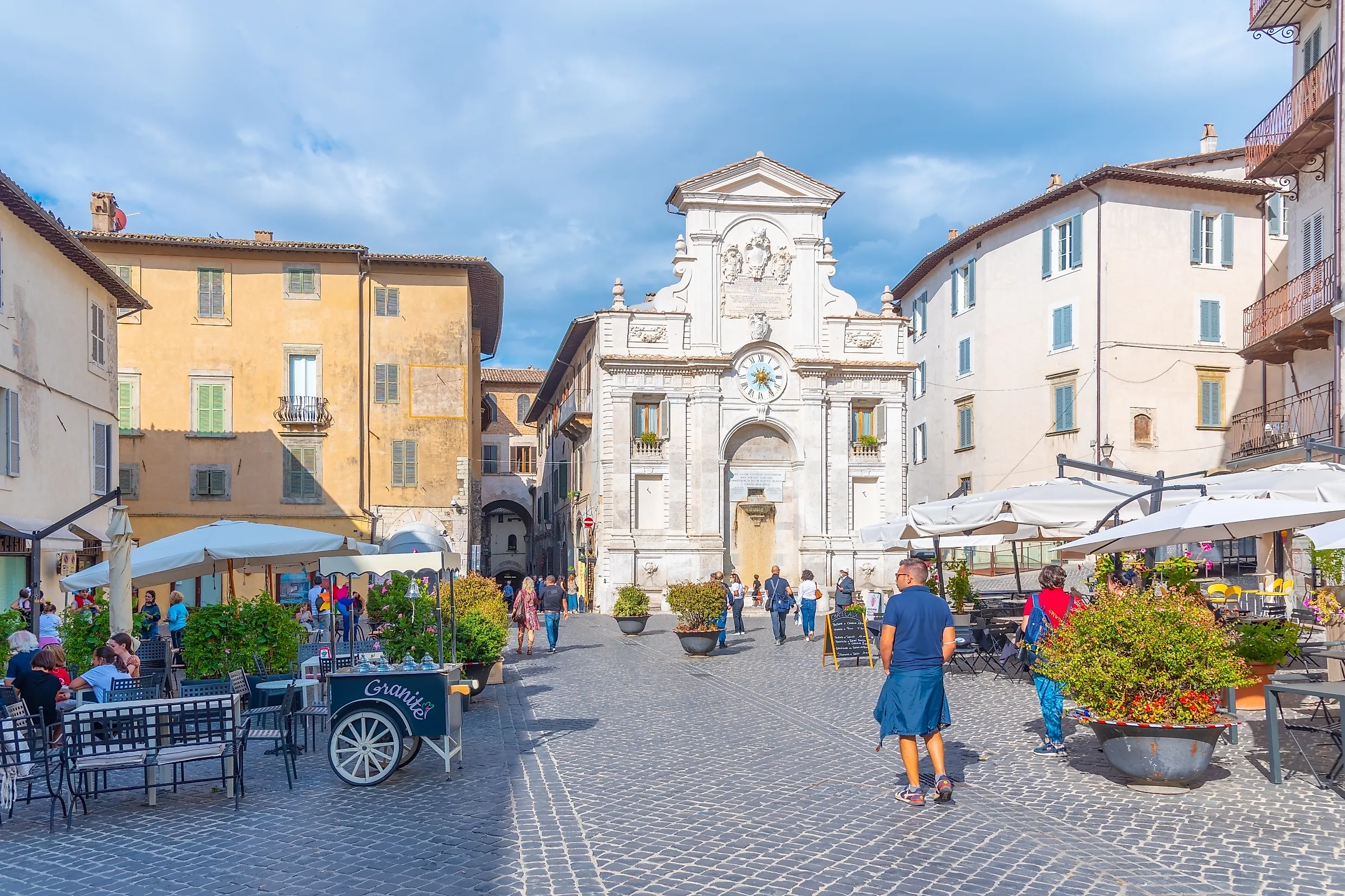
Spoleto gives retirees an Umbrian hill-town setting without the highest central Italian housing costs. Immobiliare.it listed Spoleto’s April 2026 residential asking price at €1,195 per square meter, far below Italy’s national average of €2,188. That gives the town a real affordability advantage while still placing retirees in one of Umbria’s most visually memorable cities.
The town’s appeal starts with the historic center where the Duomo di Spoleto, Rocca Albornoziana and older streets give daily walks more variety than a simple village routine. Umbria Tourism describes Spoleto as one of the region’s most fascinating art cities. The broader Spoleto area also supports walking, cycling, wineries, olive mills, restaurants, and cultural experiences. The Festival dei Due Mondi adds a major arts tradition with programming tied to music, dance, opera, and theater. Spoleto works well for retirees who want culture, hill-town scenery, and enough activity to keep the town from feeling too quiet outside the tourist season.
Orvieto

Orvieto stays below Italy’s national housing benchmark while offering the kind of historic setting that usually comes with a much higher price tag. Immobiliare.it listed Orvieto at €1,740 per square meter in April 2026, which keeps it under Italy’s €2,188 national average. For retirees looking a town with beauty, services, and train access between Rome and Florence, that balance is ideal.
The retirement appeal is easy to understand from the first walk through town. Orvieto Viva highlights the town’s tufa outcrop, Duomo di Orvieto, Pozzo di San Patrizio, the ancient center, churches, palaces, and underground tunnels and caves as defining parts of the visit. The funicular connection from the lower town also helps make the hilltop setting more manageable, especially for retirees who want the views without relying only on steep streets. Orvieto is best for retirees who want a smaller city with architecture, restaurants, train access, and enough museums and historic sites to make ordinary weeks feel less repetitive.
Sulmona

Sulmona offers one of the strongest affordability profiles here with Immobiliare.it listing April 2026 residential asking prices at €884 per square meter. That puts the town well below both Italy’s national average and many better-known central Italian destinations. The lower cost is especially appealing because Sulmona still gives retirees a historic center, mountain scenery, and enough local identity to feel memorable.
Italia.it describes Sulmona’s historic center as the heart of a city known since antiquity as the birthplace of the Roman poet Ovid and today closely associated with confetti, the sugared almonds used for celebrations. Retirees can spend time along Corso Ovidio, visit churches and piazzas in the old center, browse confetti shops, and use Sulmona as a base for the surrounding Abruzzo landscape. The Majella National Park area also gives the town outdoor access without requiring retirees to live in a remote mountain village. Sulmona is a good fit for retirees who want a lower-cost town with history, food traditions, and mountain views close to everyday life.
Ascoli Piceno

Ascoli Piceno offers retirees a polished historic setting at a price that remains below Italy’s national average. Immobiliare.it listed April 2026 residential asking prices at €1,353 per square meter, keeping the city comfortably below the national figure of € 2,188. It is also a larger small town by this list’s standards, giving retirees more restaurants, services, events, and cultural options than a tiny hill village can usually provide.
The town’s daily-life appeal centers on Piazza del Popolo, one of the most beautiful public squares in the Marche. Caffè Meletti sits directly on the square and is listed by the Comune di Ascoli Piceno as one of Italy’s historic cafes, still preserved in its original Liberty style. The Cathedral of Sant’Emidio, travertine streets, local markets, and nearby mountain scenery offer more reasons to stay active without the need for a large-city pace. Ascoli Piceno is especially appealing to retirees who want a town that feels elegant and lively yet manageable for daily walks, cafe routines, and errands close to the center.
Città di Castello

Città di Castello gives retirees an affordable Umbrian base with a more everyday feel than some of the region’s heavily visited hill towns. Immobiliare.it listed the town at €1,334 per square meter in May 2026, which is well below Italy’s national average. The town also remains under the 50,000-person limit, with ISTAT-based population sources placing it in the high-30,000 range.
The most distinctive cultural draw is the Fondazione Palazzo Albizzini Collezione Burri, which operates two major museum sites in Città di Castello, Palazzo Albizzini and the Ex Seccatoi del Tabacco. The foundation describes the collection as dedicated to Alberto Burri who was born in the town. Italy’s culture ministry notes that Palazzo Albizzini includes about 130 works arranged across 20 rooms. Beyond the Burri museums, retirees have a historic center, local restaurants, churches, and easy access to the Upper Tiber Valley. Città di Castello works for retirees who want art, affordability, and a town that still feels tied to local life rather than only seasonal tourism.
Lanciano

Lanciano offers retirees a lower-cost Abruzzo town with a historic center and access to the Adriatic coast. Immobiliare.it listed Lanciano’s May 2026 residential asking price at €1,101 per square meter, well below the national average. That affordability gives retirees more breathing room while still keeping them close to churches, markets, restaurants, and the coast.
The town is best known for the Sanctuary of the Eucharistic Miracle, tied to a religious tradition said to date to the eighth century. Lanciano also includes the older Lanciano Vecchia district, the Basilica della Madonna del Ponte, the Diocletian Bridge area, and nearby wine country, such as Cantina Frentana. These options give retirees several ways to shape a quiet week, whether around religious history, old streets, local food, or short trips toward the Trabocchi Coast. Lanciano is best for retirees who want affordability, Abruzzo culture, and access to both inland history and the Adriatic landscape.
Urbino

Urbino gives retirees a Renaissance city setting without the prices of Italy’s most famous art capitals. Immobiliare.it listed April 2026 residential asking prices at €1,434 per square meter, still below the national average and also below the Pesaro-Urbino provincial average noted in the same market data. That makes Urbino a more attainable option for retirees who want history, university energy, and cultural depth in one small city.
UNESCO describes the historic center of Urbino as a small hill town that became one of Europe’s major Renaissance cultural centers, with walls, bastions, the Ducal Palace, cathedral, monastery, and oratories still defining the old city. Retirees can visit the Palazzo Ducale, spend time around the historic center, see Raphael’s House, and use the town’s university presence to keep the city active through much of the year. Urbino suits retirees who want a beautiful, historic setting that still has students, exhibitions, cafes, and cultural life within the town walls.
San Casciano dei Bagni

San Casciano dei Bagni is small, but it earns its place because it gives retirees a Tuscan thermal-spa setting while still staying below the national housing benchmark. Immobiliare.it listed April 2026 residential asking prices at €1,887 per square meter, well below Italy’s €2,188 average. San Casciano dei Bagni sits in southern Tuscany near the Val di Chiana, not far from the Val d’Orcia.
The town’s retirement appeal centers on wellness and scenery. Visit Tuscany describes Fonteverde as a 5-star thermal spa and resort built around San Casciano’s thousand-year-old springs with thermal waters, gourmet dining, and views over the Val d’Orcia hills. The village itself adds stone streets, restaurants, local food, and nearby countryside drives through one of Tuscany’s most recognizable landscapes. San Casciano dei Bagni works best for retirees who want a quieter routine built around hot springs, walking, small restaurants, and countryside views rather than a busy town calendar.
Italian Retirement Towns With Value And Daily Beauty
The most wallet-friendly retirement towns in Italy are not always the cheapest places on the map. The better options are the towns where lower housing costs still come with beauty, services, cultural life, and enough local activity to make retirement feel comfortable year-round. Spoleto, Orvieto, Ascoli Piceno, Città di Castello, Urbino, and San Casciano dei Bagni offer art, architecture, piazzas, and historic centers, while Sulmona and Lanciano add Abruzzo affordability, sweeping views, and deep local traditions. Together, these eight towns show that retiring in Italy can still feel rich in daily life without needing to buy into the country’s most expensive markets.