8 Illinois Towns Where Time Stands Still
Illinois has experienced a great deal throughout the years, from its people fighting in the American Revolutionary War and the Civil War to the Great Chicago Fire and the Lincoln-Douglas debates. This rich tapestry of state and national history is still ingrained in some of its small towns, where preserved old town districts with vintage architecture and heritage sites transport visitors back to an era when life moved at a gentler pace.
Tucked between rolling prairies, quiet rivers, and storied crossroads, these communities seem stuck between past and present, their character shaped by generations who built and fiercely protected by their descendants. Whether exploring Victorian life in Galena or learning about Mormon heritage in Nauvoo, here are Illinois towns where time stands still.
Galena

This picturesque community in northwest Illinois traces its origins to the early 1800s, when it was founded as a mining boomtown that later evolved into a significant port on the Mississippi River. Galena's rich history is intertwined with the Black Hawk War and was the home to prominent Civil War figures, including Ulysses S. Grant. Today, hundreds of Victorian buildings line the main thoroughfare, providing visitors with a glimpse of the past at the Washburne House. This exquisite Greek Revival home vividly portrays middle-class life at the time.
The Galena Trolley Tours offer a deep dive into the region's history with a narrated excursion through the historic town square, where passengers learn about the backstory of each site from knowledgeable local guides. A break in the open spaces beckons at Grant Park, whose peaceful walking trails, grassy picnic lawns, and stunning vistas of the Galena River allow you to unwind in a rich natural environment.
Woodstock

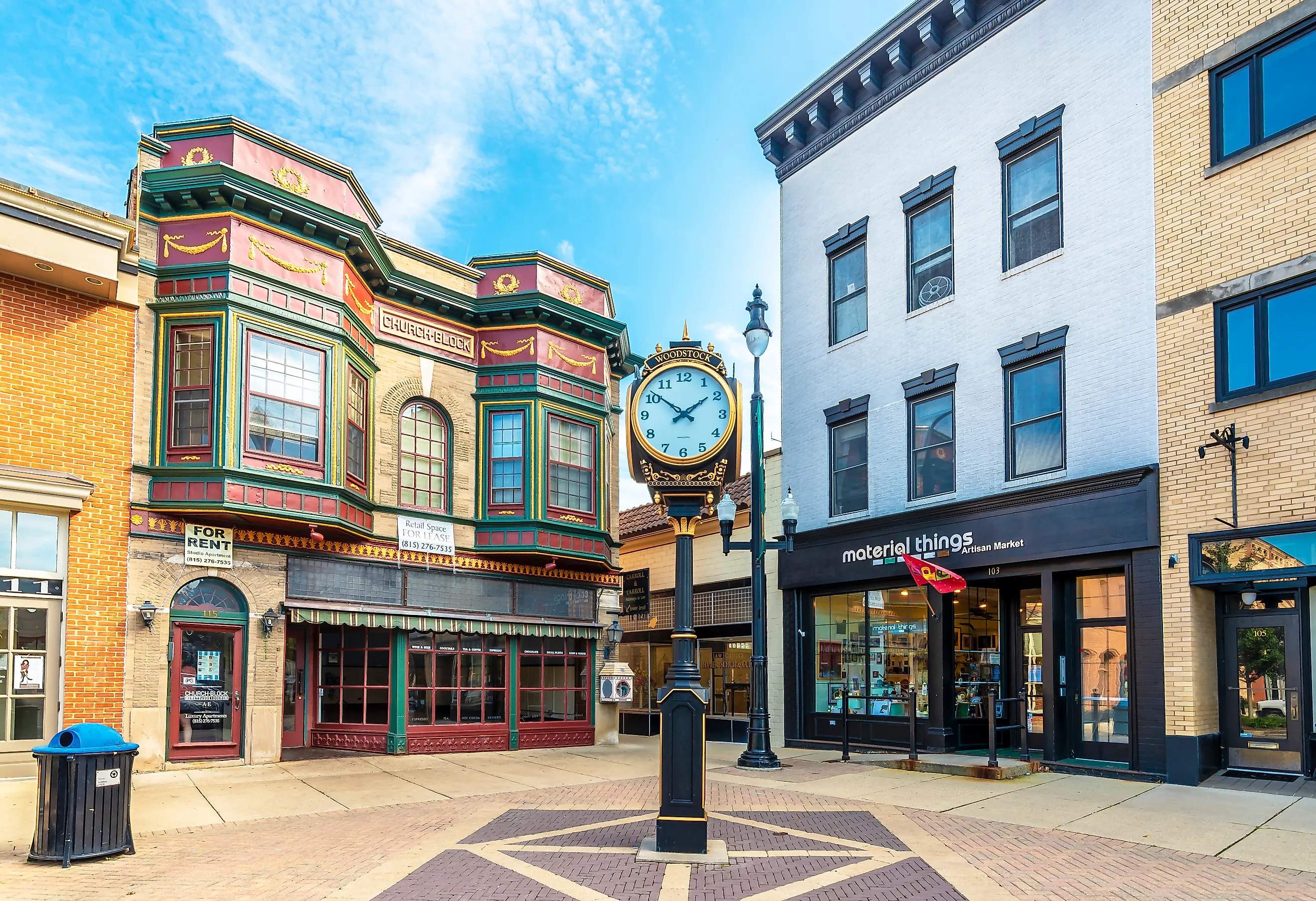
Established in the 1840s as Centerville, this McHenry municipality was renamed Woodstock in 1845. Its growth is credited to the arrival of the railroad in the mid-1800s, and Woodstock gained national prominence when it was featured in the 1993 comedy "Groundhog Day." The Woodstock Square Historic District paints a picture of the town's bygone eras with its delightful display of historic architecture. It harbors several notable landmarks, most notably the Woodstock Opera House, which was constructed in 1889 and serves as the area's hub for theatrical performances, concerts, and art exhibitions.
The Dufield Pond Conservation Area offers a serene setting for nature enthusiasts, situated on a 78-acre site that features a small lake and provides opportunities for hiking, picnicking, and fishing. Woodstock is renowned for its numerous annual festivals, and one of its most vibrant is the McHenry County Fair, which celebrates agriculture and the community.
Fulton

Fulton dates back to 1835, when it was founded by John Baker and later named after steamboat inventor Robert Fulton. It received a group of Dutch settlers in the mid-19th century, who left behind a strong Dutch identity that can still be felt by tourists today. The first thing most people notice in Fulton is the towering De Immigrant Windmill. This historic windmill, originating from the Netherlands, sits on the banks of the Mississippi River, reminding newcomers of the community's European heritage.
Meanwhile, you can get a more vivid glimpse of Fulton in its formative days at Heritage Canyon. This features a mid-1800s complex with rustic structures that depict the earliest pioneer settlements in the area. Food lovers can savor tasty, made-from-scratch confections at Krumpets Restaurant & Bakery, while sightseers will delight in terrific views of the Mississippi River along the Great River Trail.
Ottawa

Ottawa's location on the confluence of the Illinois River and Fox River made it a key historical trade center that started attracting French explorers from as early as the 17th century. The town also played a part in the mid-1800s Lincoln-Douglas debates and served as a stop on the infamous Underground Railroad. The Washington Square Park preserves the actual sites of the first Lincoln-Douglas debate, honoring the event with two sculptures of the national figures.
Meanwhile, Buffalo Rock State Park is a pleasant escape for ardent adventurers across its 290-acre untamed wilderness. The reserve offers a range of recreational activities, including hiking, primitive camping, and wildlife viewing. Also, you can get creative with your hands and mind during a family-friendly art experience at Open Space Art Gallery & Studios.
Quincy

Popularly known as Illinois' "Gem City," Quincy's captivating history dates back to 1825, when it was founded by John Wood, and later played a landmark role in the Lincoln-Douglas debates, the Underground Railroad, and trade along the Mississippi River. The town is riddled with heritage sites, and the 1835 John Wood Mansion paints a portrait of Quincy in its early days.
t also boasts a bustling arts and culture landscape, with guests enjoying splendid exhibitions at the Quincy Art Center and thought-provoking performances at the Quincy Community Theatre. Quincy's Indian Mounds Park preserves rich Native American history in a quiet green space. This 37-acre park features over a dozen Indian burial mounds from 500 AD and offers isolated picnic areas where you can relax and enjoy beautiful river views.
Nauvoo

Nauvoo is one of those Illinois towns where time stands still, transporting visitors back to its heyday as the Mormon Church's headquarters. In the 1840s, the community grew to be one of Illinois' largest cities after Joseph Smith created a utopian village for his many followers. Walking through Nauvoo's historic district today is akin to stepping into a time capsule. And the first thing you notice is the Nauvoo Illinois Temple. Reconstructed after the original church burned down in 1848, it is a magnificent building that dominates the town's skyline.
Several historical houses, including the Heber and Vilate Kimball Home, offer insight into what life was like for church followers at the time. Beyond its history, Nauvoo gives visitors the opportunity to explore its tranquil countryside at Nauvoo State Park. The reserve covers 148 acres along the Mississippi River and features serene picnic areas, walking trails, and fishing spots.
Jacksonville

Jacksonville was founded by New England settlers in 1825, becoming a terminus for the Northern Cross Railroad and a hotbed for members of the abolitionist movement. It also became home to the state's first college and medical school. Visitors can explore the Jacksonville Area Museum to discover its rich cultural history by browsing a vast collection of intriguing exhibits.
The David Strawn Art Gallery showcases the town's art scene, featuring classic masterpieces, relics, and artifacts as part of an impressive permanent collection. An unmissable spectacle unfolds at the Jacksonville Speedway that tourists will be glad to witness. This quarter-mile dirt track hosts adrenaline-inducing races, pitting some of the most talented drivers in the region against one another.
St. Charles

St. Charles is a beautiful waterfront town, set along the Fox River, with heritage dating back to the 1830s when it was founded. Its dynamic history features roles in the Civil War, Camp Kane, and the mid-19th-century industrial boom. Its vibrant downtown district is awash with gems, such as the Arcada Theatre, where people gather to watch enthralling cabaret and Broadway performances in an intimate atmosphere.
Meanwhile, the Kane County Flea Market offers shopping opportunities from a mix of charming antiques, toys, furniture, and other valuable merchandise. Elsewhere, Outdoorsy guests can be in their element at Pottawatomie Park, which offers a serene getaway along the Fox River, featuring lush vegetation and a cool breeze, ideal for relaxation.
From Woodstock's historic square to Fulton's unique pioneer village, these small Illinois towns where time stands still impressively blend the past and the present through their preserved architecture, enduring traditions, and deep-rooted community pride. Wherever they go, tourists have a rare opportunity to slow down and reconnect with the stories that shaped the Midwest of the United States. Whether you're exploring cobblestone streets, riverfront mills, or century-old landmarks, these towns remind us to relive and cherish the past whenever we can.