7 Tiny Off-Grid Towns In Georgia
Georgia stretches from the Appalachian foothills down to the coastal plain, and a surprising amount of that ground is made up of small towns that operate on a quieter scale. It wouldn’t be unusual to build a trip around Atlanta or Savannah and then add a few off-grid stops for a slower kind of exploring.
The appeal of tiny off-grid towns in Georgia often comes from giving your senses a break from constant stimulation and larger-than-life plans. Places like Folkston or Cave Spring don’t need big itineraries or ticketed attractions to hold your attention. Instead, their simple, authentic experiences shape the trip and keep you deeply connected to the Empire State of the South.
Cave Spring

Cold spring water flows straight out of a limestone cave in the middle of Cave Spring, and the town treats it like public infrastructure. Rolater Park wraps around the source, with stone walls, shaded paths, and the cave mouth set at the base of a bluff. Jugs and bottles line up at the spout as locals fill them for home use. A short walk leads to the spring-fed Rolater Lake, where the water stays clear and the shoreline stays quiet. Downtown sits close enough to hear the water moving, with storefronts arranged on a compact grid and the pace shaped by the park.
Rolater Park remains the town’s main gathering point, with benches facing the spring and picnic tables set under trees. The Cave Spring Historic Museum houses town artifacts, photographs, and local memorabilia in a small downtown space. Dining centers on Linde Marie’s Steakhouse on Cedartown Highway for ribeyes, seafood platters, and baked potatoes, followed by a stop at the Cave Spring General Store for snacks and local goods. For a longer loop, the Cave Spring Rolling Hills Scenic Byway runs through farm fields and ridgelines, connecting a string of quiet roads and views across the Polk County countryside.
Crawfordville

Crawfordville runs on courthouse time and pine-woods space. This is the seat of Taliaferro County, a town measured in blocks instead of traffic lights, where the square anchors daily life. The Taliaferro County Courthouse rises above Broad Street with a brick façade and a domed cupola, and the surrounding streets keep a small-town grid of older homes and shade trees. A few miles outside town, A.H. Stephens State Park adds depth with a major historic site tied to Alexander H. Stephens, Georgia’s former governor and the Confederacy’s vice president. Liberty Hall, his antebellum home, sits on the property with furnished rooms and period details.
A.H. Stephens State Park carries the itinerary with Liberty Hall tours and the Confederate Museum, which holds artifacts, uniforms, and exhibits on Georgia’s Civil War era. The park’s trail system winds through hardwood stands and along quiet water edges, with the campground spread across open, level sites. In town, a stop at the historic courthouse square frames photos and short walks past local government buildings and storefronts. Lunch fits at Gigue’s Deli & Espresso in nearby Washington for sandwiches, salads, and coffee before returning to the backroads running between Crawfordville, Sharon, and the small farms of east-central Georgia.
Folkston

Freight horns thread through pine flatwoods in Folkston, the Charlton County seat and a rail town set against the Okefenokee’s blackwater edge. CSX traffic funnels through here in a steady parade of locomotives and container cars, and locals track the movements like weather. The Folkston Funnel Platform sits beside the main line with benches, shade, and a long view down the straightaway where headlights appear miles out. South of town, the Suwannee Canal Recreation Area serves as the eastern gate to Okefenokee National Wildlife Refuge, with the canal basin, cypress trunks, and Spanish moss setting the scene. Refuge roads continue to Chesser Island Homestead and the canal boat basin, framed by sawgrass prairie.

Okefenokee Adventures runs guided canoe and kayak trips that slip into narrow channels lined with water lilies, pickerelweed, and cypress knees. At the Suwannee Canal boardwalk and observation tower, prairie pools spread out in front of interpretive panels on canal history and swamp ecology, with alligators basking along the edge. The Folkston Funnel Platform stays active from morning into evening as freights roll through and steel wheels ring on the rail. Lunch lands at the Okefenokee Restaurant for fried catfish plates, shrimp baskets, hushpuppies, and sweet tea.
Woodbine

In Woodbine, the Satilla River sets the rhythm and the courthouse sets the coordinates. This is the Camden County seat, a tidal-country town where shrimp boats work downstream and paper-bark marsh grass frames the backroads. The main landmark rises at the center of town: the Camden County Courthouse anchors the square with brickwork and a clock tower, and the surrounding blocks keep the pace slow. Along the riverbank, the Woodbine Riverwalk traces the Satilla with boardwalk sections, railings, and benches facing the current. A long pedestrian bridge ties the path together and opens wide views over the water and tree line.
The Woodbine Riverwalk stays active around sunrise and late afternoon, with egrets in the shallows and fishermen posted at the edges. A short drive leads to Harrietts Bluff Landing Park, a Satilla access point with a ramp, picnic tables, and room for kayaks and jon boats. Lunch lands at Captain Stan’s Smokehouse in nearby Kingsland for brisket, pulled pork, smoked sausage, and banana pudding before looping back through town. For a deeper day on the coast, Cumberland Island National Seashore sits within reach via the St. Marys ferry, with wild horses, Dungeness Ruins, and long stretches of sand.
Darien

Shrimp boats and marsh grass define Darien, a working waterfront town on the Darien River where the tide sets the schedule. This is McIntosh County’s seat, rooted in the Georgia coast’s oldest layers of settlement and shipping. The docks sit close to town streets, and the smell of brine and diesel lingers around the river bend. Darien Waterfront Park holds the front-row view, with a pier, boat slips, and open sightlines over the river toward wide marsh. A short drive inland reaches Fort King George State Historic Site, a reconstructed British outpost tied to the early 1700s frontier, with palisade walls and a small museum.
Darien Waterfront Park stays active around the shrimp fleet, with pelicans skimming the channel and fishing lines dropping from the pier. Fort King George State Historic Site adds structure with its blockhouse, guardhouse, and exhibits on coastal defense and trade. Butler Island Plantation, reachable by car, carries the rice-coast story through surviving tabby ruins and a landscape shaped by old canals and dikes. Dinner lands at Skipper’s Fish Camp for fried shrimp baskets, oysters, crab stew, and sweet tea on a deck overlooking the river, with marsh light settling in behind the pilings.
Dillard

Morning fog clings to the ridgelines above Dillard, a Rabun County outpost near the North Carolina line where the landscape does the talking. The town’s identity centers on one landmark: The Dillard House, a century-old institution that turned family-style Southern meals into a destination. The main road runs past farm stands and cabin rentals, and the air carries woodsmoke and damp leaves after rain. A few miles up the mountain, Black Rock Mountain State Park sits at Georgia’s highest state-park elevation, with overlooks that stretch across layered blue ridges. The setting stays quiet, with long curves of highway and short drives to trailheads.
The Dillard House serves fried chicken, country ham, mashed potatoes, butter beans, cornbread, and fruit cobbler in a dining room built for lingering. Black Rock Mountain State Park adds movement through the Tennessee Rock Trail, a loop with cliff-edge views, and the park’s main overlook near the visitor area. R.M. Rose & Company Distillers, a short drive away in Dillard, pours local spirits in a tasting room and runs tours tied to the brand’s long Georgia history. For a town stop, Andy’s Trout Farm in nearby Mountain City keeps it simple with stocked ponds, picnic areas, and an on-site kitchen turning the catch into lunch.
Soperton

Pine resin hangs in the air around Soperton, a Treutlen County town where the road edges fade into long stands of timber and sandy lanes. The place runs on county-seat routines, centered on the square and its brick landmarks. The Treutlen County Courthouse anchors downtown with steps, columns, and a broad lawn that catches the afternoon light. Local identity peaks during the Million Pines Arts & Crafts Festival, a fall gathering that fills the streets with vendor tents, quilt booths, woodwork displays, and food stands. The surrounding landscape stays wired to the Ohoopee River basin, a blackwater system that cuts through the coastal plain.
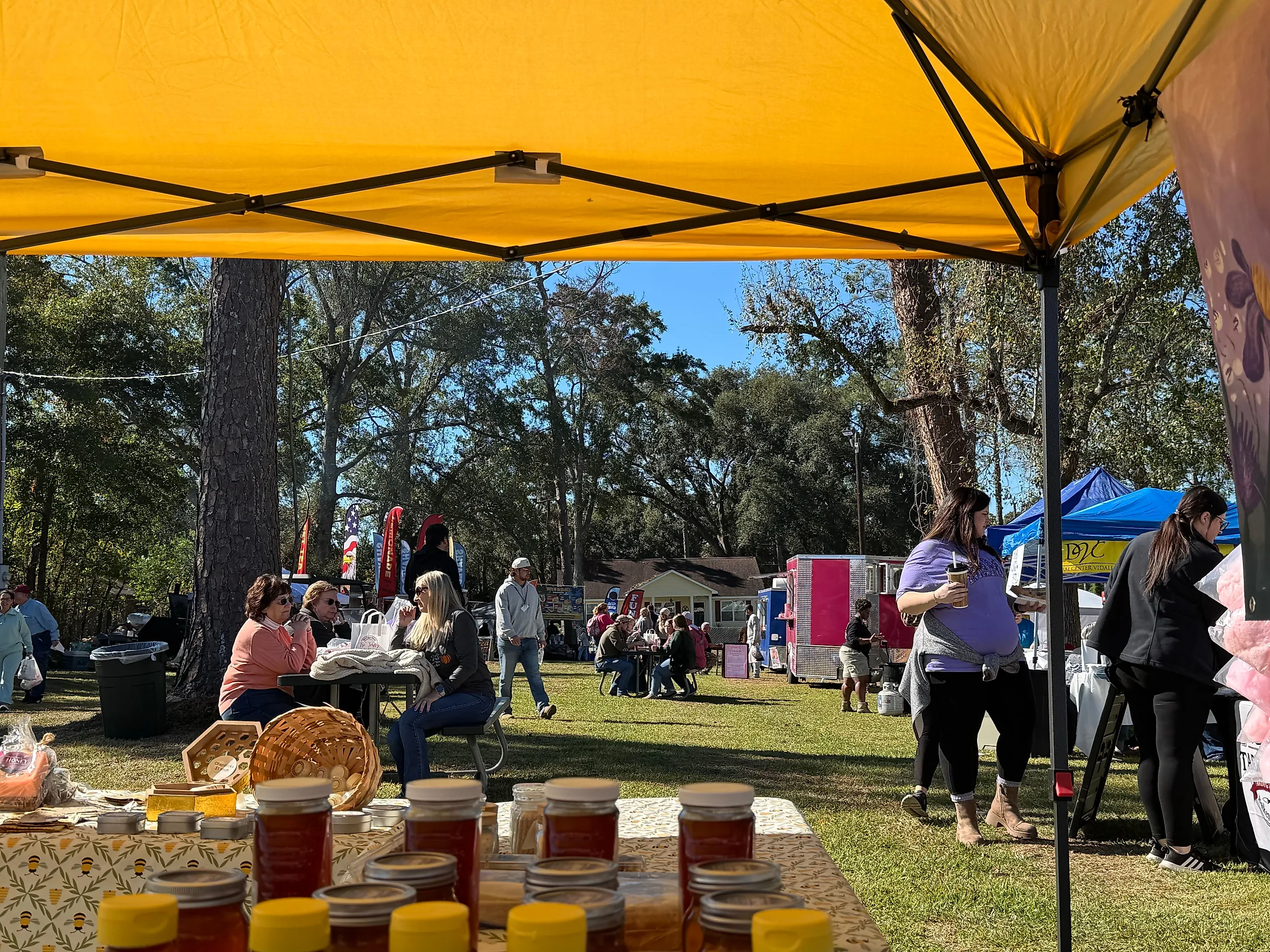
The Million Pines Arts & Crafts Festival brings the biggest crowds, with handmade ceramics, wreaths, porch furniture, and baked goods stacked under canopies. Downtown stops start at the Treutlen County Courthouse for photos and a short walk past storefronts and small civic buildings. A day on the Ohoopee River begins at access points outside town, where kayaks slip into tea-colored water under cypress and tupelo, with sandbars opening for breaks. Lunch lands at The Galley in town for burgers, wings, fried shrimp, and sweet tea, followed by a pass through the rural roads toward Cedar Crossing and the river flats.
These seven towns map Georgia by water, rail, and ridge. Plan around the anchors: Folkston’s Suwannee Canal entrance to Okefenokee, Woodbine’s Satilla Riverwalk, Cave Spring’s Rolater Park spring, Crawfordville’s Liberty Hall at A.H. Stephens State Park, Darien’s waterfront and Fort King George, Dillard’s Black Rock Mountain overlooks, Soperton’s Million Pines Festival and Ohoopee River launches. Each stop stays compact, walkable, and focused. Meals at Skipper’s Fish Camp, Dillard House.