7 Prettiest Small Towns In Kansas
Kansas rarely announces its beauty loudly. The seven small towns ahead each pair a distinctive setting with the kind of preserved downtown architecture and local rhythm that holds up to a closer look. Limestone courthouses anchor Flint Hills prairie. Swedish heritage runs through Smoky Valley storefronts. Victorian homes step down toward eastern river bluffs. Each Kansas community ahead builds a different version of the same balance between landscape, history, and daily life.
Lindsborg

Lindsborg stands out in the Smoky Valley because its Swedish heritage is evident in everyday details rather than confined to museums or festivals. Bright Dala horse sculptures line sidewalks and storefronts, guiding visitors through a central district where brick buildings carry soft pastels and warm reds that create a distinctive visual rhythm.
Farmland surrounds the community on all sides and defines much of its atmosphere. Wheat fields ripple in the wind during late spring, then turn deep gold by harvest season. That agricultural backdrop frames nearly every view, including residential streets shaded by mature trees and older homes with steady, unpretentious character. Coronado Heights rises just outside the settlement, where a limestone shelter built by the Works Progress Administration in the 1930s sits above the valley. A short climb leads to wide views that stretch across rolling hills, especially striking when evening light softens the terrain.
Cultural traditions remain active in daily life. Festivals bring music and movement into the streets, while quieter days settle into café conversations, student activity from Bethany College, and small-business routines. The Svensk Hyllningsfest is a standout celebration that takes place biennially in town, featuring Swedish dancing, cooking demonstrations, musicians, a parade, and more, with many students also involved.
Leavenworth

Leavenworth rises along the Missouri River, where steep bluffs guide the city's layout and create layered views across water, rooftops, and wooded slopes. Streets climb sharply in sections, revealing changing perspectives that shift with elevation and light. Brick mansions from the 19th century dominate older neighborhoods. Ornate trim, tall windows, and wide porches reflect the Victorian-era architectural style, with a heavy dose of Italianate, Queen Anne, and Second Empire influences evident in the details. Ongoing occupancy keeps these residences part of daily life, with porches still in use and gardens maintained through the seasons.
Fort Leavenworth, located just north of the urban core, anchors the region's military heritage and influences nearby museums and preserved landmarks connected to long-standing river trade and defense strategy. The fort was established in 1827 and is the oldest active United States Army post west of the Mississippi River. The Haymarket Square Riverfront and Riverfront Community parks open along the Missouri and draw steady foot traffic in the evenings. Walking paths trace the shoreline where barges pass through a working stretch of water that reflects changing sky conditions. Afterward, downtown spots like The Depot are ideal for a quick bite, with burgers and American fare.
Cottonwood Falls

Cottonwood Falls sits within the Flint Hills, where tallgrass prairie spreads across rolling terrain without interruption. Cattle graze on open pastureland while limestone fence posts trace old boundaries across the countryside. The Chase County Courthouse rises above the settlement and is the oldest operating courthouse in Kansas. Built from native limestone in 1873 in the French Renaissance style by architect John G. Haskell, it serves as a constant visual reference point from multiple directions and anchors the town's historic center. Stone storefronts line the compact main corridor, housing cafés, antique shops, and local businesses that rely on consistent community traffic rather than seasonal tourism.
The Tallgrass Prairie National Preserve lies nearby and expands the sense of scale dramatically. Established on November 12, 1996, the preserve protects nearly 11,000 acres of the remaining tallgrass prairie ecosystem, one of the rarest landscapes in North America today. Grasslands shift with wind and season, moving from deep green to golden tones that stretch toward the horizon. Scenic roads cut through the preserve, maintaining uninterrupted sightlines in every direction. Just outside town, the 1914 Cottonwood River Bridge adds another recognizable landmark with its filled-spandrel concrete arch structure, which crosses the river near the edge of downtown.
Atchison

Atchison sits at a bend in the Missouri River, where steep hills rise directly from the water. That geography produces layered views across river flats, wooded slopes, and dense residential blocks. Victorian homes line hillside streets with detailed woodwork, tall windows, and porches that follow the terrain. Landmarks like the 19th-century Atchison County Courthouse add even more historic character with their clock tower and Romanesque architecture overlooking downtown. Brick storefronts define the core commercial district, where narrow streets and iron details reflect 19th-century trade patterns.
Amelia Earhart's birthplace adds historical depth that continues to influence local identity through museums and interpretive sites tied to aviation and river commerce. The restored Gothic Revival home where Earhart was born in 1897 now operates as a museum featuring photographs, personal items, aviation exhibits, and memorabilia related to her record-setting flights. Each July, the town also hosts the Amelia Earhart Festival, featuring air shows, concerts, fireworks, and aviation events in downtown. The river overlooks deliver some of the strongest visual moments in the area. Jackson Park is situated on elevated land, offering wide views of the Missouri River, where shifting light alters the contrast between water and the hillside throughout the day.
Abilene

Abilene carries its cattle-town legacy through wide streets, preserved brick architecture, and a downtown that still feels tied to everyday community life. Rail lines and cattle drives once fueled the city's rapid growth, and traces of that era remain visible in the long commercial blocks, historic storefronts, and Old West character that continues to define the area.
The Dwight D. Eisenhower Presidential Library, Museum, and Boyhood Home serves as the centerpiece of one of the city's best-known districts. Landscaped grounds, walking paths, and quiet public spaces surround the campus, creating a calm setting that contrasts with the openness of the surrounding prairie. Nearby, Eisenhower Park and Rose Garden bring seasonal color into the center of town with carefully maintained flower beds, blooming roses, shaded benches, and mature trees that make the space especially inviting during spring and summer.
Little Ike Park adds another layer to the city's downtown. Together, these parks soften the city's historic character with pockets of greenery, color, and fragrance. Outside the commercial center, central Kansas farmland stretches toward the horizon beneath wide skies that change dramatically with weather and light.
Wamego

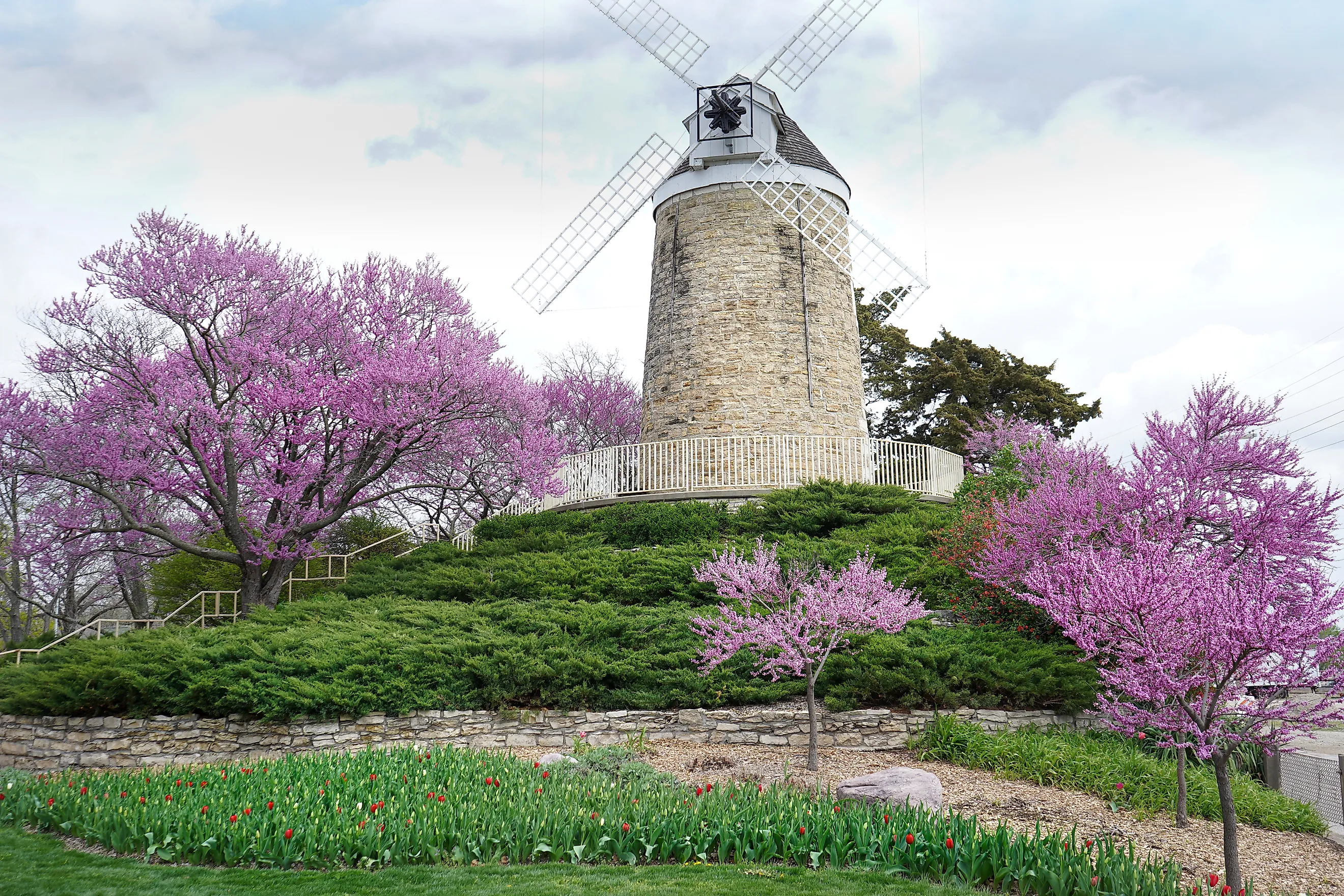
Wamego sits along the Kansas River, where tree-lined streets lead into a compact downtown filled with brick storefronts and local businesses. Wamego Historical Museum and Prairie Town Village add even more small-town character with restored prairie buildings, old exhibits, and historic homes that reflect everyday life in early Kansas. City Park remains one of the town's biggest gathering spots. A restored 1879 Dutch windmill overlooks open green space while walking paths wind beneath large shade trees. Every spring, the town hosts the annual Tulip Festival, wherein thousands of tulips bloom, and dozens of vendors offer food, drinks, and crafts.
Wizard of Oz references appear throughout the community in murals, sculptures, and public art, but the biggest draw remains the Oz Museum. The museum holds more than 25,000 collectibles, props, and memorabilia tied to both the original L. Frank Baum books and the 1939 film. Even with all the Oz-themed touches, downtown still feels grounded and lived-in rather than overly touristy, which gives Wamego much of its appeal.
Lucas

Lucas turns the open prairie of central Kansas into one of the state's most unusual small towns. Art is everywhere, from mosaics and sculptures to painted storefronts and handmade creations scattered throughout downtown. Small galleries and folk-art studios give the community a creative atmosphere that feels natural instead of staged, making even quiet streets feel colorful and lively.
The Garden of Eden remains the town's best-known landmark, with detailed concrete sculptures surrounding a log-cabin home built by Civil War veteran and populist orator Samuel P. Dinsmoor between 1907 and 1929. The site is listed on the National Register of Historic Places. Nearby, the mosaic-covered Bowl Plaza public restroom has become a landmark of its own, covered in bright tiles, glass, ceramics, and folk-art details that constantly catch the sunlight. Together, these places give Lucas a personality that feels creative, quirky, and completely different from anywhere else in rural Kansas.
Pretty Towns In Kansas
The prettiest small towns in Kansas do not rely on grand landmarks to leave an impression. Wamego blends river views, shaded parks, and a brick-lined downtown that feels playful yet grounded. Abilene carries the history of its cattle-town past and presidential connections while still feeling approachable through its walkable streets and steady pace of life. Lucas takes a more unexpected path, turning open prairie into a backdrop for colorful folk art and handmade creativity. Together, these towns show how Kansas rewards closer attention. Whether through prairie scenery, historic architecture, or local traditions, each place offers a version of beauty shaped more by character and atmosphere than size or spectacle.