6 Unpretentious Towns To Visit In Florida
Florida is famous for places that perform tourism: beaches staged for social media and towns where souvenir shops outnumber grocery stores. Yet between the interstates and theme parks, there are communities that never learned how to “act” like destinations. In these places, the same streets that carry visitors also carry shrimp boats to the dock, kids to school, and church dinners to the fellowship hall.
This article focuses on six of those towns, small, working communities where the nicest building might be the courthouse and most restaurants are owned by the people clearing tables at the end of the night. They sit on forgotten stretches of coast, in the hilly interior, and along freight-stained riverfronts, linked less by geography than by attitude. Together, these unpretentious Florida towns offer a clear view of what the state looks like when the marketing gloss falls away and the everyday rhythms of fishing, farming, and small-town commerce step back into the foreground.
Apalachicola

The name Apalachicola comes from a Native American word meaning “people on the other side,” and the town still feels like it sits apart from the rest of Florida. Located on the Gulf in a region known as the Forgotten Coast, Apalachicola is a working-class waterfront town defined by oyster boats, weathered brick warehouses, and slow tides. It was once the third busiest port on the Gulf of Mexico, shipping cotton downriver from Georgia and Alabama. Today, its economy leans on heritage and small-scale tourism rather than resort polish, making it one of Florida’s least affected coastal communities.

The Orman House Historic State Park, built in 1838, offers a preserved look at antebellum Apalachicola, with guided tours and access to the Chapman Botanical Gardens next door. The Apalachicola National Estuarine Research Reserve’s Nature Center, just across the bridge, has interactive exhibits on local ecosystems and a raised boardwalk through pine flatwoods. For lunch, the seafood at Up the Creek Raw Bar arrives fresh from boats you can see from the open deck. Nearby, Downtown Books & Purl blends new titles with knitting supplies in a quiet brick storefront—one of several independent shops on Market Street where owners still work behind the counter.
Cedar Key

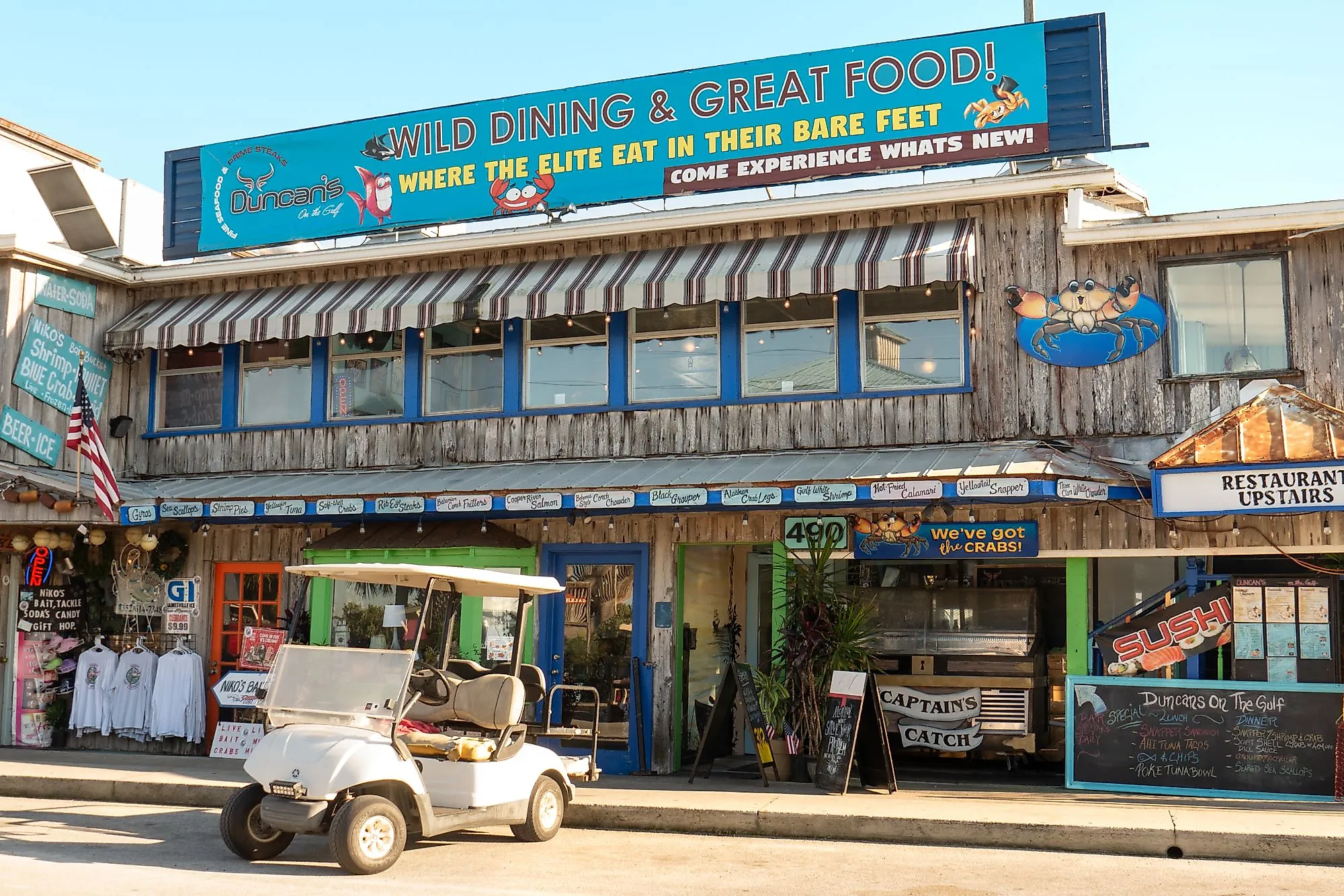
Cedar Key is one of the oldest ports in Florida and was once the western terminus of the Florida Railroad, long before Henry Flagler’s trains reached the east coast. It’s a cluster of small islands off the Gulf, reachable only by a narrow causeway, and feels more aligned with clam harvesting and tide charts than tourism schedules. The town is a center for farm-raised clams, which support its economy more than any resort development. Golf carts are common transportation, and storm-scarred buildings still line Dock Street, many of them rebuilt by hand after past hurricanes.

At the Cedar Key Museum State Park, the restored home of Saint Clair Whitman preserves glass bottles, seashells, and 19th-century cedar pencils from the town’s industrial past. On the waterfront, Steamers Clam Bar & Grill on Dock Street serves Cedar Key farm-raised clams and Gulf fish in a simple upstairs dining room with broad views over the marina. The Island Hotel & Restaurant, built in 1859, serves local grouper and holds a liquor license signed by Roosevelt. The Lower Suwannee National Wildlife Refuge’s Shell Mound Unit, just north of town, offers a short hiking loop through oyster middens and marshland with views over the Gulf, especially clear near sunset.
Lake Placid

Lake Placid grows 95% of the world’s caladiums and promotes itself accordingly, with a Caladium Festival each July and fields planted in streaks of red, white, and pink stretching across its outskirts. The downtown area features over 40 murals painted directly onto commercial buildings, depicting scenes from the town’s citrus, cattle, and railroad history. Speakers mounted beside several murals play audio histories recorded by longtime residents. The sidewalks are inset with stamped brass plaques from the “Town of Murals” walking tour, a project funded entirely by local fundraising.

The Lake Placid Historical Society Depot Museum, housed in the 1927 Atlantic Coast Line train station, displays switch levers, baggage scales, and handwritten train ledgers from the town’s early passenger service years. Across Park Street from the depot, the mural-covered commercial blocks carry the railroad theme into town, with painted freight scenes and depot-era storefronts facing the tracks. On Lake June Road, Jaxson’s on the Lake sits right on the shoreline and draws steady crowds for catfish platters and homemade pies. On the edge of town, Lake June-in-Winter Scrub State Park protects a rare habitat of sand pine and cutthroat grass; a short trail leads to a high bank overlooking the lake, which is clear, undeveloped, and ringed with native scrub rather than homes.
DeFuniak Springs

DeFuniak Springs was founded as a Chautauqua resort in the late 1800s and developed around a rare, perfectly round spring-fed lake—one of only two naturally round lakes in the world. The original Chautauqua Hall of Brotherhood still stands near the water’s edge, a three-story auditorium with a pressed tin ceiling and wraparound porch. Around the lake, a ring of Victorian and early 20th-century homes remains intact, many marked with interpretive signs installed by the Walton County Heritage Association.

Along Baldwin Avenue, the town’s commercial spine, Perla Baking Co. operates out of a 1920s storefront and sells dark chocolate tarts, rosemary focaccia, and coffee roasted in nearby Santa Rosa Beach. Next door, Vault 46 curates antiques and architectural salvage inside a converted bank building. The Walton-DeFuniak Library, opened in 1887, claims to be the oldest continuously operating library in Florida and holds a collection of medieval weaponry and early Florida maps. Chipley Park, which encircles Lake DeFuniak, hosts a Christmas lights display each winter that wraps the lake in thousands of incandescent bulbs. The lake itself remains open year-round for walking, and the entire route measures just under a mile.
Brooksville

Brooksville was built on former plantation land and sits at one of the highest elevations on the Florida peninsula, with brick streets that rise and fall through oak-covered hills. Unlike most of the state, the terrain here slopes steeply enough for switchbacks, and several 19th-century homes still stand within view of the courthouse dome. The town’s rail line once carried lumber and citrus to the coast, and the old depot remains at Russell Street Park, now part of a public trail lined with benches and native plantings.

The May-Stringer House Museum, a four-story Victorian home with over 11,000 artifacts, includes Civil War medical tools, antique dolls, and a preserved attic bedroom set under the original tin roof. Main Street hosts Florida Cracker Kitchen, where the menu includes smoked mullet dip, chicken and waffles, and sweet tea served in mason jars. Around the corner, Mountaineer Coffee roasts its beans on-site and sells cold brew by the growler. On the western edge of downtown, Tom Varn Park has tennis courts, a loop trail, and shaded picnic areas within walking distance of the Brooksville Bandshell, which hosts community concerts and local events throughout the year. Most businesses are independent, and many occupy buildings older than a century.
Palatka

Palatka was once known as the “Gem of the St. Johns” and served as a steamboat hub before Jacksonville overtook it in size. It was one of Florida’s earliest winter destinations, drawing 19th-century tourists to riverfront hotels that no longer stand. What remains is a grid of wide streets, faded storefronts, and an unusually high concentration of outdoor murals—more than 20—painted directly on downtown buildings. Many depict the town’s industrial history, including turpentine distilleries, citrus packinghouses, and rail depots.
The Bronson-Mulholland House, built in 1854, sits on a bluff overlooking the river and is open for self-guided tours. The Larimer Arts Center, located in a former women’s club, holds rotating exhibits and hosts local ceramics and painting classes. At Angel’s Dining Car, Florida’s oldest diner, the griddle dates back to 1932 and the menu includes fried okra, liver and onions, and hand-spun milkshakes served at the curb. Nearby, the Riverfront Park has a long concrete promenade with benches facing the St. Johns and a covered pavilion used for local bluegrass and barbecue festivals. Palatka’s economy has shifted, but many of its buildings remain in active use, and the downtown core has resisted chain development almost entirely.
These six towns show a version of Florida that rarely appears in brochures. Main streets still work for locals first, then anyone passing through. Cafés, bait shops, diners, and bookstores are run by people whose names appear on the mailboxes out front. There are no marquee attractions to chase, only working waterfronts, courthouse squares, and small businesses that open because it is Monday. For travelers who value that kind of honesty, these places more than earn a place on the map. They leave room for quiet, lasting memories.