6 Old-Timey Mining Towns In Oregon
The discovery of gold in them there hills (and later silver, copper, and coal) set off a frenzy across the Pacific Northwest, transforming valleys into bustling boomtowns, fueling railroads and industry, and leaving a lasting mark on the region’s towns, landscapes, and frontier culture. This is particularly true of Oregon, whose mining past is full of boomtowns, ghost towns, and historic streets that tell the story of the Gold Rush era. From Baker City’s frontier crossroads and Sumpter’s massive gold dredge to Jacksonville’s role as a historic landmark to the state’s mining past, each of these six old-timey mining towns offers a unique window into Oregon’s rich mining heritage and its enduring legacy.
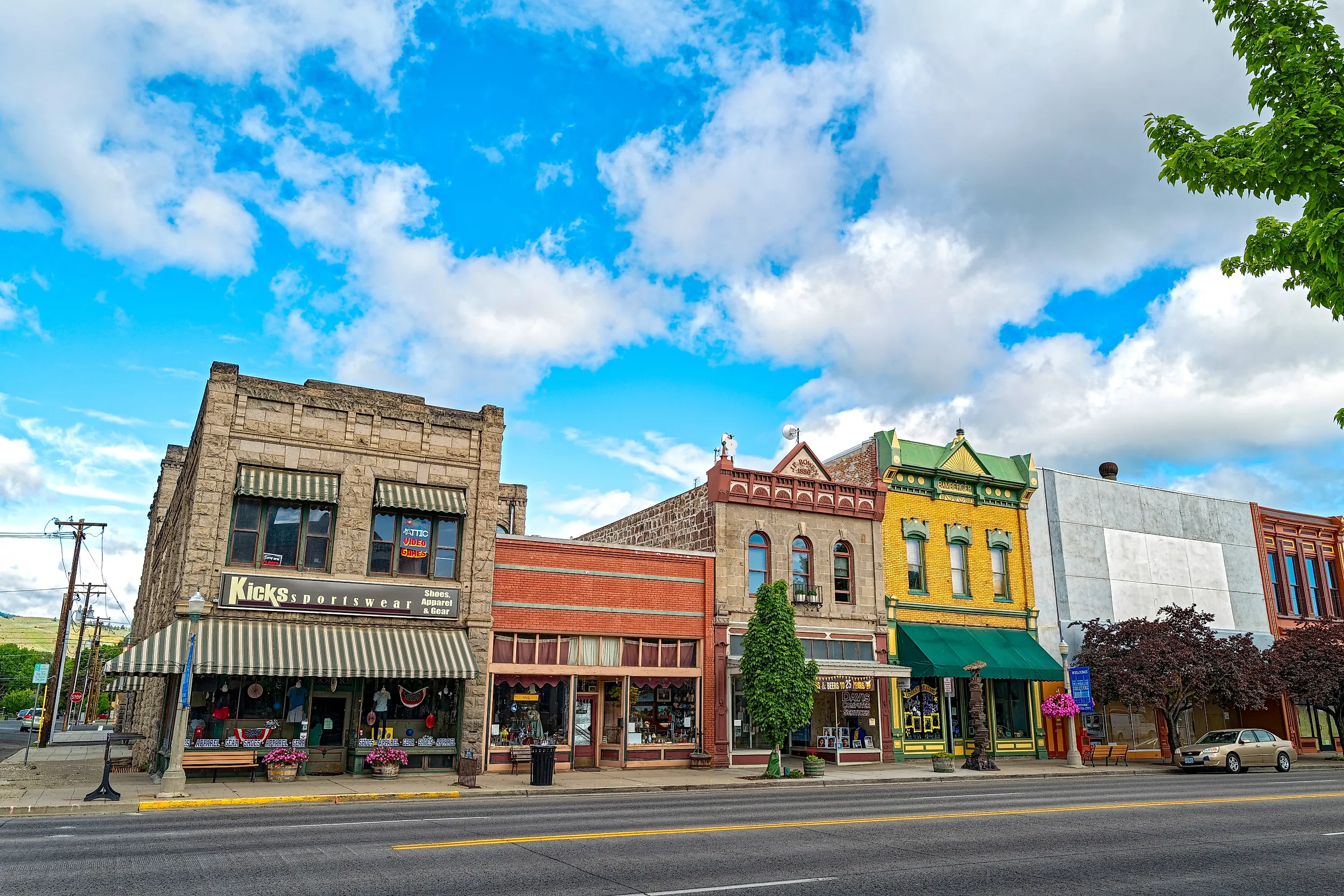
Baker City

Nicknamed the “basecamp for Eastern Oregon,” thanks to its proximity to part of the Snake River, Hells Canyon, and the Oregon Trail, Baker City stands at the crossroads of migration, mining, and exploration. Baker City was established in 1861 after gold was discovered, sparking a rush of miners to the area. A saloon, hotel, and blacksmith shop soon popped up, and by 1884, the Oregon Short Line Railroad came to town, along with no shortage of miners, ranchers, cowboys, gamblers, and dance hall girls, cementing its place as a frontier hub. To learn more about its rich history, the 500-acre National Historic Oregon Trail Interpretive Center tells the story of early pioneers through living history presentations, multi-media shows, and outdoor exhibits, including remnants of the historic Flagstaff Gold Mine.
Closer to Baker City’s historic downtown district, don’t miss the circa-1889 Geiser Grand Hotel, a beautifully restored symbol of the town’s gold-mining boom, where you can take a guided “Step Back in Time Tour.” Take a well-deserved sightseeing break for a local brew and a beer cheese steak sandwich at award-winning Barley Brown’s Beer, which brews everything from Irish Stout to Saison.
Sumpter

One of Oregon’s best-preserved mining towns, Sumpter, is hidden in Oregon’s Elkhorn Mountain Range. The town was named after the famous Civil War-era fort in South Carolina, Fort Sumter, by a group of prospectors en route to California to strike it rich during the Gold Rush, who discovered gold in Cracker Creek, which was one of the most important gold-bearing streams during the 1860s Oregon gold rush. Today, Sumpter is surrounded by rivers, mountains, and lakes, making it a sought-after destination for swimming, hiking, and skiing for outdoor adventurers driving along the Elkhorn Scenic Byway.
Evidence of Sumpter’s former gold-mining glory days is everywhere you look in the historic town, with the star attraction being a massive early-1900s gold dredge that dug up more than $4 million in gold during the boom, now preserved as the Sumpter Valley Dredge State Heritage Site. Fans of the Old West, frontier life, and mining history can visit the dredge, hike 1.5 miles of trails, and pan for gold. Ghost town groupies will find themselves in heaven, with several abandoned mining towns within striking distance of Sumpter, including Whitney Ghost Town (a 13-mile drive) and Bourne Ghost Town (a 7-mile drive).
Canyon City

The quintessential mining town shaped by boom, bust, and survival, Canyon City developed almost overnight after prospectors camping along the John Day River discovered gold in the early 1860s, triggering one of Oregon’s earliest and richest gold rushes. Unlike other mining-adjacent towns that sprang up across the state, Canyon City was a true mining town and managed to escape the ghost-town fate of many by transitioning to ranching and government, as you’ll discover by visiting one of the oldest continuously working courthouses in Oregon, the 1870s-built Grant County Courthouse, or in the Grant County Historical Museum, home to over 7,000 photographs, 3,000 paper documents, and an extensive archive.
Wander down historic Main Street to see 19th-century storefronts, saloons, and former hotels leftover from Canyon City’s boom years. Visit the self-proclaimed “extremely independent bookstore” in Canyon City, DGDriscoll’s Books, to find that elusive, out-of-print book you’ve always wanted to add to your library. The stop’s eclectic selection of books includes sections devoted to Cats, Wilderness Wildlife and Survival, and Circus.
Cornucopia

Once one of Oregon’s richest gold camps, Cornucopia generated around $7 million in gold during its 40 years of operation, which began in the early 1880s. Today, you can explore what’s behind in the abandoned ghost town on the west slope of Pine Creek Canyon, mostly dilapidated boardinghouses, saloons, a general store, and an old jail. However, several mine entrances are still visible from town, including the Queen of the West Mine. Adventurous hikers can access the mines on foot, but there are no formal trails. Use the Cornucopia Lodge as your base camp to explore the ghost town, either on foot or by borrowing a mountain bike from the lodge, but be mindful that some of the town is now private property. For outdoor enthusiasts, overnight and extended 3- and 5-day pack trips into nearby Hells Canyon, one of the deepest canyons in the United States at 7,993 feet, and the Eagle Cap Wilderness in the Wallowa Whitman National Forest are available from the Pack Station.
Prairie City

Prairie City is definitely worth a stop on any road trip through the old-timey mining towns of Oregon, where you can discover its rich mining past on historic Front Street. Stay overnight at the Hotel Prairie, a small 9-room hotel established in 1910 to house travelers on the Sumpter Valley Railroad during the mining boom. Today, you can still book a round trip on the railroad on select weekends and holidays from nearby McEwan or Sumpter on a classic steam locomotive or a diesel-powered train along tracks through the scenic valley with panoramic views of forests and old mining areas full of tailings.
Railroad enthusiasts can dive deeper into the connection between the railway and mining during the Sumpter Valley’s gold-boom years at the DeWitt Museum, housed inside the former Sumpter Valley Railway Depot. The museum's exhibits include railroad memorabilia, mining artifacts such as tools and equipment, and personal items related to frontier life.
Jacksonville

Jacksonville was founded after gold deposits were discovered in Rich Gulch between 1851 and 1852, triggering Oregon’s first major gold rush. Thousands of miners poured in from California, making Jacksonville one of the earliest boomtowns in the Oregon territory. It boomed until 1884, when the railroad bypassed the town in favor of nearby Medford. Unlike many nearby towns, Jacksonville pivoted from gold mining to agriculture and, later, heritage tourism, emerging as one of Oregon’s best-preserved gold-rush communities. Find out more by picking up a walking tour map of 30 historic sites to see at the Jacksonville Visitor Information Center.
Today, Jacksonville is full of gold-rush-era sites and landmarks like the Beekman Bank Museum. Constructed in 1863, the bank was one of the earliest institutions handling gold during the town’s boom years. Another must-see is the 32-acre Jacksonville Cemetery, one of the largest and most historic graveyards in Oregon.
Beyond its rich mining history, Jacksonville is also a modern-day cultural hub, home to one of the longest-running music festivals in the Pacific Northwest, the Britt Music Festival, founded in 1963. The town is also a hotspot in the Rogue Valley wine country, so be sure to pop into a few nearby tasting rooms at vineyards like Dancin, Hummingbird Estate, and Rellik Winery.
Boom, Bust, and Beyond: Exploring Oregon’s Historic Mining Towns
These six old-timey mining towns in Oregon offer travelers a mix of gold-rush history, preserved architecture, and cultural experiences. Explore historic streets, visit museums full of mining artifacts, hike to abandoned mine entrances, take a ride on landmark railroad tracks used in the industry, or enjoy music and wine in towns that successfully pivoted from mining to modern attractions. From ghost towns like Cornucopia to lively hubs like Jacksonville, you can experience the full spectrum of Oregon’s mining legacy—past, present, and scenic.