6 Charming Old Railroad Towns In Vermont
Railroads took hold in Vermont in the mid-19th century, reshaping travel, trade, and daily life across the state. Construction on the Vermont Central and the Rutland & Burlington Railroad began in the 1840s, though competition between the two companies slowed the development of broader connections east and west. By 1849, their main lines were complete, making it far easier for people and goods to move between towns. Junction communities such as Bellows Falls and White River Junction grew rapidly as rail lines converged, bringing new workers, businesses, and industries. Today, many of these towns still reflect the period when the railroad defined their growth and character.
Bellows Falls

Bellows Falls was incorporated as a Village of the Town of Rockingham in 1909. It would take fifteen years for the railroad to reach the village and another two years for the Bellows Falls Union Station to be built at the junction of four railroads. These railroads were the Sullivan County Railroad, Cheshire Railroad, and the Rutland and Burlington Railroad. The Vermont Valley Railroad also opened its line to Brattleboro in 1851.

Today, Bellows Falls offers more than its historic rail infrastructure. A notable site in town is the local fish ladder, which allows migrating fish to pass over or around obstacles that may hinder their passage in the river. The Bellows Falls fish ladder includes a building where you can learn more about the fish that pass by. You can also stand by the glass wall to watch the fish swim upstream. Other notable sites include the Abenaki petroglyphs along the Connecticut River. Access to the petroglyphs can be challenging and requires careful footing. A far safer activity is walking the trail along the river near the Grist Mill Museum, or watching a show at the historic Bellows Falls Opera House.
Morrisville

When the Morrisville Depot was constructed in 1872, it reshaped the town’s economic future. For nearly a century, the Portland and Ogdensburg Railroad carried both passengers and freight to and from Morrisville. This also ensured that the town became an important commercial center for lumber transport and trade. It was not until 1956 that passenger service ended here, and the building was then used as the headquarters of the St. Johnsburg and Lamoille County Railroad, beginning in 1959. This railroad company ceased operations in 1994, and today, 10 Railroad Street houses the historic depot, which is now an eatery.
Today, visitors can experience the Lamoille Valley Rail Trail, a 94-mile recreational route that stretches across northern Vermont. You can walk, bike, hike, or snowmobile along this trail, which passes through 18 towns. Back in town, the Bijou Theatre screens both classic and contemporary films in a historic setting, while the Noyes House Museum provides insight into life in Morrisville during the 19th century.
St. Johnsbury

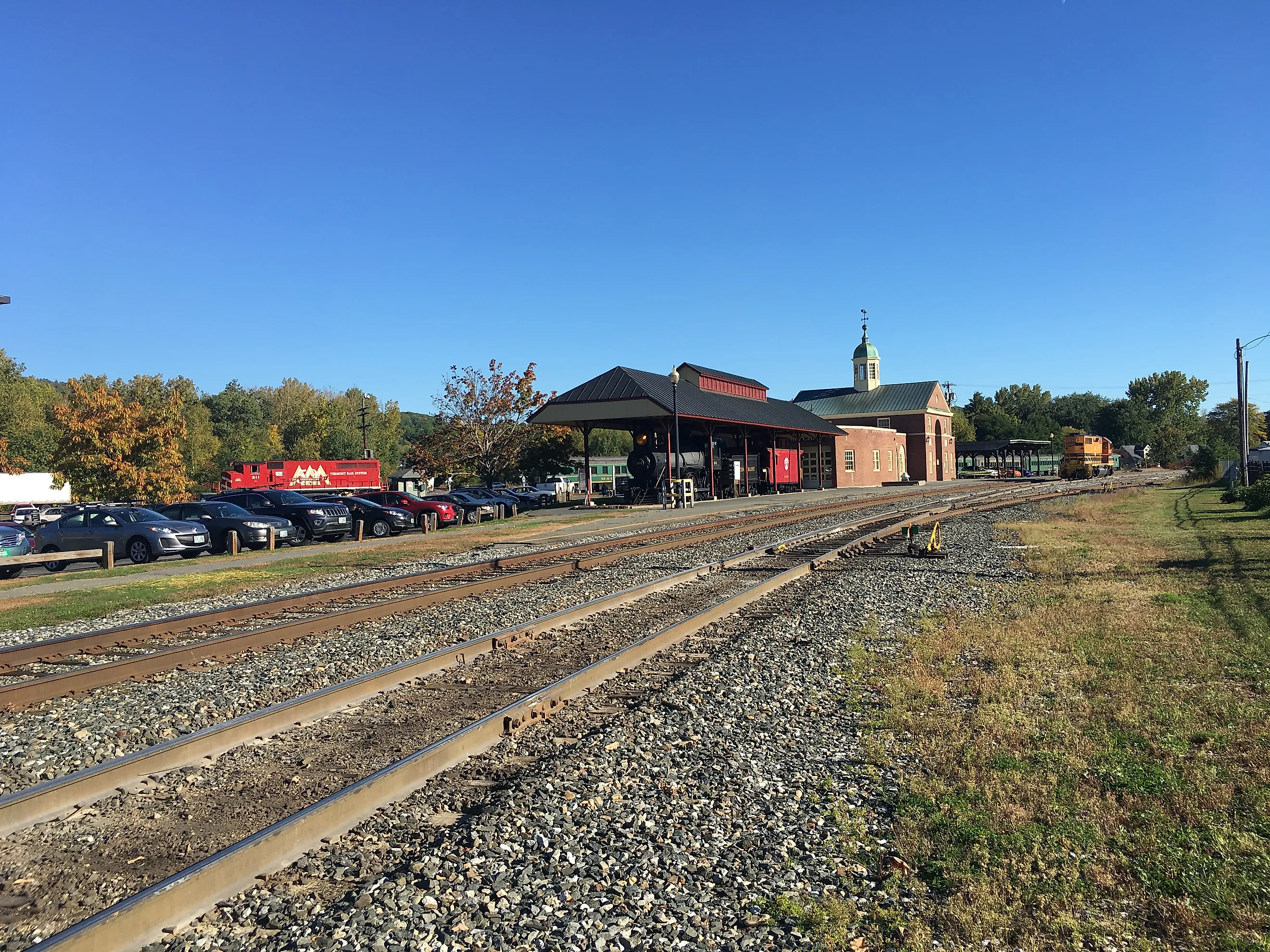
The charming railroad town of St. Johnsbury became known as the ‘Railroad Center of Northern New England’ in the mid-1800s. Four rail lines converged here, and a stunning brick railway station was built. As the railways took over, Main Street and Railroad Street in St. Johnsbury’s downtown area competed for the number one spot as the town’s commercial center. Downtown St. Johnsbury is listed on the National Register of Historic Places and is a must-see for visitors.

A stop at the St. Johnsbury Athenaeum, a public library and National Historic Landmark, adds cultural context to the visit. There is also a gallery attached to the library where you can see Hudson River School paintings. At the Fairbanks Museum and Planetarium, you will find dioramas and several natural science exhibits. You can take a walk down Main Street to see the historic homes on either side, or explore the town’s ‘wild’ side at Dog Mountain. This 150-acre dog park features hiking trails, ponds, and a Dog Chapel.
Richford

After the arrival of the Missisquoi Valley Railroad in the late 1800s, the charming town of Richford rapidly developed into a center for timber and local produce. It used the railroad to transport these goods to Canada and established itself as a resource-based community.
Today, Richford serves as a practical base for exploring the surrounding landscape. Around 45 minutes away from downtown, you will find the Missisquoi National Wildlife Refuge. The refuge was established in 1943 to protect migratory birds. You can see these birds while you explore the Missisquoi River or Lake Champlain by boat. There are also several trails to explore that provide access to refuge habitats. If you want to hike only, there are more trails at the Long Trail State Forest, an hour away from Richford. For kayaking and fishing, Lake Memphremagog is perfect and just about 31 miles away.
White River Junction

By the early 20th century, White River Junction saw more than 50 passenger trains passing through. There were even more freight trains coming and going during that time. What was just a couple of houses in the White River Junction area soon became a full-fledged town after operations started via the Vermont Central railroad. As railroad transport waned, so did the town. But it bounced back with a vibrant downtown, where you can still see the crossroads location near Interstates 91 and 89.

There are also plenty of things to do in White River Junction, including visiting the Montshire Museum of Science and enjoying the hands-on exhibits. If you visit during June, you can catch the popular Quechee Hot Air Balloon Festival, since the festival grounds are located just ten minutes from the White River Junction Station. The festival fills the air with hot-air balloons, and you can explore more than 50 vendor stalls selling food, drinks, and other items. For outdoor adventure, take a 10-minute drive to Quechee State Park to see the Ottauquechee River and camp at the designated campground.
Castleton

The Castleton train station was built in 1850 by the Rutland and Whitehall Railroad. The station was meant to support the transport of slate from quarries in the area. It is also one of the oldest depot buildings still in use within the Amtrak network. Aside from the station, there are many other historic buildings to see, as well as lovely historic houses on Main Street. There are three main areas to visit within Castleton, namely the village where you will find a 1940s-style diner, Lake Bomoseen, where you can fish and swim, and Hydeville, which is a sort of extension of Main Street.

If you are after a blissful day out in nature, head to the Taconic Mountains Ramble State Park, ten miles from town. You cannot stay overnight here, but there is a wonderful Japanese garden to explore. Keep in mind that this is an undeveloped park, so it is best to only stay a couple of hours. There are no water, phone, or toilet facilities other than a single porta-potty. If this does not appeal to you, head to Crystal Beach, six minutes from downtown. Here, you can swim and have a relaxing picnic next to the lake.
Charming Small Towns With Big Railroad Histories
The railroad has not been a novelty for many decades now. In Vermont’s old railroad towns, that sense of novelty still lingers. Just listening to the stories told about each town’s railroad history brings the railroad to life in a unique way. It is fascinating to see the rail legacy displayed in historic depots, museums, and rail-trails that follow former track routes. At the same time, these towns reinvented themselves as rail travel declined, and each now offers something for tourists. For travelers interested in history and regional identity, these towns remain worthwhile destinations.