8 Safest Towns In Hawaii For Senior Living
The towns that make the strongest case for retiring in Hawaii tend to sit outside the usual travel coverage. Waimea occupies a stretch of upland at 2,500 feet in the middle of paniolo country, and Maunawili is a quiet residential valley tucked against the base of the Koʻolau Mountains. What they share is a safety profile shaped by three practical measures: hospital proximity, hazard zone classifications, and street-level crime data that the state has made publicly searchable. This article uses those benchmarks to evaluate eight communities where the case for retiring safely is well supported.
Makawao, Maui

Makawao stands in Upcountry Maui at roughly 1,500 feet, where the temperature moderates and the tourist traffic fades into the background. The town functions as the hub of a region dominated by ranches and farms, and its residential character reflects that working identity.

Baldwin Avenue gives Makawao a downtown that is still walkable and lined with local businesses. Nearby, Hui Noʻeau Visual Arts Center opens its galleries and grounds to the public six days a week on a 25-acre estate. Maui Memorial Medical Center is roughly 20 minutes away in Kahului.
The available crime data for Upcountry Maui suggests a peaceful environment, with the broader region recognized as one of the island's safest areas. Makawao appeals to retirees who want a town that still feels like a town, a place where people stay because they choose to, not because a resort reservation brought them there.
Waimea (Kamuela), Hawaii Island

Drive inland from the Kohala Coast and the landscape shifts abruptly from black lava rock to rolling green pasture. Waimea occupies a stretch of upland at 2,500 feet, resting against the shoulder of a volcano that ceased eruptive activity about 120,000 years ago. The U.S. Geological Survey classifies this area as Lava Zone 9, the lowest hazard designation on the island. Zone 1 marks the active rifts of Kīlauea and Mauna Loa; Zone 9 has remained quiet since before the last ice age.
North Hawaii Community Hospital is a 35-bed acute-care facility in Waimea and a Level III Trauma Center designated by the Hawaii Department of Health. The hospital has 24-hour emergency physician coverage, with surgeons and anesthesiologists available as needed, and it is accredited by The Joint Commission. For seniors, the practical advantage is simple: serious falls or cardiac events can often be treated here without a transfer to Hilo or Kona.
The town moves to a paniolo rhythm, a Hawaiian cowboy culture that has shaped this community for generations. Parker Ranch spans 130,000 acres and has been operating since the mid-19th century. Hawaii County's Coordinated Services for the Elderly helps connect older adults with transportation, chore services, and advocacy. Reported violent crime in the area runs below state averages. Waimea also offers something harder to find on the Big Island: low-risk ground.
Kapaa, Kauai

Kapaa sits along Kauai's eastern shore, where groceries, pharmacies, and other everyday services are easily accessible. Ke Ala Hele Makalae gives the town one of its most useful features, a paved coastal path that runs for miles without much interaction with traffic. Lydgate Beach Park is along the same stretch, with protected lagoons that are usually calm enough for swimming.
Wilcox Medical Center in nearby Lihue provides emergency and specialty care. The Kauai Agency on Elderly Affairs helps connect older adults with long-term care information and support. Kapaa works well for retirees who want daily movement built into their surroundings and basic services close at hand.
Pearl City, Oahu

Pearl City has made national headlines for a reason unrelated to scenery. WalletHub's annual "Safest Cities in America" report evaluates more than 180 U.S. cities across 41 safety indicators, and Pearl City has finished first in the nation for home and community safety in recent editions. The same report placed it near the top for fewest traffic fatalities per capita. For retirees who value statistical reassurance, that ranking carries more weight than any ocean view.
Pali Momi Medical Center, a 118-bed facility with a cardiac catheterization lab and a comprehensive women's center, serves the area. The full Honolulu hospital network remains accessible for specialized care.
The Pearl Harbor Bike Path, part of the broader Pearl Harbor Historic Trail, follows the waterfront on a flat, separated route ideal for low-impact walking and cycling. Pearl City offers the stability of a well-planned suburb, with infrastructure that reliably supports daily life.
Princeville, Kauai

Princeville covers 9,000 master-planned acres on Kauai's north shore, but the figure that defines its safety profile is 200: the elevation in feet of the plateau where most homes stand. Official tsunami evacuation maps for Kauai, updated in March 2025, place the residential core outside standard hazard zones. The geography handled the heavy lifting long before the first foundation was poured.
The community is gated, with private roads that limit traffic and unfamiliar vehicles. Wilcox Medical Center in Lihue lies 45 minutes away, a distance worth acknowledging. The hospital's 18-bed emergency department functions as the island's Primary Stroke Center and holds the distinction of being the first American College of Surgeons verified Level III Trauma Center in the state.
Reported crime here runs well below state averages, and the community's gated layout limits through traffic. Princeville Botanical Gardens winds through curated plantings on paths built for easy walking. The Princeville Makai Golf Club, an 18-hole Robert Trent Jones Jr. design, follows the contours of native woodlands down toward the coast. The one honest trade-off is the drive to Wilcox Medical Center in Lihue, 45 minutes each way, and retirees who choose Princeville tend to decide that the elevation, the seclusion, and the 200-foot plateau are worth it.
Maunawili, Oahu
Maunawili is nestled in a valley on Oahu's windward side, a place most drivers pass without noticing. A turn off the main road leads into a residential enclave tucked against the base of the Koʻolau Mountains.
Adventist Health Castle in Kailua is less than 10 minutes away and serves as the primary healthcare facility for the entire windward side of Oahu, with an accredited geriatric emergency department among its specialties. Hoomaluhia Botanical Garden sits just beyond the neighborhood with paved paths and picnic areas backed by the full height of the Koʻolau range. Kailua Beach Park is a short drive in the other direction. For retirees, the appeal is simple: a quiet residential setting with fast access to hospital care and nearby outdoor space.
Lihue, Kauai

Lihue serves as Kauai's government seat and commercial hub, a role that keeps the town functional year-round, regardless of the tourist season. Groceries, pharmacies, and government offices cluster within a compact radius, eliminating the long errand runs that define more remote communities.
Wilcox Medical Center anchors the town with 72 beds, an 18-bed emergency department, and 30 specialties, including cardiology, neurology, oncology, and orthopedics. The American Heart Association has awarded the hospital its Get With The Guidelines Stroke GOLD PLUS Achievement Award. The Kauai Agency on Elderly Affairs coordinates senior services across the island and serves as a one-stop source of information on long-term care support options.
The Kauai Museum covers island history in a climate-controlled setting. Kalapaki Beach lies within walking distance of downtown. Lihue prioritizes function, and for many retirees, that practicality is the point.
Wailea, Maui

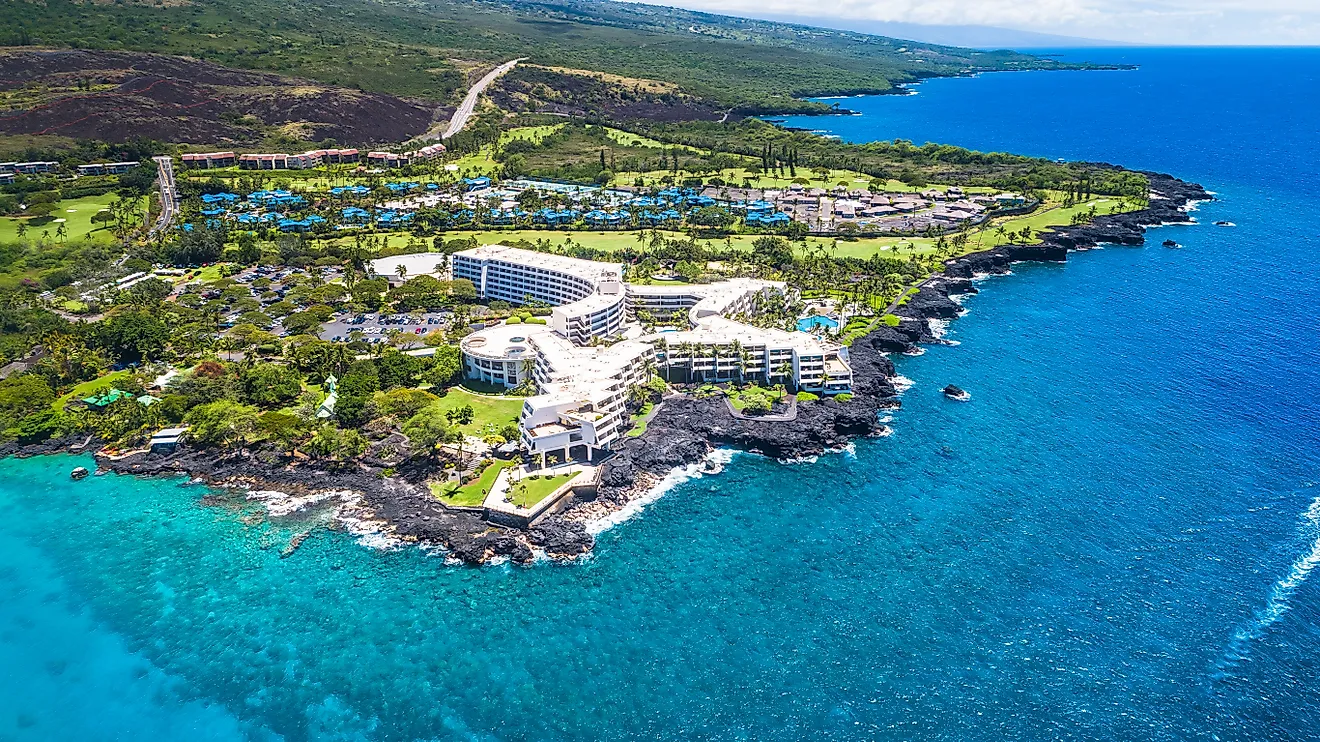
Wailea occupies the luxury end of the safety spectrum, a master-planned resort community where the infrastructure was designed for ease from the outset.
The Wailea Beach Path connects beaches, hotels, and homes along a paved, flat route built for walking rather than navigating traffic. Maui Memorial Medical Center is about 25 minutes away in Kahului; it is the only acute care hospital on the island of Maui. The Maui County Office on Aging provides senior services and caregiver support across the island. Ulua Beach offers calm water for snorkeling, and The Shops at Wailea handle retail and dining in an open-air format. What Wailea offers is not just comfort, but a built environment that reduces daily friction for older residents.
The Practical Test for Retiring Safely in Hawaii
Retiring safely in Hawaii requires a different kind of attention. The islands are generous with what they show and less forthcoming with what matters later: flood maps, hospital access, the history of the ground itself. The safest towns are not the ones that photograph best. They are the ones that continue to function without asking much from you. The ground stays quiet. The roads stay open. Help is already close. That kind of reliability matters more over time than scenery ever could.