6 Charming Old Railroad Towns In Arizona
Decades before highways started crisscrossing Arizona, railroads connected the desert settlements to the rest of the country. The railway tracks cut through forests and canyons. They stretched across open plains, making it easier for towns to rise along the way as the ‘iron horses’ came and went. These towns became water stops and critical supply stops. Workers populated them, allowing some to grow into cities while others remained small. In 2026, Arizona’s railroad towns are charming tourist destinations where you can see how travel differed from what is common today. When you visit these towns, you can experience classic rail excursions and even Route 66 stops, while learning more about the history of each destination.
Seligman

The historic small town of Seligman is known as the birthplace of the world-famous Route 66. But long before the route became a reality, Seligman was a railroad junction between the Santa Fe main transcontinental line and a branch toward Prescott. It was originally called Prescott Junction, but was renamed after financier Jesse Seligman, who helped support the railroad’s expansion. By the early 1900s, Seligman was a priority stop for freight and crew changes before the state acknowledged a section of road from Seligman to Kingman as Historic Route 66 in 1987. This happened after I-40 bypassed the old highway, and this section is now part of the longest remaining stretch of Route 66 in the country.
Today, you cannot turn a corner in Seligman without seeing something related to Route 66. If you have always wanted to explore a part of the route, this is one of the best places to start. A must-see is Angel & Vilma Delgadillos, the barbershop-turned-museum and souvenir shop that preserves and highlights the legacy of Route 66. Also, stop by the Delgadillo’s Snow Cap Drive-In Diner, built in 1953 from scrap lumber. The diner offers delicious hot dogs and other nostalgic American meals. If you plan on taking a lot of selfies, be sure to get one including the ‘World’s Largest Route 66 Sign’ at 22925 W Old Highway. And, remember to keep an eye out for Pixar’s Cars murals, including a Mater truck and a Fillmore bug.
Winslow

Winslow was founded as a stop on the Atlantic and Pacific Railroad, which later became part of the Santa Fe Railway. Winslow was named for a railroad executive and became an integral divisional terminal. The rail economy in Winslow guided the town’s growth and layout for many years. The town also lies along Route 66 and is packed with nostalgia, railroad history, and ancient Native American tradition. The nostalgia comes in the form of Standin’ On the Corner Park, a public square that came back to life and reinvigorated the town after Route 66 traffic died down due to the I-40 highway. The park is named after lyrics in the Eagles’ song, Take It Easy. It also features a statue of a musician dressed in 70s clothing, balancing his instrument on his toe. The statue and the mural behind it are among the most visited attractions in Winslow today, and their popularity helped the town grow again after stalling when businesses closed in the wake of the opening of I-40.
Other things to see and do include visiting the Meteor Crater, around 18 miles west of town. Experts believe that a meteorite slammed into the area around 50,000 years ago. You can see the scar it left, as well as the wreck of a Cessna 150 that flew too low in the area. It is said to be the best-preserved meteorite impact site in the world. If you want to experience less science and more history (and throw in a ghost or two), visit the Apache Death Cave between Winslow and Flagstaff on Old Route 66. Venturing into the cave means you might encounter the spirits of the Chindi, who are said to haunt it.
Williams

The Atlantic and Pacific Railroad reached the town of Williams in the 1800s. The town soon became an important link for both freight and passengers. The Grand Canyon Railway began service between Williams and the South Rim of the Grand Canyon in 1901, ensuring the town’s reputation as a charming gateway destination. You can still ride the Grand Canyon Railway in 2026, and it takes you right to the Grand Canyon. On the way (it is just more than two hours to get there each way), you will hear stories about the canyon from your tour guide and learn more about the fauna and flora you see along the ride. When you get to the canyon, you have around four hours to go exploring before the train heads back to Williams.
Back in town, there are lots more to see and do, including visiting Bearizona, where you can drive through the wildlife loop and see black bears up close. Other animals in the zoo include bison, bighorn sheep, jaguars, and mountain goats. If you are feeling adventurous, try the Route 66 zipline on for size, or head to the Canyon Coaster Adventure Park, which features a mile-long alpine coaster.
Benson

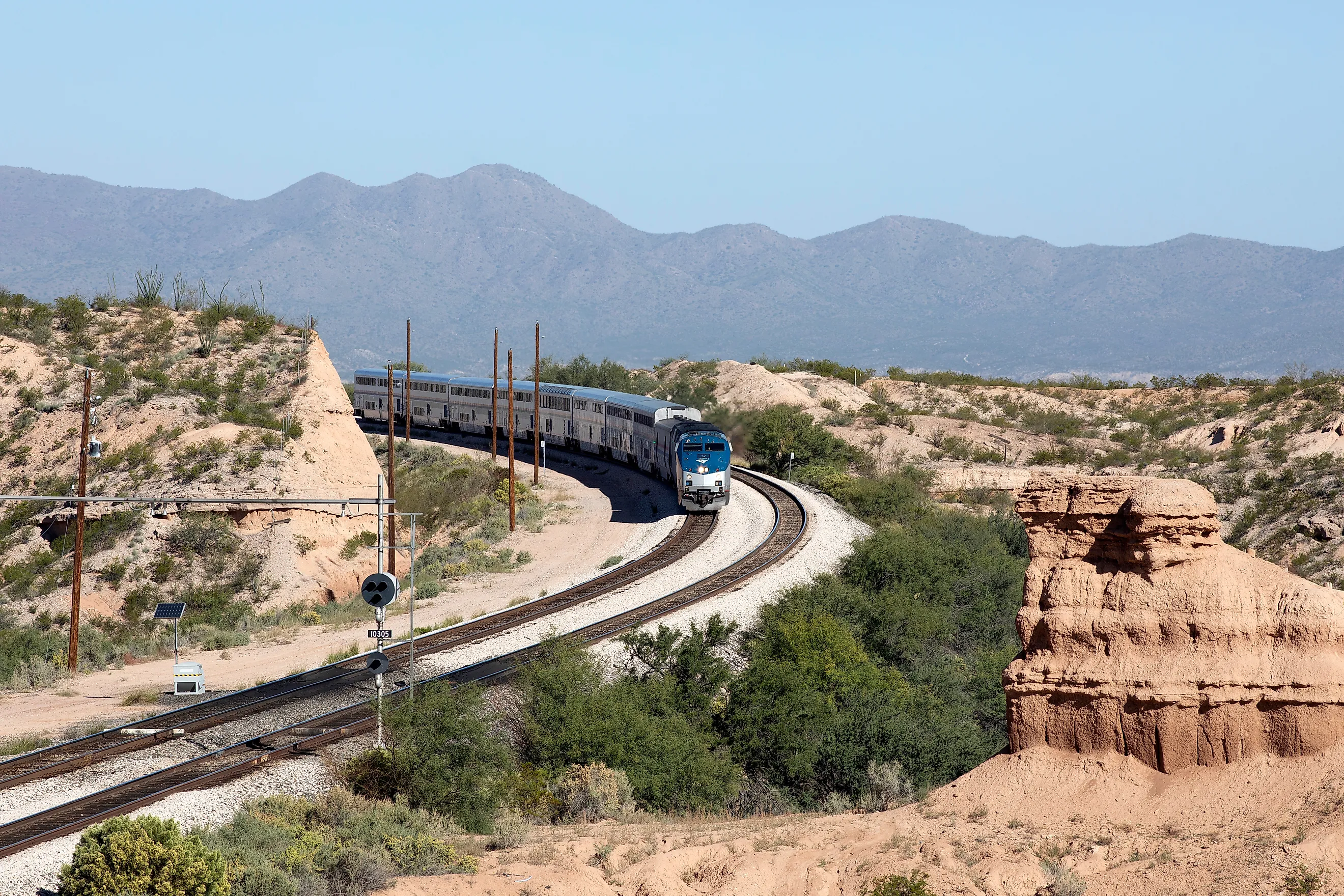
Benson was founded in 1880 after the arrival of the Southern Pacific Railroad. It soon became a rail hub for southeastern Arizona. The town was also a departure point for stagecoaches and freight bound for Tombstone, ranching areas, and mining camps. It was named for Judge William Benson, a close friend of the railroad’s president. Today, you can take a long trip on the Amtrak Sunset Limited from Benson to Los Angeles. This is the ideal activity after you have explored all that Benson has to offer.
When you get to Benson, head to the Benson Visitor Center located in a replica railroad depot downtown. The staff here can guide you on how to get around town and where to see the best attractions. Most likely, they will point you towards the Kartchner Caverns first, where you can hike half a mile through the caverns and see the tallest column formation in the state, the Kubla Khan. There are more hiking trails above ground that also extend into the Whetstone Mountains. Other things to do include strolling through Benson’s downtown area to see the unique murals, visiting the Benson Historical Museum, and touring the Mescal Movie Set, where big Hollywood stars such as Sharon Stone, Clint Eastwood, and Val Kilmer have filmed scenes for Western movies.
Clarkdale

Clarkdale was founded in 1912 as a planned company town for workers at the United Verde Copper Company. The workers were employed at the company’s copper smelter, and a railroad line connected the town to mines and markets. As such, the railway was essential to the region’s copper industry. Now, Clarkdale is called the Gem of Arizona and offers incredible outdoor activities and cultural experiences. At the Arizona Copper Art Museum, you will find collections and art exhibits filled with pieces made by braziers and coppersmiths. The focus is on American and European artwork made between the 16th and 21st centuries. If you want to learn more about the railroad history of Clarkdale, take a four-hour ride on the Verde Canyon Railroad’s route to Perkinsville and back. Along the way, you will see desert plants and vegetation, wildlife, and the unique Arizona desert terrain.
If you want to canoe, kayak, or fish, you can make use of the two public river access points to the Verde River right from Clarkdale. The lower point allows you to explore the Verde River Corridor, while the Tuzigoot access point is part of the Verde River Greenway State Natural Area. Clarkdale is also a gateway town to Sycamore Canyon, where you will find the second-largest canyon in Arizona’s red rock country, as well as a desert riparian area.
Ash Fork

Ash Fork was founded in 1882, with the Atlantic and Pacific Railroad establishing a siding where Ash Creek met the tracks. Later, the area became a ship-in point for livestock and ore before a stone industry was developed with a foundation in railroad shipments. Ash Fork is a tiny place in modern times, but it offers one of the best Route 66 experiences and historic charm you would be hard-pressed to find elsewhere. When you walk through the downtown area, you will find two one-way streets that still follow the original Route 66 path. You can take selfies at Route 66 Park and view several historic buildings, including the 1920s Post Office.
Ash Fork also lost its tourism boom when the railroads and Interstate 40 left Route 66 almost desolate. However, it worked hard to get its visitors back, and today people still flock to the Ash Fork Route 66 Museum, where they can see displays highlighting the town’s Route 66-specific history. You can see panoramic views of Ash Fork, as well as the Kaibab National Forest, from the scenic Crookton Overlook. Or, you can go in search of the unknown at Two Guns, a ghost town located around 85 miles from Ash Fork. There are several abandoned buildings here, including a zoo and a Route 66 bridge.
Why You Should Visit Arizona’s Charming Old Railroad Towns
Arizona’s small railroad towns are perfect examples of places where you can experience ‘living history.’ Some of them still offer charming rail rides that include beautiful scenery and live entertainment. Others have ensured that their railroad legacy shines just as brightly as the old neon signs along Route 66 when it was in its heyday. You will also hear stories of mom and pop businesses, ranching, and mining that made these towns into what they are today: appealing small town destinations that have so much to offer. When you make your way through these towns, you will not only tick off ‘done’ on your list of attractions or ‘must-see sights’, you will also see first-hand how trains helped grow and expand each one of them.