6 Alabama Towns Where Famous Movies Were Filmed
Small towns in Alabama have long attracted the film industry with their historic architecture, scenic landscapes, and varied natural settings. The state’s weather and range of environments, from forests to coastlines, allow it to stand in for many locations needed for different genres. These qualities have supported films that draw on imagination, history, and regional character. From the work of director Tim Burton to stories drawn from the civil rights movement, these six Alabama towns have served as memorable settings for major productions.
Wetumpka - Big Fish (2003)

Tim Burton transformed Wetumpka into the world of Big Fish. The filmmaker chose this riverside town for its Victorian architecture, which supported the larger-than-life stories in the film. While Spectre, the town in the movie, was built on Jackson Lake Island, the film’s most recognized location, known as the Big Fish House, is found in Wetumpka.

The Wetumpka Impact Crater is a notable natural site formed when a meteorite struck the area more than 80 million years ago. The crater spans roughly five miles. Gold Star Park on the Coosa River has walking trails, fishing areas, and space for birdwatching.
Fort Toulouse-Jackson Park & Historic Site is another key stop. The grounds include Native American mounds from the 1400s, Creek homes from the 1700s, a French fort from the same period, and an early 1800s U.S. fort connected to the surrender of Creek lands to Andrew Jackson.
Selma - Selma (2014)

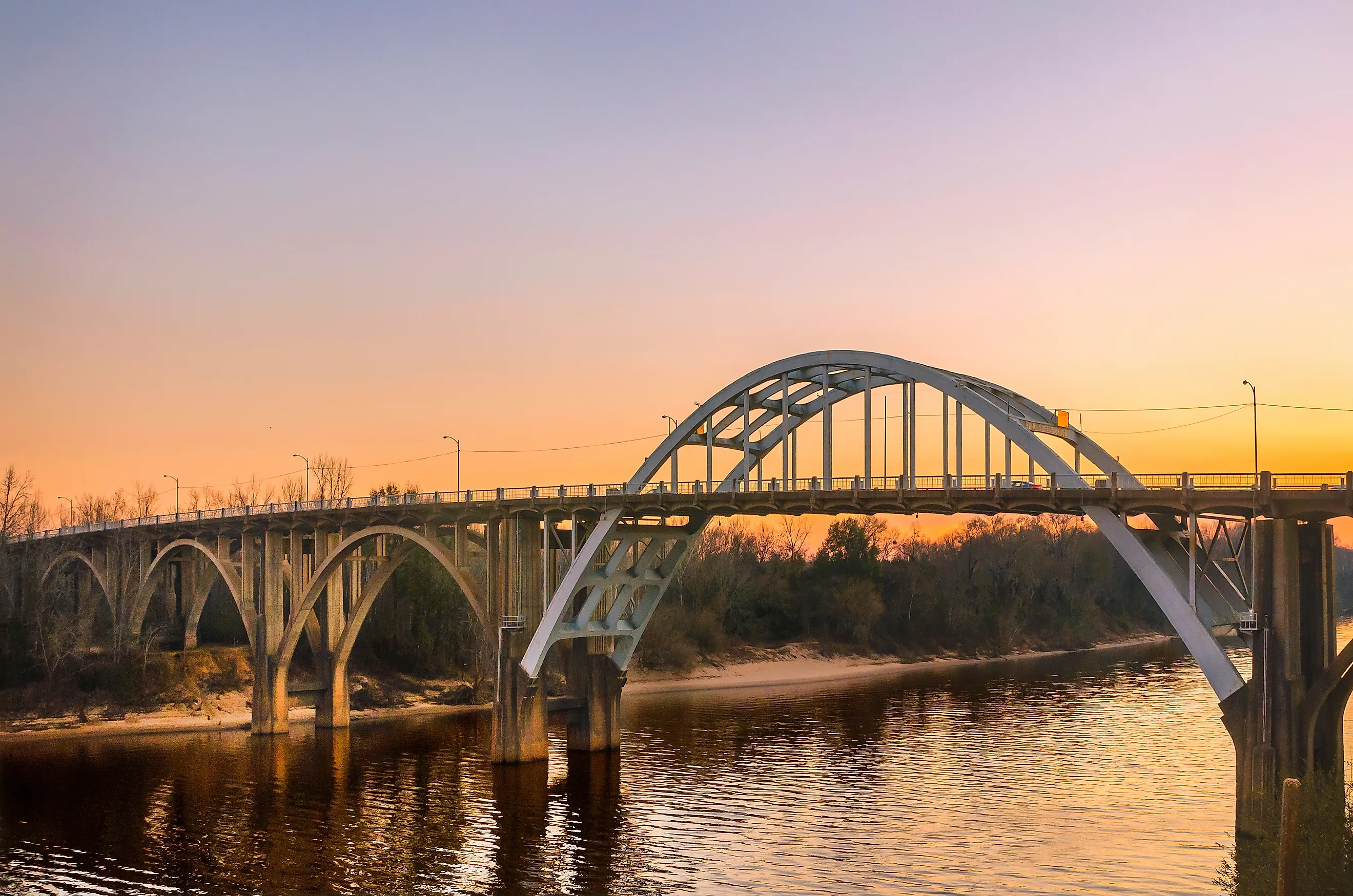
Ava DuVernay’s civil rights film Selma brought international attention to the city. Scenes depicted the 1965 voting rights marches from Selma to Montgomery, with the Edmund Pettus Bridge as the focal point of the “Bloody Sunday” sequence.
The Edmund Pettus Bridge remains one of the most recognized sites of the Civil Rights Movement. Visitors often come to see the structure and follow the same route taken by John Lewis, Martin Luther King Jr., and the 600 marchers on March 7, 1965. At the base of the bridge is the Selma Interpretive Center, which marks the start of the trail leading to Montgomery.
Brown Chapel AME Church served as the gathering point for organizing the marches and remains an important site. The National Voting Rights Museum, located near the bridge, recounts the history of the fight for the right to vote through exhibits related to both women’s rights and civil rights.
Fairhope - Get Out (2017) and Hush (2016)

Fairhope has served as a contrasting backdrop for recent filmmakers. Two horror films used this beachside community to frame their stories. Get Out, the psychological thriller, was filmed in Fairhope and the nearby city of Mobile. Hush also used Fairhope, drawing on its history and older architecture.
Fairhope Municipal Pier is central to the community, with views of Mobile Bay, an award-winning rose garden, and sunsets along the Gulf Coast. Residents often gather at Sunset Pointe in the Fly Creek Marina for the evening light. The downtown area is pedestrian-friendly, with boutiques, galleries, and the Eastern Shore Art Center. This facility contains five galleries and four studios, with ongoing exhibitions by local and national artists.

The Fairhope Museum of History provides context for the area’s past. Its exhibits address the city’s utopian origins and local development through interactive displays.
Mobile - USS Indianapolis: Men of Courage (2016) and Gerald's Game (2016)

Many locations throughout Mobile have made it a frequent choice for filmmakers. The city’s antebellum properties and the presence of the USS Alabama battleship have contributed to its recurring use in feature films. The WWII film USS Indianapolis: Men of Courage, starring Nicolas Cage, was filmed on the USS Alabama at Battleship Memorial Park. The horror film Gerald’s Game also made use of the city’s architectural settings.
USS Alabama Battleship Memorial Park contains the WWII battleship, the submarine USS Drum, which is the oldest of its kind on display in the United States, and more than 30 military planes. The Mobile Carnival Museum presents the city’s long Mardi Gras tradition through displays of dresses, costumes, and related parade artifacts.

Fort Condé in downtown Mobile is a reconstructed French colonial fort with large cannons and staff in period clothing. Bellingrath Gardens on the Fowl River includes about 65 acres of landscaped grounds with a wide range of plant life.
Florence - The Devil All the Time (2020)

The Devil All the Time, a dark psychological thriller, used the historic streets of Florence in northwest Alabama to support its Southern Gothic setting. The area, known as The Shoals, is recognized for its musical history, which adds to the city’s cultural background.
The W.C. Handy Home and Museum is a key site for music history. It preserves the childhood home of the musician known as the “Father of the Blues,” who grew up in a small log cabin. The Rosenbaum House, designed by Frank Lloyd Wright, is the only home of his design in Alabama and has stood since 1939.
Nearby Muscle Shoals is home to FAME Recording Studios, which provides tours of the studio where many well-known artists recorded. Icons such as Aretha Franklin created several notable singles there. McFarland Park adds a natural setting with open scenery, recreation areas, and a small lighthouse.
Montgomery - Just Mercy (2019) & Selma (2014)

Montgomery has been a significant location for films centered on themes of justice. Just Mercy, featuring performances by Michael B. Jordan and Jamie Foxx, was filmed across several Montgomery sites in late 2018. The city also appeared in Selma, with filming at the Alabama State Capitol.
The National Memorial for Peace and Justice and The Legacy Museum address the history of racial injustice from slavery to mass incarceration. Both sites were developed by the Equal Justice Initiative, the organization featured in Just Mercy. The memorial and museum present this history through documented accounts and curated exhibits.
The Alabama State Capitol marks the end point of the Selma to Montgomery march on March 25, 1965. The building is associated with major historical events, including the oath of office taken by Jefferson Davis as Confederate President and speeches delivered by Martin Luther King Jr. The Rosa Parks Museum focuses on the Montgomery Bus Boycott and contains exhibits related to the 381-day protest that became a defining moment in the Civil Rights Movement.
Walking Through the Films You Love
From the streets of Wetumpka that shaped Tim Burton’s storytelling to the Edmund Pettus Bridge in Selma, these Alabama towns connect film settings with real places. Fairhope contributed to the atmosphere of recent horror films, and Montgomery provided locations tied to major civil rights history. Florence added its cultural backdrop to a Southern Gothic narrative. Across these locations, visitors can see sites connected to well-known productions and the historical events that shaped them.