10 Small Towns in Wyoming with the Best Downtowns
Wyoming's downtowns held onto their pre-war character better than most of the West managed to. Buffalo still runs the Occidental Hotel saloon that hosted Owen Wister and the actual Wild West regulars who frequented it during the boom years. Cody pulled its town into being around Buffalo Bill himself with sandstone storefronts the founders built to last. Sheridan keeps Kings Saddlery making the same custom rigs that cowboys came to it for over a century ago. Kemmerer claims the original J.C. Penney store from 1902 still standing on the original block. The 10 below all kept their pre-war buildings actually working.
Buffalo

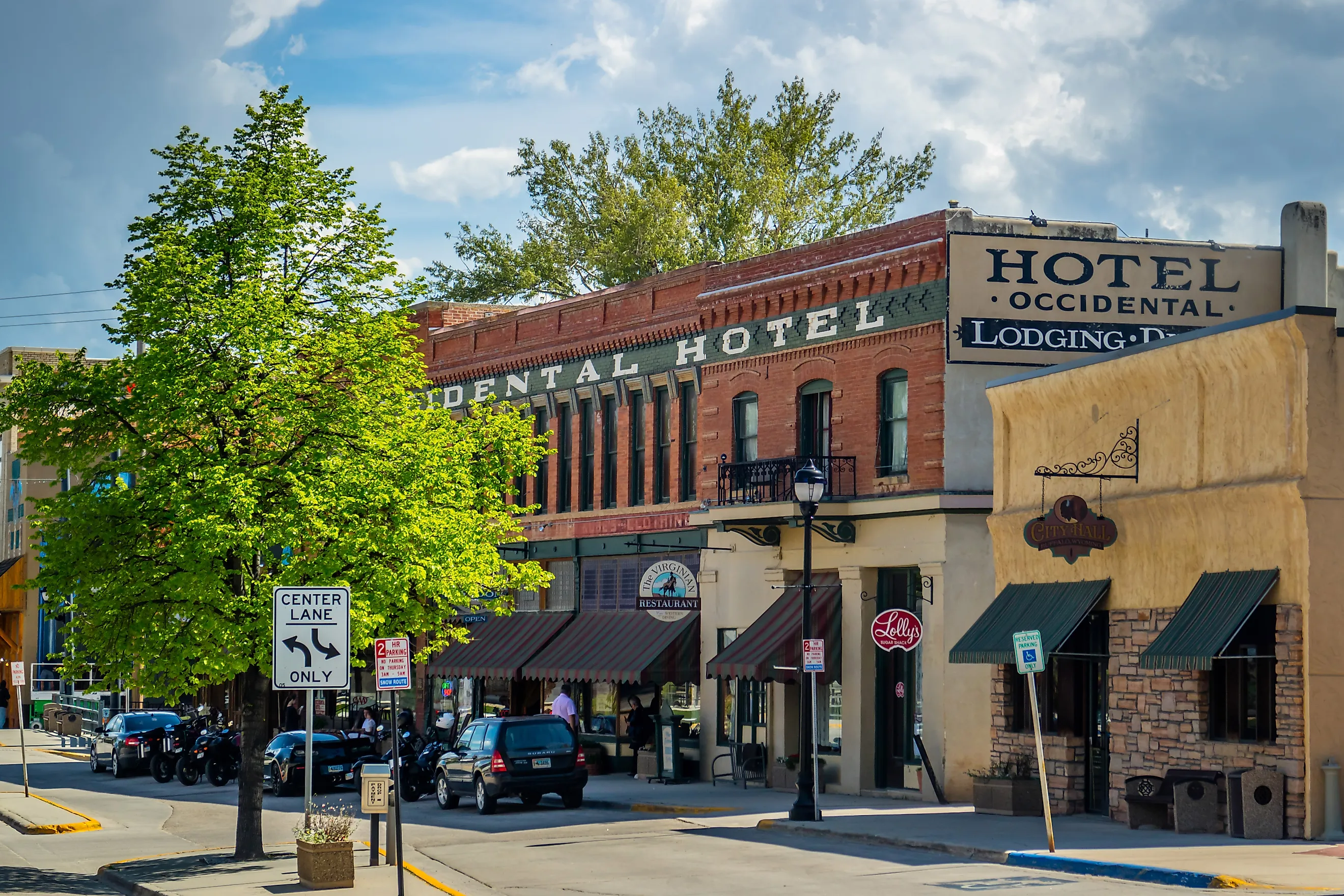
Along the Bozeman Trail, Buffalo was established as a supply point and is still closely tied to that early transportation route. Its downtown is near the base of the Bighorn Mountains and has many historic commercial buildings from the late 19th and early 20th centuries. The Historic Occidental Hotel, originally opened in 1880 and rebuilt after a fire, still operates a preserved saloon with period interior details.
The Jim Gatchell Memorial Museum houses a large regional collection of frontier history including thousands of artifacts related to Old West settlement and local industry. Downtown businesses include western apparel retailers and specialty shops, reflecting the area's ongoing connection to ranching and rodeo culture.
Laramie

Laramie is a college town known for its academic presence and local arts community. Public art initiatives like the Laramie Public Art Coalition and the Laramie Mural Project have added murals and installations throughout downtown. The area has locally operated shops, restaurants, and breweries. There are also more than 20 historic sites within close proximity.
The town is home to a range of museums including the University of Wyoming Geological Museum and the Wyoming Territorial Prison State Historic Site, which document regional history.
Cody

Cody was founded by William "Buffalo Bill" Cody and was developed around both ranching and the railroad. Its downtown includes numerous 1900s to 1930s sandstone buildings that show its frontier roots. Just outside the core, its Old Trail Town section preserves more than 20 relocated cabins, barns, and shops, illustrating the area's history.
The town's proximity to two Yellowstone National Park entrances and nearby public lands makes its downtown a gateway for outdoor recreation. The Buffalo Bill Center of the West has five museums covering local history, western art, firearms, natural history, and Native American culture. There are also annual rodeo events that continue the town's longstanding connection to cowboy traditions.
Sheridan

Like Buffalo, Sheridan sits at the foot of the Bighorn Mountains. The downtown area is community-based, featuring many festivals and events. Kings Saddlery and Museum is considered one of the most historic and renowned saddleries in the Mountain West, and it is right on Main Street. The shop is famous for custom saddles, cowboy chaps, and a collection of cowboy and ranch artifacts.
Also on Main Street in downtown Sheridan is the WYO Theatre, known for its comedy, music, and local theatre shows. Its Art Deco exterior reflects a long history in the arts that now focuses heavily on education.
Lusk

Lusk has a compact downtown centered along Main Street. The Lusk Stagecoach Museum, located in a former National Guard Armory, features regional artifacts including an original stagecoach and historical exhibits. There are also preserved structures such as a one-room schoolhouse and an old general store.
The Lusk Municipal Golf Course, a nine-hole public course, is a short distance away and serves as a local recreational space. Because of limited development and low light pollution, the area is also known for clear night skies and consistent stargazing conditions.
Kemmerer

Kemmerer began in 1897 during the development of coal mines in the region and is steeped in mining history. In the center is Herschler Triangle Park, featuring several remaining 100-year-old buildings. The town is known as the birthplace of J.C. Penney, with the original store and the Penney family home open for tours during the warmer months. It also is a gateway town to Fossil Butte National Monument, where a variety of different animal fossils from the ancient Wyoming Fossil Lake ecosystem can be seen.
Rawlins

Rawlins developed during the railroad expansion and has many original brick commercial buildings from the 1920s and 1930s. Its downtown features a series of murals collectively called "A Walk Through Carbon County History" that depict regional history and culture. There are also boutique shops and locally operated restaurants that display its history and commercial character.
Just off Main Street, the former Rawlins State Penitentiary now operates as the Wyoming Frontier Prison Museum. It has daytime guided tours about the prison's history and notable inmates, as well as seasonal ghost tours. The nearby Carbon County Museum displays artifacts from the area's coal mines, documents the arrival of the railroad, and traces the growth of early towns in the area.
Lander

Originally established as the end of a train line, Lander's downtown is compact and highly walkable, reflecting its early design for walking and horse traffic. The district features a mix of shops, galleries, and breweries within a few blocks, supporting both local commerce and community activity. The Fremont County Pioneer Museum, one of Wyoming's longest-running history museums, preserves artifacts and exhibits related to the town's development and regional history.
Lander is located at the edge of the Wind River Mountains. It benefits from its proximity to well-known climbing areas, connecting its downtown directly to broader outdoor recreation opportunities.
Douglas

Downtown Douglas, located along the banks of the North Platte River, is filled with historic brick commercial buildings that show its development during the railroad era. The streets are home to locally operated shops, cafes, and public murals that depict the town's railroad history. Jackalope Square, featuring a statue of the mythical jackalope, marks local culture tied to regional folklore.
The Wyoming Pioneer Memorial Museum preserves artifacts and exhibits on early settlement and the town's connection to the Oregon Trail.
Powell

Powell sits in the Big Horn Basin. It maintains a compact downtown of historic storefronts and locally operated businesses along streets like Bent Street. The area includes cafes, restaurants, and retail spaces. The Homesteader Museum preserves artifacts and exhibits documenting the region's early settlers and history.
Washington Park, centrally located downtown, has public green spaces with mature trees, picnic areas, and a bandshell for community events. Downtown Powell hosts farmers markets, seasonal festivals, and local art installations. Its walkable layout and many parks support both daily activity and access to nearby recreational areas in the Big Horn Mountains.
Where Wyoming's Early West Still Stands
Wyoming's wide-open landscapes and small population have helped preserve some of the most authentic downtowns in the Mountain West. These downtown centers show a clear record of how communities developed around mining, ranching, railroads, and key transportation routes. Their location near major landmarks including Yellowstone and Grand Teton places them within a wider historical and geographic framework. Together they illustrate how Wyoming's settlements emerged and how they continue to function within the structure of the American West.