5 Old Mill Towns To Visit In Pennsylvania
As one of the original thirteen colonies, Pennsylvania played a massive role in American History. Aside from being integral to the American Revolution and the Civil War, this state also made a significant contribution to the early colonial economy through its milling operations. Gristmills quickly became business centers, attracting immigrants who worked in the growing industrial mills. As time passed, milling technology evolved from water wheels to rollers, and many mills subsequently transitioned to animal feed production during the late 19th and early 20th centuries.
Today, Pennsylvania’s old mill towns still stand, offering visitors a fascinating glimpse of what American industrial life looked like hundreds of years ago. These towns combine their milling history with unique attractions to keep the visitors and tourists coming. If you have not experienced walking through an old mill town before, these five towns are the perfect starting point.
Rittenhouse Town

America’s first paper mill was built in Rittenhouse Town, located in Philadelphia. Papermaker William Rittenhouse made his way to the newly established Germantown in 1687, following the lead of other Quaker and Mennonite families. By 1690, William struck a deal with Philadelphia’s first printer and bought a 20-acre plot along Paper Mill Run (Monoshone Creek). The first paper mill in British North America was established, officially marking the founding of Rittenhouse Town. Together, William and his son, Nicholas, built the first paper mill and dominated the early American papermaking industry for forty years. In 1707, the Rittenhouse Homestead, the first permanent home in the community, was constructed. The Rittenhouse family also operated many other mills that produced grist, rugs, blankets, and textiles.

In modern times, Rittenhouse Square, located approximately 4-5 miles from Rittenhouse Town, is one of the most popular attractions in Philadelphia. When you arrive here, you might find yourself gravitating toward the nearby Monk’s Café or the Good Dog Bar, which are two of the most charming watering holes in the neighborhood. Afterwards, make your way to the Rittenhouse Homestead and Bake House in Rittenhouse Town, which housed eight generations of the Rittenhouse family. The bake house even includes a working beehive oven. Other historical activities include joining a walking tour that follows the paths around the old mill race and mill pond ruins. Or try making your own paper courtesy of the nonprofit, Historic Rittenhouse Town.
Milton

The borough of Milton in Northumberland County was built on milling, with its name being an abbreviation of ‘Milltown.’ Milton’s early history includes sawmills and gristmills that took advantage of the waterpower from Limestone Run. By the early 19th century, grist and sawmills had turned Milton into a proper manufacturing town. One of the most notable was Baker’s Grist Mill, built in 1815 by George Eckert Jr. on Limestone Run (on the site of an earlier wooden mill built by Andrew Straub). The new mill survived fire and floods, including the Great Limestone Run flood of 1817. The mill was eventually torn down in 1892. Much later, in the 20th century, Milton also housed rolling, woodworking, and planing mills as well as furniture and paper-box factories.

Today, you can join the Historic Downtown Walking Tour to learn more about Milton’s history. There are fourteen kiosks along the walk to explore, while the Mural Tour of Downtown Milton brings history to life through murals. If you want to experience nature in Milton, head to Milton State Park, which sits entirely on an island between Milton and West Milton. Here, you can kayak, canoe, or fish in the Susquehanna River. There are several trails perfect for families, including the North and Mid Trails. Or, you can play soccer and have a picnic in the northern section of the park.
Vandergrift

Vandergrift, located in Westmoreland County, is notable for its steel mill heritage. As one of the first thriving planned industrial communities in the U.S., founded in 1895 by George McMurtry, president of the Apollo Iron and Steel Company, Vandergrift was designed to be sold to its workers. The Vandergrift mill became one of the largest rolling mills in the world, producing sheet steel instead of traditional mill products. The company built an entire town, courtesy of landscape architect John Charles Olmsted, complete with paved streets, utilities, parks, and houses, before selling the lots to workers, an unusual event for that era.

If you visit Vandergrift today, you can walk the curving streets and admire the turn-of-the-century Queen Anne and Victorian homes that formed part of Olmsted’s layout and design. You can also visit the Victorian Vandergrift Museum and Historical Society, located in the historic Sherman School, which was built in 1911. The museum features exhibits on the steel mill, foundry, the town’s architecture, and overall community life. You can also explore the Casino Theatre Building, which is used for vaudeville and theater and is home to Vandergrift’s public library.
Charlestown Township

Charlestown Township is located in Chester County and is the site of the original woolen (textile) mill on Pickering Creek. This mill was founded by Job Harvey in 1724 and produced woolen and later cotton textiles for more than 170 years. In 1902, the mill was converted to produce grist and cider. In the mid-20th century, the mill fell into disrepair. In 2002, Charlestown Township bought the building and restored it, supported by grants from the Pennsylvania Historical and Museum Commission. The mill still stands today and is part of the Charlestown Village Historic District, listed on the National Register of Historic Places. However, the mill is currently closed to the public.

Charlestown is still filled with historical charm today. You can stroll through Charlestown Village to view the historical houses, including the Job Harvey House, the Methodist Episcopal Church, and the wheelwright’s shop. If you are visiting with your family, Charlestown Park offers several playgrounds and walking trails perfect for a day out in the sunshine. And, at the nearby Valley Forge National Historical Park, you will find exhibits and artifacts that tell the story of George Washington’s Continental Army encampment. You can also go bicycling, hiking, or running here, as the park offers many miles of hiking and biking trails.
Strasburg
Lancaster County boasts the beautiful town of Strasburg, a small town with a rich milling history. This history is built around the Olde Village Mill, also known as the Herr or Edisonville Mill. The original mill was built around 1740, when John Herr realized plans to establish a grist and sawmill on Pequea Creek. In 1822, Samuel Herr expanded the mill to a larger stone structure, which still stands in Strasburg today. The mill underwent several transformations over time, from being a woolen mill to a hydroelectric plant associated with the Edison Electric Company. At one point, it was a VFW post and even a toy/gun museum. Today, the restored mill has been converted into a wedding and events venue.

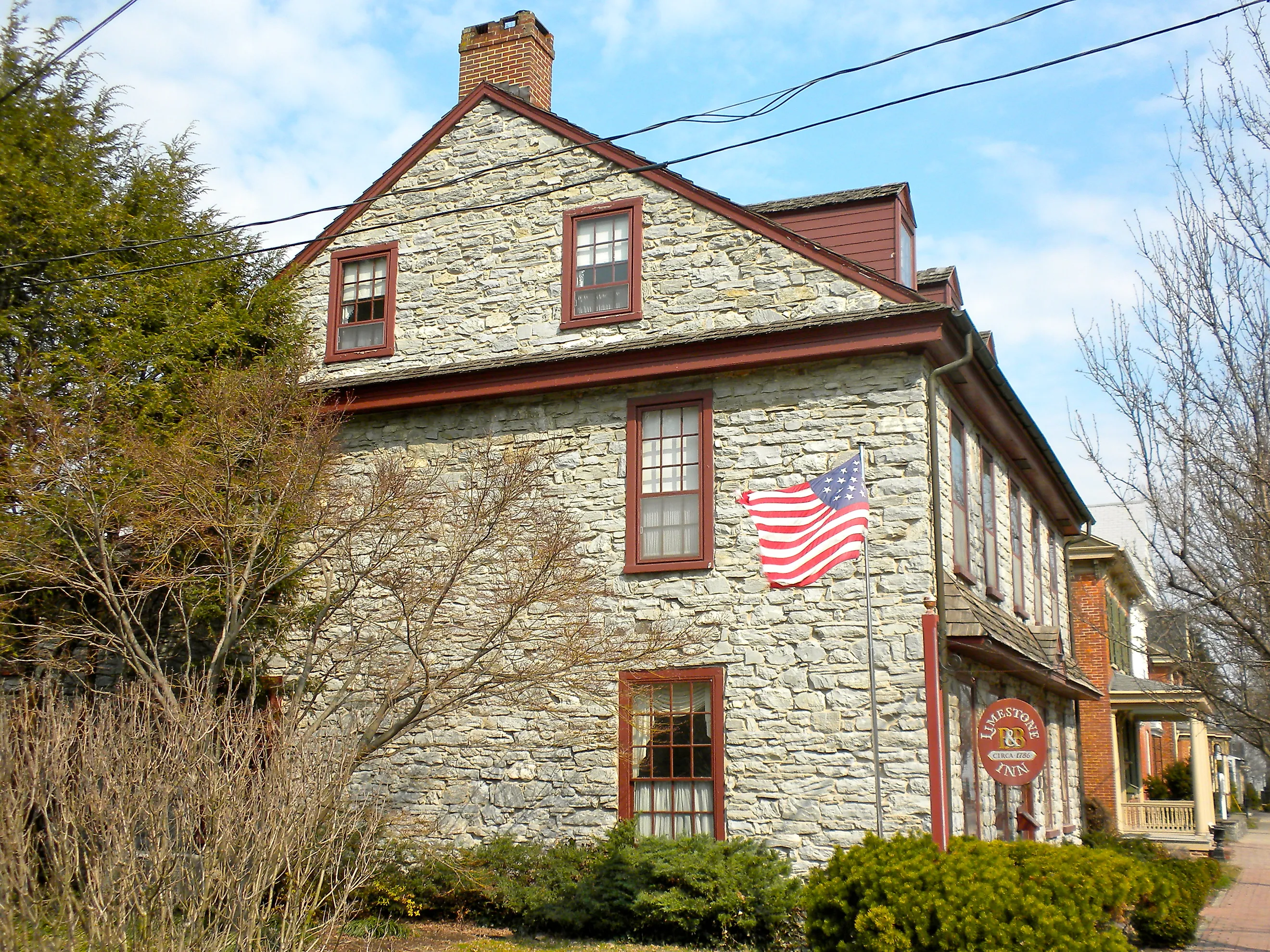
33 East Main Street in Strasburg, Pennsylvania. House built c. 1786, now used as a bed and breakfast. Most of the town of Strasburg is in a Historic District on the NRHP. Wikimedia Commons.
The stone walls, mill race floor, and waterway features of the Olde Village Mill are still visible. You can book an on-site visit through the mill’s website or tour the venue at the beginning of December each year when it becomes a featured stop on the Strasburg Heritage Society’s annual Holiday Home Tour. Other things to do in Strasburg include visiting the nearby Strasburg Rail Road, which is the oldest continuously operating railroad in the Western Hemisphere. Or you can explore downtown Strasburg, including the Pequea Creek area, to see how the town expanded around the original mill and waterway.
When you visit Pennsylvania’s old mill towns, you get a fascinating look into the entire state’s industrial past. These small communities evolved from modest settlements into thriving towns, built on craftsmanship and trade, all powered by the waterways that once supplied the mills. So, whether you take a short walk along these historic roads or explore these old waterways for hours, you will learn more about the ingenuity and resilience of the past communities that shaped each town. Pennsylvania's mill towns will take you on an eye-opening journey right into the core of America's earliest industrial settings, even as you enjoy the modern conveniences of green spaces, gorgeous landscapes, and inviting main streets.