5 of the Oldest Incorporated Towns in California
If you want to understand California, start with the small towns that quietly decided what could be built, what had to be protected, and who the landscape was really for. In Los Gatos, waterpower at a creekside flour mill eventually becomes a recreational spine; in San Anselmo and Ross, rail junctions and ranch estates evolve into film pilgrimages, art gardens, and watershed trails.
This guide walks through five of California's older incorporated towns where every must-visit spot, bakery, rail corridor, reservoir path, or estate garden, doubles as an explanation for why the region looks and works the way it does today.
Los Gatos

Los Gatos incorporated as a town in 1887, but its roots reach back decades earlier along Los Gatos Creek, where water once powered one of the region's most important early industries. That story is clearest at the stone Forbes Mill annex, now a California Historical Landmark whose exterior and interpretive plaques mark the site of Los Gatos's original flour mill, even though the former history museum inside has closed and its exhibits have moved to New Museum Los Gatos downtown. From the mill, the route naturally extends onto the Los Gatos Creek Trail, a paved corridor following the same creek south toward Lexington Reservoir. What was once a working transport route is now one of the South Bay's most heavily used recreational paths, still tracing the geography that shaped settlement.
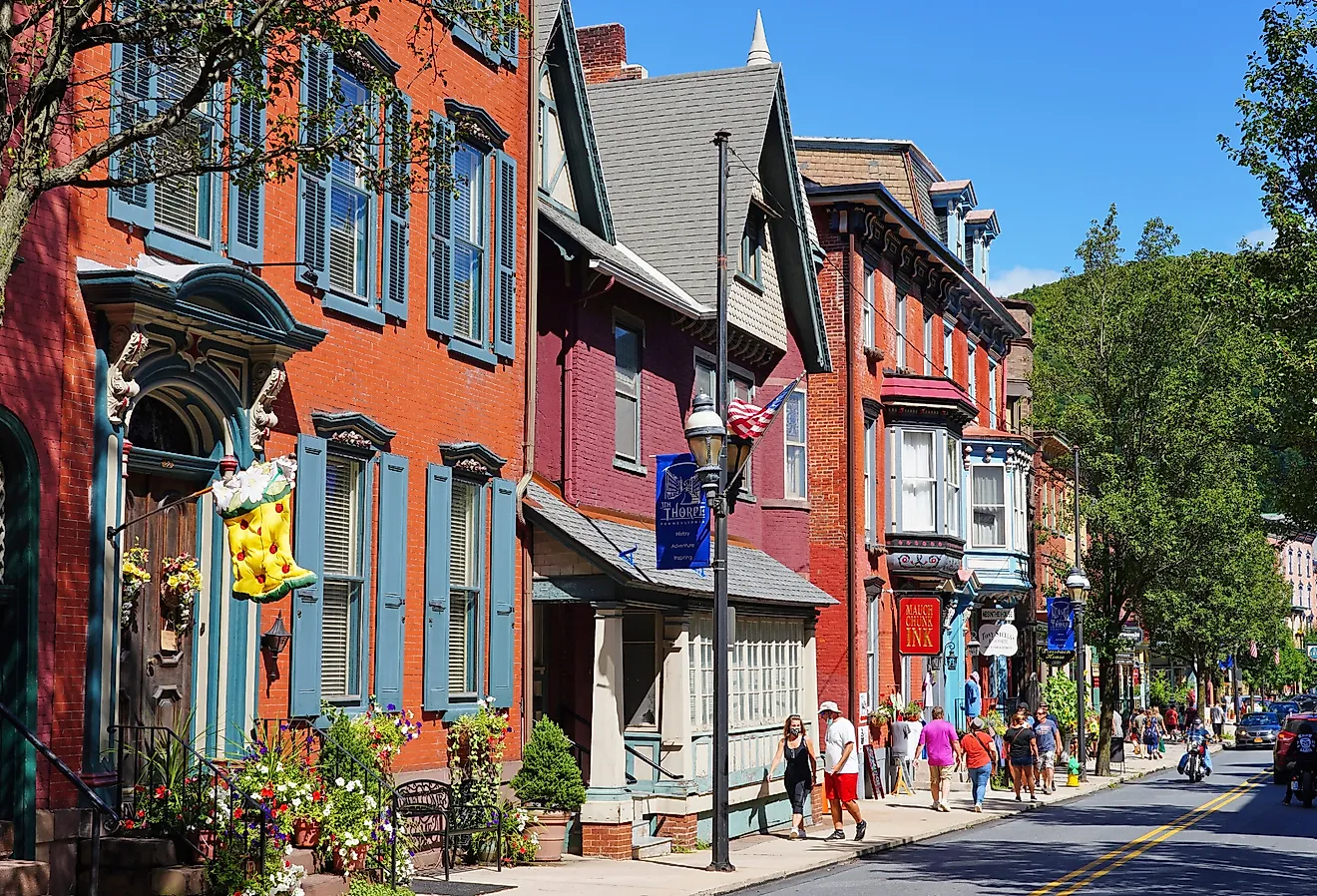
That sense of continuity carries straight into town. The Los Gatos Downtown Historic District preserves Victorian storefronts that emerged after the railroad arrived in the late 19th century, now housing some of the region's most destination-worthy businesses. Manresa Bread draws lines for naturally leavened loaves tied to California grain, while Telefèric Barcelona Los Gatos has made the town a regional stop for serious tapas and paella. Just uphill, Testarossa Winery pours Pinot Noir and Chardonnay inside 19th-century stone cellars, linking Los Gatos' agricultural foundations to its modern identity as one of the Bay Area's most deliberately preserved historic towns.
San Anselmo

Incorporated in 1907, San Anselmo grew at a key rail junction that locals called "the Hub," and that origin is still readable along San Anselmo Avenue. Early-20th-century storefronts frame the approach to San Anselmo Town Hall, a 1911 Mission Revival landmark whose bell tower anchors civic life much as it did when trains and streetcars converged here. Just downstream, Imagination Park compresses a surprising chapter of California pop culture into a creekside plaza, George Lucas's gift to the town, where bronze statues of Yoda and Indiana Jones mark San Anselmo's unlikely role in modern film history. Follow the water along Creek Park, and the bridges and public art make the town's long negotiation with flooding and watershed management unmistakable.
That same corridor leads naturally into San Anselmo's commercial heart. Pizzalina draws regional attention for rigorously traditional Neapolitan pies, while Flour Craft Bakery & Café has become a reference point for gluten-free baking done at a serious level. Around the corner, Amazing Grace Music, a community institution rescued and rebuilt by Lucas, fills its historic building with instruments and working musicians.
Ross

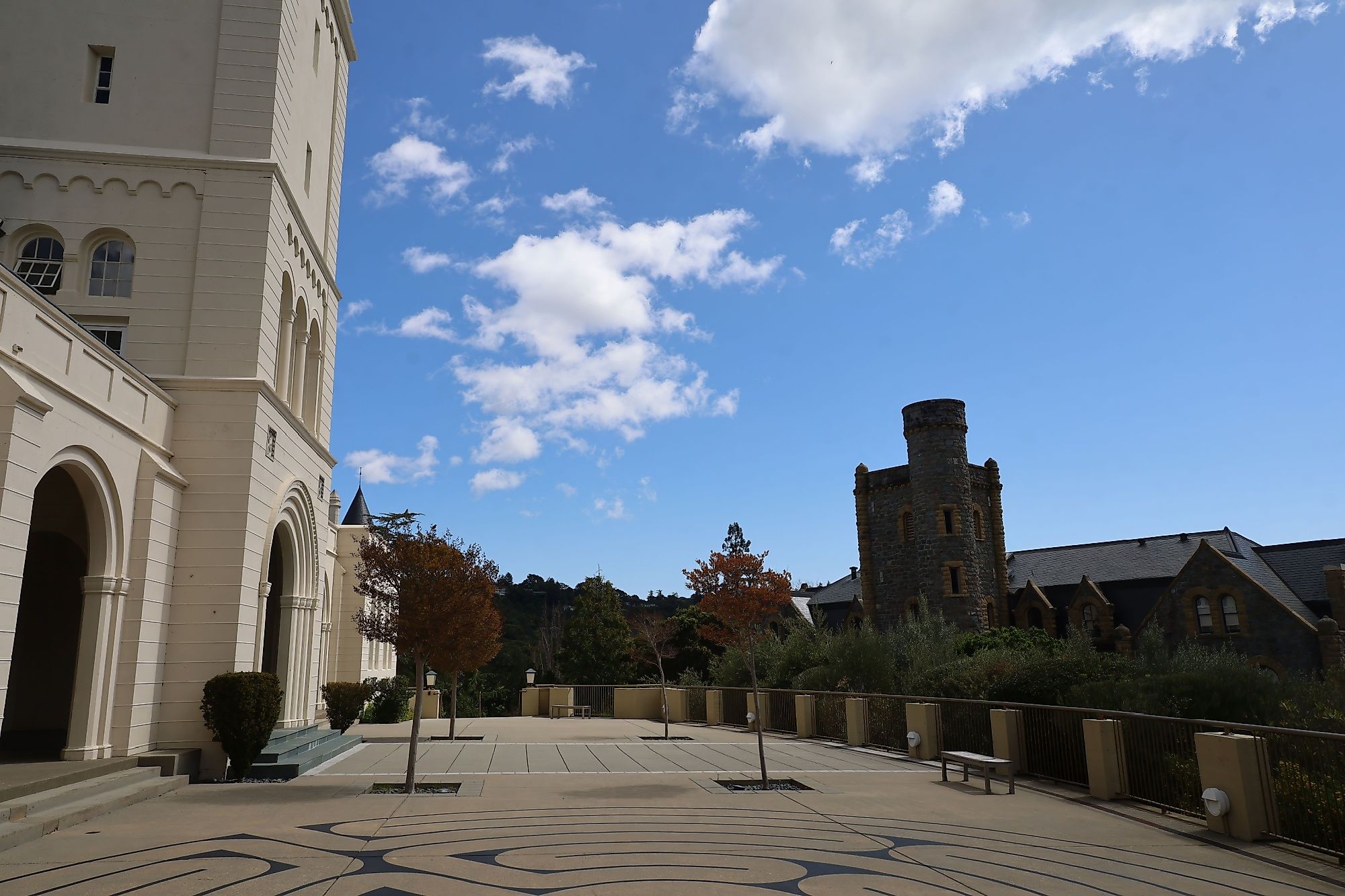
Ross reads its history through land rather than landmarks after being incorporated in 1908, starting at the Marin Art and Garden Center, an 11-acre estate shaped from former ranchland once held by founding families. The preserved Octagon House and formal gardens show how early agricultural holdings evolved into civic cultural space, while the center's theater and exhibitions keep the property in active use rather than frozen in time. From there, trails naturally pull visitors toward Phoenix Lake, a working watershed built in the early 1900s. Its loop path makes the reservoir's role explicit, this is infrastructure first, recreation second, and explains how water management quietly shaped Ross's growth.
Back at street level, Ross Common anchors the town's compact commercial core, a grassy square that has functioned as Ross's civic center for more than a century. On its edge, Marché Restaurant carries forward the legacy of Marché aux Fleurs with seasonal French-Italian cooking that draws diners from across Marin. A few doors away, Crown & Crumpet Ross adds a distinctive counterpoint, serving formal afternoon tea from a storefront that turns the Common into a destination rather than a pass-through.
Hillsborough

Hillsborough made an early and deliberate decision to resist commercial development, and its history is best read through the estates and landscapes that defined its boundaries after its incorporation in 1910. That intent is unmistakable at Carolands Chateau, a 98-room Beaux-Arts residence completed in 1916 and now a California Historical Landmark. Touring its restored salons, grand staircases, and formal gardens offers one of the most complete expressions of Gilded Age ambition on the West Coast, built by railroad wealth and preserved through careful stewardship. Nearby, the curving residential lanes around Ralston Avenue reveal how early planners used large parcels and winding roads to lock in privacy and scale, shaping a town where land itself became the primary artifact.
Nature reinforces that design just as clearly. Along Hillsborough's western edge, Sawyer Camp Trail follows Crystal Springs Reservoir, tracing the water system that supplies much of the Peninsula and San Francisco. The trail's long, uninterrupted sightlines make infrastructure legible rather than hidden. Closer to town, Vista Park offers one of the few public vantage points, where visitors can read the surrounding hills and estate patterns from above.
Corte Madera

Following its incorporation in 1916, Corte Madera grew from a redwood logging and shipping point into one of Marin County's most geographically legible towns, and that history is clearest above the neighborhoods at Ring Mountain Open Space Preserve. The looping trail crosses exposed serpentine rock and Coast Miwok petroglyph sites, making visible the land's importance long before modern settlement. From the summit, sightlines stretch across San Francisco Bay, explaining why elevation and access shaped everything that followed. Descending toward the flats, the route naturally meets the Corte Madera Marsh Pathway, a shoreline corridor threading through restored wetlands that once bordered active lumber routes. The tidal channels and levees still dictate how the town meets the water.
That same relationship between land and use defines Corte Madera's commercial core. The Village at Corte Madera occupies ground once tied to transport and industry, now reworked into Marin's most prominent open-air retail center. Dining has become part of the draw, particularly at RH Rooftop Restaurant, where the elevated terrace frames Mount Tamalpais and the bay with architectural precision. Nearby, Pig in a Pickle anchors the experience with Central Texas-style barbecue that has made the town a regional food stop.
Treat these towns as field notes: start with one creek, one commons, one trail, and read what the buildings and shorelines are telling you. Learn that, and California stops being a postcard and becomes a story you can actually walk through, corner by corner, at a time.