11 Unforgettable Small Towns to Visit in Connecticut
Connecticut is one of the few U.S. states where many towns were established before 1800, long before highways, zoning codes, or tourism districts existed. River crossings, mill sites, art colonies, and naval facilities still sit where daily life passes through them. That density creates places where a boarding house could give rise to American Impressionism, or a ferry crossing could remain part of the state’s transportation network centuries later.
This list focuses on small towns in Connecticut where those layers remain visible. Each place offers access to moments, systems, or institutions that continue to function much as they always have, making them difficult to replicate elsewhere in the country.
Essex

Essex functions at a slower pace because it never pivoted away from its river-based economy. The Essex Steam Train & Riverboat offers a continuous rail-to-river experience that begins at the restored 1892 Essex station. A coal-fired steam locomotive pulls vintage railcars north through the Connecticut River Valley, passing salt marshes, bald eagle nesting areas, and preserved farmland. At Deep River Landing, passengers transfer directly onto the Becky Thatcher riverboat, which continues the trip on the river itself. This uninterrupted rail and river connection exists nowhere else in the country and reflects how closely Essex remains tied to working transportation routes.

Essex’s compact Main Street supports lingering rather than browsing. The Connecticut River Museum sits directly on the waterfront in a former steamboat warehouse and features exhibits focused on regional shipbuilding, river trade, and navigation. These include a working shipyard gallery and seasonal demonstrations. Essex Town Dock is a public marina where recreational boats, kayaks, and small commercial vessels still come and go. It remains a functional dock rather than a decorative boardwalk, with activity shifting throughout the day as tides change.
Mystic

Mystic developed around working water, not scenery. The town grew where the Mystic River bends before reaching Long Island Sound, and its layout still follows shipyards, wharves, and warehouses. The anchor is Mystic Seaport Museum, a 19-acre waterfront village with a re-created seaport village. Historic tall ships are docked along the river, including the Charles W. Morgan, the last wooden whaling ship in the world. The recreated village includes ropewalks, cooper shops, and chandlers laid out as they would have been during the height of American whaling. This level of completeness is rare in the United States.

Commercial activity concentrates at Olde Mistick Village, a pedestrian-only complex modeled after an 18th-century New England settlement. Shops are arranged around a central green and duck pond, eliminating car movement. Behind the commercial strip, Mystic River Park provides direct river access without programming or crowds. The park includes a small boat launch, a well-maintained riverside path, and an open lawn used primarily for walking and observing vessel traffic.
Stony Creek

Stony Creek developed as a granite-working village in Branford long before it became a coastal escape. What sets it apart is the Thimble Islands, a chain of about 100 small islands scattered just offshore in Long Island Sound. Many are no larger than a tennis court, yet several hold private homes passed down for generations. The Thimble Islands are best experienced via the Thimble Islands Boat Tour, which departs directly from the Stony Creek dock. The narrated cruise moves slowly through the archipelago, explaining how the islands formed from exposed pink granite and how residents continue to manage water, power, and access.
Stony Creek Beach is a small, town-managed shoreline where the sand is mixed with crushed granite rather than soft dune material. It attracts kayakers and swimmers who stay close to shore due to tidal currents, reinforcing a slower, local use of the water. Community activity centers on Stony Creek Marina, a simple waterfront space used for fishing, launching small boats, and evening walks.
East Haddam

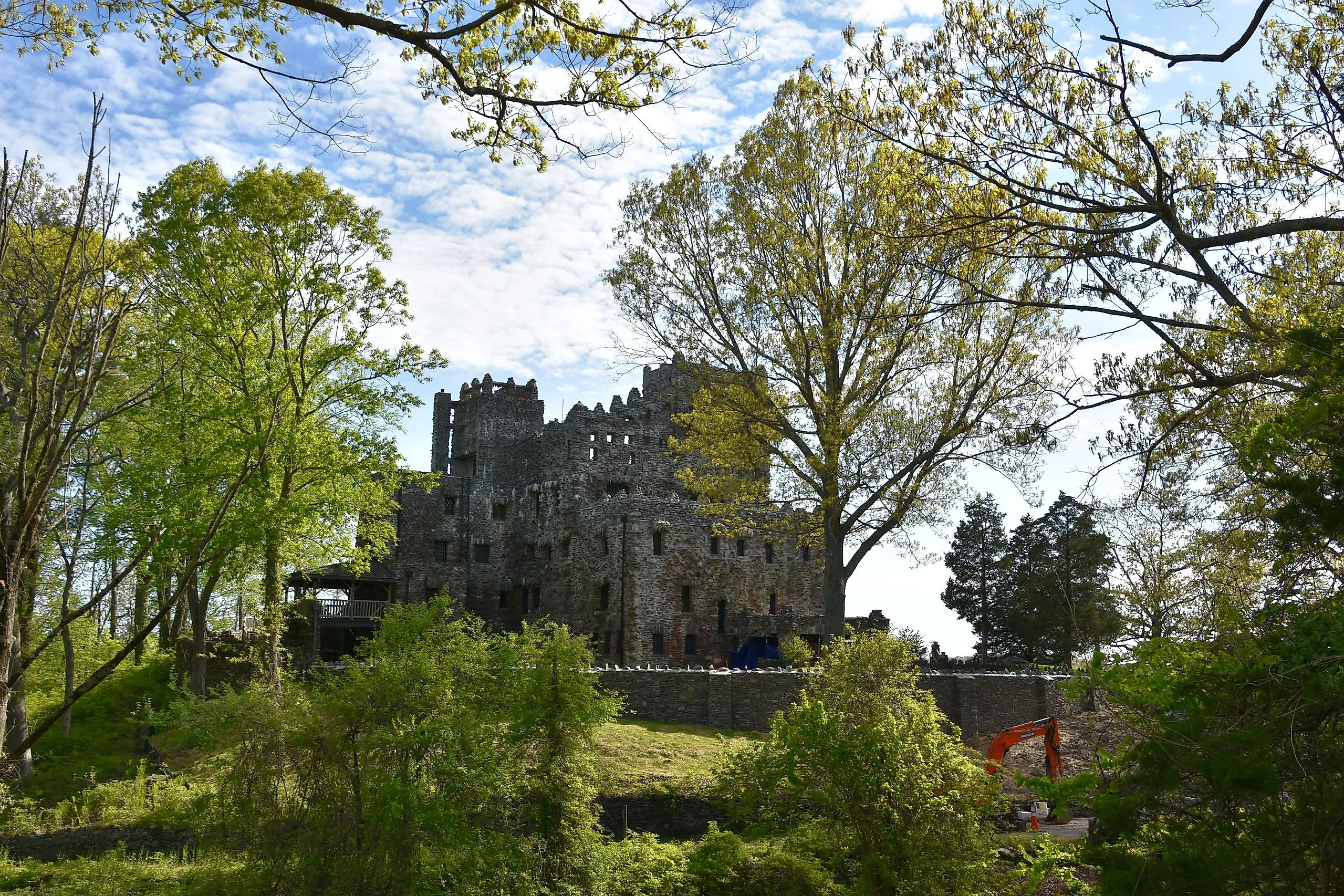
East Haddam is structured around elevation and river access rather than a central square. The most prominent landmark is Gillette Castle, built between 1914 and 1919 by actor William Gillette, the first person to portray Sherlock Holmes on stage. The stone structure resembles a medieval fortress but functions like a personal puzzle box. Inside, visitors find hand-carved wooden light switches, false doors, hidden mirrors, and locking mechanisms designed to confuse guests. The castle grounds connect to Gillette Castle State Park, which includes about seven miles of maintained walking trails. Several trails follow the former track bed of William Gillette’s quarter-scale ‘Seventh Sister’ railroad.

At the base of the hill, the East Haddam Swing Bridge links the town across the Connecticut River. The steel truss bridge from 1913 still opens for passing boats, temporarily halting traffic. The Goodspeed Opera House is a restored 19th-century riverfront theater known for developing Broadway-bound musicals. Its scale remains intimate, and performances draw steady but manageable crowds.
New Milford

New Milford occupies a broad bend of the Housatonic River, and its size sets it apart from many Connecticut towns. It is physically larger, flatter, and less compressed, which gives daily life more breathing room. One of the most unusual sites lies just outside the central area at Tory’s Cave, a marble cave carved into the hillside above the river. The cave is small but geologically rare for the region, formed in marble rather than limestone. It is also biologically significant for hosting Stygobromus, a blind, shrimp-like amphipod adapted to permanent darkness and groundwater conditions. This genus is rarely documented in the northeastern United States, making the site important for regional biospeleology.

Back downtown, New Milford Town Green is one of the longest town greens in Connecticut. It is not ornamental. The green hosts regular farmers’ markets, local fairs, and small civic gatherings that primarily draw residents. The New Milford Historical Society & Museum documents local industry, river commerce, and military history, keeping the focus on the town rather than the broader region.
Kent

Kent developed along an old north-south travel corridor between the Taconic and Litchfield Hills, which limited sprawl and preserved a compact village core. The most prominent landmark is Kent Falls State Park, where Kent Falls Brook descends roughly 250 feet in a sequence of broad drops and narrow chutes. A quarter-mile stone-and-gravel trail follows the water uphill, with stepped viewing areas positioned at each major tier. The trail allows close observation of changing flow patterns, rock formations, and moss growth without leaving the path. Few places in the United States offer side-by-side access to a waterfall of this height within walking distance of a village.

Beyond the village edge, Macedonia Brook State Park extends across more than 2,300 acres of forested ridges and stream valleys. Trails such as the Blue Trail climb steadily to exposed overlooks, offering long views across the Housatonic Highlands. The Kent Historical Society maintains early farm structures and archival collections focused on agriculture, ironworking, and river trade.
Eastford

Eastford has no real downtown, just open land, forest roads, and Frog Rock greeting drivers along Route 44. Frog Rock is a house-sized glacial erratic painted to resemble a bright green frog. The boulder was left behind by retreating ice thousands of years ago and later carved and painted by a local resident in 1881. It functions as both public art and a navigational marker. There is nothing else like it in New England, a permanent transformation of a natural glacial feature into a folk landmark that residents actively maintain.
Much of Eastford’s land folds directly into Natchaug State Forest, a protected area spanning more than 13,000 acres across northeastern Connecticut. Forest access here is not symbolic. Trailheads open straight from town roads into long interior stretches of hardwood forest. Sections of the Blue-Blazed Natchaug Trail pass through Eastford, following old logging corridors and stone-lined streams. Remnants of Civilian Conservation Corps work from the 1930s still appear along the way, including earthen structures and former camp clearings. The Eastford Historical Society maintains town records, agricultural tools, and schoolhouse materials donated by residents.
Winsted

Winsted feels active rather than curated. It grew as a working town along the Mad River, and that energy still shows in how much there is to do within a small area. The most singular institution is the American Museum of Tort Law, the only museum in the country focused entirely on tort law and civil justice. Instead of treating law as theory, the museum uses everyday cases to explain how consumer safety, workplace protections, and environmental standards evolved.

Visual art appears outdoors through several large-scale murals painted on downtown buildings. The works reference local history, river life, and community themes, turning brick facades into informal exhibition spaces. The works reference labor history, river ecology, and community life, turning alleyways and brick facades into informal exhibition spaces. Cold months bring activity uphill, where Ski Sundown operates as one of the region’s primary ski areas, offering night skiing and terrain suited for beginners and intermediates. Sunset Meadow Vineyards, a short drive from downtown, operates on former dairy land and produces small-batch wines from cold-hardy grapes suited to Connecticut’s climate.
Old Lyme

Old Lyme’s national importance comes from a specific place and moment. Beginning in the 1890s, painters gathered here to work directly from the surrounding marshes and river light, creating a distinctly American response to European Impressionism grounded in realism and place. That origin remains visible at the Florence Griswold Museum, preserved in the former boarding house where artists lived and worked. The house itself is part of the collection, with painted panels still visible on bedroom doors and walls, documenting individual artists’ interpretations of the same landscape.

Living art culture continues at the Lyme Art Association, founded in 1914 by painters from the original art colony. Unlike a static museum, the association operates as a working gallery for juried exhibitions, rotating shows, and member-led workshops. Old Lyme’s geography supports quiet exploration rather than spectacle. Preserves along the Lieutenant River protect tidal wetlands and forested edges just inland from the village, with short, level trails that follow the river’s bends and offer close views of salt marsh grasses, osprey nests, and shifting tidal lines.
Chester

Chester operates at the pace of the river it faces. Set directly along the Connecticut River, the town developed around crossing and trade rather than inland expansion. One of the most essential experiences is the Chester-Hadlyme Ferry, which has operated continuously since the 18th century. The current cable-guided ferry carries vehicles, cyclists, and pedestrians across the river.

Chester’s cultural life leans heavily toward live performance. The Terris Theatre, a professional Equity theater operated by Goodspeed Musicals, presents a summer season featuring new works and experimental productions. The Spectrum Art Gallery in nearby Essex is just a short drive away, and it represents regional painters, sculptors, and ceramicists, and regularly hosts artist talks that bring working makers into direct contact with visitors. Grano Arso anchors the town’s dining scene with a menu centered on seasonal New England ingredients prepared using Italian techniques.
Groton

Groton lies along the Thames River, directly across from New London, and functions as one of the most important submarine centers in the United States. The USS Nautilus & Submarine Force Museum, located near the entrance to Naval Submarine Base New London, anchors the town’s national role. The USS Nautilus was launched in 1954 and became the first submarine powered by nuclear energy, fundamentally changing naval warfare and global strategy. Visitors can walk through the submarine’s interior, including crew quarters and control rooms, along with a nuclear propulsion exhibit explaining how the technology allowed for extended underwater missions. No other nuclear submarine is accessible to the public in the United States, making the experience singular.

Away from defense infrastructure, Groton opens into preserved coastal land at Bluff Point State Park, an 806-acre peninsula extending into Long Island Sound. Formerly a private estate, the park includes flat gravel trails leading to salt marshes, rocky shoreline, and open water views. Along the Thames River waterfront, working docks, research vessels, and naval traffic pass through daily, reinforcing Groton’s connection to active maritime use rather than historic reenactment.
Where Function Still Shapes Place
The towns that leave the strongest impression in Connecticut are those still organized around work that never disappeared, from ferry routes and shipbuilding to art production and naval research. In Essex, a steam train links directly to a working riverboat. Old Lyme remains centered on the site where American Impressionism took shape. Groton continues to be defined by active submarine research rather than nostalgia. Kent routes foot traffic alongside a cascading waterfall, while Chester still moves people across the Connecticut River by ferry. These small towns stand out because their defining features remain in daily use, whether for art, transit, defense, or industry, making each visit difficult to replicate elsewhere in the United States.