10 Unforgettable Small Towns to Visit in Iowa
Some trips stick with you not because of how far you travel, but because of what you find along the way. In Iowa, that feeling often unfolds in towns where daily life still moves at its own pace, and familiar landscapes give way to moments you didn’t expect. A baseball field cut into farmland. A working windmill turning against the sky. A hillside elevator climbing toward river views. Each experience rewards curiosity and encourages you to slow down, leaving impressions that feel personal and surprisingly hard to explain until you’ve been there yourself. Let’s explore ten of the most unforgettable towns in the Hawkeye State.
Dyersville

Dyersville attracts visitors from around the world for its role as the filming location of the 1989 movie Field of Dreams. The ballpark sits exactly where the film placed it, with a diamond carved into the corn field and the white farmhouse still watching from beyond the outfield. Visitors step onto the grass, toss a baseball, and quickly realize this place feels unlike any other movie location in the country.
In town, the National Farm Toy Museum deepens the experience, filling its galleries with thousands of detailed replicas that celebrate rural life and craftsmanship. The Basilica of St. Francis Xavier commands attention with twin spires and luminous stained glass that rank among the most impressive church interiors in the region. Downtown bakeries and small shops set a comfortable pace along the main street corridor. All it takes is a few minutes on the field of dreams to see the reason why people keep coming back.
Pella

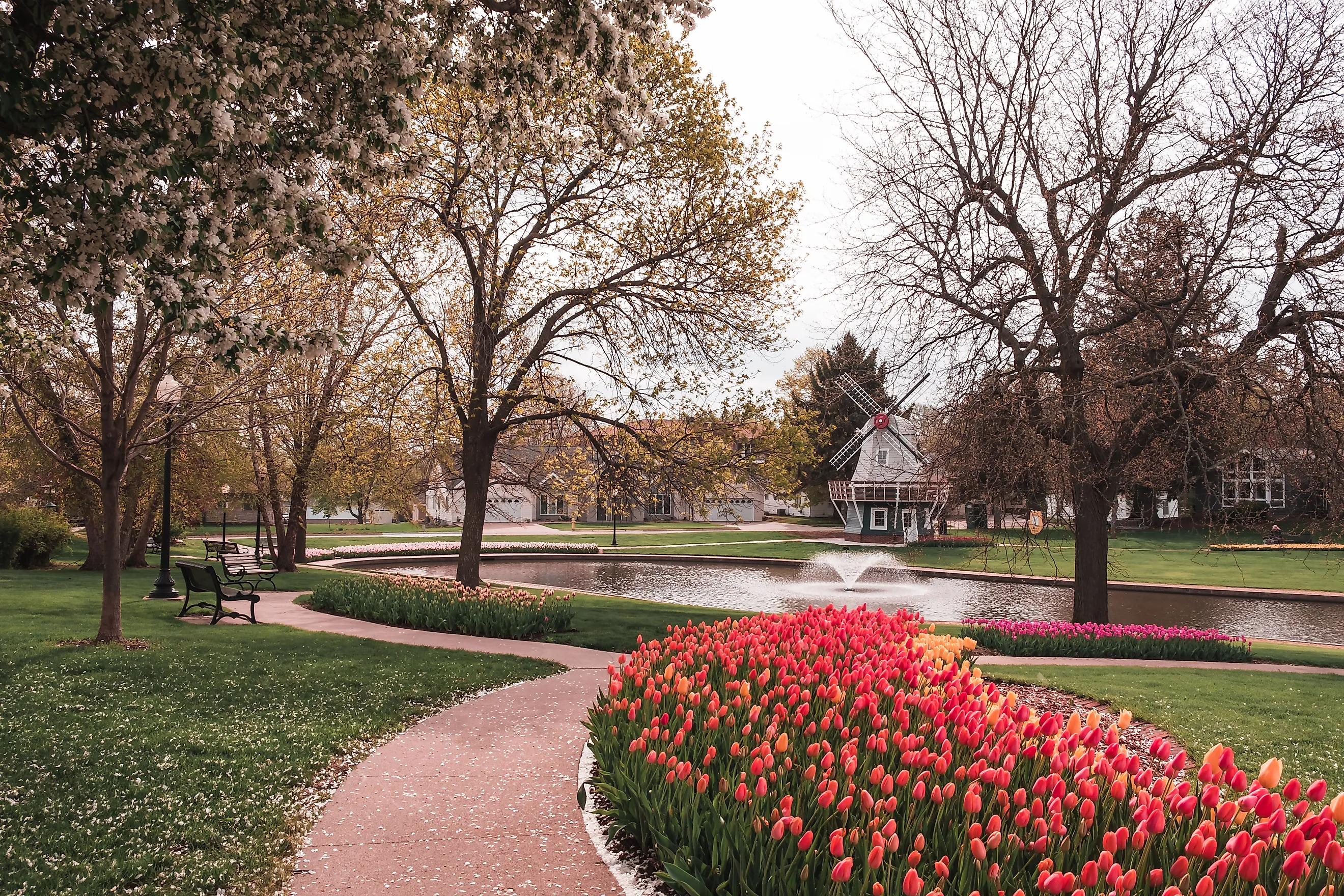
Pella began when Dutch immigrants settled here in the mid-1800s, seeking religious freedom and the chance to build a community shaped by shared values. The towering Vermeer Mill, one of the tallest working windmills in the United States, rises above the skyline and continues to grind grain using traditional methods. The windmill is a key part of the Pella Historical Village, where visitors can tour buildings and attend demonstrations that highlight how early residents lived and worked.
The Molengracht Canal sets the tone for the community’s downtown plaza, with arched bridges, reflective water, and brick-lined paths that echo the canal towns of the Netherlands. From there, brick streets and Dutch-style storefronts carry that influence. Jaarsma Bakery draws visitors in with its fresh Dutch pastries and the steady rhythm of a shop that has anchored daily life in Pella for generations.
Winterset

Winterset has an unmistakable cinematic quality, shaped by rolling hills, winding roads, and a landscape made for storytelling. Just outside town, the Bridges of Madison County, which inspired the 1995 film, stretch across quiet streams and wooded hollows, each one offering its own sense of place. These covered bridges invite slow drives, and many visitors find themselves hopping from bridge to bridge, camera in hand, letting the scenery set the pace.
Back in town, Winterset’s square anchors the experience with limestone buildings that reflect the area’s local stone and long history. The John Wayne Birthplace Museum draws fans from across the country, offering a thoughtful look at the actor’s early life and enduring legacy through exhibits and memorabilia. Just a few blocks away, the Iowa Quilt Museum adds a quieter but equally memorable stop, showcasing rotating exhibitions that highlight craftsmanship, storytelling, and regional tradition through textile art. Nearby shops and cafés create easy opportunities to pause and strike up conversations, often with locals happy to share directions to their favorite bridge or overlook.
Amana Colonies

The Amana Colonies began in the mid-1800s when German Pietists fleeing religious persecution settled in a fertile Iowa river valley. They established seven villages across more than 26,000 acres and organized them as a communal society. For nearly eighty years, the colonies remained largely self-sufficient, producing nearly everything residents needed for daily life. Today, the Amana Heritage Society Museum explains how people once lived, worked, and worshiped together, sharing property and responsibilities across the seven connected villages. Nearby, the Amana Woolen Mill continues to produce blankets and textiles using methods tied directly to those early traditions.
German influence shapes daily life throughout the villages. The Ronneburg Restaurant serves hearty Old World meals prepared from recipes passed down through generations. Along the streets, craft shops, bakeries, and workshops continue long-standing family trades, with many businesses still operated by people tied directly to the area’s past. The Amana Arts Guild adds a creative layer through pottery, fiber art, and woodwork rooted in the community’s traditions. While the Amana Colonies welcome visitors from around the country, the seven villages continue to share a working identity shaped by faith, cooperation, and everyday routines rather than display.
Decorah

Decorah builds its identity around a natural oddity tucked into the limestone bluffs near town. The Decorah Ice Cave forms and holds ice well into summer, even during the warmest months. Cold air settles deep inside the cave and becomes trapped, allowing ice to linger long after winter fades. A short walk through Dunning’s Spring Park leads you past a waterfall spilling from the cliffs and straight into this rare geological phenomenon, one that feels quietly magical.
Beyond the cave, the Vesterheim Norwegian-American Museum anchors the town, preserving the largest collection of Norwegian-American artifacts in the country and highlighting craftsmanship, folk art, and everyday life. Downtown shops, bookstores, and cafés keep things personal and approachable. For a meal, Toppling Goliath Brewing Co. draws visitors from far beyond town, pairing nationally recognized craft beer with a lively taproom and full menu that keeps locals and travelers sharing tables. Visitors come for the ice and stay for the beer, which seems precisely how life should be.
Le Claire

Le Claire rises along the Mississippi River with a sense of confidence and Old West lore. The town’s most famous connection begins at the Buffalo Bill Museum, where William “Buffalo Bill” Cody’s boyhood years come into focus through exhibits that trace his path from river town kid to international legend.
The Mississippi River is integral to the town. There is access to the river with clear views of barges, boats, and sunsets stretching across the slow-moving water. Just uphill, Antique Archaeology draws collectors and casual browsers alike, filling its restored building with Americana, vintage finds, and pieces pulled from across the country. Nearby, Big Dave & Holly’s Dairy Sweet draws steady crowds for classic comfort food, especially its well-known tenderloin sandwiches, which have become a local staple. Main Street ties everything together, with small shops and locally owned businesses adding to the small-town charm. Le Claire is a historic Mississippi River town, and as visitors spend time along the water, it is easy to see why this stretch of Iowa has always felt connected to something bigger.
Okoboji

Okoboji creates memories people carry for decades. The town sits beside West Lake Okoboji, where clear water, boat traffic, and long summer evenings draw visitors from across the state. Everything in this small community points to the lake, and being near the water is a major draw, whether you are swimming, cruising, or simply watching the sun set over the surface.
When you need a break from the water, Arnolds Park Amusement Park in neighboring Arnolds Park offers one of Iowa's most recognizable experiences. The wooden roller coaster still rattles and climbs just as it has for generations, offering a ride that feels nostalgic without losing its thrill. Nearby, the Iowa Rock ‘n Roll Music Association Hall of Fame highlights musicians with Iowa ties, adding an unexpected cultural stop between lake outings. Local restaurants and lakeside eateries fill the space between activities, but the town never loses its focus. Okoboji’s appeal comes from how naturally life here continues to revolve around the water.
Elk Horn

Elk Horn proudly wears its Danish heritage in ways you will not find anywhere else in the country. The town’s defining landmark is the Danish Windmill, the largest of its kind in the United States. Shipped piece by piece from Denmark and rebuilt here, the windmill still turns and offers sweeping views of the surrounding countryside. Inside, exhibits focus on Danish history, craftsmanship, and everyday traditions.
Just across the street, the Museum of Danish America expands that story through rotating exhibits centered on immigration, design, folk art, and modern Danish culture. When it is time to eat, the Norse Horse Tavern anchors the downtown with Danish-inspired dishes, local favorites, and a casual, welcoming charm. Small shops and seasonal events keep the streets active, often marked by Danish flags and community gatherings. Elk Horn stands out because it continues to practice Old World hospitality, one windmill turn at a time.
Le Mars

Le Mars fully embraces its identity as the Ice Cream Capital of the World, doing so with confidence and a genuine sense of fun. The town’s signature stop is the Wells Visitor Center & Ice Cream Parlor, where interactive exhibits trace the rise of Wells Enterprises from a small Iowa business to one of the country’s best-known ice cream producers (Blue Bunny). The visit naturally ends at the ice cream counter, where scoops, malts, and sundaes turn the story into something you can taste. It is a single stop that combines history, brand pride, and a simple pleasure that feels right at home here.
Beyond ice cream, Le Mars offers a downtown that feels active and well-established. The Plymouth County Courthouse, with its Richardsonian Romanesque design, anchors the town square and stands as one of northwest Iowa’s most impressive civic buildings. A few blocks away, Archie’s Waeside draws diners from across the state, serving classic steakhouse fare in a setting that has barely changed over the decades. Shops, cafés, and community events keep the square lively year-round. Le Mars stands out not just for what it produces, but for how completely it has turned that legacy into an experience visitors can taste, walk through, and remember.
West Bend

West Bend is home to one of the most unexpected landmarks in the country: the Grotto of the Redemption. This religious shrine occupies an entire city block and took four decades to build. The grotto features detailed biblical scenes, stone corridors, and carefully arranged materials that reward slow, thoughtful exploration. The experience feels immersive and personal rather than overwhelming, encouraging people to move at their own pace and take in the craftsmanship up close.
Beyond the grotto grounds, West Bend keeps a comfortable, everyday rhythm. The Grotto Museum adds insight into how the project came together, offering photographs, artifacts, and stories that deepen appreciation for the work behind it. Stop by the Rockin' Grotto Cafe afterward for a classic diner meal. Small shops and quiet streets nearby make easy follow-up stops, often filled with visitors still reflecting on what they have just seen. West Bend does not compete for attention; instead, it quietly rewards those who come to visit this sacred place.
These Iowa towns will surprise you and reward you with lifelong memories, whether you are visiting from near or far. Whether you're floating on a lake in Okoboji, celebrating European immigrant cultures in Elk Horn or Pella, or digging into some good old American ice cream in Le Mars, these Iowa destinations are ones to remember. So head to the Heartland, where these small towns are as welcoming as they are unforgettable.