7 Quirky Little Towns In Iowa
Iowa’s backroads hold more surprises than most travelers expect, windmills straight out of Europe, movie settings tucked between cornfields, and shrines crafted from semiprecious stones. The state’s small towns run on personality, not polish, and many have built their identities around wonderfully odd landmarks, fiercely preserved traditions, or one-of-a-kind museums that could only exist in the Midwest. This is where you go to find a Dutch village with a wooden-shoe pond, a grotto built from thousands of minerals, or the house behind one of America’s most recognizable paintings. If you are the type who loves a good roadside detour, these seven quirky Iowa towns make the drive more than worth it.
Eldon

Eldon’s claim to fame is unexpectedly artistic: this tiny river town is home to the American Gothic House, the white-trimmed backdrop of Grant Wood’s legendary painting. Visitors still pose on the lawn with pitchforks and aprons, a ritual so common that the American Gothic House Center keeps costumes ready. Eldon leans into the fun; there is a lightheartedness surrounding the house that makes even non-art lovers stop for a photo. A walk through the center explains how an ordinary home became one of the most recognizable images in American culture.
A few blocks away, the Eldon Depot Museum adds an entirely different flavor, recreating the era when rail lines shaped small-town life. For a quiet break, the Des Moines River overlook sits just outside town, a peaceful place to watch the water move past farmland. And in true quirky fashion, Eldon celebrates “Gothic Days,” where locals don costumes, host tongue-in-cheek contests, and keep the painting’s oddball legacy alive.
West Bend

What makes West Bend unforgettable is the Grotto of the Redemption, a sprawling, glittering creation made from petrified wood, quartz, marble, and gemstones. Father Paul Dobberstein spent decades collecting minerals from around the world, assembling scenes from the life of Christ like a jewel-studded storybook. No matter your background, the sheer scale, and oddity, of the grotto stays with you. You won’t find anything like it anywhere else in Iowa.
After exploring the grotto’s passageways and courtyards, visitors often wander to the West Bend Historical Museum, which displays local antiques and early farm tools that reveal how the town grew around faith and agriculture.
Le Claire

Le Claire sits right on the Mississippi River, but its quirks run deeper than riverboat history. This is the hometown of Buffalo Bill Cody, and the Buffalo Bill Museum proudly documents his wild frontier life with memorabilia and river-era artifacts. The museum’s steamboat exhibit, anchored by the Lone Star, adds another layer of old-world storytelling. Across town, the quirky continues at Antique Archaeology, the shop featured on American Pickers, where rusty treasures and odd collectibles attract road-trippers year-round.
Le Claire’s riverfront is equally lively, with Mississippi River Distilling Co. giving tours that highlight how spirits are crafted using grains from nearby farms. For something more scenic, visitors hop aboard a Twilight Riverboat Cruise, drifting past limestone bluffs and small islands. And if you time your visit right, you might catch Tug Fest, the only interstate tug-of-war across the Mississippi, Illinois on one bank, Iowa on the other, proving that Le Claire’s quirks are proudly and enthusiastically competitive.
Dyersville

Dyersville is where Hollywood meets cornfield, thanks to the Field of Dreams movie site. Standing on the original baseball diamond feels oddly magical, especially as people wander in from the parking lot to “have a catch” with total strangers. The Field of Dreams Movie Site adds more backstory, displaying set pieces and film memorabilia. It is hard to imagine another Iowa town where baseball nostalgia feels this alive.
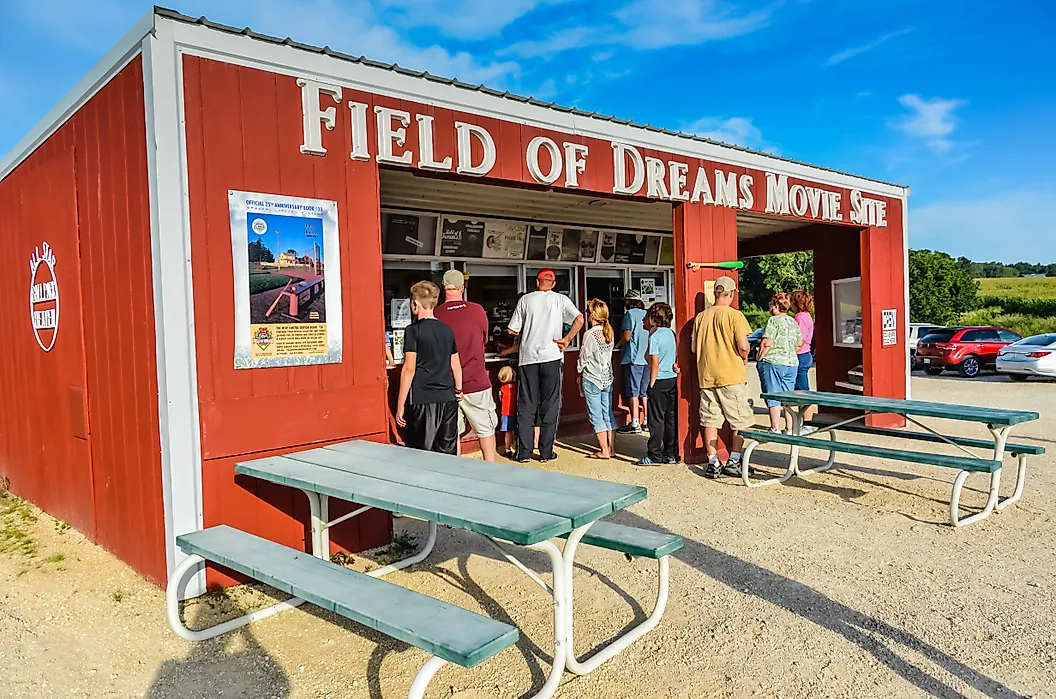
Beyond the famous field, Dyersville’s quirks continue at the National Farm Toy Museum, a two-story celebration of miniature tractors and model barns. For architecture lovers, the Basilica of St. Francis Xavier towers above town with twin spires visible for miles, a surprising bit of grandeur in rural Iowa. And here is the real question: what other place hosts an annual “Ghost Player” show where costumed baseball spirits reenact movie moments and crack jokes right on the outfield? It is a local tradition that keeps the Field of Dreams legend cheerfully alive.
Pella
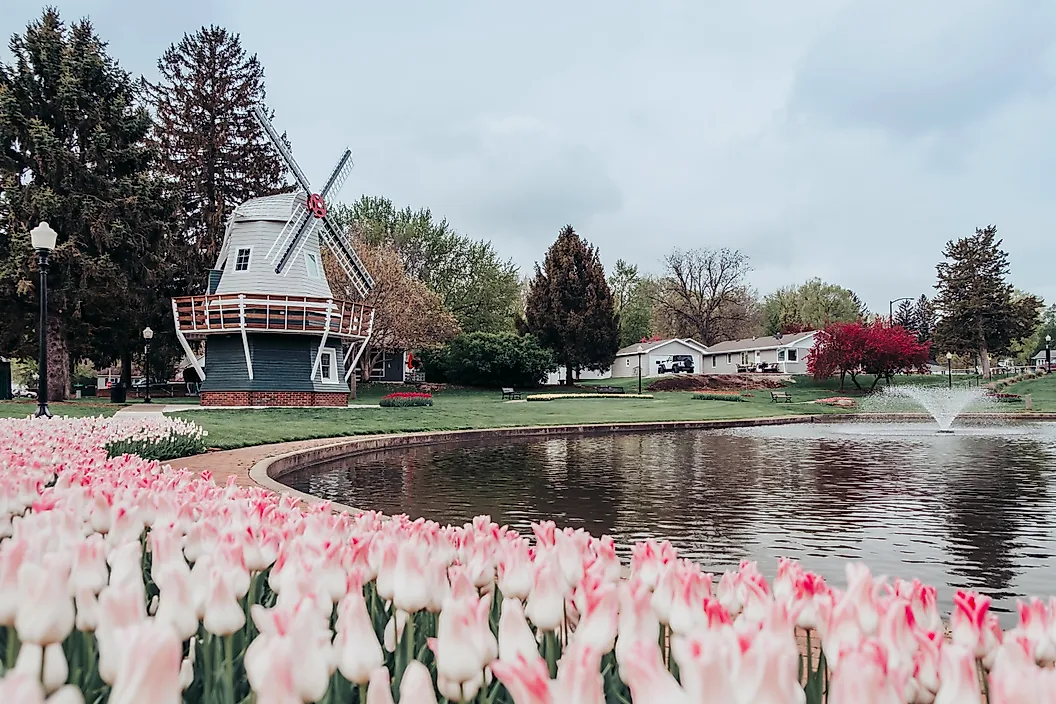
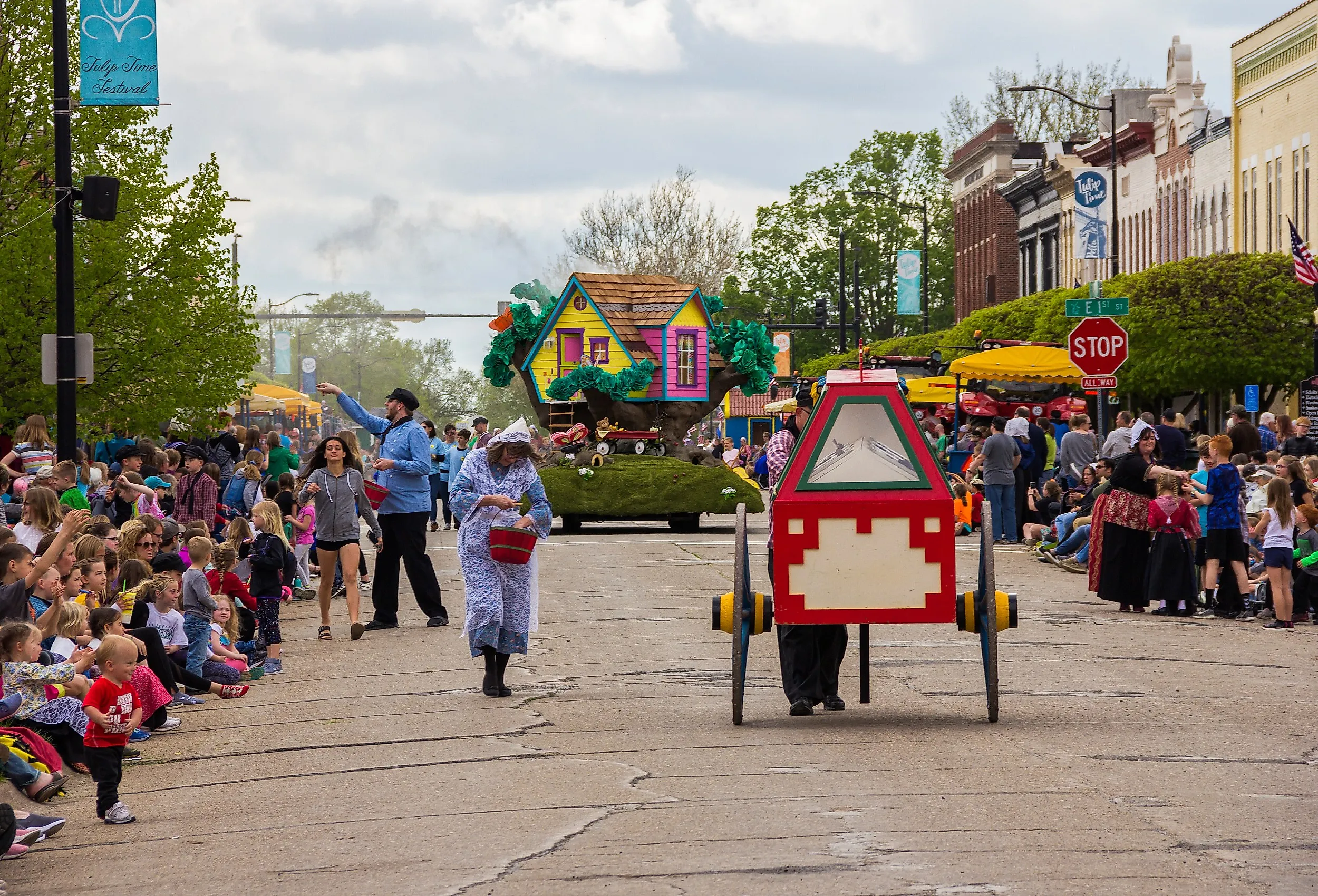
Pella transports visitors into a Dutch daydream with its Vermeer Mill, a fully functional windmill that rises above brick storefronts and tidy streets. The town’s annual Tulip Time Festival brings traditional dances, parades, pastries, and endless beds of blooming color, a springtime spectacle unlike anything else in Iowa. Even outside festival season, the mill’s wooden gears and flour demonstrations draw curious travelers.

A short walk away, Pella Historical Village recreates a 19-building Dutch settlement with shops, gardens, and the famed Scholte House, once home to the town’s founder. Sunken Garden Park, with its wooden-shoe-shaped pond, adds another whimsical touch. For a sweet finish, locals send visitors to Jaarsma Bakery, famous for Dutch letters packed with almond filling. For something delightfully offbeat, travelers track down the Klokkenspel, a musical clock tower that springs to life with moving figurines throughout the day, an odd performance hidden in plain sight.
Winterset

Winterset leans into its dual identities: the birthplace of John Wayne and the backdrop for the beloved covered bridges of Madison County. The John Wayne Birthplace & Museum houses handwritten letters, film props, and personal belongings that paint a surprisingly intimate portrait of the actor. Meanwhile, the covered bridge tour guides visitors through scenic backroads to structures like the Roseman Bridge, which gained fame from the novel and film.

Back in town, the Iowa Quilt Museum celebrates textile artistry with rotating exhibits ranging from modern quilts to historic pattern collections. Just beyond Winterset sits Pammel State Park, home to Iowa’s only highway tunnel carved through limestone, a quirky geological oddity. Come fall, area farms often create movie- or Western-themed corn mazes, occasionally even John Wayne tributes, giving families a seasonal puzzle that doubles as a nod to the town’s legendary native.
Amana Colonies

The Amana Colonies, seven villages founded by German Pietists, might be the closest thing Iowa has to stepping into a perfectly preserved time pocket. Brick workshops still hum with old-world craftsmanship, communal kitchens look ready to serve the next 40 villagers, and the Amana Woolen Mill keeps its looms clicking just as it did generations ago. Festivals like Oktoberfest, Maifest, and Wurst Festival turn the streets into a swirl of accordions, sausages, and steins, proving these villages take their heritage seriously… and joyfully.

Visitors wander through the Amana Furniture Shop, admire handmade cabinetry, sip fruit wines at Ackerman Winery, or peek into the Communal Kitchen Museum to see how entire village meals were once prepared under one roof. The Kolonieweg trail leads cyclists between villages past farmland and prairie. And for a delightfully odd tradition, locals celebrate the annual Best Beard Contest each Oktoberfest, a competition where facial hair is treated like fine art.
Detours That Make the Midwest Weird in the Best Way
Iowa’s quirkiest towns prove that the Midwest hides its surprises in plain sight: Dutch windmills spinning beside cornfields, gemstone grottos glowing in the prairie, movie diamonds carved into farmland, and pitchfork selfies waiting on tiny porches. These places don’t try to be odd; they simply are. And that is exactly why they stick with you long after the road unwinds behind you.