10 Best Places To Call Home In Virginia In 2026
Staunton sits in the Shenandoah Valley with a theater company performing in a reconstructed Jacobean playhouse, a presidential library, and a downtown of intact railroad-era brick lined with working offices and shops. It also still costs less than Charlottesville an hour away. That mix, a center worth living in and a price a working household can actually carry, is harder to find in Virginia than it used to be, as the Charlottesville and Northern Virginia markets price out the people who grew up near them. The ten towns below manage it. None of them is a secret, and none needs to be.
Staunton

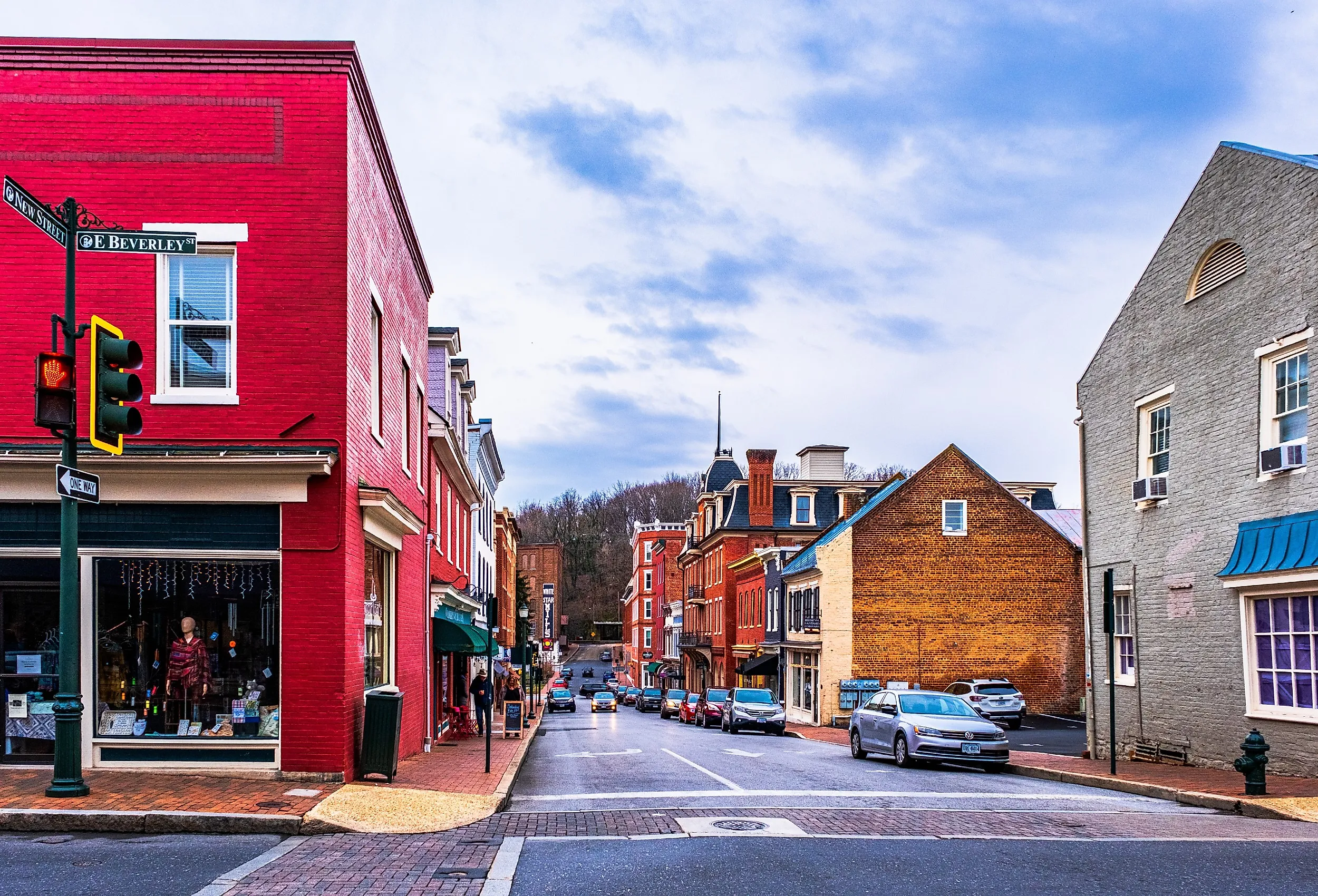
Cost is a real part of Staunton's case: prices have risen across the Valley, yet the city often remains below Charlottesville while keeping a stronger center than most nearby towns. Beverley Street carries offices, restaurants, shops, and the Wharf district, so the old railroad fabric is still in everyday use. The American Shakespeare Center's Blackfriars Playhouse gives the city a serious theater draw, and it sits near the Woodrow Wilson Presidential Library and Museum without either institution overwhelming the other. The Staunton Farmers' Market draws a steady local crowd on Saturday mornings. Reunion Bakery & Espresso, Gypsy Hill Park, and the R.R. Smith Center for History & Art fill out a downtown with more going on than its size suggests.
Abingdon

On Abingdon's Main Street, the courthouse, storefronts, inns, and restaurants still sit on the same walkable line. Barter Theatre is the obvious institution, but local identity does not depend on one name. The Virginia Creeper Trail starts close by and shapes weekends before and after the ride. White's Mill keeps Washington County craft and milling history visible without requiring a dedicated trip. The Martha Washington Inn & Spa keeps a major 19th-century building in active use as a hotel and restaurant. Wolf Hills Coffee and the Abingdon Farmers Market are well-used local establishments. Housing remains less expensive than in larger Virginia metro areas, though addresses nearest the center bring their own premium.
Lexington

For a town of its size, Lexington carries an unusually heavy public memory. The courthouse area still serves present needs through the Lexington Farmers Market, coffee stops, bookstores, offices, and dinner at Zunzun. That said, Washington and Lee University and Virginia Military Institute still make the past difficult to ignore through the University Chapel & Galleries, the VMI Museum and the George C. Marshall Foundation's research library and public programs. That weight can be useful, and it can also crowd the municipality. Prices run higher here than in many Valley towns, pushed by campus demand and limited inventory within the municipal grid. The Chessie Nature Trail gives the place a needed release, with a Maury River route for walking and cycling when the institutional presence feels dense.
Waynesboro

Waynesboro is at its best when it does not try to smooth out its industrial past. The main outdoor draw is the Claudius Crozet Blue Ridge Tunnel Trail, a 4,273-foot walk through a railroad tunnel bored under Rockfish Gap in the 1850s. Back in town, the South River, freight lines, older brick masonry, and former factory space give Waynesboro a plain Blue Ridge character that holds up. Basic City Beer Co. uses that inheritance well, with beer, music, and pizza in a reused industrial property. The central blocks include the Waynesboro Heritage Museum, the Shenandoah Valley Art Center, seasonal produce stalls, and a working stock of shops and services. Housing generally remains more attainable than in Charlottesville or Albemarle, which explains part of the appeal.
Front Royal

At the north end of Skyline Drive, Front Royal has a role few places can avoid once they receive it: gateway to Shenandoah National Park. That fact shapes restaurants, traffic, and weekend timing. Even so, the town has its own civic texture. Belle Boyd Cottage gives the Civil War record a human scale, Skyline Caverns has taken visitors underground since the 1930s, and Warren County growers keep Saturday mornings from belonging only to park traffic. Main Street Daily Grind remains the coffee stop, while Spelunker's has built a direct reputation on burgers, custard, and a line at busy hours. Prices are no longer bargain-level, but Front Royal still undercuts the towns closer to the Washington suburbs, which is much of why commuters willing to drive the I-66 corridor have kept settling here.
Luray

Luray Caverns sets the public image, and the Great Stalacpipe Organ remains the detail visitors remember, but the town around them stands on its own. Practical services matter here as much as the visitor draw: groceries, schools, Page Memorial Hospital, and a downtown solid enough to support full-time residents. Gathering Grounds Patisserie & Cafe and Page County growers at Ruffner Plaza give the center an everyday pull of its own. The Hawksbill Greenway gives walkers a creekside route through town. Shenandoah National Park sits close enough for early hikes or late drives on Skyline Drive, and the Mimslyn Inn adds a 1930s landmark that earns its keep through dining, lodging, and area events.
Farmville

Far enough from Richmond and Lynchburg to have its own pull, Farmville is anchored by Longwood University, Prince Edward County offices, and Green Front Furniture's warehouse buildings. The Robert Russa Moton Museum gives the area's civil-rights record the seriousness it requires. High Bridge Trail State Park is the clear outdoor asset, especially where the restored bridge carries walkers and cyclists above the Appomattox River. Uptown Coffee Café and the Farmville Community Marketplace see steady local traffic. The Fishin' Pig fills a different role, serving barbecue and fish to a steady regional crowd. Housing has tended to be lower-priced than in fast-growing parts of the state, but distance from larger employment hubs is built into that price.
Bedford

Bedford does not need much staging. The National D-Day Memorial is the defining institution, sober and specific, tied to the Bedford Boys and the losses in Normandy. Around the courthouse area, Bridge Street Café, the Bedford Farmers Market, and older residential blocks sit within easy reach of one another. Peaks of Otter and Sharp Top put demanding Blue Ridge hiking within a short drive. Beale's Brewery brings evening traffic to Grove Street, and the Bower Center for the Arts keeps classes, exhibits, and events available without overstating its role. Buyers can find houses within the grid, brick ranches, and acreage outside it. What Bedford offers is a serious institution, a walkable center, and quick mountain access, without the price of the larger metros.
Wytheville

At the meeting point of I-77 and I-81, Wytheville holds a functional role that predates travel branding. It serves motorists, nearby rural areas, courthouse business, and residents who want Southwest Virginia prices without leaving services behind. Skeeter's World Famous Hotdogs, open since 1925, remains the lunch counter that needs little explanation. Big Walker Lookout provides the clearest mountain view, with a country store and craft demonstrations at the tower. The Edith Bolling Wilson Birthplace is a worthwhile stop on its own terms, focused on the only Appalachian-born First Lady. The Haller-Gibboney Rock House preserves early Wytheville history in an 1820s brick structure. Seasonal vendor stalls give the center its own pull for the people who live around it.
Christiansburg

Christiansburg often gets read as a Blacksburg satellite, but it carries its own economy. The appeal begins with function: Virginia Tech access, the Huckleberry Trail, Roanoke Valley jobs, and Montgomery County services usually come at a lower cost than Blacksburg allows. The Montgomery Museum of Art & History keeps local records, railroad material, Civil War items, and rotating exhibits in public view. The town farmers market runs Thursdays at Huckleberry Park from May through October. Fatback Soul Shack serves barbecue and fried chicken without performance. Sinkland Farms, just outside town, adds concerts, pumpkins, and farm events that draw a crowd separate from campus calendars. Christiansburg is plain in ways that matter: useful roads, real stores, civic institutions, and enough distance from campus culture to keep its own habits.
What The Cost Gap Buys
The thread running through these ten is a cost gap that has not yet closed. A salary that buys a condo in Charlottesville or a townhouse outside the Beltway buys a house with a yard in Waynesboro, Farmville, or Wytheville, and buys it inside a town that still has a downtown worth walking to. What you trade is distance, from the biggest job markets, sometimes from the nearest interstate, and that trade is the whole calculation. For households who can make the distance work, whether through remote jobs, a commuter bus, or simply a shorter career drive, these are the Virginia towns where the math still favors staying.