Asian Elephant
Asian elephants, the largest land mammal of Asia, are a crucial keystone species. They play an integral part in their ecosystems and are known as the engineers of their forests. These large mammals are known for more than their crucial roles in sustaining their habitats; they are also intelligent, kind, and highly compassionate animals. Learn more about these gentle giants below.
Taxonomic Classification

Asian elephants, known as Elephas maximus, are herbivorous mammals in the class Mammalia, order Proboscidea, and family Elephantidae. There are four major subspecies: the Indian elephant, E. m. indicus, which lives in mainland Asia; the Sri Lankan elephant, E. m. maximus, which lives in Sri Lanka; the Sumatran elephant, E. m. sumatranus, which lives on the island of Sumatra, and the Bornean elephant, E. m. borneensis, in Borneo. This elephant subspecies has unique physical and genetic distinctions in comparison to the other three subspecies.
Physical Description

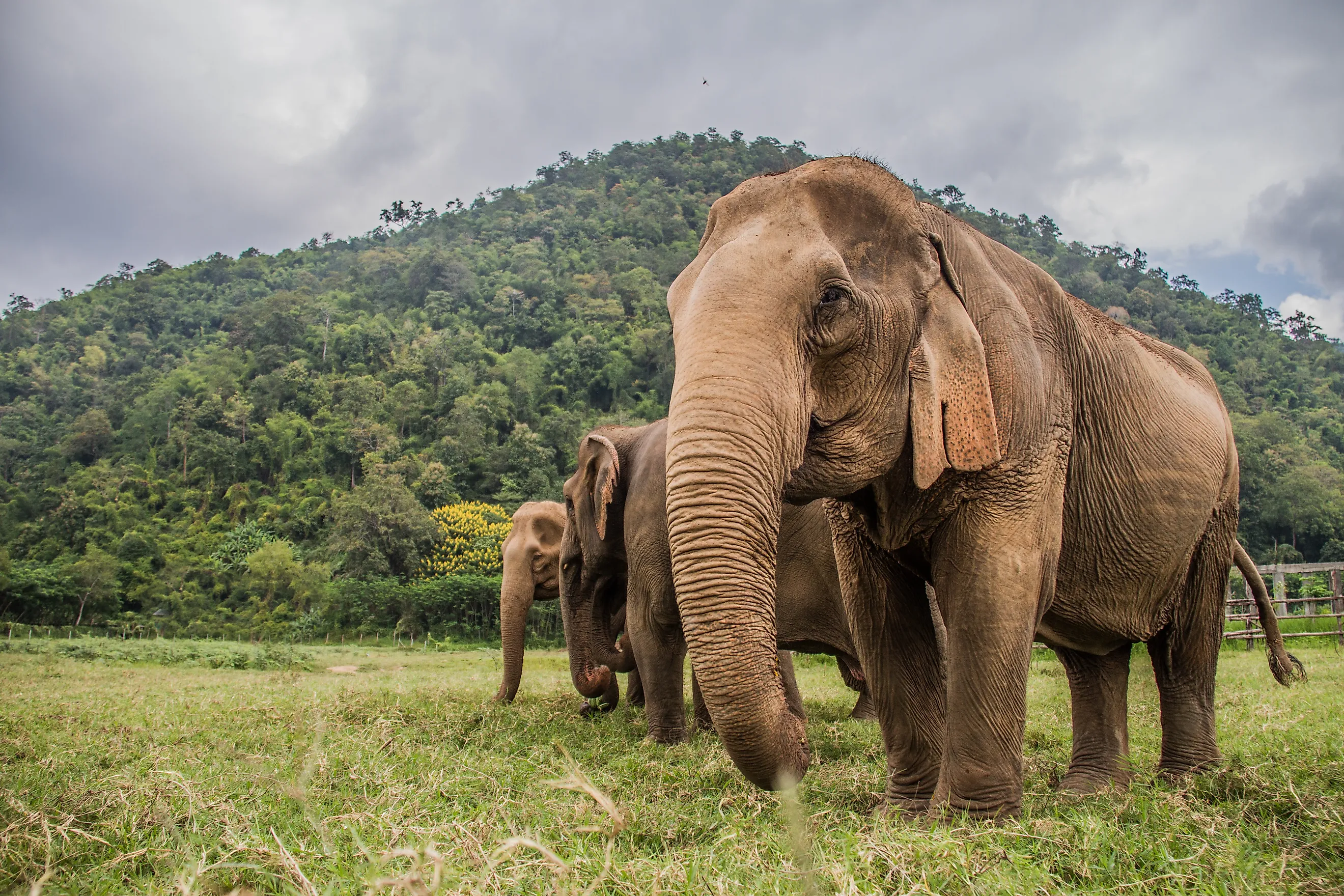
Although a bit smaller than their relative, the African elephant, the Asian elephant is still the largest terrestrial animal of Asia. The main differences between their bodies include their ear and head shapes, their size, and the fact that only the Asian elephant males grow tusks. Asian Elephants have a smaller, more arched back with much smaller ears, and the coloration patterns on their ears and trunks are different. Asian Elephants have dark grey to brown skin, and the coloration on their ears, trunks, and sometimes other areas, such as their legs, consists of pink to light brown splotches. They stand about 7 to 10 feet tall and weigh around 5,500 to 13,500 lbs, living up to 70 years old. One of the Asian elephant's most fascinating features is their fully functioning trunk. These versatile trunks are an extension of their nose and their mouth, leading into their upper lip. The nostrils are at the bottom of the trunk, and they use this appendage to move things, breathe, smell, and drink water. Their trunks can produce incredibly loud trumpeting sounds. They can also be used similarly to an arm, capable of picking up objects such as tree branches. Trunks have finger-like structures used to hold and grip objects. These are called prehensile extensions, and they are extremely sensitive. The Asian elephant has one prehensile extension, while the African elephant has two. Their trunks contain over 40,000 individually functioning muscles, making them agile, capable, and incredibly efficient. Males are usually the only ones to have tusks, and they use them to dig into the ground, take bark off trees, and defend themselves if attacked. Only 7% of male Sri Lankan elephants have large tusks, while 90% of male Indian elephants do.
Diet

Asian elephants are strictly herbivorous, requiring up to 400 lbs of vegetation per day. They browse, forage, and graze constantly. Their diet consists of grasses, barks, stems, leaves, roots, and even crops from farms if they’re nearby. They will also eat bananas and sugarcane if it’s accessible. Asian elephants consume a massive amount of water, between 20 and 40 gallons a day, which is crucial in order for them to stay hydrated and healthy.
Habitat and Range

Asian Elephants live in dense forests, including tropical and subtropical forests, grasslands, and scrublands. The vegetation in their habitats includes tropical evergreen, bamboo, and deciduous forests. They normally live anywhere from sea level to a little under 10,000 feet in elevation, although some have been known to head even higher during hotter seasons, especially in the Himalayas. The four subspecies of Asian elephants live in India, Vietnam, Thailand, Bangladesh, Bhutan, Sri Lanka, Malaysia, and Indonesia. Unfortunately, they occupy only about 15% of their original territories, with 60% of that 15% in India. The Asian elephants that live in India have a much broader habitat range, while Sri Lankan elephants have a much smaller population, and their range is extremely limited. Sadly, over the years, Sumatran elephants have lost over 70% of their habitat.
Reproduction

When females are ready to mate, they will make a low rumbling sound known as an estrous call. This will invite male elephants into the area. Once a male elephant seeks out a female, he will assess how ready she is to reproduce by collecting some of her urine with his trunk and placing it in his mouth. Once he assesses a female's fertility, he follows her, hoping for access, while keeping other males away. The mating period usually only lasts a few days, and the male will move on quickly afterward. Older males will typically win conflicts or rivalries when competing for a female. Due to the hierarchical system and older males' size and strength, younger males will normally back down even if they are interested in the same female. Older bull elephants experience periods known as musth. The musth state occurs because older males produce higher levels of testosterone, and their temporal glands secrete. This hormonal change makes older males a bit more aggressive and dominant.
Elephants have the longest gestational period of any land mammal, which lasts between 18 and 22 months, and they only give birth to a single calf every 4 to 5 years. When a calf is born, they stand at about 3 feet tall and weigh around 220 lbs. Calfs nurse for up to three years, but they begin to eat vegetation within just a few months of being born. The females are responsible for teaching their young how to forage for food, how to be social, and how to be defensive when needed. Their herd also plays a major role in protecting and nurturing the newborn.
Behavior

Asian elephants live in large groups under a matriarchal system, and they have a complex, hierarchical social structure. The males leave their families between the ages of 8 and 13. They will head off on their own, living in solitude, or they will find a bachelor herd, a small group of other male elephants. These elephants will often have their two strongest males in the front and the back. The hierarchical roles of these elephants change and shift whenever a new male enters or leaves the group. The bull elephant does not stay within a single family unit; it searches for mates across different families and herds. This increases their chances of mating.
Females live in their matriarchal units; these groups typically consist of 3 to 7 close family members, along with their offspring. Other females can join these groups as well. Although there is usually a stable, core group that sticks together, other groups or families will temporarily coexist with one another. Each group is led by the oldest and most experienced female, its matriarch. Her sisters, daughters, and any of their offspring normally remain in this group as well. Survival rates increase when there are more females in a family unit. Asian elephants need to be in close proximity to water due to how much they need to consume every day. Although hydration is not their only reason for heading to water, they also enjoy bathing and playing in water and mud often. Dust and mud are also commonly used to coat their bodies for protection from the sun and bugs, as well as to keep cool. They are most active at dusk and dawn. One of the most fascinating and compassionate behaviors of elephants is their ability to mourn the loss of a family or group member. They will also mourn the loss of elephants not in their immediate groups. They have been seen stopping at the side of a deceased elephant, touching the body gently with their trunks, and staying close to it for a while before moving forward.
Threats

The Asian elephant is listed as endangered on the IUCN Red List of Threatened Species. Their populations have declined dramatically over the past 60 to 70 years, and there are only 40,000 to 50,000 left in the wild. They are massively threatened by poaching and illegal hunting; they are killed for their tusks and ivory, as well as their skin for leather and their meat. Urban development and deforestation are also major threats to these elephants, as they encroach on their territory and destroy their habitats. This leaves elephants in greater danger due to their proximity to humans and their lack of ability to travel safely within their range. Another major threat is the capture of wild elephants for the tourism industry. Often, wild elephants are illegally captured to offer elephant rides, encounters, and photographs to tourists. It is extremely important to do your research before visiting these types of facilities, as some rescue and rehabilitate them, but many breed and capture them specifically for tourism. This causes them severe distress, as they are usually not properly cared for, and it also depletes the already endangered populations of these species in the wild.
Importance in the World
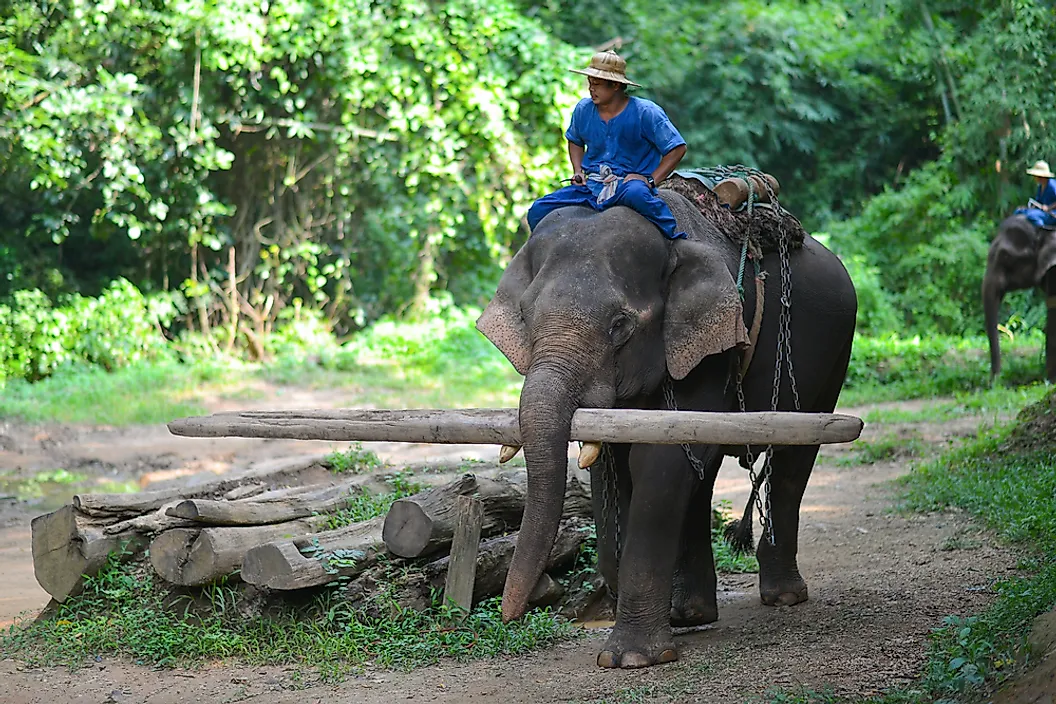
Asian elephants are a critical keystone species in Asia. They disperse seeds, manage vegetation, create crucial forest pathways, and sustain their ecosystems. Their massive size naturally creates open space and paths as they travel. This helps other animals easily navigate these dense forests and allows more sunlight to come in, as well as water when it rains. Even their large footprints play an important role, creating small watering holes for insects, amphibians, and other small creatures. They are crucial to maintaining the health and biodiversity of their habitats. Asian elephants also hold cultural and spiritual significance to many people. In indigenous folklore, Buddhism, and Hinduism, the Asian elephant symbolizes wisdom, luck, royalty, strength, peace, divine connection, and prosperity, among other good omens. Protecting Asian elephants also protects many other endangered species that live within the same ecosystem; they are an integral part of their habitats and deserve protection.
Asian elephants are a key species throughout Southeast Asia and the Indian subcontinent. Their size, intelligence, and social ways make them a captivating species to many, and luckily, many efforts are underway to ensure their protection. These gentle giants have long roamed the landscapes of their native zones, and with efforts to protect their remaining habitats, they will continue to grace these lands.