Largest Christian Denominations in the World
Christianity has roughly 2.3 to 2.4 billion followers worldwide, or about 29% of the global population, which makes it the largest religion in the world. Inside that total, three branches together account for almost all of the membership: the Catholic Church (about half of all Christians), Protestantism broadly defined (about 37%), and the Eastern Orthodox Church (about 12%). Almost everyone else, from the Oriental Orthodox communion to the Latter-day Saints to Jehovah's Witnesses, falls inside the remaining 1 to 2%.
How that small remainder gets divided into "denominations" depends on what counts as one. The Center for the Study of Global Christianity at Gordon-Conwell Theological Seminary, which produces an annual statistical table for the International Bulletin of Mission Research, currently estimates the total worldwide at about 47,000 distinct Christian denominations. That figure includes thousands of small independent churches and movements, especially in Africa and Asia. The list below ranks the major branches and traditions by claimed membership, with the caveat that numbers vary depending on whether the count is based on baptismal records (which favors the Catholic Church and the Orthodox communions), self-identification in surveys (which favors Protestantism), or active participation (which produces much smaller numbers for groups like Jehovah's Witnesses that require regular preaching activity to count as a member).
1. The Catholic Church - About 1.4 Billion

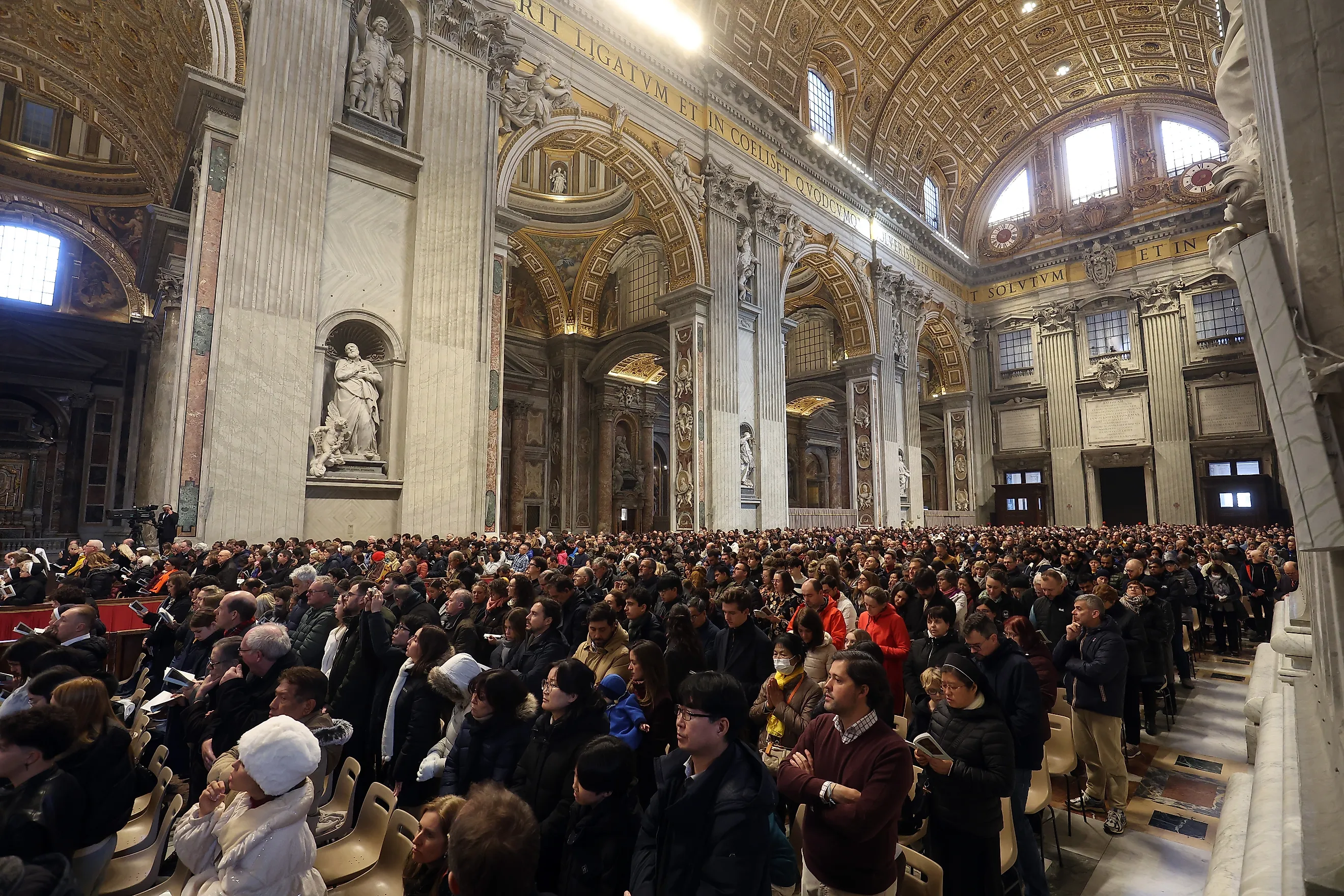
The Catholic Church is by a wide margin the largest single Christian body in the world. The Vatican's most recent Annuarium Statisticum Ecclesiae, published in 2025 and covering data through the end of 2023, reports 1.406 billion baptized Catholics worldwide, up from 1.39 billion the year before. The Catholic Church does not regard itself as a denomination but as the original undivided church, with all other Christian groups having separated from it at various points. In statistical and comparative terms, however, it is counted as a denomination.
Structurally, the Catholic Church is composed of the Latin Church (the Roman Rite, by far the largest component) plus 23 Eastern Catholic Churches that are in full communion with the Pope but maintain their own liturgical traditions, including the Maronite, Ukrainian Greek Catholic, Syro-Malabar, Melkite, and Chaldean churches. The total is 24 sui iuris (self-governing) churches under the universal jurisdiction of the Bishop of Rome.
The geographic distribution is shifting. As of 2023, the Americas held 47.7% of the world's Catholics, Europe 20.1%, Africa 20.3% (up from 19.9% the year before), Asia 11.0%, and Oceania 0.9%. Africa's Catholic population grew 3.31% from 2022 to 2023, nearly five times the growth rate in Asia and well above demographic growth. Italy, Poland, and Spain remain over 90% Catholic by self-identification; Brazil and Mexico are the largest Catholic countries by raw numbers. The Pope is the head of the church; the current pope, Leo XIV, was elected in May 2025.
2. Protestantism - About 800 to 900 Million

Protestantism is the second-largest Christian tradition by population but, unlike the Catholic Church or the Orthodox communions, it is not a single institution. It is a label for the entire family of churches that traces its origins to the 16th-century Reformation, most often dated to Martin Luther's posting of the Ninety-five Theses in Wittenberg in 1517. The World Christian Database in early 2026 reported 637,856,000 Protestants worldwide, plus another 426,370,000 "Independents" (mostly non-denominational and Pentecostal Christians who do not self-identify as Protestant in the traditional sense). Pew Research Center estimates Protestants at about 37% of all Christians, or roughly 850 million.
Inside that figure, the largest Protestant denominational families have historically been Pentecostals (about 10.8% of all Protestants), Anglicans (10.6%, often counted as a separate communion), Lutherans (9.7%), Baptists (9%), United and uniting churches (7.2%), Presbyterian and Reformed churches (7%), Methodists (3.4%), and Adventists (2.7%). Pentecostalism as a cross-cutting movement (including Charismatic Catholics) is the fastest-growing segment of Christianity, projected by some estimates to reach about 1 billion adherents by 2050. The United States has the largest national Protestant population at about 150 million, followed by Nigeria (about 75 million) and Brazil (about 43 million).
3. Eastern Orthodox Church - About 220 Million
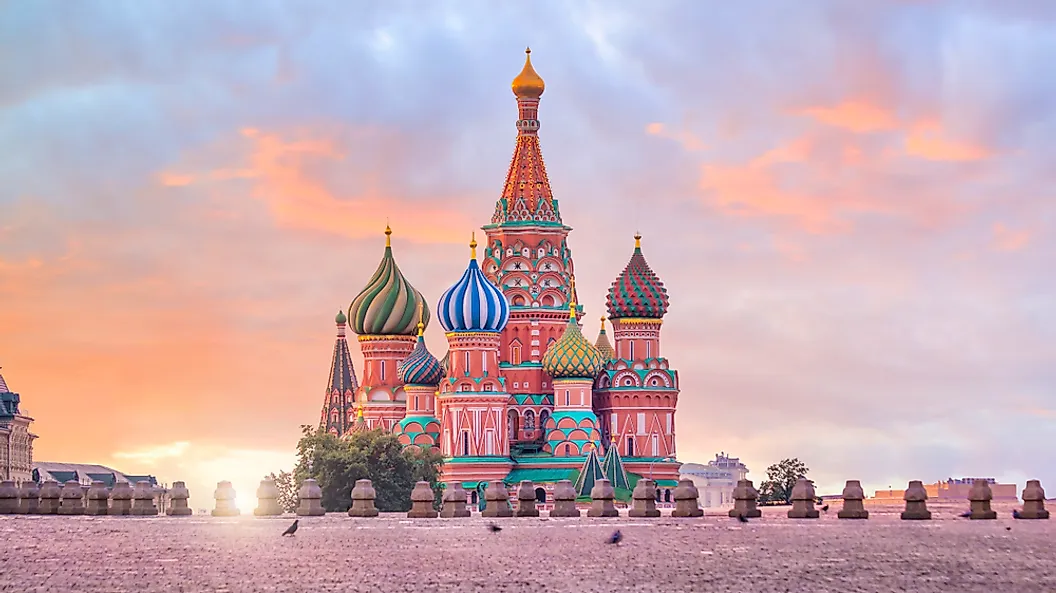
The Eastern Orthodox Church is the second-largest Christian communion after the Catholic Church (Protestantism being a tradition rather than a single communion). Pew Research and the Wikipedia consensus estimate put membership at about 220 million, with some sources giving a range of 200 to 300 million. It is a communion of autocephalous (self-governing) national churches, including the Russian Orthodox Church (the largest single body, with an estimated 80 to 100 million members), the Romanian Orthodox Church, the Greek Orthodox Church, the Serbian Orthodox Church, the Bulgarian Orthodox Church, the Georgian Orthodox Church, and the Patriarchate of Constantinople, among others. The Ecumenical Patriarch of Constantinople is recognized as primus inter pares (first among equals), but the Eastern Orthodox Church has no equivalent to the Catholic Pope.
The split between the Eastern Orthodox and the Catholic Church is conventionally dated to 1054, the year of the "Great Schism" between Rome and Constantinople, though the underlying theological, liturgical, and jurisdictional disputes had been building for centuries. Eastern Orthodox Christianity is concentrated in Russia, Ukraine, the Balkans, Greece, Georgia, and the Christian populations of the eastern Mediterranean and Middle East. The community has more than doubled in absolute size over the past century but has declined as a share of total Christianity, from about 20% in 1910 to about 12% today, primarily because of European demographic stagnation in the Orthodox heartland.
4. Anglican Communion - About 85 Million

The Anglican Communion is the fourth-largest Christian communion in the world. Membership estimates range from 85 million to 110 million across 42 autonomous member churches (called Provinces) and five extra-provincial areas, present in more than 165 countries. The communion grew out of the Church of England, which itself separated from Rome in 1534 under Henry VIII through the Act of Supremacy. The Anglican Communion's spiritual head is the Archbishop of Canterbury, but the communion has no central governing authority comparable to the papacy. Each province makes its own decisions.
Whether Anglicanism is "Protestant" is debated. Some classifications group it with Protestantism on the grounds of its 16th-century origin and its Reformation-era theology; others treat it as a third stream alongside Catholicism and Protestantism, in keeping with its own historical self-understanding as a via media (middle way). Pew Research counts Anglicans inside the Protestant figure of 37%. The Church of Nigeria, with about 18 million members, is currently the largest single Anglican province by membership, larger than the Church of England itself.
5. Oriental Orthodox Communion - About 60 Million
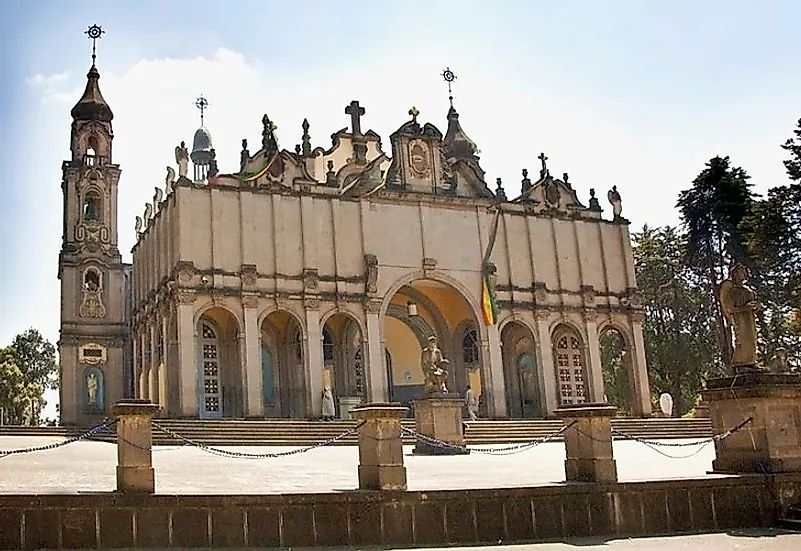
The Oriental Orthodox communion is distinct from the Eastern Orthodox Church and predates the 1054 Great Schism by six centuries. The six Oriental Orthodox churches separated from the rest of Christianity after the Council of Chalcedon in 451 AD, when they rejected the Chalcedonian formulation of Christ as one person "in two natures" and held instead to Miaphysite Christology (one united nature, both divine and human, in Christ). The communion has about 60 million members worldwide, with some sources placing the figure closer to 72 million as of 2020.
The six autocephalous churches are the Ethiopian Orthodox Tewahedo Church (by far the largest, with about 40 to 50 million members), the Coptic Orthodox Church of Alexandria in Egypt (about 10 to 15 million), the Eritrean Orthodox Tewahedo Church (about 2 to 3 million), the Armenian Apostolic Church (about 9 million), the Syriac Orthodox Church of Antioch (about 1 to 2 million), and the Malankara Orthodox Syrian Church in India (about 2 to 3 million). These churches preserve ancient liturgies in classical languages including Coptic, Geʽez, Classical Syriac, Armenian, and Malayalam.
6. Independent Catholicism - About 18 Million
Independent Catholic churches identify as Catholic in self-understanding, sacramental practice, and ritual life but are not in communion with the Pope of Rome and are not recognized by the Roman Catholic Church. The largest single group within Independent Catholicism is the Old Catholic Church, formed primarily after the First Vatican Council in 1870 by Catholics who rejected the new dogma of papal infallibility. The Old Catholic churches of the Union of Utrecht remain the most institutionally established Independent Catholic body and are in full communion with the Anglican Communion. Other significant Independent Catholic groups include the Polish National Catholic Church (about 60,000 members in the United States and Canada), various Brazilian and Latin American independent Catholic churches, and the Philippine Independent Church (Iglesia Filipina Independiente), which has about 6 to 10 million members and is sometimes counted separately.
7. The Latter-day Saint Movement - About 17.9 Million

The Church of Jesus Christ of Latter-day Saints, often called the LDS Church or "Mormons," reported a worldwide membership of 17,887,212 at the end of 2025, according to the church's own annual statistical report published in April 2026. The denomination was founded in 1830 by Joseph Smith in upstate New York and is headquartered in Salt Lake City, Utah. As of the 2025 report, the church operates 204 temples worldwide, 118,767 congregations, and 36,131 service missionaries. Membership is counted by the church's own definition (baptized and confirmed, not excommunicated, regardless of activity level), which produces a higher figure than active attendance would.
The Latter-day Saint movement is generally classified as Restorationist (it claims to restore the original primitive church that existed before what it considers a great apostasy) and Nontrinitarian (it rejects the classical Nicene formulation of the Trinity). The two traits are usually treated as separate categories in religious demography, although they overlap heavily in this movement. Smaller offshoots include the Community of Christ (about 250,000 members), formerly known as the Reorganized Church of Jesus Christ of Latter Day Saints.
8. Jehovah's Witnesses - About 9 Million
Jehovah's Witnesses are unusual in that the movement counts members by activity rather than baptism or self-identification. The 2024 service-year report, the most recent official figure, lists 9,043,460 peak active publishers (members who report at least one hour of preaching activity in a given month) and 8,828,124 average publishers each month. Attendance at the 2024 annual Memorial of Christ's Death, the only ritual observance the movement holds, was 21,119,442 worldwide. The movement reports 118,767 congregations in 240 lands.
The Witnesses are theologically Nontrinitarian and Restorationist. The movement originated in the Bible Student work of Charles Taze Russell in Pittsburgh in the late 1870s and took its current name in 1931 under Russell's successor Joseph Franklin Rutherford. Distinctive practices include door-to-door evangelism, refusal of blood transfusions on biblical grounds, political neutrality (Witnesses do not vote, salute flags, or serve in the military), and the use of the divine name "Jehovah" in worship and translation.
Other Restorationist and Smaller Branches
Several other groups together account for the remaining sliver of the Christian population. The Seventh-day Adventist Church, which observes Saturday as the Sabbath and emphasizes the imminent return of Christ, reports about 22 million baptized members worldwide; most demographic sources, including Pew, count Adventists within the broad Protestant figure, but the church's distinctive theology and 19th-century Restorationist origins lead other sources to list it separately. The Stone-Campbell Restoration Movement, originating in early-19th-century America, encompasses the Churches of Christ (about 5 million members, primarily in the United States and Africa), the Disciples of Christ, and the Christian Churches and Churches of Christ; the combined Stone-Campbell family is about 7 million.
The Assyrian Church of the East, with about 400,000 members concentrated in Iraq, Iran, Syria, India, and a global diaspora, is the surviving major church of the ancient Church of the East tradition, sometimes historically called "Nestorian" for its association with the 5th-century theologian Nestorius. It was once one of the largest Christian bodies in the world, with missions reaching China and Mongolia in the medieval period, but it was devastated by the Mongol conquests, later persecutions, and the 1915 Assyrian genocide. Christadelphians, founded in the 1840s in Britain, number about 50,000 worldwide and reject the Trinity, hellfire, and the immortality of the soul.
Christian Denominations by the Numbers
| Rank | Tradition or Communion | Approximate Members |
|---|---|---|
| 1 | Catholic Church | 1,406,000,000 |
| 2 | Protestantism (broadly defined) | 850,000,000 |
| 3 | Eastern Orthodox Church | 220,000,000 |
| 4 | Anglican Communion | 85,000,000 |
| 5 | Oriental Orthodox Communion | 60,000,000 |
| 6 | Independent Catholicism | 18,000,000 |
| 7 | Latter-day Saint Movement | 17,900,000 |
| 8 | Jehovah's Witnesses | 9,000,000 |
| 9 | Stone-Campbell Restoration Movement | 7,000,000 |
| 10 | Assyrian Church of the East | 400,000 |
| 11 | Christadelphians | 50,000 |
What The Numbers Show
The Catholic Church accounts for half of all Christians on the planet, the broad Protestant family accounts for slightly more than a third, and the two Orthodox communions (Eastern and Oriental) together account for about 14%. Everything else, including the Anglican Communion if it is counted separately, the Latter-day Saint movement, Jehovah's Witnesses, Independent Catholicism, Adventism, the Stone-Campbell churches, and the Assyrian Church of the East, fits inside the remaining 1 to 2%. The largest numerical growth in Christianity over the next quarter-century is widely projected to come from Africa, both Catholic and Pentecostal Protestant. The 47,000-denominations figure, often cited as a shocking marker of Christian fragmentation, is concentrated almost entirely in the Independent and Protestant categories: most of the listed traditions above are single communions or small families, and the Catholic Church and the Orthodox communions, despite their internal complexity, are statistically counted as single denominations each.