This Oregon All-American Road Is the Ultimate US Road Trip
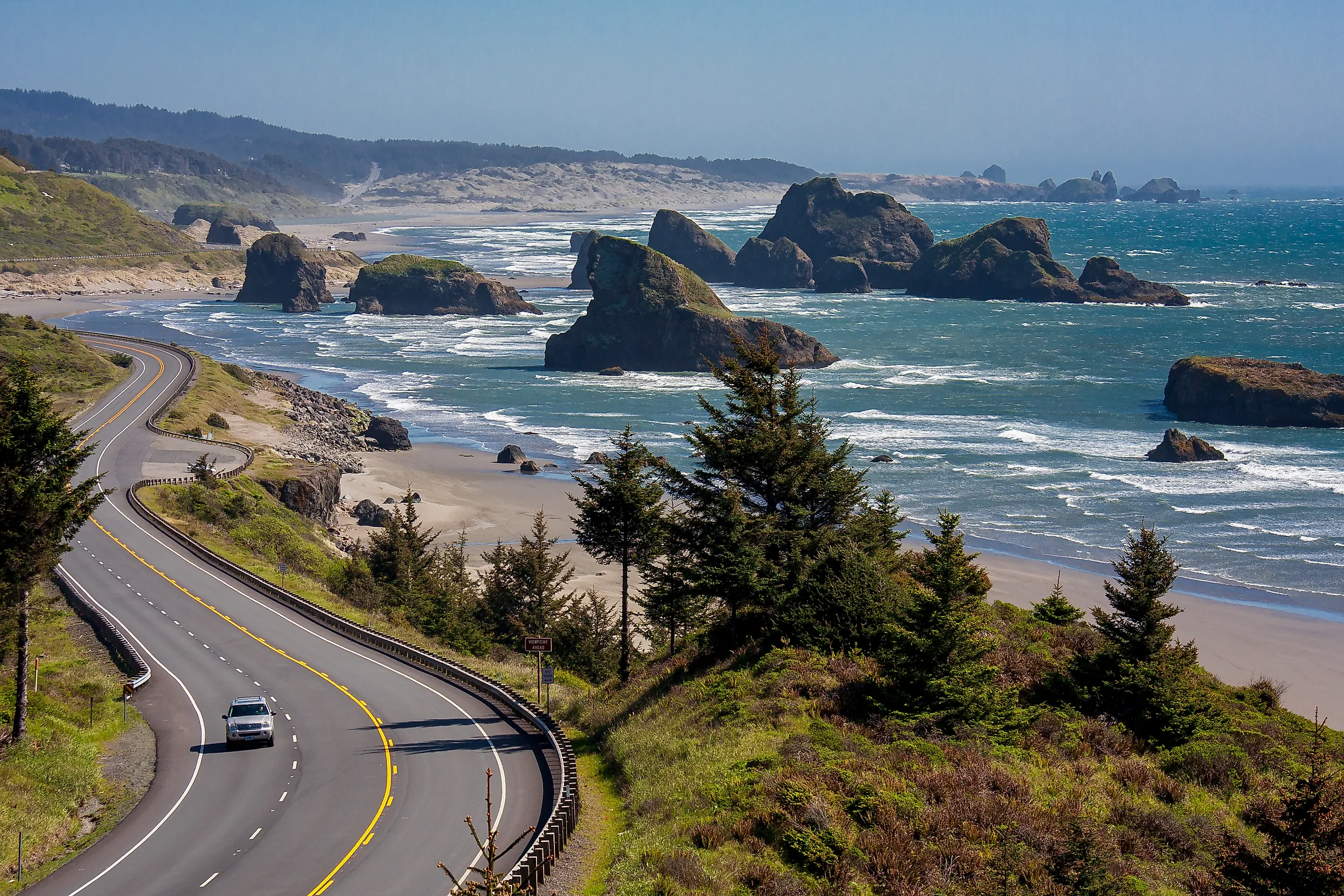
There is a romance to long drives along scenic coasts. Travelling along winding highways, overlooking the ocean from tall cliffs, or beside sandy beaches, there is nothing like the freedom of the open road. US Route 101 runs from California through Oregon and Washington, along the West Coast. Threading its way along the entire coastline, Oregon’s section is popularly called the Pacific Coast Scenic Byway. From the California border to the Columbia River at the Oregon-Washington border, the byway travels through some of Oregon’s most scenic, storied, and diverse landscapes, all the while hugging the coast.
How Long Does it Take?

For an unforgettable road trip, tracing the Pacific Coast Scenic Byway route from Astoria to Brookings is a must for anyone seeking the freedom of the open road and the beauty and variety of Oregon’s Pacific Coast. At 363 miles in length, the byway takes from 10 to 12 hours to drive nonstop. It is best experienced over a few days, with several key stops along the way to take in the views and explore natural wonders and coastal towns. A state law mandates that every part of Oregon’s Pacific Coast is open to the public, earning it the title The People’s Coast.
From Astoria to Seaside

You can start your drive right at the top of the state, in Oregon’s oldest city, Astoria. This was the first permanent US settlement west of the Rockies. The Columbia River, the natural border between Oregon and Washington, and Astoria sit at the river’s mouth where it flows into the Pacific. This port city is filled with Victorian-era homes, many nestled into the hills overlooking the Columbia. As a maritime city, the history of the river and the ocean is prominent and is part of Astoria’s fabric, found in its museums and the forts along the coast.
To get a sense of that history, stop by the Columbia River Maritime Museum in Astoria. The focus is the ocean, the river, and the port with interactive and hands-on exhibits, model boat sailing on the Warnock Model Boat Pond, and exploring the lightship Columbia, a National Historic Landmark, and a floating lighthouse that guided ships in the Columbia River. From here, you can start your journey along US-101 south to Seaside. Along the way, you can stop at Lewis and Clark National Historical Park, a replica of the winter camp of the Lewis and Clark Expedition, on Fort Clatsop Road, just off the highway.
From Seaside to Garibaldi

Seaside is a city on the coast famous for its 1920s-era Seaside Beach Promenade and boardwalk. There’s oceanside dining, a discovery center, the Seaside Aquarium, and a 35-foot Gray Whale skeleton. Further south along US-101 is Cannon Beach, an artists' community with excellent shopping, galleries, and dining. It is noted for the 235-foot Haystack Rock that sits offshore.
On your way to Cannon Beach, you can take a small detour closer to the coast and visit Ecola State Park with its secluded coves, trails running through the forests that line the shore, an abandoned lighthouse, and the cliffside cape of Tillamook Head. The trails include an 8-mile section of the Oregon Coast Trail, plus the Clatsop Loop Trail, a 2.5-mile interpretive route. Leaving Cannon Beach, you continue south on the Pacific Coast Scenic Byway and head towards Garibaldi. Of course, in between there are many other worthwhile stops.
From Garibaldi to Lincoln City and Depoe Bay

Arriving in Garibaldi, you will find yourself in a cozy town sitting on the Tillamook Coast. With a busy harbor, Garibaldi’s main industry is fishing, and this would be a perfect place to take a break from driving and cast a line. If you prefer to take in the waters from the land, a wonderful way to explore the Tillamook Coast is on the Oregon Coast Scenic Railroad. This heritage railroad and museum provides interpretive train rides along the coast, with information about the wildlife and nature, stressing environmental conservation. Nearby Tillamook sits in the heart of Oregon’s coastal dairy country. Tillamook is home to the century-old Tillamook Cheese Factory, which is open for tours and tasting. Resting at the confluence of three rivers, Tillamook is a perfect spot for kayaking and hiking.
Depoe Bay has the smallest navigable harbor in the world. It is also known for being a perfect spot for whale watching. Chartered boats take you through the rocky channel and into the Pacific to watch Gray whales during their migration. You can also explore the tide pools near Otter Rock, and visit a collapsed sea cave called Devils Punchbowl and its swirling ocean waters. Before venturing south on the highway, a great place to stop is the Yaquina Head Outstanding Natural Area. This is a perfect place to watch harbor seals, many species of seabirds, and more opportunities to catch the migrating gray whales, plus starfish, hermit crabs, purple urchins, and anemones at low tide.
Newport and Yachats

Newport is a city with ample beaches, with the bonus of being a great place to spot bald eagles. The shoreline is also prime fishing and crabbing waters, and you can get a taste of the local catches at several oceanside restaurants. The Hatfield Marine Science Center at Oregon State University is a research center with programs in marine and estuarine research. Yachats is a town at the base of the Oregon Coast Range along the Pacific. You will find boutique hotels, galleries, and locally-owned businesses. Like so many communities on the coast, your dining experiences will be exceptional. Are you sick of seafood yet? You will find many dining options, from Mexican to Thai and Vietnamese, to choose from.
Cape Perpetua Scenic Area

The Cape Perpetua Scenic Area overlooks the protected Marine Garden shoreline, and the Cape Perpetua Overlook Day Use Area is the highest viewpoint along the Oregon Coast that is accessible by car. A winding road lined with trees takes you to the overlook at 800 ft. The visitor center and museum are located at the base of the park. Three hiking trails begin at the day-use area, featuring the Whispering Spruce Trail that is wheelchair accessible. The Giant Spruce Trail is a two-mile-long hike through a lush forest, leading to a 500-year-old Sitka spruce. The giant tree is over 185 ft. in height and 40 ft. in circumference.
Nearing the End

Coos Bay, with the largest natural harbor on the Pacific Coast between Seattle and San Francisco, is a significant port. In addition to commercial fishing, a key industry in the area is recreational and sport fishing. The Coos Bay shoreline and waters are also popular for crabbing and clamming. A quick detour along the coast is the Charleston to Bandon Tour Route, which reconnects with US-101. The area is famed for its world-class golfing, and it also has a vibrant art community.
On the way south, if you want to get out and stretch your legs, or more accurately, give your legs some needed exercise, the Wild Rivers Coast Scenic Bikeway offers several route choices. It is one of the most picturesque stretches of the South Coast, and slowing down on a bike could make for a great afternoon. With several diversions along the way, US-101 winds down the coast to the California border, where it continues as US-101. Before you reach the border, you can stop in Brookings, located on the Wild Rivers Coast and has some of the warmest weather on the whole Oregon coastline. The highway winds through some of the most dramatic coastlines in Oregon. Stretching for 12 miles, the Samuel H. Boardman State Scenic Corridor offers several viewpoints of the rocky coast. Harris Beach State Park is also worth a stop, featuring a rugged coastal area that is ideal for tide pooling.
Take a Day or Two, Or Take a Week

Of course, there is so much more, and the fun of a scenic drive is unplanned stops and sudden detours into unknown territory. The Pacific Coast Scenic Byway is ideal for this kind of extended exploration, as the route is straightforward, with a single main highway traveling along the Oregon coast from one end of the state to the other. It’s really hard to get lost unless that’s what you want to do. Make sure to leave time for diversions, to stop for country fare, or sample local breweries or wineries, or take in some hiking in the hills overlooking the ocean. Or you can just take it easy on the beach and watch the sun setting over the whales and seabirds that make this area their stomping grounds.