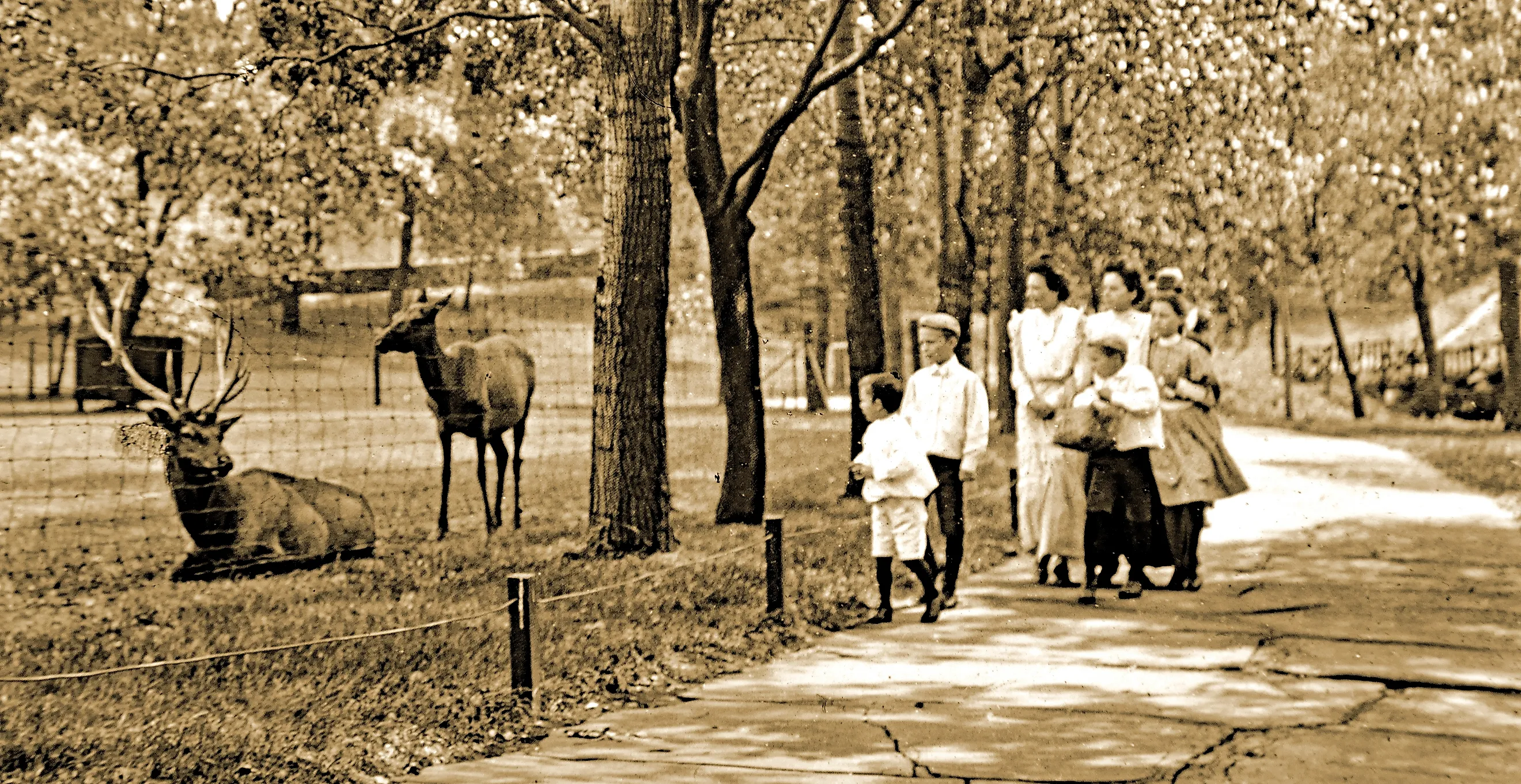
The Oldest Zoos in the United States
The Philadelphia Zoo opened to its first paying visitors on July 1, 1874, at an admission price of 25 cents. The Zoological Society of Philadelphia had been chartered fifteen years earlier on March 21, 1859, but the American Civil War and a slow recovery delayed the opening until the early 1870s. The Philadelphia institution markets itself as "America's First Zoo," a claim other zoos dispute on technical grounds (the Central Park Zoo's animal menagerie predates Philadelphia's opening by a decade, though it did not become a formally organized zoo until 1934). The nine zoos covered below are the oldest in the country by founding or opening date, and the table at the end lists the top 20.
Philadelphia Zoo (1874)

The Philadelphia Zoo was authorized by an act of the Commonwealth of Pennsylvania on March 21, 1859, and opened to the public on July 1, 1874, on a 42-acre site within Fairmount Park along the west bank of the Schuylkill River. Opening-day attendance was 3,196 visitors, with approximately 1,000 animals on display. The opening had been delayed for fifteen years because the original construction effort coincided with the start of the Civil War in 1861, and the project was not revived until Dr. William Camac, the Zoological Society's founding president, returned from a 1872 tour of European zoos and pushed the development forward.
The zoo houses around 1,700 animals across 340 species today and is operated by the Zoological Society of Philadelphia. The institution has several documented "firsts" in American zoo history: the first zoo laboratory (opened 1901), the first children's zoo (1938), and the first formal animal nutrition program with custom-formulated diets ("monkey cake," developed in the 1930s, is still used in some form by zoos today). The zoo was a member of the original 1924 founding group of the Association of Zoological Parks and Aquariums, the body now known as the Association of Zoos and Aquariums (AZA). A fire in the World of Primates building on Christmas Eve 1995 killed 23 animals, including six lowland gorillas and three orangutans, all from carbon monoxide inhalation; the building has since been rebuilt with improved fire suppression.
Central Park Zoo (Menagerie 1864, Modern Zoo 1934)

The Central Park Zoo in New York City exists at the older end of every reasonable counting metric. The zoo's predecessor, an unofficial menagerie of donated and abandoned animals, began accumulating in the southeast corner of Central Park as early as 1859, with the New York State legislature granting formal recognition in 1864. For seventy years the menagerie expanded informally, gaining a permanent home as part of Central Park's overall design but never operating as a planned modern zoo.
The current Central Park Zoo opened on December 2, 1934, as part of Robert Moses's New Deal-era park renovations, which produced the still-recognisable quadrangle of buildings around the sea lion pool. The zoo was significantly redesigned again between 1984 and 1988, replacing the older barred cages with naturalistic habitats. The 6.5-acre site now houses about 130 species under the management of the Wildlife Conservation Society, the New York-based nonprofit that also operates the Bronx Zoo, the Prospect Park Zoo, the Queens Zoo, and the New York Aquarium. Featured exhibits include the snow leopard habitat (opened June 2009) and the temperature-controlled penguin house.
Lincoln Park Zoo (1868)

The Lincoln Park Zoo in Chicago, Illinois, was founded in 1868 when the Central Park Board of Commissioners in New York gifted the Lincoln Park Commissioners two pairs of mute swans. Within the year, a series of additional donations had added a puma, two elk, three wolves, four eagles, and eight peacocks. In 1874, the zoo purchased a black bear cub from the Philadelphia Zoo for ten dollars; the cub became notorious for escaping its enclosure and roaming the surrounding park grounds at night.
The zoo is the second-oldest continuously operating zoo in the United States after Philadelphia and one of only a handful of major US zoos still offering free admission. The 35-acre site in Chicago's Lincoln Park houses about 1,100 animals across 200 species, with approximately 3.42 million annual visitors. The first American bison born in captivity was born at Lincoln Park Zoo in 1884; by 1896 the zoo had a sufficient breeding population that the federal government purchased one bull and seven cows to help re-establish wild herds at Yellowstone National Park. The zoo also became an accredited arboretum in 2019, recognising the maturity of its botanical collection alongside the animal exhibits.
Roger Williams Park Zoo (1872)

The Roger Williams Park Zoo in Providence, Rhode Island, opened in 1872 within the 435-acre Roger Williams Park, the parkland bequeathed to the city in 1871 by Betsey Williams, a descendant of Providence's 17th-century founder Roger Williams. The zoo opened with a small collection of native and exotic small mammals (including anteaters, peacocks, and raccoons) and has been continuously operating ever since.
The zoo expanded significantly in the late 20th century under the management of the Rhode Island Zoological Society, which took over operations from the City of Providence in 1985. The 40-acre site now houses around 100 species and is accredited by both the Association of Zoos and Aquariums and American Humane. Recent additions include the African Plains exhibit, the Asia Quest area, and a children's farmyard. The zoo's annual Zoobilee fundraiser and Jack-O-Lantern Spectacular are among the largest seasonal attractions in southern New England.
Cincinnati Zoo and Botanical Garden (1875)

The Zoological Society of Cincinnati was founded in 1873 and the Cincinnati Zoo opened to the public on September 18, 1875, making it the second-oldest zoo in the United States by opening date (after Philadelphia). The original collection consisted of eight monkeys, two grizzly bears, three deer, six raccoons, two elk, a buffalo, a hyena, a tiger, an alligator, a circus elephant, and approximately 400 birds (including a talking crow). The zoo was founded on 65 acres in what was then the rural Avondale neighbourhood north of central Cincinnati.
The institution is a designated National Historic Landmark (1987) for the preservation of several of its original 19th-century buildings, including the Reptile House (built 1875) and the Passenger Pigeon Memorial (the building where Martha, the last known passenger pigeon, died on September 1, 1914). The current 75-acre site houses around 1,896 animals across more than 500 species and draws over 1.2 million annual visitors. The Cincinnati Zoo received international attention in May 2016 when a four-year-old child climbed into the western lowland gorilla enclosure and the zoo's response team shot the gorilla Harambe to protect the child. The incident produced extensive discussion about zoo enclosure standards and visitor safety protocols across the industry.
Buffalo Zoo (1875)

The Buffalo Zoo in Buffalo, New York, opened the same year as the Cincinnati Zoo (1875), giving Buffalo a competing claim to the second-oldest opening date in the United States. The zoo began when a local furrier named Jacob E. Bergtold donated a pair of deer to the City of Buffalo, with the city establishing them in the Buffalo Park (now Delaware Park) and adding a small assortment of additional animals (sheep, bison, elk) over the following years.
The 23.5-acre site houses around 320 animals across 90 species today. The Buffalo Zoo's claim to oldest-zoo status alongside Cincinnati comes down to precise dating: the Buffalo zoo dates the official founding from the 1875 donation but did not have a constructed enclosure until 1890. The zoo is accredited by the AZA and is owned by the City of Buffalo, with day-to-day operations managed by the Buffalo Zoological Society. Major recent renovations include the Heritage Farm Discovery Zone (2019), the Otter Creek exhibit, and a planned long-term relocation of the zoo's elephant herd to a larger sanctuary site.
Maryland Zoo in Baltimore (1876)

The Maryland Zoo in Baltimore was established in 1876 as the Druid Hill Park Menagerie, making it the third-oldest zoo in the United States by founding date (after Philadelphia and Lincoln Park). The zoo was created when Mayor Ferdinand C. Latrobe accepted a gift of four mute swans, two foxes, four prairie dogs, and an eagle from local donors and arranged for their housing in the existing Druid Hill Park, which had opened in 1860 as the third-largest urban park in the United States.
The institution operated under various names (Baltimore Zoo, Baltimore Municipal Zoo, Maryland Zoological Society) before adopting its current name in 2004. The 135-acre site houses around 1,500 animals across more than 200 species. The zoo's African Watering Hole exhibit, opened in the 1990s and continuously expanded since, is among the largest African plains exhibits at any North American zoo. The Maryland Zoo is also home to one of the most successful captive breeding programs for African penguins, having hatched more than 1,000 chicks since the program began in the 1960s.
Cleveland Metroparks Zoo (1882)

The Cleveland Metroparks Zoo opened in 1882 as the Cleveland Zoological Park at Wade Park, on land donated to the City of Cleveland by industrialist Jeptha H. Wade. The original site is now part of University Circle and houses the Cleveland Museum of Art. The zoo was relocated to its current 183-acre site in Cleveland's Old Brooklyn neighbourhood in 1907 by order of the Cleveland City Council, in part to make room for the new art museum on the original Wade Park property.
The zoo passed to the Cleveland Metroparks regional park district in 1975, giving it both its current name and a substantially expanded conservation mandate. The institution houses around 3,000 animals across more than 600 species, with one of the largest collections of primates in North America. Major exhibits include The RainForest (opened 1992, a 2-acre indoor tropical environment with more than 600 animals), Australian Adventure (opened 2000), and Asian Highlands (opened 2018). Annual attendance is approximately 1.32 million.
Smithsonian's National Zoological Park (1889)

The Smithsonian's National Zoo in Washington, DC, was established by an act of Congress signed by President Grover Cleveland on March 2, 1889, "for the advancement of science and the instruction and recreation of the people." The zoo's animals (originally a group of 185 native species kept behind the Smithsonian Institution Building on the National Mall by chief taxidermist William Temple Hornaday) were relocated to a new 163-acre site within Rock Creek Park in 1891. The site was designed by Frederick Law Olmsted, the landscape architect responsible for Central Park in New York and the US Capitol grounds.
The National Zoo houses approximately 2,700 animals across 390 species, including its best-known residents (the giant pandas of the David M. Rubenstein Family Giant Panda Habitat, present in DC under loan agreements with the Chinese government since 1972). Admission is free, consistent with the rest of the Smithsonian Institution's museum network. The zoo operates a second campus, the 3,200-acre Smithsonian Conservation Biology Institute in Front Royal, Virginia, which is closed to the public and focuses on captive breeding programs for endangered species including the cheetah, the black-footed ferret, and the scimitar-horned oryx.
The 20 Oldest Zoos in the United States
The following table lists the 20 oldest continuously operating zoos in the United States by founding or opening date, with location and current operational status. The 19th-century group (Philadelphia through Bronx Zoo) all originated before 1900 and were among the founding generation of organised American zoos; the early 20th-century group (Toledo through Alexandria) opened during the wave of public-park-affiliated zoo construction that followed the City Beautiful movement of the 1890s and 1900s.
| Rank | Zoo | Founded / Opened | Location | Status |
|---|---|---|---|---|
| 1 | Philadelphia Zoo | 1859 charter / opened 1874 | Philadelphia, PA | Open |
| 2 | Central Park Zoo | 1864 menagerie / 1934 modern zoo | New York, NY | Open |
| 3 | Lincoln Park Zoo | 1868 | Chicago, IL | Open |
| 4 | Roger Williams Park Zoo | 1872 | Providence, RI | Open |
| 5 | Cincinnati Zoo and Botanical Garden | 1873 founded / 1875 opened | Cincinnati, OH | Open |
| 6 | Buffalo Zoo | 1875 | Buffalo, NY | Open |
| 7 | Maryland Zoo in Baltimore | 1876 | Baltimore, MD | Open |
| 8 | Cleveland Metroparks Zoo | 1882 | Cleveland, OH | Open |
| 9 | Detroit Zoo | 1883 | Royal Oak, MI | Open |
| 10 | Dallas Zoo | 1888 | Dallas, TX | Open |
| 11 | Smithsonian's National Zoo | 1889 | Washington, DC | Open |
| 12 | Denver Zoo | 1896 | Denver, CO | Open |
| 13 | Bronx Zoo | 1899 | Bronx, NY | Open |
| 14 | Toledo Zoo | 1900 | Toledo, OH | Open |
| 15 | Memphis Zoo | 1906 | Memphis, TN | Open |
| 16 | Kansas City Zoo | 1909 | Kansas City, MO | Open |
| 17 | Franklin Park Zoo | 1912 | Boston, MA | Open |
| 18 | Jackson Zoo | 1919 | Jackson, MS | Open |
| 19 | Lake Superior Zoo | 1923 | Duluth, MN | Open |
| 20 | Alexandria Zoological Park | 1926 | Alexandria, LA | Open |