6 Best Natural Wonders To Visit In North Dakota This Year
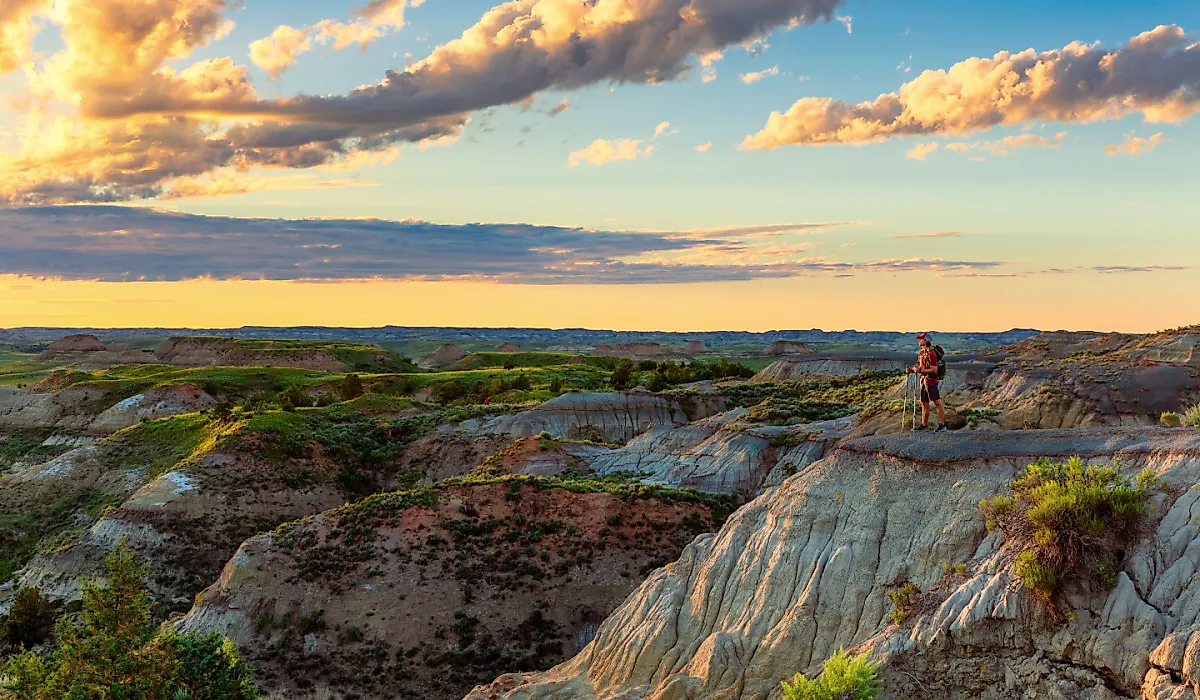
North Dakota is often talked about for its prairie, but that only tells part of the story. Painted Canyon, where striped rock and steep walls cut through Theodore Roosevelt National Park, gives a better sense of the terrain behind this list. Mineral Springs Waterfall comes out of a spring-fed hillside in Sheyenne River State Forest, while White Butte offers wide prairie views from the highest point in North Dakota. These six places show a side of North Dakota that feels far more varied once you see it firsthand.
Theodore Roosevelt National Park: Painted Canyon

North Dakota’s connections to Theodore Roosevelt run deep. America’s 26th president first experienced what was then the Dakota Territory in 1883 to hunt bison, but wound up buying a stake in a cattle operation. He returned frequently, spending years working the range along the Little Missouri River.
The badlands he knew and loved so dearly are now protected within Theodore Roosevelt National Park, a 70,446-acre national park divided into three sections: the South Unit near Medora, the North Unit near Watford City, and the remote Elkhorn Ranch Unit. Comprising canyon country landscapes and abundant wildlife, it’s considered one of the most genuinely distinctive places to visit in the Great Plains.

The Painted Canyon Visitor Center in the South Unit is where most tourists go. The facility’s overlook provides an unobstructed view across a wide canyon of layered sedimentary rock in bands of red, orange, yellow, and gray. For other views, follow the mile-long Painted Canyon Nature Trail from the rim into the canyon itself, or take the 36-mile scenic loop drive around it. Along the way, there’s a good chance you’ll see plenty of wildlife, including prairie dog towns, bison herds, wild horses, and mule deer.
Best Time to Visit: Late May through early June is ideal for wildflower spotters, with mild temperatures. September is popular with hikers.
Sheyenne National Grassland

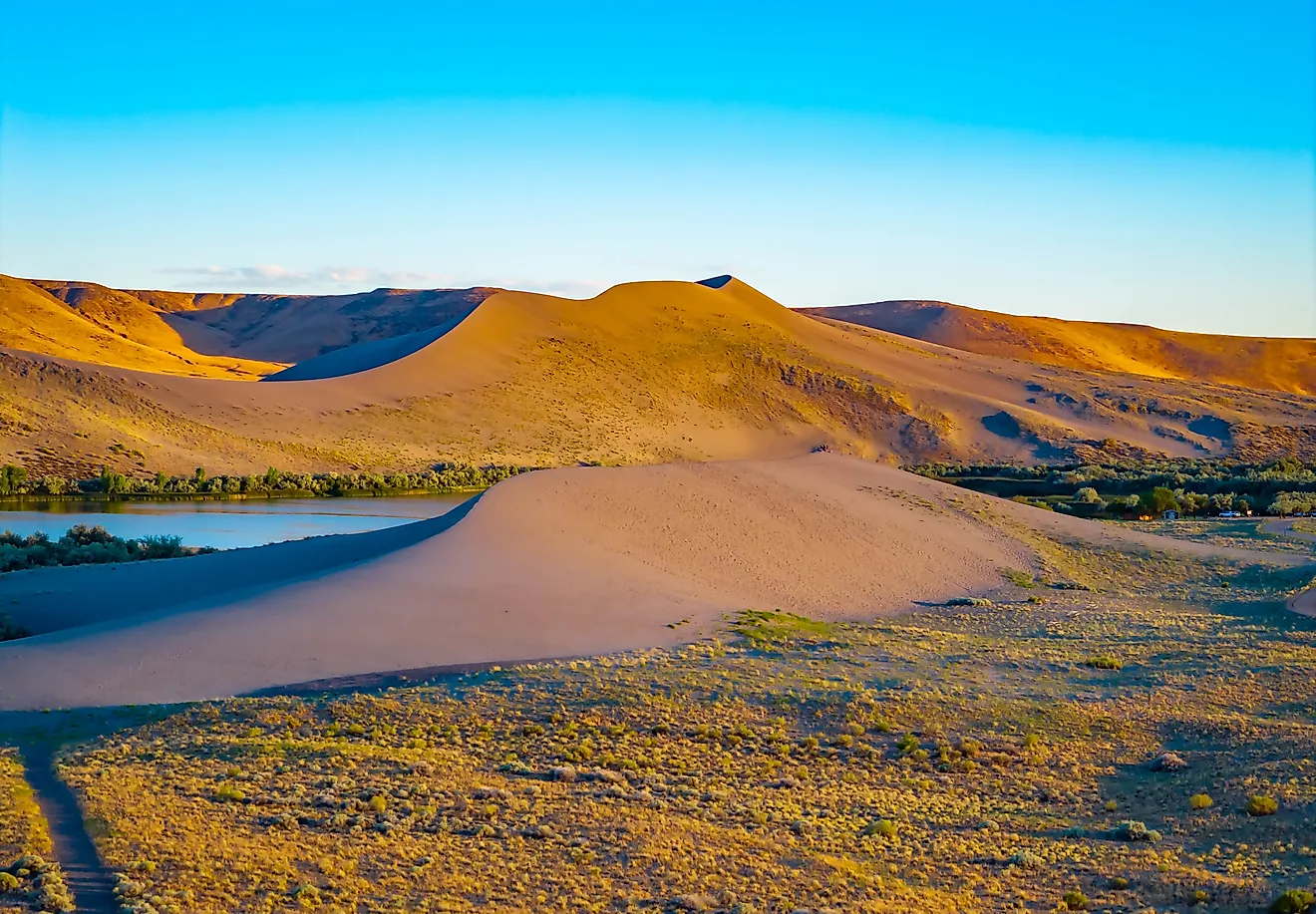
The Sheyenne National Grassland in southeastern North Dakota originated about 11,700 years ago when the Sheyenne River flowed into Glacial Lake Agassiz, a massive body of water that covered much of what is now the Red River Valley. As the river entered the lake, it deposited sediment in a large, sandy, fan-shaped delta, which remained when the lake and glaciers eventually retreated. Shaped by wind and rain, it’s now a unique patchwork of rolling sand dunes, flat plains, and wetlands.

The ecological significance of the grasslands here is considerable. It’s home to one of the largest populations of fringed orchids, a federally threatened species that blooms in June, and though increasingly rare, greater prairie chickens still thrive here. Other species, like the Dakota skipper butterfly, also depend on this grassland habitat.
A 30-mile segment of the North Country National Scenic Trail crosses the grassland, and Brown Ranch, on the southern edge of the Sheyenne Delta, is popular for hiking and birdwatching.
Best Time to Visit: Mid-June, for peak orchid blooms and prairie chicken activity.
White Butte

Although just 3,506 feet above sea level, White Butte is the highest natural point in North Dakota. Set in the southwestern corner of the state near the small town of Amidon, it gets its name from the chalky white and yellow-white sandstone exposed on its slope, which stands out against the surrounding green and brown prairie.
Although modest in height, the surrounding flat terrain ensures great views from the top of White Butte. The hike to the summit is a moderate 1.7-mile out-and-back trail, with an elevation gain of just 334 feet, and can be done in under an hour.
Best Time to Visit: Early summer, when prairie wildflowers are blooming along the trail.
Pembina Gorge

Pembina Gorge isn’t what you usually picture when you think of North Dakota. Located in the northeastern corner of the state, eight miles west of Walhalla, it’s defined by steep valley cliffs, densely forested slopes, and the winding Pembina River itself.
Surrounded by the largest continuous, undisturbed forest in the state, the gorge serves as a transition zone where boreal forest, eastern deciduous forest, and central grassland converge. This meeting of landscapes creates exceptional biodiversity, much of it preserved within the Pembina Gorge State Recreation Area.
Home to several rare animal species and roughly a third of all plant species found in North Dakota (some found nowhere else in the state), a network of 30 miles of multi-use trails will get you up close to many of them. For another vantage point, the Pembina River can be kayaked when conditions allow (rentals are available through the park office in Walhalla).
Best Time to Visit: Late spring through early fall for hiking and paddling, while late September and early October offer outstanding fall color in the gorge.
Little Missouri National Grassland

As the largest national grassland in the United States, the Little Missouri National Grassland is one of North Dakota’s most significant natural wonders. Covering more than a million acres in the western part of the state, it encompasses the badlands country of the Dakotas in its most undeveloped state and surrounds Theodore Roosevelt National Park.
The dominant feature is a mixed-grass prairie and the Little Missouri River, which meanders south to north through the grassland before joining the Missouri River. The expedition passed the mouth of the Little Missouri River in 1805, and much of it looks much as it did then. Interestingly, sedimentary layers from an ancient inland sea that once covered the region around 80 million years ago are continuously being turned up by erosion, sometimes even revealing fossils from ancient marine creatures.
Best Time to Visit: Late spring through early fall offers the best conditions, with September being especially nice for golden prairie colors, particularly at sunset.
Mineral Springs Waterfall: Sheyenne River State Forest
North Dakota isn’t a state you typically think about for waterfall visits. But the Sheyenne River State Forest, located about 10 miles west of Lisbon in the southeastern part of the state, is home to the state’s only natural waterfall. Known as the Mineral Springs Waterfall, it’s formed by an underground spring that emerges from a hillside and drops eight feet down an embankment into a small creek, which then empties into the Sheyenne River.
Though modest by most standards, in a state where no other waterfalls exist, it’s a rarity that stands out as a natural curiosity. Getting there is part of the experience and involves a just over two-mile hike from the trailhead near Fort Ransom. Although it takes a couple of hours, the trail passes through wooded terrain and over ridges that offer great views of the Sheyenne River Valley below.
Best Time to Visit: Late spring through early summer is best when water flow from the underground spring is at its strongest. It’s also when wildflowers reach their peak.
Why These North Dakota Natural Sites Stand Out
Together, the six destinations show a wider range of landscapes than many travelers expect in North Dakota. Whether it’s the state’s highest point, its only natural waterfall, or the millions of acres of grassland across the state, these places offer a strong sense of North Dakota’s natural range.