5 Most Rattlesnake Infested Areas in California's Sierra Nevada
Some of the most rattlesnake-infested areas in California’s Sierra Nevada are home to species like the Northern Pacific and Great Basin rattlesnake. The rattlesnake is the only native venomous snake in California, found from sea level to about 11,000 feet. Thanks to its cold climate, long winters, and high altitude, the Sierra Nevada has long been considered an unfriendly environment for the snakes. Recently, the area has been experiencing a rise in rattlesnake sightings, especially in places like Lake Tahoe and Yosemite National Park, which has been attributed to climate change and the trend toward longer, hotter summers.
Lake Tahoe

Lake Tahoe is the largest freshwater lake in the Sierra Nevada, straddling both California and Nevada. By volume, the largest alpine lake in North America holds about 122 million acre-feet of crystal-clear water. Only the Great Lakes are larger than Lake Tahoe in volume. Surrounding the lake, the forested Lake Tahoe Basin is a high-elevation, year-round playground for outdoor recreation, making the area a go-to destination for boating, hiking, and biking in the summer, and skiing and snowboarding in the winter.

The first official rattlesnake sighting in Lake Tahoe was reported in June 2015, underneath the porch of a home in a residential neighborhood of South Lake Tahoe. Since then, the Tahoe Institute for Natural Sciences (TINS) has noticed an uptick in Western rattlesnakes moving into higher elevations, including Pyramid Peak, one of the highest peaks in the Desolation Wilderness, at 9,984 feet. At higher elevations, Western rattlesnakes tend to be slightly smaller, typically growing three feet long. The rattlesnake is diurnal and seeks shelter in rocky outcrops, beneath vegetation, and in animal burrows, where they may hibernate for months at a time. Pit vipers are generally not aggressive and avoid hikers, but may not rattle before striking. Maintain a safe distance, as rattlesnakes can only strike a distance equal to half their own length.
Yosemite National Park

Yosemite National Park encompasses nearly 1,200 square miles of natural beauty, including mountains, meadows, high cliffs, stunning waterfalls, and giant sequoias. The park attracts millions of visitors annually to see its most iconic and photographed landmarks, including the 3,000-foot El Capitan rising from the valley floor, the 620-foot Bridalveil Fall, and the granite dome nearly 5,000 feet above the valley floor known as Half Dome. For outdoor enthusiasts, Yosemite ranks among the top bucket-list destinations for adventures from backpacking to birdwatching to biking in the Sierra Nevada region.
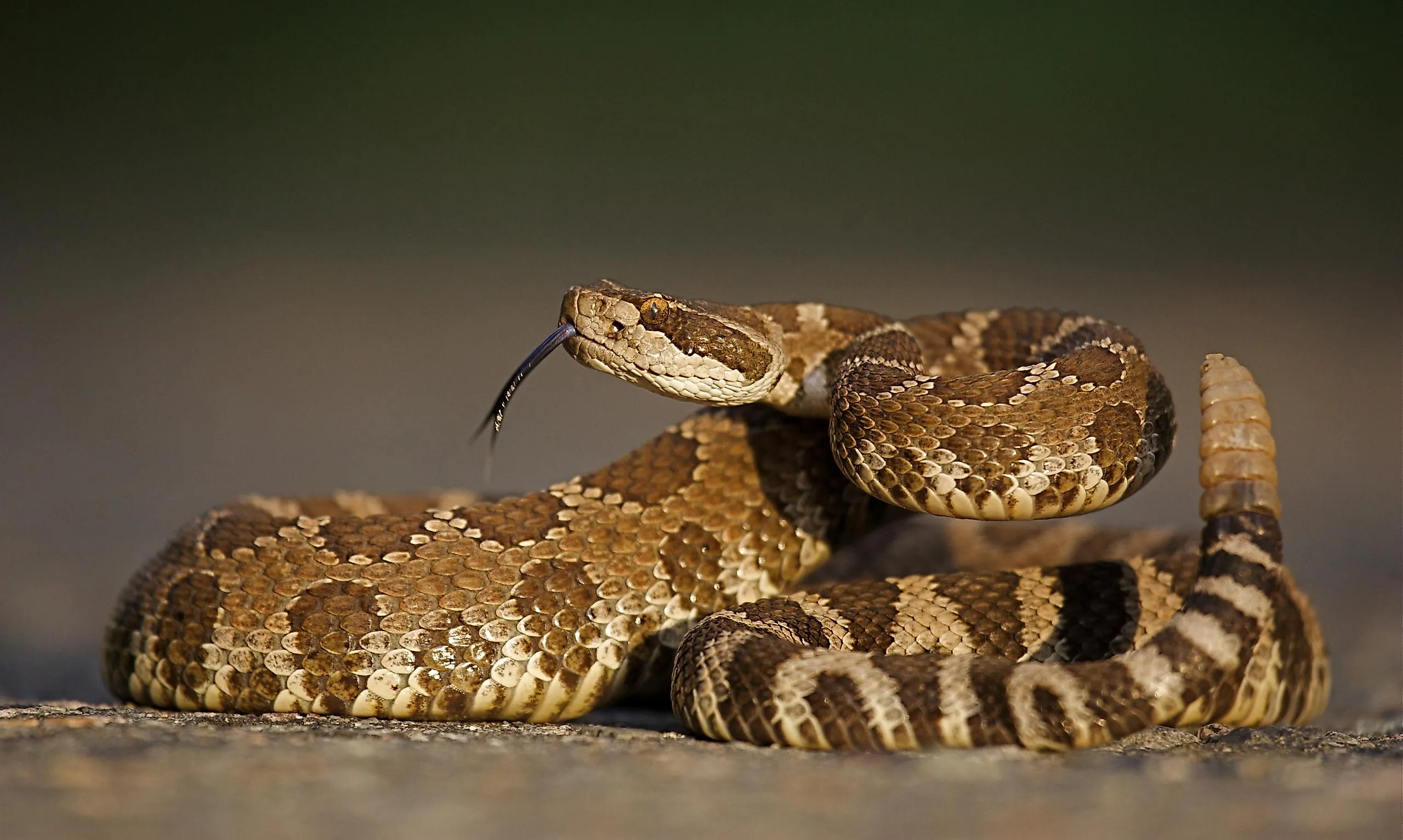
Yosemite is in the heart of Northern Pacific rattlesnake (subspecies of the western rattlesnake) country, and the snakes are a natural part of the park’s ecosystem, helping control populations of small mammals like chipmunks, squirrels, and other rodents. The rattlers are found in a variety of habitats in the park, especially in areas with cover, such as rocks, logs, and woodpiles, up to 9,000 feet in elevation. The Northern Pacific rattlesnake is a medium-sized snake, usually around three feet long, greenish-brown in color, with dark blotches along its back. Like all pit vipers, the rattlesnake has a triangular head, narrow neck, and vertical pupils.
In September 2020, two hikers were bitten by rattlesnakes in the span of three days in the Yosemite wilderness. Both were airlifted to area hospitals and recovered after doses of the antivenom CroFab.
Donner Memorial State Park

Donner Memorial State Park is about 15 miles north of Lake Tahoe, near the legendary Donner Pass in the Sierra Nevada at an elevation of about 6,000 feet. The park pays tribute to the Donner Party, a group of emigrants that became trapped in heavy snow during the winter of 1846-1847 while attempting to travel west. While the park preserves historical sites like the Pioneer Monument, it also offers plenty of opportunities, including 150+ campsites with picnic tables, boating and fishing on both Donner Lake and Donner Creek, over 8 miles of hiking trails, and more.
While rattlesnakes are far more common below about 6,000 feet, campers and hikers are advised to watch where they step and avoid reaching into rock crevices during the summer months in the state park. Unlike most rattlesnakes, the Great Basin rattlesnake can survive in cooler climates and higher elevations like the high desert. They have been found up to 11,000 feet, preferring rocky hillsides, sagebrush flats, and mountain foothills. They can be distinguished by their blunt tails with a rattle at the tip, stocky bodies, and tan to yellow color with oval blotches along their length, although the pattern can be faint, helping them blend into the rocky terrain.
Red Rock Canyon State Park

Located at the southernmost tip of the Sierra Nevada, where it meets the El Paso Mountains, the state park spans roughly 27,000 acres and features spectacular formations, cliffs, and colorful buttes. Take a scenic drive through the park and stop at overlooks for panoramic views and photographs, or use one of the trailheads and walk to Hagen Canyon or Red Cliffs. Visitors can engage in outdoor recreation such as rock climbing, camping at the 50-site primitive Ricardo Campground, or hiking through desert canyons and badlands.
The park is the home turf of the northern Mojave rattlesnake, also called the Mojave green rattlesnake. It typically grows between 3 and 4 feet (91 to 122 cm) long and may be hard to spot in the shrubs, as its olive-green to brown coloration helps it camouflage in the rocky sagebrush. The rattler is sometimes confused with the western diamondback rattlesnake due to its brown or tan diamond pattern that runs down its back, but the edges of the Mojave green’s diamond pattern are more rounded. Like many other pit vipers, it is an ambush predator that quickly strikes its prey with highly toxic venom. Hikers who are inadvertently bitten should seek medical treatment immediately.
Tuolumne River

The Tuolumne River starts in the high Sierra Nevada on the eastern side of Yosemite National Park and flows for 62 miles into the Stanislaus National Forest, then continues to the San Joaquin River. Popular with hikers of all skill levels, the Tuolumne River Loop is a scenic trail that takes outdoor enthusiasts through lush Tuolumne Meadows, offering breathtaking views of the mountains and Lembert Dome, the landmark granite dome rising 800 feet above the meadows.

The river slows and pools as it winds through riparian areas dotted with rocky outcrops and shady thickets, providing ideal habitat for a variety of wildlife, including Northern Pacific rattlesnakes. These snakes typically reach about 3 feet (91 cm) in length and are known for their ability to adapt to a wide range of elevations across the Sierra Nevada. While Northern Pacific rattlesnakes prefer drier habitats, they avoid deserts, choosing instead to live in brush and grassland and along rivers, where they have been seen along trails and basking on sun-warmed rocks. The vipers are more active from April through October, when temperatures range from 77 to 89 degrees.
Sierra Nevada Adventures and Rattlesnake Awareness
Rattlesnake encounters in California are not uncommon, especially in rural and mountainous regions. Climate change has led to an increase in rattlesnake populations in areas previously considered safe from the reptiles. According to the CDC, about 7,000 to 8,000 people are bitten annually, which results in about 5 to 6 fatalities per year. In early 2026, a mountain biker passed away from a rattlesnake bite while cycling on a trail in the foothills of the Sierra Nevada. Outdoor enthusiasts should always hike with awareness, using all of their senses, and be prepared when engaging in outdoor activities in the five most rattlesnake-infested areas in California’s Sierra Nevada.