5 Copperhead Snake Hotspots In Kentucky
The Mid-Southern State of Kentucky has four venomous snakes: the tiny pigmy rattlesnake, the timber rattlesnake, the western cottonmouth, and the eastern copperhead. Of these snakes, the copperhead's range extends across the entire state of Kentucky.
This pit viper grows to about 20 to 37 inches long, with males slightly larger than females. They are resourceful creatures that can survive in many different habitats, but typically prefer mixed woodlands or forests. These venomous snakes are not known to be particularly aggressive, but they are responsible for a significant number of bites in the United States.
In Kentucky, the places you are most likely to find these snakes include rivers, canyons, outside of caves, and in a vast peninsula between two lakes. Read on to learn more about these five copperhead snake hotspots in Kentucky, along with some insights into copperhead's behavior and how to avoid them.
Ohio River

The Ohio River forms the northern border between Kentucky and Indiana and is home to Kentucky's largest city, Louisville. At 981 miles long, its widest point is located right next to Louisville. Its water basin provides drinking water for 5 million people across the Midwest and the Mid-South. Its waters and surrounding environments support many ecosystems of fish, birds, and reptiles, including copperheads.
Although copperheads are not as strong swimmers as other snakes, they can swim through water, including the Ohio River and its creeks and streams. It will keep its head above the water and use its tail as a rudder to move straight ahead. However, the copperhead will most likely live in natural habitats around the Ohio River, from greenway parks to river bluffs and outcrops.

Out of the around 8,000 venomous snake bites in the U.S. reported yearly, copperheads account for nearly 3,000 of those incidents. The reason is how the copperhead responds to the threat of a human close by. Other venomous snakes will flee, but the copperhead will freeze in place, making it much more likely that a human may unwittingly step or touch it. However, the copperhead is known for giving dry bites that don't contain venom as a warning. And even if you are bitten by one, their venom is typically mild and non-life-threatening.
Cumberland Falls State Resort Park

The Cumberland Falls State Resort Park is one of Kentucky's best natural wonders. Located in Corbin, the birthplace of Kentucky Fried Chicken, the park is named after the 68-foot-tall by 125-foot-wide waterfall that some have called the "Niagara of the South." It produces so much mist that on full moon evenings, it sometimes produces a rainbow formed by moonlight called a moonbow. The park has 17 miles of trails that pass by other spots like the 1937 Pinnackle Knob Fire Tower, a gem mine, and backpacking paths into the Daniel Boone National Forest.

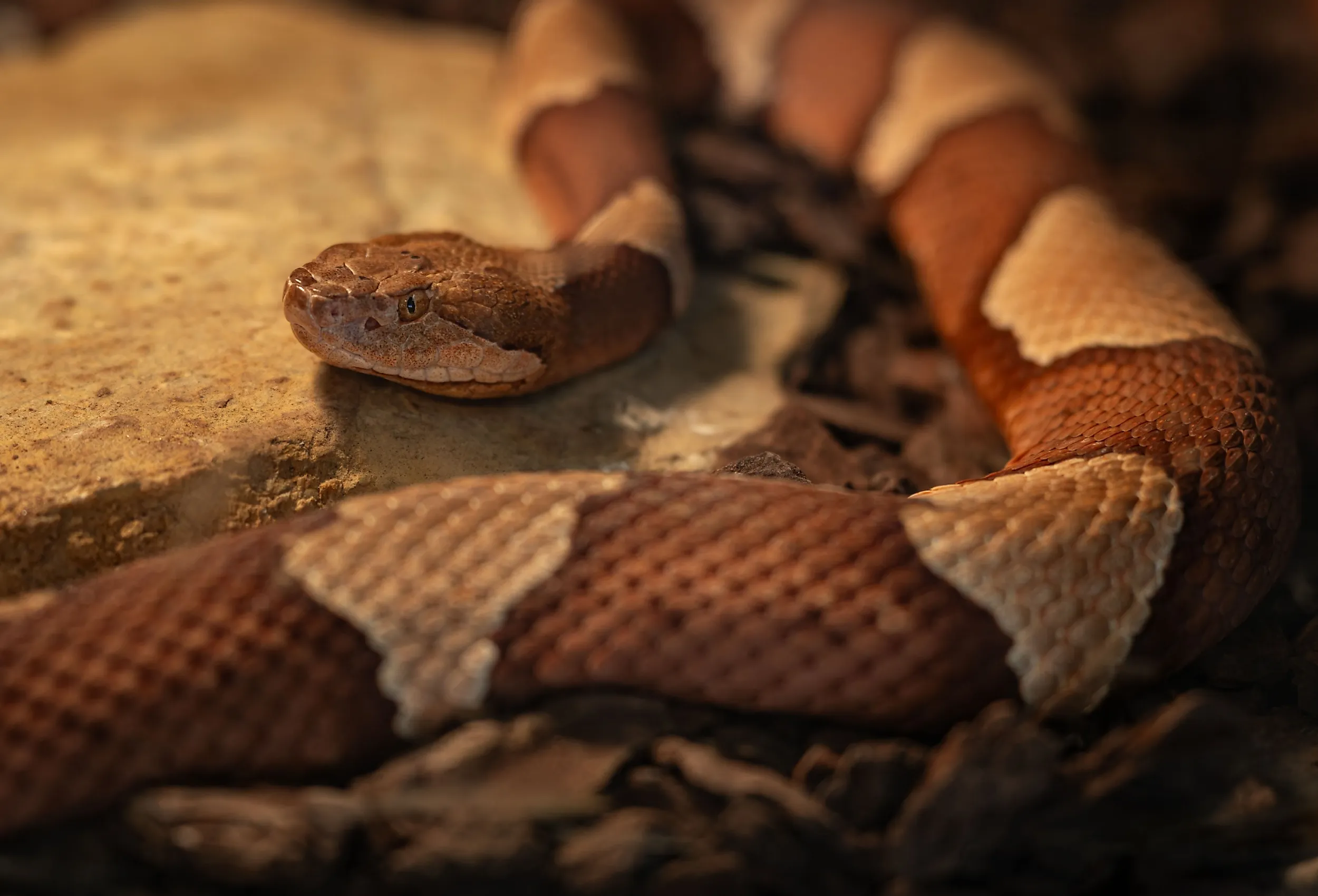
Wildlife authorities have found copperheads in the park as well, sometimes hiding in the trees, grabbing cicadas to eat. Although the snake is unlikely to be in the falls themselves, the woodlands downstream are an ideal habitat for it. The best way to tell the copperhead apart from a nonvenomous snake is to look at its head. Nonvenomous snakes typically have rounded heads, while the copperhead has a triangular-shaped head that's usually a copper color with two heat-sensing pits on the sides.
Red River Gorge Geological Area

If you ask a climber in Kentucky where they go to test their skills, they'll tell you the Red River Geological Area is the best place in the state. This canyon was formed by the Red River ages ago, and is filled with 29,000 acres of climbing hubs up steep cliffs, kayaking and fishing hot spots in the Red River Gorge, and a natural sandstone arch bridge. In fact, there are more than 100 naturally occurring sandstone arches in the area that climbers tackle everyday.
The Red River Gorge is a perfect place for copperheads to live as there are many places for this pit viper to hide and wait for prey, from leaves to underbrush to ledges and more. The copperhead primarily feeds on small rodents, lizards, caterpillars, and any other small creature it can catch. Its hemotoxic venom targets the prey's circulation. Usually, these snakes stay off the main trails, but they may come out to warm themselves in the sunlight on trails.

The venom from copperheads can cause swelling, pain, tingling, and nausea, leading to vomiting. One of the deadliest side effects is an allergic reaction to the bite.
Mammoth Cave National Park

This UNESCO Heritage site is the world's longest known cave system., with more than 426 miles surveyed so far. It was formed by the Green and Nolin Rivers cutting through the limestone. The park provides tours of several of the most famous places in the cave network, such as the Frozen Niagara Tour, with stalagmites resembling a waterfall or the Gothic Avenue Tour, which goes by several rock formations that look like Gothic style architecture.
Around the Mammoth Cave National Park are 60 miles of trails, such as the Green River Bluff or the Echo River Springs. These woodlands and even the entrances of the cave are hiding places for reptiles ranging from the orange and black Eastern box turtle to timber rattlesnakes and copperheads.

Hikers have reported seeing both of these venomous snakes coming out onto trails or into campgrounds. One popular way to identify copperheads by hikers is to look for the dark markings on its tan body, which some call "Hershey's Kisses." These snakes are most active from April to October, and they mostly hibernate during the winter.
Land Between the Lakes National Recreation Area

This unique recreational area spans Kentucky and Tennessee and is named for its location between Lake Barkley and Kentucky Lake. It's one of the largest inland peninsulas in the country and draws in about 2 million visitors a year to swim at its more than 300 miles of lakeside shoreline, hike through its 100 miles of trails, or view wildlife. This park has multiple bison herds that wander through its South Bison Range, just one mile south of the border of Kentucky and Tennessee.
The area has many creeks running along from the lakes, which copperheads love to plunge into during a hot summer day to cool off. Summer vacationers and wildlife observers alike have spotted copperheads enjoying the summer day by diving into creeks or resting in the underbrush. When visiting the Land Between the Lakes, like any outdoor facility, it's best to be aware of your surroundings, whether you're hiking a trail, fishing, or boating. You're in the copperhead's home after all.
It's a Copperhead State
Copperheads can technically live anywhere in Kentucky, but you aren't likely to find them everywhere. Although they can meander out into backyards, you're most likely to find these venomous reptiles above river bluffs of the Ohio River, bathing in creeks in the Land Between the Lakes, waiting for prey in the ravines of the Red River Gorge, or slithering around the trails of the Mammoth Cave National Park.
With these snakes, bites are rarely fatal or even venomous, but if you are bitten, medical experts recommend removing any jewelry from the bite site, not applying ice or a tourniquet, and keeping the bite at heart level. Also, seek medical attention immediately to avoid any complications. Kentucky is a copperhead's state, so be respectful of their home to avoid getting a nasty surprise.