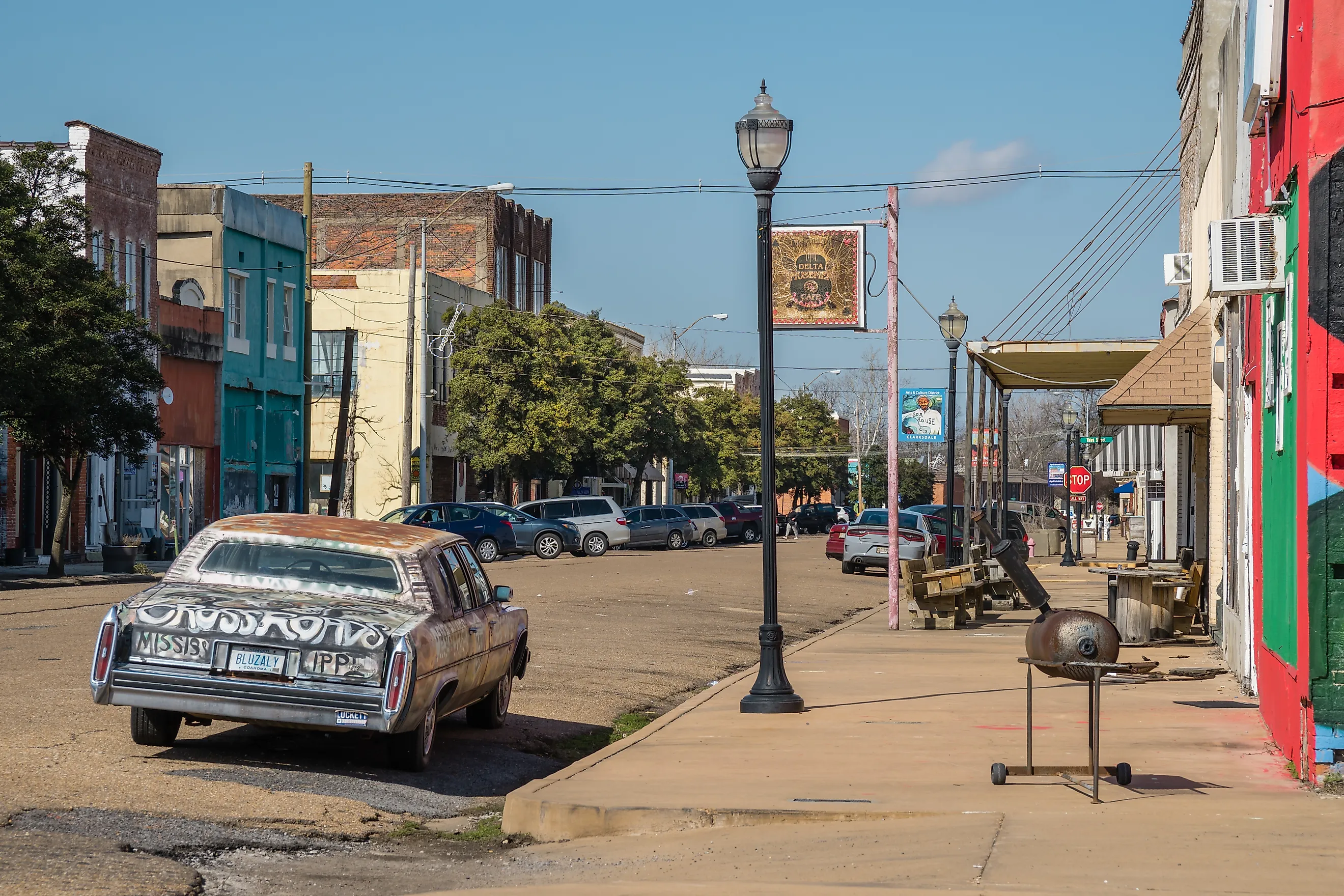
8 Tiny Off-Grid Towns In Mississippi
Mississippi doesn’t advertise itself as off-grid country. You hear about blues highways, flat Delta farmland, Gulf beaches, and small towns stitched together by two-lane roads. But tucked into the state’s quieter corners are places where the modern world fades quickly. Cell bars vanish, streetlights are rare, and a simple grocery run can take half a tank of gas.
In these towns, life follows a different clock. Power flickers and nobody panics. Satellite internet is often the only reliable connection. Many homes still draw water from wells and heat with propane or wood. Days bend around weather systems, river levels, and planting seasons.
These aren’t curated eco-communities or lifestyle experiments. They are ordinary places where being disconnected has always been normal. Off-grid living here is less a statement and more a habit. With that, here are some Mississippi towns where independence from the grid is still part of everyday reality.
Isola

Isola is in the heart of the Delta. It is a small town framed by cotton fields and quiet roads. About 700 people live here, and agriculture remains central to the town’s character. The community once carried the name Dawson Lake, a nod to the nearby water and local geography that shaped its early years.
A few drives from Isola take you to places worth seeing. About 10 minutes away in Belzoni, the Ethel Wright Mohamed Stitchery Museum displays detailed folk embroidery that reflects Delta life. The Jaketown Site is 4 miles north of Belzoni, where prehistoric earthwork mounds speak to centuries of human history. Nearby also brings you to Sky Lake and its ancient cypress wetlands, where old trees rise above the water and quiet trails invite you into a different kind of landscape.
Rodney

Rodney sits on a remote bend of the Mississippi River in Jefferson County, reached by narrow roads that steadily erase your signal bars. Population hovers around 8 to 10 people. Once a busy river port, it now feels suspended in time. There is no cell service in most of town, no stores, no restaurants, and limited public utilities. After dark, light comes from porch bulbs and the occasional passing truck.
Silence here feels heavy. You walk past collapsing brick storefronts and overgrown lots until you reach Mt. Zion Presbyterian Church, where a cannonball from the Civil War remains lodged in the wall. Wells, generators, and propane tanks handle daily needs. Windsor Ruins in Port Gibson and the Natchez Trace Parkway are within driving range, but Rodney itself offers no distractions. Bring water, fuel, and supplies. Once you arrive, history and isolation are the entire experience.
Satartia

Satartia sits on a bluff above the Yazoo River. It is one of the state's smallest incorporated towns, with 36 people. The community began as an active river port and grew into one of the earliest permanent settlements in the area.
The nearest shopping center is a 20 to 30 minute drive to Yazoo City, and until recently, reliable internet barely existed. Flood season shapes conversations here and river levels determine routines. People often stop on the Satartia Bridge just to watch the Yazoo River drift past. Backroads toward Bentonia and Flora cut through empty farmland with no signs and no visitor center. Just water, sky, and distance.
Glen Allan

In Glen Allan, errands become day trips and outages are expected. About 300 people live in this unincorporated community directly east of Lake Washington. If you need serious supplies, Greenville is about 36 minutes away. The town had a post office established in 1883 and was served by the Y&MV railroad until its abandonment in 1941.
Mail delivery, fuel levels, and weather forecasts matter more than schedules. The hum of generators is part of the soundtrack. Yazoo National Wildlife Refuge, the Greenville Cypress Preserve Trust, and the Highway 61 Blues Museum are nearby, but daily life stays rooted in farmland and long horizons.
Alligator

Town hall located in Alligator, Mississippi. Editorial credit: Wikimedia Commons
Alligator is a quiet dot on Highway 61 in Bolivar County. Its population is around 103 people and fields dominate everything. The town takes its name from nearby Alligator Lake, once filled with alligators. Services are minimal, utilities are limited, and basic errands require long drives. The nearest major store sits about 16 minutes away in Clarksdale.
Wind moves through cotton rows and tractors outnumber cars. The town feels like it belongs to another time. Nearby Clarksdale is packed with blues history, with its Delta Blues Museum, Juke Joint Festival, and historic Mississippi Blues Trail markers.
Duncan

Duncan has one two-lane road that cuts through town and a handful of weathered buildings that mark the center. While there is a convenience store in town, the nearest big-box store requires a 15 to 30-minute drive to Cleveland or Rosedale. Aside from a historic Mississippi Blues Trail marker, there are no directional signs, no visitor facilities, and no curated stops. Mail arrives when it arrives and supplies require prior planning.
Church schedules and farming seasons shape routines. Clarksdale, home of The Blues Crossroads and a few historic markers, is about 25 minutes away. Cleveland is about 10 to 15 minutes south, where you’ll find Delta State University, the GRAMMY Museum Mississippi, and more blues history.
Rena Lara

Rena Lara is a tiny community along Mississippi Highway 1, near Clarksdale. It began as a stop on the former Riverside Division of the Yazoo and Mississippi Valley Railroad. At one time, the town had two general stores, two grocery stores, and the Richardson and May Land & Planting Company. Today, Rena Lara still has a post office, which has been serving the area since 1895.
The payoff is its proximity to bigger Delta stories. Rosedale, home of the legendary Mississippi Blues Trail - Rosedale lore, is only about 30 minutes away. Clarksdale’s New Roxy live music venue, Hopson Commissary bar, and the Cutrer Mansion historic landmark, are roughly 30 minutes away.
Life Off the Beaten Path
Mississippi’s off-grid towns are not trying to be preserved, promoted, or rediscovered. They are still here because the land allows them to be. Distance, weather, and habit have shaped these places more than any development plan ever could. Power comes and goes, stores are far away, and neighbors matter more than apps.
Life in these towns is not easier. It is slower, more deliberate, and less forgiving of poor planning. You learn to watch forecasts, keep extra fuel, and know who has a generator. Convenience is replaced by awareness and noise is replaced by space.
For visitors, these towns offer something rare: a chance to experience what life looks like when the grid stops being the center of everything. No filters and no curated moments. Just fields, rivers, long roads, and communities that still run on their own terms.