4 Rattlesnake Hotspots In South Dakota
South Dakota is home to some of the most dramatic landscapes in the United States. From wide expanses of grassy prairie to dusty badlands and forested peaks. This diversity of rocky, grassy and wooded habitats provides the perfect environment for the state’s only venomous snake, the Prairie Rattlesnake.
Found across South Dakota, these vipers are particularly abundant in the western part of the state and around the Missouri River. They tend to be most active from spring to fall, and most encounters with humans occur in the summer months, when people are outside more, enjoying the balmy weather. No one wants a snakebite ruining their vacation, but with a few common-sense precautions, it’s possible for visitors to enjoy the Mount Rushmore State’s beautiful parks and preserves while respecting its rattlesnake residents.
Jewel Cave National Monument, Custer

Jewel Cave is one of the most stunning natural wonders of South Dakota. The fifth-longest cave in the world, the underground cavern stretches over 220 miles. Visitors can explore the cave with a guided tour led by a ranger or enjoy hiking one of the two self-guided trails on the surface. Trails start at the Visitor Center, where you can pick up a trail map to guide you and meander through forests, rocky outcroppings, and open meadows.

Just be careful where you’re putting your feet. The Jewel Cave area is a rattlesnake hotspot, and they may be seen basking in the sun on the trails during the warmer months. Be mindful when walking through tall grass or rocky areas, as they could be hiding in a crevice or under natural debris. If you see one, give it plenty of space to get out of your way and make sure pets and children are a safe distance away.
Custer State Park, Custer

Deep in the southern Black Hills lies 71,000 acres of pristine wilderness that marks South Dakota’s oldest and largest state park. Custer State Park is also one of the most popular, attracting millions of visitors each year. Many come for the park’s most famous event, the Buffalo Round-Up, which takes place in September and sees around 60 cowboys and cowgirls rounding up the park’s herd of 1,300 buffalo.

Other wildlife at the park include deer, coyotes, donkeys, bighorn sheep, prairie dogs, and elk. One of the best ways to enjoy some wildlife watching is via the 18-mile Wildlife Loop State Scenic Byway, which runs through the park’s prairies, canyons, and hills and passes the Custer State Park Wildlife Station Visitor Center, where you can learn more about the local fauna. If you’re exploring Custer State Park on foot or camping out, be careful. There are rattlesnakes throughout the preserve. Look out for a large, thick-bodied snake with a triangular head and dark green coloring with greenish blotches. And, of course, you can also identify a rattler from the signature rattle at the end of its tail, which vibrates when the snake feels threatened.
Badlands National Park, Interior

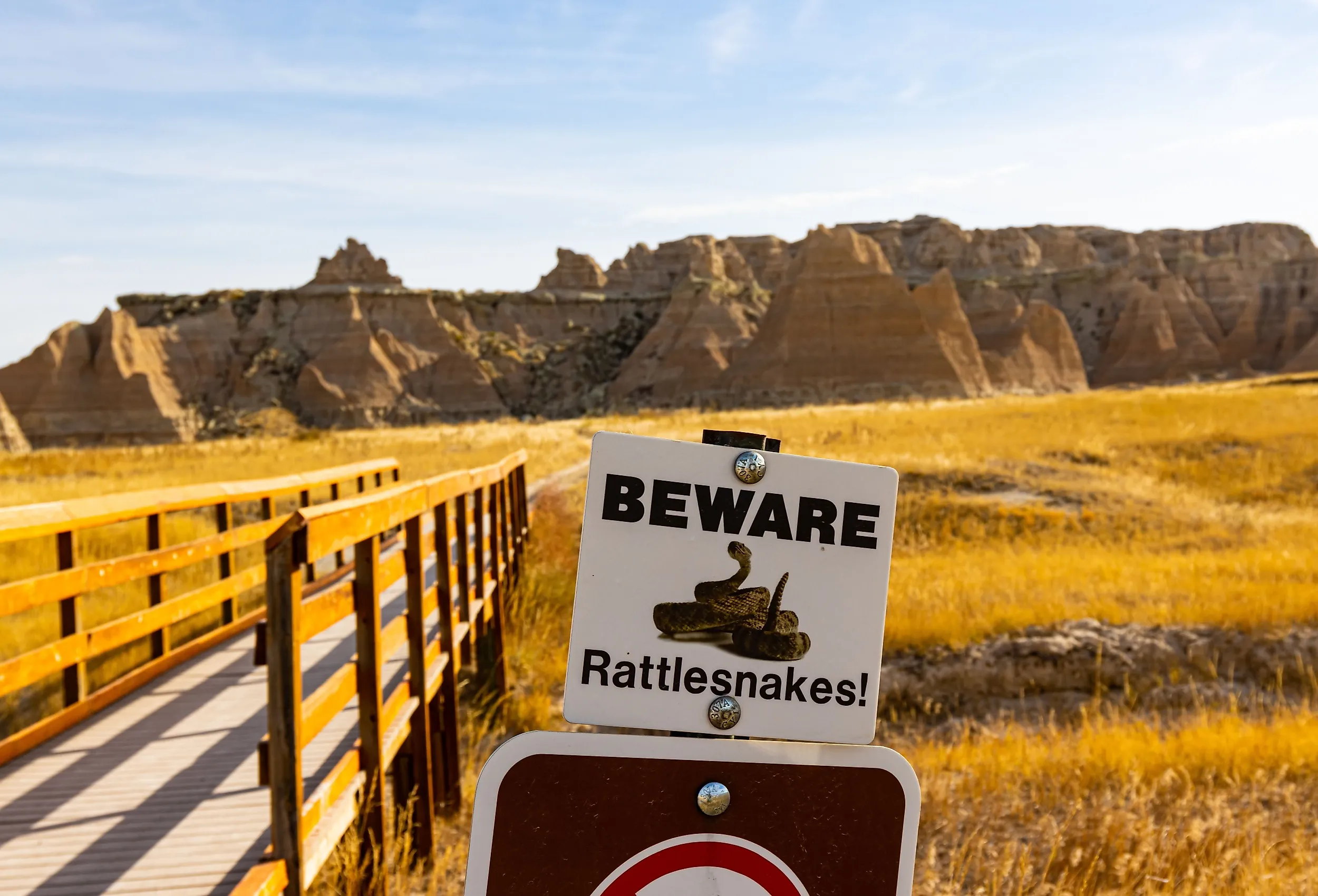
The 244,000 acres of Badlands National Park protect an area of timeless beauty, rich in ecological significance and history. The badlands are one of the world’s richest fossil beds. They’re also a diverse natural playground with mixed grass prairie, rocky outcrops and unique geological formations. One of the best things to do in the park if you’re pushed for time is to drive the Badlands Loop Road, which takes you past the Visitor Centre and several scenic overlooks. Stop by the Pinnacles Overlook at sunset to capture unforgettable views of the sun disappearing over the horizon and painting the rocks in an array of colors.

Badlands National Park is home to just one rattlesnake species, the Prairie Rattlesnake. As their name suggests, their favorite places to hang out and catch some sun is open grasslands and prairies. Their coloring allows them to blend into the rocky environments of the badlands, and there’s also plenty of prey for them to devour in the park, such as prairie dogs, squirrels, chipmunks, mice, and rabbits.
Black Hills National Forest, Custer

South Dakota’s Black Hills take their name from their dark pine-covered slopes, which, rising above the Prairies, make them seem black. This unspoilt wilderness, dotted with rocky canyons, deep lakes, and open grassland, has long been known as an area of special environmental and historical importance. Native Americans saw the hills as a spiritual retreat and sanctuary, and today that need for connection with nature continues to draw millions of visitors to the region each year.

The Black Hills National Forest covers an area 125 miles long and 65 miles wide. Within its borders are plenty of recreational activities and stunning views. The forest area includes 11 reservoirs, 30 campgrounds, 32 picnic areas, two Scenic Byways, and 353 miles of trails. Watch out for Prairie Rattlesnakes if you’re walking, camping or picnicking. The vipers are found throughout the Black Hills and may be seen soaking up the sun on warm days or curled up in secluded spots. Rattlers are often confused with South Dakota’s largest snake, the Bull Snake, which is also at home in the Black Hills. Bull Snakes are known to curl up and shake their tails to fool attackers into thinking they’re rattlesnakes, but they don’t actually have a tail rattle.
Respecting Rattlers
Despite their scary reputation, rattlesnakes are rarely a danger to humans. These reclusive snakes typically just want to be left alone and would much rather not waste their venom on a prey that’s too big to eat. That is why the best thing you can do if you spot a rattler is keep your distance. Give it room to escape, and you can both go your own way. If the snake is coiled and rattling its tail, that’s a sign that it is feeling threatened and may strike out in defence. Prairie Rattlesnake bites are rarely fatal, but their venom can cause severe pain, swelling, blistering and tissue damage. Most hospitals in South Dakota carry anti-venom, so it’s important to seek help immediately if you are bitten. Do not let snakes stop you from enjoying South Dakota’s stunning natural attractions! As with all wildlife, when you’re in their territory, show respect, give the animal space and enjoy seeing these fascinating creatures in the wild.