The 5 Most Beautiful Gothic Churches In Missouri
Missouri's religious diversity and architectural history are all gorgeously showcased in the state's array of Gothic churches. Interestingly enough, many of these churches were built in the late 19th and early 20th centuries, when expanding congregations used architecture as a means of expressing their faith, permanence, and civic pride.
From massive stone buildings in large cities like St. Louis and Kansas City to wooden parish churches in rural places, there are undoubtedly five stunning Gothic churches with a wide variety of Gothic expression.
St. Francis Xavier College Church

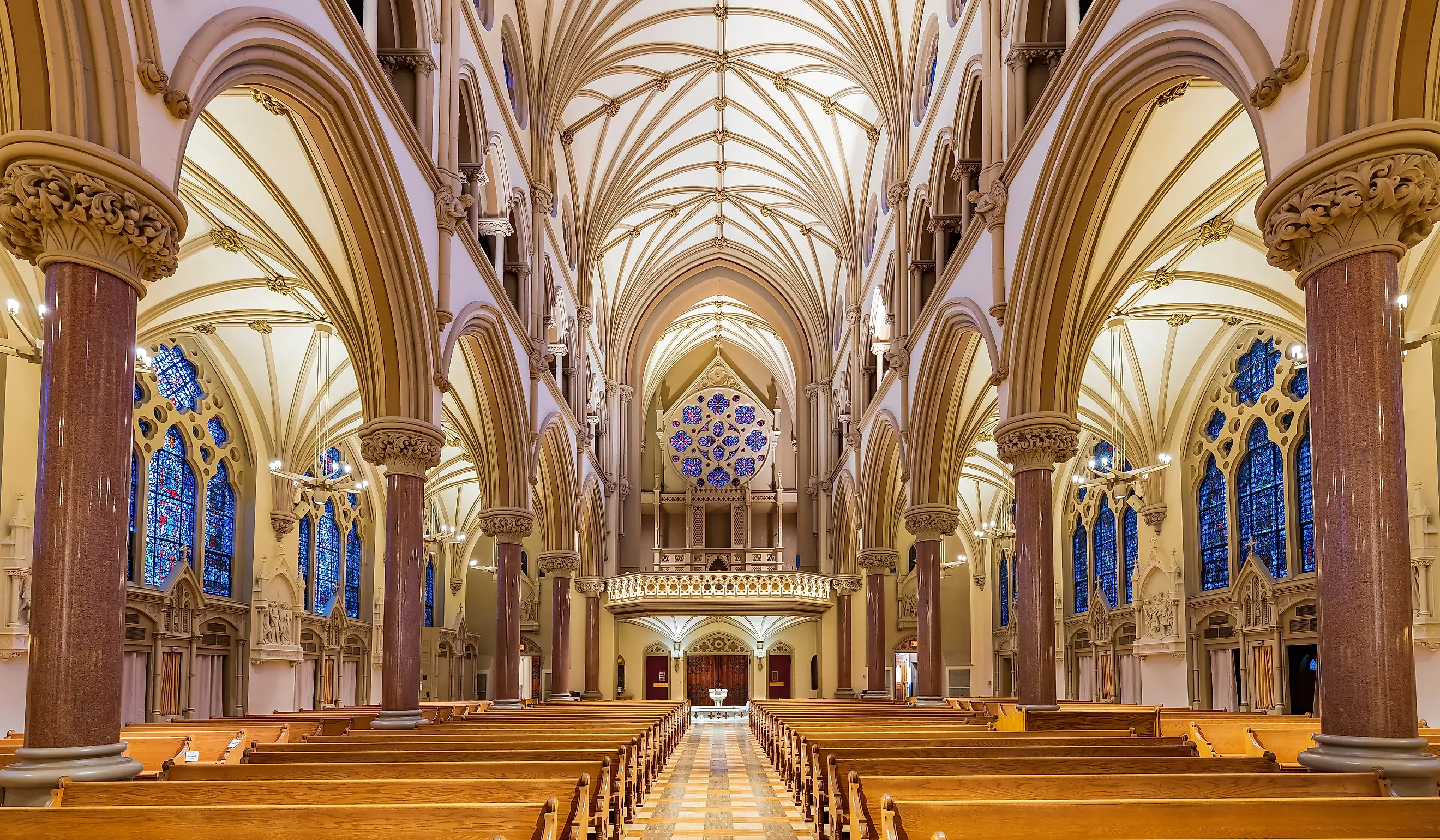
One of Missouri's most exquisite examples of Gothic Revival architecture is St. Francis Xavier College Church in St. Louis. Architects Thomas Walsh and Henry Switzer are credited with the creation of the structure. The church has limestone construction, pointed windows, and a towering structure, not to mention its spire, which was finalized in 1914 and gave the building its skyline presence.

At Saint Louis University, one of the oldest Jesuit campuses in the country, the campus blends architecture and history. St. Francis Xavier College Church still operates as a Roman Catholic parish today, providing services to the academic community as well as the larger St. Louis region.
Christ Episcopal Church

Christ Episcopal Church in Springfield features Gothic architectural styles, such as Carpenter Gothic architecture and the formality of Collegiate Gothic expansions. The original 1870 nave, constructed with wood board-and-batten siding and steeply pitched gables, reflects the picturesque qualities of Carpenter Gothic architecture.
This early structure was expanded in 1927-1928 with the addition of a stone chancel and parish hall, which introduced more substantial masonry, pointed arches, and refined Gothic detailing. The church is an architectural focal point in a historic district close to Springfield's downtown and is listed on the National Register of Historic Places. It still operates as an active Episcopal parish today, holding community events and worship sessions.
St. Paul’s Episcopal Church

St. Paul's Episcopal Church is an evident Carpenter Gothic building in Lee’s Summit. It demonstrates how Gothic forms were adapted for wood construction and local craftsmanship in the late 1800s. The church was built in 1884 and includes pitched rooflines, board-and-batten cladding, and pointed lancet windows.

Designed and constructed under the guidance of Rev. Frederick B. Scheetz, the building has remained largely unchanged since its completion. Funded through community efforts, St. Paul’s continues to serve as an active Episcopal parish and remains a vital part of the Episcopal Diocese of Western Missouri.
Glasgow Presbyterian Church

The Glasgow Presbyterian Church is a modest yet stunning brick chapel that is an early piece of Gothic Revival architecture in a small-town context and is situated in Glasgow, a town on the Missouri River. The one-story building, which was constructed between 1860 and 1861, has Gothic arcades, pointed arches, and a board-and-batten entryway.
Its design echoes that of larger ecclesiastical structures while maintaining a modest size. The former church was carefully converted and is now the Glasgow Community Museum, which preserves and interprets local history within its ancient Gothic walls. It was listed on the National Register of Historic Places in 1982.
Warren Street United Methodist Church

Originally called Warren Street Methodist Episcopal Church, Warren Street United Methodist Church in Warrensburg is certainly a noteworthy Late Gothic Revival structure, which was built sometime between 1898 and 1899. The church stands out from other Gothic buildings in Missouri thanks to its pointed-arch windows, buttressed walls, and a distinctive square entry tower with a concave dome.
It is built of warm, orange-tinted brick. Constructed around the beginning of the 20th century by a local African-American congregation, the church's architectural uniqueness and cultural significance led to its eventual inclusion on the National Register of Historic Places. As a United Methodist parish, it still serves the community today.
Anyone interested in Missouri’s history is often drawn to these churches because they have a tangible connection between the past and the present. Together, they highlight to tourists and locals how Gothic-style churches appear across the state, not just as places of worship, but as expressions of local identity and craftsmanship.
By upholding regular services, community events and performances, and ongoing restoration or reuse efforts, these five churches continue to play an active role in the life of their communities.