6 Most Beautiful Gothic Churches In Pennsylvania
Gothic architecture began in Europe in late medieval times and is responsible for some of the continent’s most imposing, ornate, and beautiful cathedrals. If you’ve ever been to Notre-Dame in Paris or the Seville Cathedral in Spain, you’ve seen this style of architecture at its finest.
The Gothic style came to America with the first colonists in the 19th century. At its height from the 1840s to the 1860s, the architecture was particularly popular in Northeastern states such as Pennsylvania where the European influence was keenly felt. The following Pennsylvania churches are stunning examples of stateside Gothic architecture that’s been carefully maintained and restored. These Gothic gems feature the telltale elements of this style, from soaring spires to vaulted arches, and intricate stained glass windows to flying buttresses. Historic landmarks and eye-catching edifices, these churches are a must-see for history lovers and art enthusiasts.
Bryn Athyn Cathedral, Bryn Athyn

Tucked among the trees in the picturesque Pennypack Creek Valley, Bryn Athyn Cathedral is an iconic landmark. The church was built between 1913 and 1928 in the Gothic style, with woodworkers, stone carvers, and other craftsmen meeting at the site to collaborate on its final design.
The result is a towering Gothic cathedral with Romanesque elements made from pink and green granite, local oak timbers, and intricate metal work. One of the most eye-catching features of the church is its dazzling, hand-blown stained windows, made via the medieval art of crafting pot metal glass to give them an authentic Old World look.
Tours of the cathedral are available on Tuesday, Wednesday, and Thursday afternoons. Tours last 45 minutes, and reservations are recommended. Visitors are also welcome to explore the grounds, which are open daily from sunrise to sunset.
St. Paul Cathedral, Pittsburgh

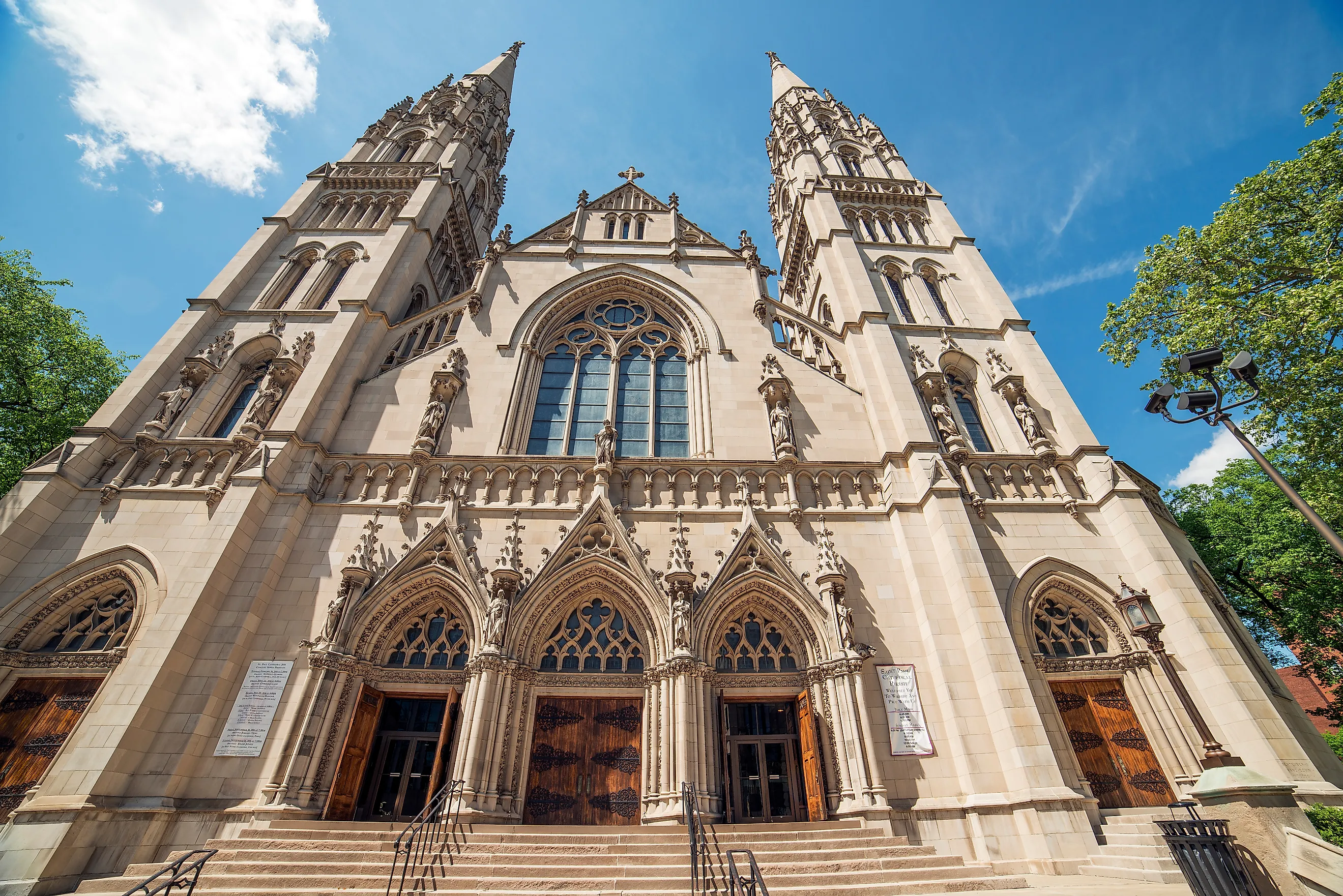
Located in Pittsburgh’s Oakland neighborhood, St. Paul Cathedral can trace its history back to 1906 when it was built to replace the city’s original cathedral and serve its rapidly expanding population. The Catholic cathedral is a Neo-Gothic example of Decorated Period English Gothic architecture, a style that emerged in England in the late 1200s. The hallmark of Decorated Gothic is the introduction of flying buttresses to support walls and roofs, allowing architects to build larger, more ornate windows.
St. Paul’s builders took the Cologne Cathedral in Germany, a UNESCO World Heritage Site, as their inspiration. Much like that church, St Paul’s signature twin Gothic spires jut high into the sky, rising 247 feet above the Pittsburgh skyline. The building is listed on the National Register of Historic Places and is a designated Pittsburgh Landmark.
Washington Memorial Chapel, Valley Forge

Visitors to Valley Forge National Historical Park may be there to see where George Washington and his army camped during the winter of 1777-1778, but they’ll also find a charming Gothic chapel within the grounds of the 3,500-acre Revolutionary War site.
The Washington Memorial Chapel is an active Episcopal church that was built in 1903 and completed in 1917. It’s constructed in the Gothic Revival style and features a bell tower that houses a replica of the Liberty Bell. Listed on the National Register of Historic Places, highlights of the chapel include its 13 stained glass windows, which represent the original 13 colonies. Above the choir stalls is another unusual feature — one of the original handles of George Washington’s coffin.
Valley Forge National Historical Park is open year-round; however, the chapel and gift shop are not operated by the Park Service, so they have their own schedule. The chapel is open daily 10 am to 5 pm in spring and summer, and 10 am to 4 pm in the fall and winter. Tours are available from Wednesday to Saturday, and the chapel also has a small cafe, gift shop, and bookstore located behind the church.
St. Mark's & St John’s Episcopal Church, Jim Thorpe

Located in the charming small town of Jim Thorpe, St. Mark’s & St. John’s Episcopal Church is a beloved community center as well as a National Registered Historic Landmark. Consecrated in 1869, the Gothic Revival church was built into the side of Flagstaff Mountain. It contains two Tiffany stained glass windows and a hand-cast brass lectern and pulpit. The ornate stone sculptures behind the altar are replicated from St. George’s Chapel in Windsor Castle. Visitors are welcome to explore the church outside of services. Guided 30-minute tours are available afternoons from Thursday to Sunday, from May to October.
First Presbyterian Church of Pittsburgh, Pittsburgh

In the heart of downtown Pittsburgh, the First Presbyterian Church was constructed between 1903 and 1905, but can trace its roots back to the eighteenth century when the congregation was first founded. Built in the English Gothic style with twin towers at its frontage, the church was designed by Theophilus Parsons Chandler Jr., founder of the University of Pennsylvania’s architecture department.
One of its most striking features is the 14 memorial stained glass windows in the sanctuary. All but one of these were made by Tiffany Studios. Tall, vibrantly colored, and separated into two sections, each window presents a Biblical scene. In total, the church boasts 253 stained and leaded glass windows. Tours of the church take place after the Sunday service, and private group tours can be arranged upon request.
Blessed Sacrament Cathedral, Greensburg

The impressive stone structure of the Blessed Sacrament Cathedral in Greensburg has stood over the town for almost a century. Designed in English Gothic style and made of sandstone and limestone, the church was dedicated in 1928 to accommodate the parish’s growing population.
Between the two towers that frame the church’s entrance is a large Rose Window, one of the telltale features of the Gothic style. These circular windows are designed to flood the church with light and provide a centerpiece that draws the eye upwards to heaven. They’re known for their ornamental tracery and radiating spokes. In 2010, the church launched a restoration project that made repairs and improvements to its stained glass windows, historic pews, and flooring.
Gothic Grandeur in Pennsylvania
Pennsylvania’s majestic Gothic churches aren’t just places of worship or tourist attractions. They’re a vital part of the state’s history and culture. Their decorative stained glass windows provide a glimpse through the centuries to a time when homesick European craftsmen put all their skills to work in homage to their faith and their native land. The expense, effort, skill, and talent that went into creating these architectural masterpieces can’t be overstated. These Pennsylvania landmarks have stood throughout the centuries, their ancient stonework bearing witness to the unfolding of American history. Next time you’re in the Keystone State, take a walk through time with a visit to these sacred and special sites.