6 Most Beautiful Gothic Churches In Nebraska
Nebraska boasts an architectural heritage that goes far beyond the prairies and famous bridges the state is known for. This state may not come to mind first when you think of Gothic-style buildings, so you may be surprised to learn that some of the most imposingly beautiful Gothic churches can be found right here in this Midwestern gem. Some of these churches incorporate rough stone, while others have intricate wooden frames and sit in rural areas. Each design was brought to life in faithful fashion to reflect the faith and culture of the settlers who built them. Today, these church buildings, like the Trinity Cathedral in Omaha and St. Mary's Catholic Church in Lincoln, are magnificent landmarks of local community history.
Trinity Cathedral, Omaha
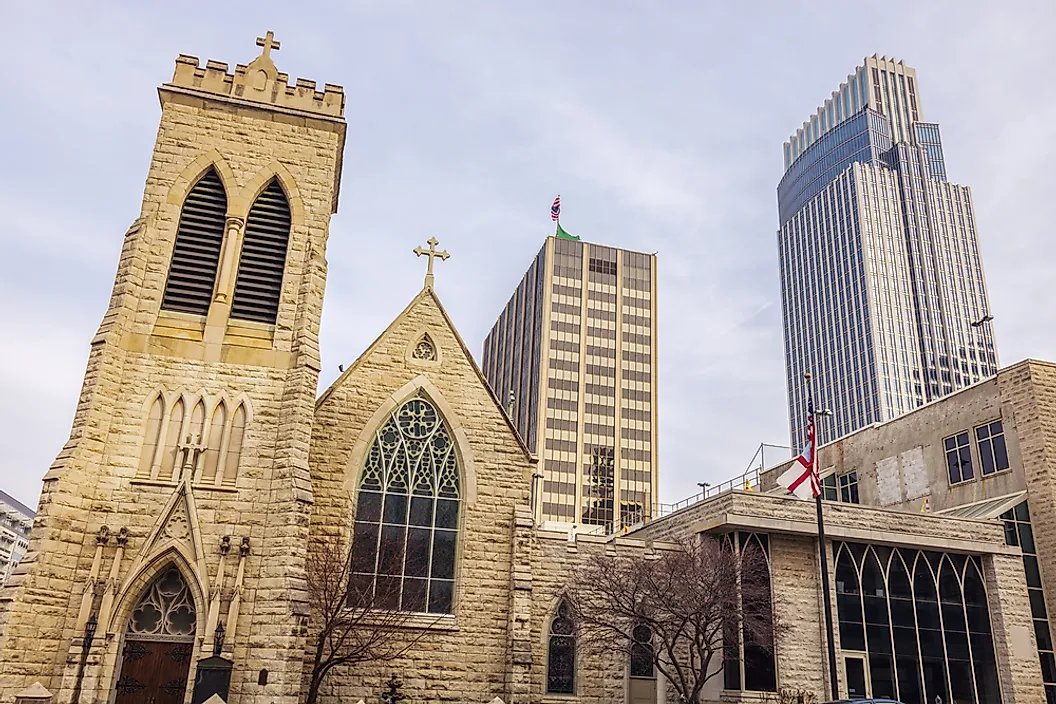
The striking Trinity Cathedral is a gorgeous break from the stark, modern skyscrapers in downtown Omaha at North 18th Street and Capitol Avenue. Omaha’s episcopal parish, Trinity, was founded in 1856, not long after the city was settled. Before the cathedral was built, church services were held in members’ houses. The cathedral was finally constructed and completed between 1880 and 1883. The building features a Late Gothic Revival style designed by Henry G. Harrison. Local architect Alfred Dufrene supervised the entire process.

The cathedral features a tower and a cruciform layout. The building material is gray textured stone, and there are several stained-glass windows throughout, including three by Tiffany. Notable members of the Omaha society donated some of these windows to the church. The building has been listed on the National Register of Historic Places since 1974.
St. Mark’s Episcopal Pro-Cathedral, Hastings

St. Mark's Episcopal Pro-Cathedral is one of the most architecturally beautiful Gothic Revival churches in the state. It took almost ten years to construct the original building, with the square-shaped tower completed only in 2001. Renowned Boston architect Ralph Adams Cram designed the church structure. Cram’s original vision came to life over many decades, starting in 1919, and the building made it onto the National Register of Historic Places in 1987.
The church stands at 422 North Burlington Avenue in Hastings and features rock-faced limestone and Late Gothic Revival architecture. The focus was clearly on monochromaticity and simplicity, compared with buildings designed in the High Victorian Gothic style. St. Mark’s emphasizes length and stepped apses, with the tower framing a piece of sky over the crossing. The church has double doors at the end of a raised entry. There is also a parapet gable and flanking buttresses. To make the entryway as inviting and striking as possible, two towers flank it, and a triple lancet window crowns the gable façade.
Inside, the rectangular nave sprouts arcades to each side. The crossing holds the pulpit, choir seats, and lectern, while the altar table and rood screen sit in the chancel. Every window in the church has some form of stained-glass design. An education wing was added in 1957, increasing the building's size.
Sacred Heart Catholic Church, Omaha

Omaha, specifically the north side, boasts another spectacular church located in the historic Kountze Place neighborhood. The Sacred Heart Catholic Church is a great example of Late Gothic Revival architecture adapted specially for an urban parish. Sacred Heart started as a suburban parish in 1890, with the first pastor serving for five years. Its original location at North 26th and Sprague Street was consistently damp, so the second priest relocated the building to North 24th and Binney Streets in 1897. Developer Herman Kountze donated land to the church, provided that a new building be constructed for at least $8,000. In 1902, the Gothic Revival building was completed and still stands today.
The old wooden church was transformed into a parish hall and clubhouse. The overhaul also included a new playground behind the old building. The new complex included the church, hall, rectory, clubhouse, high school, grade school, and even a grotto. The new church looks similar to Gothic churches in England dating to the Middle Ages. The stone walls are rough, and there are long stained-glass windows. The tower is a massive 124 feet tall, and there is a cross-shaped, rounded section over the altar. This section features frescoes and hand-painted scenes. Around 2012, the church replaced the building’s floors, roof, and gutters. Sacred Heart remains a fully functional church in 2026, with Mass held daily except on Mondays.
Blair Congregational Church, Blair

Carpenter Gothic-style churches are rare in Nebraska, so the Blair Congregational Church in Blair is a visual treat. The church building is significant not only for its architectural style but also for its place in local history. It was once a building with eight communicants in 1870. The building was organized less than a year after the original town lots were auctioned north of the site. It was not until 1874 that the church that still stands today was dedicated at the site.
Local builder George Sutherland erected the board-and-batten building that year. Charles F. Driscoll was responsible for the design, which includes a 28 x 40-foot core and a high-peak ceiling. Stunning wood arches support the ceiling. An annex was added on the south side in 1884. An extensive renovation was completed in 1890, and a full basement was excavated. As time passed, more additions saw the light, such as Sunday School rooms on the west side of the building in 1957. The elevator and restroom were built and installed in 1999. In 2026, the church is the oldest in Blair with the second-oldest congregation. Services are held every Sunday morning with more services added during Advent and Lent.
Church of Our Most Merciful Saviour, Santee

Another place to see a stunning Carpenter Gothic-style Episcopal church is in Santee. Also known as the Santee Mission, this church was built on the Missouri River in the Santee Indian Reservation in 1884 after the existing combination church burned down. With the exception of the plain side windows, the church features the typical architectural elements of a Carpenter Gothic structure. These include lancet windows, a circular rosette window, a belfry tower, and board-and-batten siding.
The building was added to the National Register of Historic Places in 1972 and is one of two Nebraska churches included in the Santee Mission of the Episcopal Diocese of South Dakota. It is a one-story cruciform plan structure with detailed Gothic design elements on the wooden belfry. The window detailing at the back of the nave also includes this detail. The church incorporates a wood frame and horizontal strips, integrated with the board-and-batten. The foundation and structure are practically unchanged in modern times, which means renovations are in order. There is a broken stained-glass window at the back of the structure. And, the bell tower and the entryway below it are not in working order.
St. Mary's Catholic Church, Lincoln

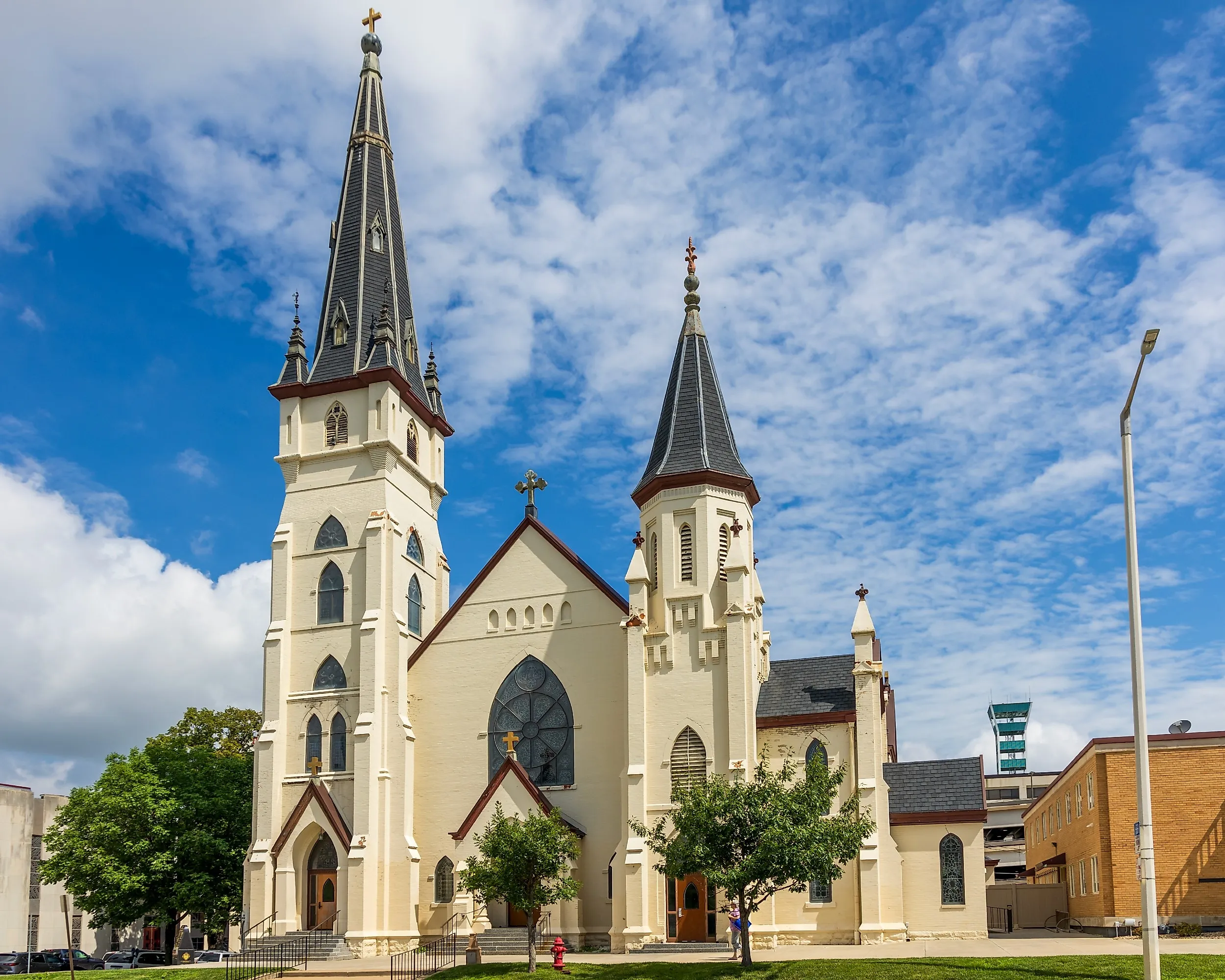
St. Mary's Catholic Church, or The Old Cathedral, is a stunning Gothic Revival structure located on 14th and K Streets in downtown Lincoln. The church began as the First Christian Church of Lincoln in 1888 before Bishop Bonacum bought the building in 1904. A couple of years later, the bishop renovated the interior and transformed it into the Cathedral of the Diocese of Lincoln. All this effort was in vain as the church was largely burned down in 1906. Fortunately, there was no delay in renovations after the fire, and the church was dedicated in 1911. It was renamed St. Mary's Catholic Church in 1965 when it was replaced by the Cathedral of the Risen Christ as the diocesan seat.

Before it was replaced by the Risen Christ, St. Mary's high altars were removed, and a new altar was installed in 1963. A grand baldacchino was built over the altar, and it remained there until 1993, when it was taken down. The current crucifix and tabernacle were put up that same year. St. Mary's is currently undergoing extensive renovations, which started in 2022. During Phase 1, new flashing was installed, and the gutters relined. The confessionals were remodeled, and a statue of Mary and the infant Jesus was installed. During the second phase, the building received a new HVAC system, transformer, and alarm system. Phases 3 and 4 are still in progress and focus on both the exterior and interior design.
Timeless Landmarks of Exceptional Craftsmanship and Faith
Nebraska’s Gothic-style churches are impressive to look at, and when you look a little deeper, you will find out more about the people and communities that ensured they were built. These communities came together out of a desire to build something lasting that would represent their faith. As time passed, churches were established throughout the state, and even as contractors remodel and update them, they continue to serve as a gathering place for those who find their identity in their faith. These churches are also a symbol of Nebraska’s history and highlight the state’s deep respect for tradition, not just in architecture, but in community and culture.